European Investment Banks Struggle as U.S. Giants Gain Market Share
Written by Emily J. Thompson, Senior Investment Analyst
Updated: May 05 2026
0mins

Source: Newsfilter
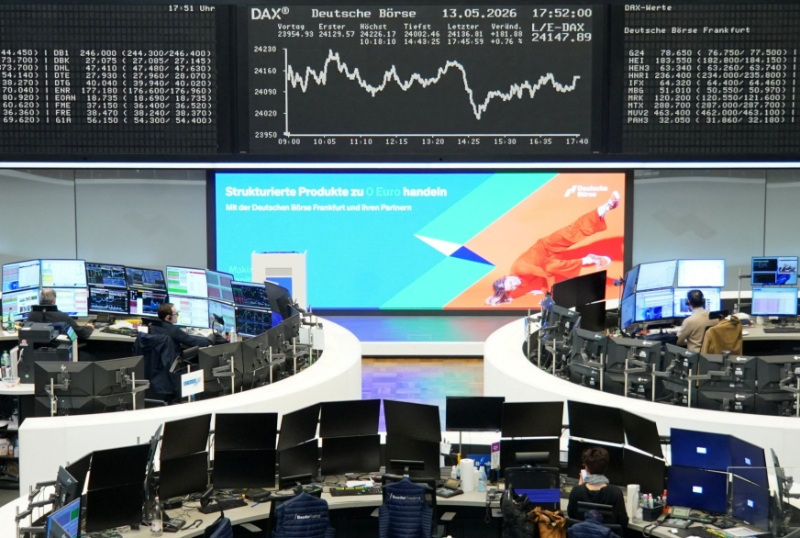
- Declining Market Share: According to LSEG data, European investment banks' share of global investment banking fees fell from 29% in 2015 to 21% last year, while U.S. banks increased their share from 46% to 51%, indicating intensified market competition.
- Disappointing Revenue Performance: BNP Paribas reported a 0.8% drop in investment banking revenue, while SocGen's investment banking division saw a 4.5% decline, primarily due to an 18% slump in fixed-income trading, reflecting weak client activity and market volatility.
- Capital Market Activity Hit: Deutsche Bank's investment banking revenue remained flat, with capital market issuance activity impacted in March but recovering in April, demonstrating the ongoing influence of market volatility on revenue.
- Optimistic Future Outlook: Despite the challenges of declining market share, analysts expect European investment banking revenue to grow this year, particularly driven by market volatility and deal-making, with Deutsche Bank even upgrading its revenue outlook for 2026.
Trade with 70% Backtested Accuracy
Stop guessing "Should I Buy JPM?" and start using high-conviction signals backed by rigorous historical data.
Sign up today to access powerful investing tools and make smarter, data-driven decisions.
Analyst Views on JPM
Wall Street analysts forecast JPM stock price to rise
19 Analyst Rating
11 Buy
7 Hold
1 Sell
Moderate Buy
Current: 299.910

Low
260.00
Averages
341.38
High
400.00
Current: 299.910
Low
260.00
Averages
341.38
High
400.00
About JPM
JPMorgan Chase & Co. is a financial holding company. The Company is engaged in investment banking, financial services for consumers and small businesses, commercial banking, financial transaction processing and asset management. The Company operates through three segments: Consumer & Community Banking (CCB), Commercial & Investment Bank (CIB), and Asset & Wealth Management (AWM). Its CCB segment offers products and services to consumers and small businesses through bank branches, ATMs, digital and telephone banking. Its CIB segment consists of banking and payments and markets and securities services, and offers a suite of investment banking, lending, payments, market-making, financing, custody and securities products and services to a global base of corporate and institutional clients. AWM segment offers investment and wealth management solutions. It offers multi-asset investment management solutions, retirement products and services, brokerage, custody, estate planning, and others.
About the author

Emily J. Thompson
Emily J. Thompson, a Chartered Financial Analyst (CFA) with 12 years in investment research, graduated with honors from the Wharton School. Specializing in industrial and technology stocks, she provides in-depth analysis for Intellectia’s earnings and market brief reports.

Quantinuum's IPO Marks a Pivotal Moment in Quantum Computing


- Company Background: Quantinuum was formed in 2021 through the merger of Honeywell Quantum Solutions and Cambridge Quantum Computing, with major backing from Honeywell and blue-chip investors like Nvidia and JPMorgan, highlighting its strong support in the quantum computing sector.
- Technological Edge: Utilizing trapped-ion quantum computers, Quantinuum employs lasers to suspend individual atoms, yielding qubits with exceptionally high fidelity and long coherence times, and this full-stack approach enhances error correction compared to Rigetti Computing's superconducting qubits.
- Financial Performance: In 2025, Quantinuum generated $30.9 million in revenue, a 35% year-over-year increase, yet net losses widened to $192.6 million, reflecting substantial investments in R&D and marketing, indicating that commercialized quantum AI solutions are still in development.
- IPO Outlook: Market speculation suggests Quantinuum's IPO could value the company near $20 billion, double its $10 billion valuation from a September 2025 funding round, and despite its poor financial profile, the IPO could serve as a catalyst for the entire quantum ecosystem.
See More

Large Banks Show Strong Q1 Performance Amid Economic Uncertainty


- Credit Conditions Warning: The American Bankers Association's Credit Conditions Index indicates a likely deterioration in credit conditions over the next six months, with the Consumer Credit Index dropping to 33.3, suggesting tightening credit that could slow loan growth and reduce net interest income, thereby impacting bank profitability.
- Large Banks Benefit: In times of economic uncertainty, large banks like JPMorgan Chase and Bank of America are better positioned due to their broad client base and diverse services, with projected net interest income increases of 8% and 6%-8% respectively in 2026, demonstrating resilience amid market turbulence.
- Market Reaction Muted: Despite strong Q1 results from large banks, the KBW Nasdaq Bank Index has declined about 2% over the past month, reflecting investor concerns about potential future credit condition deterioration, leading to a general decline in bank stocks post-earnings.
- Investor Confidence Lacking: Although JPMorgan Chase and Bank of America stocks are currently trading at relatively low valuations, with forward P/E ratios of 13 and 11 respectively, market confidence in their future performance remains weak, with JPMorgan expected to rise 16% and Bank of America 24% over the next 12 months.
See More

JPMorgan Lowers Gold Price Forecast Amid Demand Concerns
- Gold Price Forecast Adjustment: JPMorgan has lowered its 2026 average gold price forecast from $5,708 to $5,243, although it still anticipates prices could rise to $6,000 by year-end, indicating a cooling demand for precious metals that may impact investor confidence.
- Silver Market Outlook: The bank expects silver to average $90 per ounce by Q4 2026, but warnings about extreme tightness in the market suggest that recent outperformance may not be sustainable, affecting overall market dynamics.
- Investor Demand Shift: JPMorgan forecasts that quarterly central bank and investor demand for gold will average around 620 tons in 2026, down from 750 tons last year, reflecting a decline in investor interest amid high inflation and energy market uncertainties.
- Market Sentiment Fluctuation: Amid escalating conflict between the U.S. and Iran, gold prices have fallen to a one-month low, reflecting market concerns over inflation and rising interest rates, leading to a decrease in investor demand for gold as a safe haven asset.
See More

Citigroup Reports Strong Q1 2026 Earnings Growth
- Significant Revenue Growth: Citigroup's Q1 2026 revenue increased by 14% year-over-year, with earnings per share rising from $1.96 to $3.06, reflecting strong business performance that has driven the stock price up over 60% in the past year.
- Peer Comparison: In contrast to Citigroup, JPMorgan Chase and Bank of America saw stock price increases of only 14% and 13%, respectively, indicating Citigroup's superior market performance, which may have attracted more investor interest.
- Valuation Metrics Shift: Citigroup's price-to-book ratio has risen from 0.5x in 2022 to 1.1x today, while its price-to-earnings ratio increased from 6x to 15x; however, its P/B ratio remains lower than that of Bank of America and JPMorgan, suggesting relative investment appeal.
- Share Buyback Program: Citigroup repurchased $6.3 billion in shares during Q1, which boosted earnings but did not address underlying business opportunities, indicating that the company still has work to do in its transformation efforts.
See More
Analysis of Investor Sentiment and Market Strategies
- Fear of Market Peaks: Despite the S&P 500 reaching all-time highs, many investors hesitate due to concerns about timing; however, since 1950, the index has hit new highs on about 7% of trading days, and in a third of those instances, it did not decline, indicating that waiting for dips can lead to missed opportunities.
- Emotion-Driven Decisions: Investors often sell in panic during market downturns, yet studies show that the largest gains typically follow significant declines, highlighting the importance of maintaining composure in volatile markets to avoid underperformance.
- Risks of Chasing Hot Stocks: Investors frequently chase stocks that are rising rapidly due to fear of missing out, but over the long term, valuations matter, and buying into already inflated stocks can lead to losses, resulting in what are derogatorily termed 'bag holders'.
- Advantages of Dollar-Cost Averaging: By consistently investing a fixed amount into index-based ETFs like the Vanguard S&P 500 ETF and Invesco QQQ Trust, investors can average their cost basis over time, which helps build wealth with reduced emotional stress in fluctuating markets.
See More

Berkshire Hathaway's Major Portfolio Overhaul Under Greg Abel


- Portfolio Restructuring: Under Greg Abel's leadership, Berkshire Hathaway's equity portfolio underwent significant changes in the first three months, adding Delta Air Lines and Macy's, indicating a renewed focus on the airline and retail sectors.
- Massive Alphabet Stake Increase: Berkshire increased its stake in Google's parent company Alphabet by 224% in Q1, making it the company's seventh-largest holding with a market value of $16.6 billion, and the stock has rallied 38% since, showcasing the success of this decision.
- Reduction in Holdings: Abel dramatically cut the number of companies in the portfolio, selling off major stakes including Amazon and Visa, with Amazon's shares reduced from 10 million to 2.3 million, reflecting a significant strategic shift in investment focus.
- Return to Delta Airlines: Berkshire purchased 39.8 million shares of Delta Air Lines in Q1, currently valued at $2.8 billion, marking the company's first return to airline stocks since 2020, demonstrating confidence in the recovery of the airline industry.
See More
Quantinuum's IPO Marks a Pivotal Moment in Quantum Computing
- Company Background: Quantinuum was formed in 2021 through the merger of Honeywell Quantum Solutions and Cambridge Quantum Computing, with major backing from Honeywell and blue-chip investors like Nvidia and JPMorgan, highlighting its strong support in the quantum computing sector.
- Technological Edge: Utilizing trapped-ion quantum computers, Quantinuum employs lasers to suspend individual atoms, yielding qubits with exceptionally high fidelity and long coherence times, and this full-stack approach enhances error correction compared to Rigetti Computing's superconducting qubits.
- Financial Performance: In 2025, Quantinuum generated $30.9 million in revenue, a 35% year-over-year increase, yet net losses widened to $192.6 million, reflecting substantial investments in R&D and marketing, indicating that commercialized quantum AI solutions are still in development.
- IPO Outlook: Market speculation suggests Quantinuum's IPO could value the company near $20 billion, double its $10 billion valuation from a September 2025 funding round, and despite its poor financial profile, the IPO could serve as a catalyst for the entire quantum ecosystem.
See More
Large Banks Show Strong Q1 Performance Amid Economic Uncertainty
- Credit Conditions Warning: The American Bankers Association's Credit Conditions Index indicates a likely deterioration in credit conditions over the next six months, with the Consumer Credit Index dropping to 33.3, suggesting tightening credit that could slow loan growth and reduce net interest income, thereby impacting bank profitability.
- Large Banks Benefit: In times of economic uncertainty, large banks like JPMorgan Chase and Bank of America are better positioned due to their broad client base and diverse services, with projected net interest income increases of 8% and 6%-8% respectively in 2026, demonstrating resilience amid market turbulence.
- Market Reaction Muted: Despite strong Q1 results from large banks, the KBW Nasdaq Bank Index has declined about 2% over the past month, reflecting investor concerns about potential future credit condition deterioration, leading to a general decline in bank stocks post-earnings.
- Investor Confidence Lacking: Although JPMorgan Chase and Bank of America stocks are currently trading at relatively low valuations, with forward P/E ratios of 13 and 11 respectively, market confidence in their future performance remains weak, with JPMorgan expected to rise 16% and Bank of America 24% over the next 12 months.
See More
JPMorgan Lowers Gold Price Forecast Amid Demand Concerns
- Gold Price Forecast Adjustment: JPMorgan has lowered its 2026 average gold price forecast from $5,708 to $5,243, although it still anticipates prices could rise to $6,000 by year-end, indicating a cooling demand for precious metals that may impact investor confidence.
- Silver Market Outlook: The bank expects silver to average $90 per ounce by Q4 2026, but warnings about extreme tightness in the market suggest that recent outperformance may not be sustainable, affecting overall market dynamics.
- Investor Demand Shift: JPMorgan forecasts that quarterly central bank and investor demand for gold will average around 620 tons in 2026, down from 750 tons last year, reflecting a decline in investor interest amid high inflation and energy market uncertainties.
- Market Sentiment Fluctuation: Amid escalating conflict between the U.S. and Iran, gold prices have fallen to a one-month low, reflecting market concerns over inflation and rising interest rates, leading to a decrease in investor demand for gold as a safe haven asset.
See More
Citigroup Reports Strong Q1 2026 Earnings Growth
- Significant Revenue Growth: Citigroup's Q1 2026 revenue increased by 14% year-over-year, with earnings per share rising from $1.96 to $3.06, reflecting strong business performance that has driven the stock price up over 60% in the past year.
- Peer Comparison: In contrast to Citigroup, JPMorgan Chase and Bank of America saw stock price increases of only 14% and 13%, respectively, indicating Citigroup's superior market performance, which may have attracted more investor interest.
- Valuation Metrics Shift: Citigroup's price-to-book ratio has risen from 0.5x in 2022 to 1.1x today, while its price-to-earnings ratio increased from 6x to 15x; however, its P/B ratio remains lower than that of Bank of America and JPMorgan, suggesting relative investment appeal.
- Share Buyback Program: Citigroup repurchased $6.3 billion in shares during Q1, which boosted earnings but did not address underlying business opportunities, indicating that the company still has work to do in its transformation efforts.
See More
Analysis of Investor Sentiment and Market Strategies
- Fear of Market Peaks: Despite the S&P 500 reaching all-time highs, many investors hesitate due to concerns about timing; however, since 1950, the index has hit new highs on about 7% of trading days, and in a third of those instances, it did not decline, indicating that waiting for dips can lead to missed opportunities.
- Emotion-Driven Decisions: Investors often sell in panic during market downturns, yet studies show that the largest gains typically follow significant declines, highlighting the importance of maintaining composure in volatile markets to avoid underperformance.
- Risks of Chasing Hot Stocks: Investors frequently chase stocks that are rising rapidly due to fear of missing out, but over the long term, valuations matter, and buying into already inflated stocks can lead to losses, resulting in what are derogatorily termed 'bag holders'.
- Advantages of Dollar-Cost Averaging: By consistently investing a fixed amount into index-based ETFs like the Vanguard S&P 500 ETF and Invesco QQQ Trust, investors can average their cost basis over time, which helps build wealth with reduced emotional stress in fluctuating markets.
See More
Berkshire Hathaway's Major Portfolio Overhaul Under Greg Abel
- Portfolio Restructuring: Under Greg Abel's leadership, Berkshire Hathaway's equity portfolio underwent significant changes in the first three months, adding Delta Air Lines and Macy's, indicating a renewed focus on the airline and retail sectors.
- Massive Alphabet Stake Increase: Berkshire increased its stake in Google's parent company Alphabet by 224% in Q1, making it the company's seventh-largest holding with a market value of $16.6 billion, and the stock has rallied 38% since, showcasing the success of this decision.
- Reduction in Holdings: Abel dramatically cut the number of companies in the portfolio, selling off major stakes including Amazon and Visa, with Amazon's shares reduced from 10 million to 2.3 million, reflecting a significant strategic shift in investment focus.
- Return to Delta Airlines: Berkshire purchased 39.8 million shares of Delta Air Lines in Q1, currently valued at $2.8 billion, marking the company's first return to airline stocks since 2020, demonstrating confidence in the recovery of the airline industry.
See More