Engaged Capital Nominates Two Highly Qualified, Independent Candidates for Election to Portillo's Board of Directors
Written by Emily J. Thompson, Senior Investment Analyst
Updated: Mar 03 2025
0mins


Should l Buy PEP?
Source: Newsfilter
Board Nominations: Engaged Capital has nominated Charlie Morrison and Nicole Portwood for election to the Board of Directors of Portillo's Inc. at the 2025 Annual Meeting, citing their extensive experience in restaurant operations and marketing as essential for improving company performance.
Company Challenges: Despite Portillo's strong brand and growth potential, the company is facing issues such as outdated operations and ineffective marketing, which Engaged Capital believes can be resolved through strategic leadership changes and targeted initiatives.
Trade with 70% Backtested Accuracy
Stop guessing "Should I Buy PEP?" and start using high-conviction signals backed by rigorous historical data.
Sign up today to access powerful investing tools and make smarter, data-driven decisions.
Analyst Views on PEP
Wall Street analysts forecast PEP stock price to rise
12 Analyst Rating
6 Buy
6 Hold
0 Sell
Moderate Buy
Current: 154.650

Low
144.00
Averages
161.90
High
172.00
Current: 154.650
Low
144.00
Averages
161.90
High
172.00
About PEP
PepsiCo, Inc. is a global beverage and convenient food company. The Company’s segments include PepsiCo Foods North America (PFNA), PepsiCo Beverages North America (PBNA), International Beverages Franchise (IB Franchise), Europe, Middle East and Africa (EMEA), Latin America Foods (LatAm Foods), and Asia Pacific Foods. PFNA segment includes all of its convenient food businesses in the United States and Canada. PBNA segment includes all of its beverage businesses in the United States and Canada. IB Franchise segment includes its international franchise beverage businesses, as well as its SodaStream business. EMEA segment includes its convenient food businesses and beverage businesses with Company-owned bottlers in Europe, the Middle East and Africa. LatAm Foods segment includes all of its convenient food businesses in Latin America. Asia Pacific Foods segment consists of its convenient food businesses in Asia Pacific, including China, Australia and New Zealand, as well as India.
About the author

Emily J. Thompson
Emily J. Thompson, a Chartered Financial Analyst (CFA) with 12 years in investment research, graduated with honors from the Wharton School. Specializing in industrial and technology stocks, she provides in-depth analysis for Intellectia’s earnings and market brief reports.
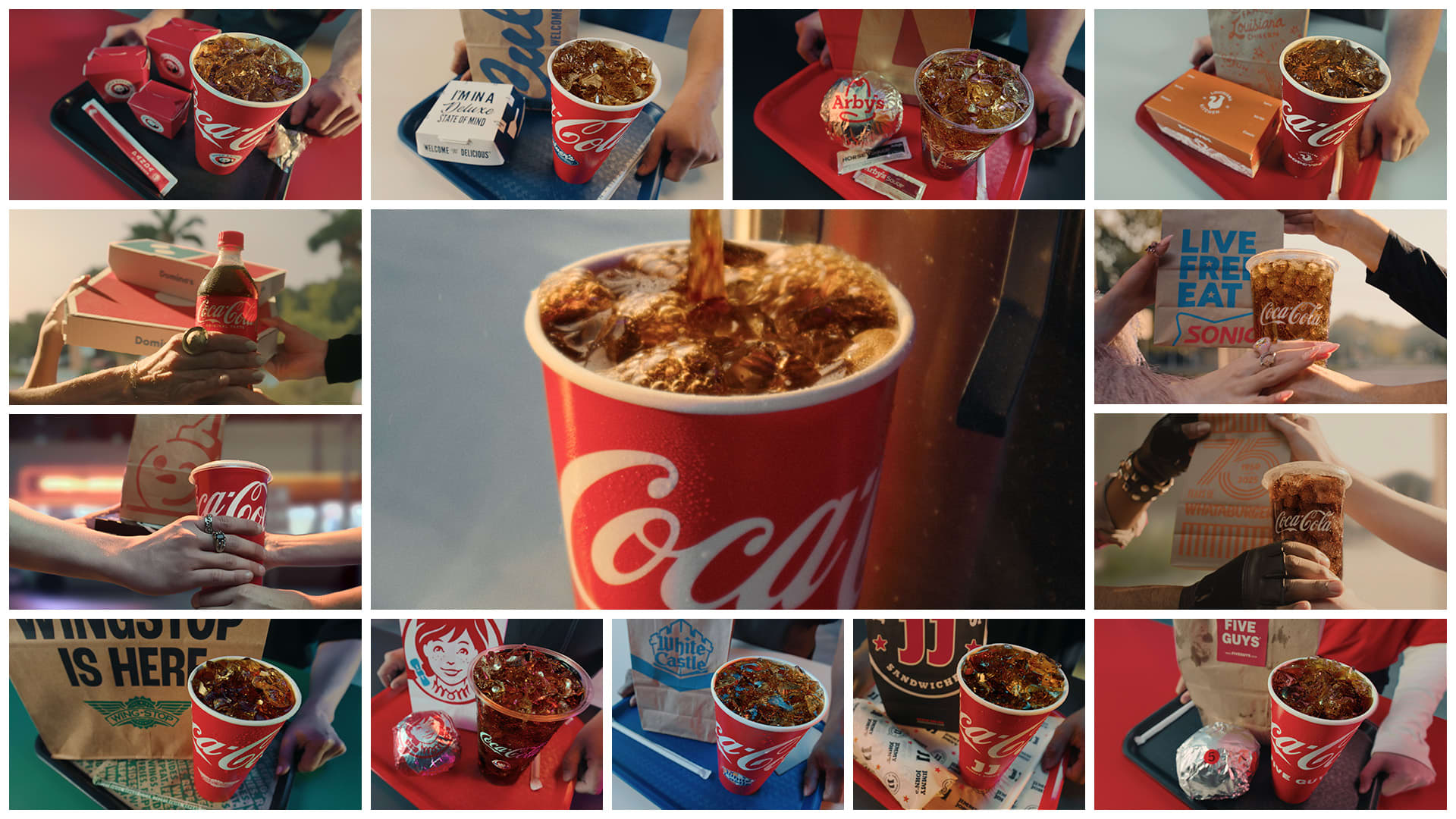
Coca-Cola Launches New Marketing Campaign to Boost Restaurant Sales


- Campaign Launch: Coca-Cola unveiled a new marketing campaign on Thursday aimed at boosting beverage sales in restaurants to tackle challenges posed by declining traffic and sluggish sales growth, marking the first time it has partnered with multiple restaurant chains for ads.
- Wide Advertising Reach: The campaign features commercials showcasing 13 different chains, including Arby's, Domino's, and Wendy's, emphasizing the importance of drinks as high-margin menu items, particularly as consumers cut back on dining out.
- Deepening Partnerships: Coca-Cola collaborates with restaurants to market combo meals, providing marketing funds to attract customers, especially amid intensified value competition in the fast-food sector, highlighting its role as a “business partner.”
- Sales Outlook: Despite a 4% organic sales growth in North America in 2025, Coca-Cola's domestic unit case volume fell by 1%, indicating weak demand, with modest sales growth projected for 2026, reflecting a challenging market environment.
See More
Analysis of Market Impact from Iran War

- Surging Oil Prices: The ongoing Iran war has led to a significant increase in global oil prices, with approximately 20% of the world's oil passing through the Strait of Hormuz, resulting in an overall market decline and expected long-term economic impacts.
- Extended Rebuilding Timeline: The reconstruction of LNG assets is projected to take 3-5 years, and if the conflict persists, this timeline may extend further, posing greater challenges to the global economy.
- Supply Chain Complexity: The current issues are more complex than mere supply shortages, particularly with Qatar's LNG facilities damaged, leading to uncertain recovery times that could affect production across multiple industries.
- Investor Sentiment Deterioration: The S&P 500 has dropped about 4% year-to-date, with the fear and greed index falling to 17, indicating a heightened fear among investors regarding future market conditions, which may lead to increased market volatility.
See More

Schwab U.S. Dividend ETF Annual Reconstitution
- Annual Reconstitution Overview: The Schwab U.S. Dividend ETF removed 22 stocks and added 25 during its annual reconstitution, reducing its energy stock allocation from 23.5% to 16.3%, while increasing consumer staples' weighting to 19.4%, indicating a strategic shift towards this sector for income generation.
- New Consumer Staples Additions: Procter & Gamble and Marzetti were added with allocations of 3.8% and 0.08%, respectively; Procter & Gamble boasts a 135-year dividend payment history and a 69-year streak of increases, qualifying it as a Dividend King, thus providing a reliable income source for the fund.
- Stability of Consumer Staples: Consumer staples stocks maintain strong demand during recessions due to their essential nature, allowing the Schwab ETF to offer stable and steadily rising dividend income throughout economic cycles, which enhances investor confidence.
- Dividend Yield Comparison: Procter & Gamble's current dividend yield of 3% is nearly triple that of the S&P 500's 1.2%, showcasing its competitiveness among high-yield stocks and adding appeal to the Schwab ETF's investment portfolio.
See More

Schwab U.S. Dividend ETF Reconstitution Alters Sector Focus
- Energy Stock Reduction: The Schwab U.S. Dividend ETF reduced its energy stock allocation from 23.5% to 16.3% during its annual reconstitution, resulting in consumer staples becoming the fund's top sector with a 19.4% weighting, indicating a shift in market confidence away from energy stocks.
- New Additions: The fund added Procter & Gamble and Marzetti, with Procter & Gamble receiving a 3.8% allocation, placing it in the top ten, while Marzetti has a 0.08% weighting, reflecting a strategic shift towards stable dividend income sources.
- Dividend King Status: Procter & Gamble has paid dividends for 135 consecutive years and increased them for 69 years, qualifying as a Dividend King, while Marzetti has a 63-year history of dividend increases, showcasing stability and appeal in the consumer staples sector.
- Resilience of Consumer Staples: Consumer staples stocks maintain strong demand during economic downturns as their products are essential for daily life, enhancing the Schwab U.S. Dividend ETF's portfolio resilience and providing stable, rising dividend income throughout economic cycles.
See More

Investment Comparison: Coca-Cola vs. PepsiCo

- Industry Giants Comparison: Both Coca-Cola and PepsiCo are among the largest consumer staples companies globally, possessing iconic brands and industry-leading distribution, marketing, and innovation capabilities, showcasing strong market competitiveness.
- Dividend Kings Status: Both companies are Dividend Kings, having increased dividends for over 50 years, demonstrating robust business models and stability during economic fluctuations, appealing to dividend investors.
- Business Model Differences: PepsiCo focuses on diversification across beverages, salty snacks, and packaged foods, but its snack segment struggles with changing consumer buying habits, potentially limiting overall growth.
- Coca-Cola's Advantage: Coca-Cola's exclusive focus on beverages presents risks, yet it excels when beverage sales are strong, evidenced by a 5% organic sales increase in 2025, significantly outperforming PepsiCo's 1.7% growth.
See More

Coca-Cola vs. PepsiCo: Investment Comparison
- Performance Metrics: Coca-Cola's organic sales rose by 5% in 2025, significantly outperforming PepsiCo's 1.7% growth, indicating Coca-Cola's strong position in the beverage market, while PepsiCo's diversification strategy faces challenges due to changing consumer buying habits in its snack segment.
- Dividend Yield: Coca-Cola offers a dividend yield of 2.7%, above the market's 1.1%, while PepsiCo's yield stands at 3.7%, reflecting Coca-Cola's stronger business performance, although its price-to-earnings ratio is slightly below its five-year average, suggesting reasonable pricing.
- Market Positioning: Coca-Cola's exclusive focus on beverages poses risks during weak sales periods, yet it allows for superior performance when the beverage market thrives, making it an attractive option for investors seeking industry-leading companies.
- Investment Consideration: Although Coca-Cola was not included in The Motley Fool Stock Advisor's current top investment stocks, its status as a reasonably priced, well-performing industry leader makes it a noteworthy investment choice.
See More
Coca-Cola Launches New Marketing Campaign to Boost Restaurant Sales
- Campaign Launch: Coca-Cola unveiled a new marketing campaign on Thursday aimed at boosting beverage sales in restaurants to tackle challenges posed by declining traffic and sluggish sales growth, marking the first time it has partnered with multiple restaurant chains for ads.
- Wide Advertising Reach: The campaign features commercials showcasing 13 different chains, including Arby's, Domino's, and Wendy's, emphasizing the importance of drinks as high-margin menu items, particularly as consumers cut back on dining out.
- Deepening Partnerships: Coca-Cola collaborates with restaurants to market combo meals, providing marketing funds to attract customers, especially amid intensified value competition in the fast-food sector, highlighting its role as a “business partner.”
- Sales Outlook: Despite a 4% organic sales growth in North America in 2025, Coca-Cola's domestic unit case volume fell by 1%, indicating weak demand, with modest sales growth projected for 2026, reflecting a challenging market environment.
See More
Analysis of Market Impact from Iran War
- Surging Oil Prices: The ongoing Iran war has led to a significant increase in global oil prices, with approximately 20% of the world's oil passing through the Strait of Hormuz, resulting in an overall market decline and expected long-term economic impacts.
- Extended Rebuilding Timeline: The reconstruction of LNG assets is projected to take 3-5 years, and if the conflict persists, this timeline may extend further, posing greater challenges to the global economy.
- Supply Chain Complexity: The current issues are more complex than mere supply shortages, particularly with Qatar's LNG facilities damaged, leading to uncertain recovery times that could affect production across multiple industries.
- Investor Sentiment Deterioration: The S&P 500 has dropped about 4% year-to-date, with the fear and greed index falling to 17, indicating a heightened fear among investors regarding future market conditions, which may lead to increased market volatility.
See More
Schwab U.S. Dividend ETF Annual Reconstitution
- Annual Reconstitution Overview: The Schwab U.S. Dividend ETF removed 22 stocks and added 25 during its annual reconstitution, reducing its energy stock allocation from 23.5% to 16.3%, while increasing consumer staples' weighting to 19.4%, indicating a strategic shift towards this sector for income generation.
- New Consumer Staples Additions: Procter & Gamble and Marzetti were added with allocations of 3.8% and 0.08%, respectively; Procter & Gamble boasts a 135-year dividend payment history and a 69-year streak of increases, qualifying it as a Dividend King, thus providing a reliable income source for the fund.
- Stability of Consumer Staples: Consumer staples stocks maintain strong demand during recessions due to their essential nature, allowing the Schwab ETF to offer stable and steadily rising dividend income throughout economic cycles, which enhances investor confidence.
- Dividend Yield Comparison: Procter & Gamble's current dividend yield of 3% is nearly triple that of the S&P 500's 1.2%, showcasing its competitiveness among high-yield stocks and adding appeal to the Schwab ETF's investment portfolio.
See More
Schwab U.S. Dividend ETF Reconstitution Alters Sector Focus
- Energy Stock Reduction: The Schwab U.S. Dividend ETF reduced its energy stock allocation from 23.5% to 16.3% during its annual reconstitution, resulting in consumer staples becoming the fund's top sector with a 19.4% weighting, indicating a shift in market confidence away from energy stocks.
- New Additions: The fund added Procter & Gamble and Marzetti, with Procter & Gamble receiving a 3.8% allocation, placing it in the top ten, while Marzetti has a 0.08% weighting, reflecting a strategic shift towards stable dividend income sources.
- Dividend King Status: Procter & Gamble has paid dividends for 135 consecutive years and increased them for 69 years, qualifying as a Dividend King, while Marzetti has a 63-year history of dividend increases, showcasing stability and appeal in the consumer staples sector.
- Resilience of Consumer Staples: Consumer staples stocks maintain strong demand during economic downturns as their products are essential for daily life, enhancing the Schwab U.S. Dividend ETF's portfolio resilience and providing stable, rising dividend income throughout economic cycles.
See More
Investment Comparison: Coca-Cola vs. PepsiCo
- Industry Giants Comparison: Both Coca-Cola and PepsiCo are among the largest consumer staples companies globally, possessing iconic brands and industry-leading distribution, marketing, and innovation capabilities, showcasing strong market competitiveness.
- Dividend Kings Status: Both companies are Dividend Kings, having increased dividends for over 50 years, demonstrating robust business models and stability during economic fluctuations, appealing to dividend investors.
- Business Model Differences: PepsiCo focuses on diversification across beverages, salty snacks, and packaged foods, but its snack segment struggles with changing consumer buying habits, potentially limiting overall growth.
- Coca-Cola's Advantage: Coca-Cola's exclusive focus on beverages presents risks, yet it excels when beverage sales are strong, evidenced by a 5% organic sales increase in 2025, significantly outperforming PepsiCo's 1.7% growth.
See More
Coca-Cola vs. PepsiCo: Investment Comparison
- Performance Metrics: Coca-Cola's organic sales rose by 5% in 2025, significantly outperforming PepsiCo's 1.7% growth, indicating Coca-Cola's strong position in the beverage market, while PepsiCo's diversification strategy faces challenges due to changing consumer buying habits in its snack segment.
- Dividend Yield: Coca-Cola offers a dividend yield of 2.7%, above the market's 1.1%, while PepsiCo's yield stands at 3.7%, reflecting Coca-Cola's stronger business performance, although its price-to-earnings ratio is slightly below its five-year average, suggesting reasonable pricing.
- Market Positioning: Coca-Cola's exclusive focus on beverages poses risks during weak sales periods, yet it allows for superior performance when the beverage market thrives, making it an attractive option for investors seeking industry-leading companies.
- Investment Consideration: Although Coca-Cola was not included in The Motley Fool Stock Advisor's current top investment stocks, its status as a reasonably priced, well-performing industry leader makes it a noteworthy investment choice.
See More