Dramatic Drop in Fortune 500 Companies' DEI Participation
Written by Emily J. Thompson, Senior Investment Analyst
Updated: Feb 04 2026
0mins


Source: CNBC
- Participation Rate Plummets: Research from the Human Rights Campaign reveals a staggering 65% drop in Fortune 500 companies publicly disclosing their diversity, equity, and inclusion (DEI) practices, falling from 377 in 2025 to just 131 in 2026, highlighting the pressures and challenges businesses face in the current political climate.
- Widespread Impact: Among the 534 companies that participated, 100 achieved a perfect score, representing nearly 6 million U.S. employees, indicating that despite the overall decline, some firms continue to excel in DEI, reflecting varying market perceptions of social responsibility.
- Political Shift: The rise of the anti-DEI movement, particularly with backing from the White House, has prompted many companies to reassess their DEI policies, with major firms like Walmart and Ford, which previously supported DEI, now withdrawing from related assessments, signaling a significant strategic shift.
- Uncertain Future: As more companies exit the Human Rights Campaign's Corporate Equality Index, the future implementation and evaluation of DEI initiatives face greater uncertainty, potentially impacting corporate social image and employee work environments.
Trade with 70% Backtested Accuracy
Stop guessing "Should I Buy WMT?" and start using high-conviction signals backed by rigorous historical data.
Sign up today to access powerful investing tools and make smarter, data-driven decisions.
Analyst Views on WMT
Wall Street analysts forecast WMT stock price to rise
26 Analyst Rating
25 Buy
1 Hold
0 Sell
Strong Buy
Current: 114.600

Low
119.00
Averages
125.75
High
136.00
Current: 114.600
Low
119.00
Averages
125.75
High
136.00
About WMT
Walmart Inc. is a technology-powered omnichannel retailer. The Company is engaged in the operation of retail and wholesale stores and clubs, as well as eCommerce Websites and mobile applications, located throughout the United States (U.S.), Africa, Canada, Central America, Chile, China, India and Mexico. It operates in three reportable segments: Walmart U.S., Walmart International and Sam's Club U.S. The Walmart U.S. segment includes the Company's mass merchandising concept in the U.S., as well as eCommerce, which includes omni-channel initiatives and certain other business offerings such as advertising services. The Walmart International segment consists of the Company's operations outside of the U.S. through its subsidiaries, as well as eCommerce and omni-channel initiatives. The Sam's Club U.S. segment includes the warehouse membership clubs in the U.S., as well as samsclub.com and omni-channel initiatives.
About the author

Emily J. Thompson
Emily J. Thompson, a Chartered Financial Analyst (CFA) with 12 years in investment research, graduated with honors from the Wharton School. Specializing in industrial and technology stocks, she provides in-depth analysis for Intellectia’s earnings and market brief reports.

Tech Giants See Massive Market Value Surge


- Market Value Surge: Excluding Alphabet, the world's most valuable tech companies collectively added approximately $2.8 trillion in market value in May, primarily driven by optimistic earnings outlooks and strong demand for AI chips, indicating a potential recovery in the tech sector.
- Apple's Strong Performance: Apple announced a $100 billion share buyback at the end of April and highlighted strong demand for the iPhone 17 and MacBook Neo, leading to a market value increase of $598 billion, reaching $4.58 trillion, further solidifying its market leadership.
- Memory Chipmakers' Robust Growth: Micron Technology and Samsung Electronics saw their market values rise by $512 billion and $481 billion, respectively, fueled by Micron's high-bandwidth memory chips being sold out and Samsung's eightfold increase in first-quarter operating profit, showcasing a strong recovery in the semiconductor industry.
- Continued Growth for Nvidia and Microsoft: Nvidia and Microsoft experienced market value increases of $276 billion and $315 billion, reaching $5.11 trillion and $3.35 trillion, respectively, with Nvidia forecasting second-quarter revenue above expectations and announcing an $80 billion share repurchase program, further boosting investor confidence.
See More
Walmart Stock Drops 12% Amid Consumer Pressure


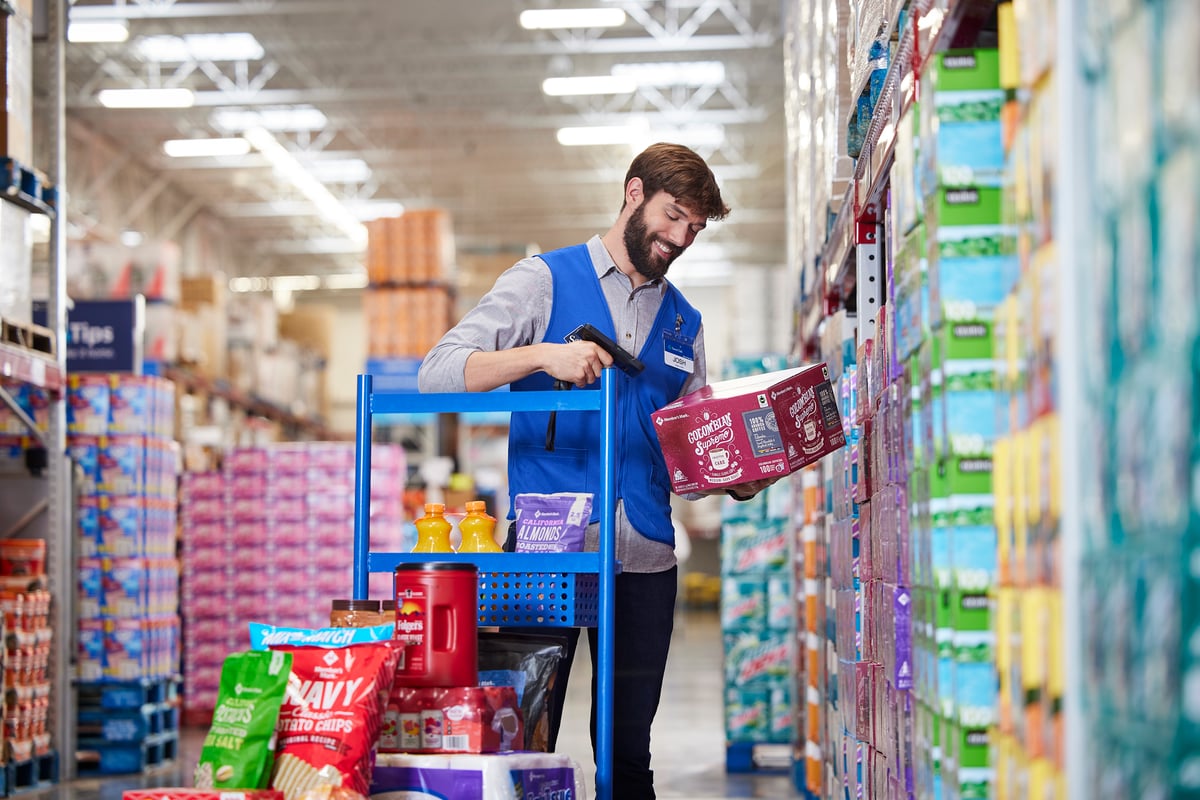
- Strong Performance Yet Stock Decline: Despite Walmart's fiscal Q1 2027 report showing a 7.3% year-over-year revenue increase and a 4.1% rise in U.S. comparable sales, its stock fell 12% in May, reflecting market concerns about future consumer pressures.
- E-commerce Market Share Growth: Walmart's e-commerce sales surged 26% year-over-year, with U.S. deliveries up 45%, indicating a significant advantage in leveraging its 5,200 stores for order fulfillment, thereby enhancing its competitive position in the retail market.
- Consumer Pressure Evident: CEO John Furner noted that consumers, particularly lower-income shoppers, are feeling pressure and seeking value from Walmart, a trend that could impact future sales performance, especially amid rising fuel prices.
- Investor Confidence in Long-term Stability: Despite facing short-term pressures, Walmart's status as a
See More

Walmart Reports Strong Q1 2027 Earnings Amid Consumer Stress
- E-commerce Surge: Walmart's e-commerce sales increased by 26% year-over-year, with some global locations achieving deliveries in just 13 minutes, showcasing its competitive edge in a rapidly evolving retail landscape, even as consumer stress rises.
- Robust Financial Performance: In Q1 2027, Walmart reported a 7.3% year-over-year revenue increase, a 4.1% rise in U.S. comparable sales, a 5% increase in operating income, and earnings per share rising from $0.61 to $0.66, indicating strong profitability despite economic pressures.
- Market Share Growth: Deliveries in the U.S. surged by 45%, with 36% of store orders fulfilled within three hours, leveraging its network of 5,200 stores to further solidify its leadership position in the e-commerce market.
- Consumer Pressure Noted: Despite strong results, Walmart executives highlighted that lower-income consumers are feeling pressure, with rising fuel prices causing average fill-ups to drop below 10 gallons for the first time in four years, potentially leading to upward pressure on retail prices, prompting investors to watch for future earnings updates.
See More

Amazon to Host Prime Day from June 23 to 26

- Sales Event Rescheduling: Amazon is shifting its annual Prime Day sales event from July to June 23-26, considering major holidays like the World Cup and U.S. Independence Day to boost sales and attract more consumers.
- Historical Sales Data: In 2025, the four-day Prime Day event drove $24.1 billion in U.S. online spending, highlighting the event's significance in the e-commerce market, with expectations for strong sales growth this year.
- Fresh Delivery Strategy: Amazon introduced free same-day delivery for perishables in August, and with Prime Day approaching, items like bananas and ice cream are increasingly appearing in member shopping carts, reflecting consumer demand for rapid delivery.
- Increased Competitive Pressure: In response to competitors like Walmart offering same-day delivery, Amazon aims to increase the proportion of fresh goods in its deliveries, anticipating that perishables and essentials will represent a larger share of its overall business.
See More
Walmart Limits Employee AI Access with Token System

- AI Usage Limitation: Walmart is now providing a fixed number of AI 'tokens' for employees, replacing the previous unlimited access, reflecting the rising computing costs companies face as AI tools become more prevalent.
- Productivity Enhancement: Code Puppy, Walmart's in-house AI assistant, is designed to assist employees with tasks such as creating presentations and analyzing spreadsheets, and despite the usage restrictions, the company continues to push for AI integration in productivity and supply chain operations.
- Industry Trends: As AI adoption accelerates, many companies are discovering that costs can escalate quickly; for instance, Uber reportedly exhausted its entire 2026 AI budget by April, prompting a reassessment of its AI spending assumptions.
- Market Sentiment Shift: Walmart's stock has gained over 15% in the past year, and retail sentiment on Stocktwits shifted from 'bullish' to 'extremely bullish', indicating investor confidence in the company's future AI strategy.
See More
Berkshire Acquires Taylor Morrison for $6.8 Billion, Marking Strategic Real Estate Move


- Acquisition Deal: Berkshire Hathaway has agreed to acquire Taylor Morrison Home for $6.8 billion, paying $72.50 per share in cash, which reflects a 24% premium over last week's closing price, marking a significant move under new CEO Greg Abel and further solidifying the company's position in the real estate sector.
- Market Reaction: Shares of Taylor Morrison surged approximately 22% in premarket trading, indicating a positive market response to the acquisition, despite Berkshire's B shares underperforming the S&P 500 by their largest margin this year.
- Startup Struggles: According to PitchBook, nearly half of U.S. unicorn startups have not raised funding in three years, with many once-billion-dollar companies like Glossier and The Farmer's Dog now classified as
See More
Tech Giants See Massive Market Value Surge
- Market Value Surge: Excluding Alphabet, the world's most valuable tech companies collectively added approximately $2.8 trillion in market value in May, primarily driven by optimistic earnings outlooks and strong demand for AI chips, indicating a potential recovery in the tech sector.
- Apple's Strong Performance: Apple announced a $100 billion share buyback at the end of April and highlighted strong demand for the iPhone 17 and MacBook Neo, leading to a market value increase of $598 billion, reaching $4.58 trillion, further solidifying its market leadership.
- Memory Chipmakers' Robust Growth: Micron Technology and Samsung Electronics saw their market values rise by $512 billion and $481 billion, respectively, fueled by Micron's high-bandwidth memory chips being sold out and Samsung's eightfold increase in first-quarter operating profit, showcasing a strong recovery in the semiconductor industry.
- Continued Growth for Nvidia and Microsoft: Nvidia and Microsoft experienced market value increases of $276 billion and $315 billion, reaching $5.11 trillion and $3.35 trillion, respectively, with Nvidia forecasting second-quarter revenue above expectations and announcing an $80 billion share repurchase program, further boosting investor confidence.
See More
Walmart Stock Drops 12% Amid Consumer Pressure
- Strong Performance Yet Stock Decline: Despite Walmart's fiscal Q1 2027 report showing a 7.3% year-over-year revenue increase and a 4.1% rise in U.S. comparable sales, its stock fell 12% in May, reflecting market concerns about future consumer pressures.
- E-commerce Market Share Growth: Walmart's e-commerce sales surged 26% year-over-year, with U.S. deliveries up 45%, indicating a significant advantage in leveraging its 5,200 stores for order fulfillment, thereby enhancing its competitive position in the retail market.
- Consumer Pressure Evident: CEO John Furner noted that consumers, particularly lower-income shoppers, are feeling pressure and seeking value from Walmart, a trend that could impact future sales performance, especially amid rising fuel prices.
- Investor Confidence in Long-term Stability: Despite facing short-term pressures, Walmart's status as a
See More
Walmart Reports Strong Q1 2027 Earnings Amid Consumer Stress
- E-commerce Surge: Walmart's e-commerce sales increased by 26% year-over-year, with some global locations achieving deliveries in just 13 minutes, showcasing its competitive edge in a rapidly evolving retail landscape, even as consumer stress rises.
- Robust Financial Performance: In Q1 2027, Walmart reported a 7.3% year-over-year revenue increase, a 4.1% rise in U.S. comparable sales, a 5% increase in operating income, and earnings per share rising from $0.61 to $0.66, indicating strong profitability despite economic pressures.
- Market Share Growth: Deliveries in the U.S. surged by 45%, with 36% of store orders fulfilled within three hours, leveraging its network of 5,200 stores to further solidify its leadership position in the e-commerce market.
- Consumer Pressure Noted: Despite strong results, Walmart executives highlighted that lower-income consumers are feeling pressure, with rising fuel prices causing average fill-ups to drop below 10 gallons for the first time in four years, potentially leading to upward pressure on retail prices, prompting investors to watch for future earnings updates.
See More
Amazon to Host Prime Day from June 23 to 26
- Sales Event Rescheduling: Amazon is shifting its annual Prime Day sales event from July to June 23-26, considering major holidays like the World Cup and U.S. Independence Day to boost sales and attract more consumers.
- Historical Sales Data: In 2025, the four-day Prime Day event drove $24.1 billion in U.S. online spending, highlighting the event's significance in the e-commerce market, with expectations for strong sales growth this year.
- Fresh Delivery Strategy: Amazon introduced free same-day delivery for perishables in August, and with Prime Day approaching, items like bananas and ice cream are increasingly appearing in member shopping carts, reflecting consumer demand for rapid delivery.
- Increased Competitive Pressure: In response to competitors like Walmart offering same-day delivery, Amazon aims to increase the proportion of fresh goods in its deliveries, anticipating that perishables and essentials will represent a larger share of its overall business.
See More
Walmart Limits Employee AI Access with Token System
- AI Usage Limitation: Walmart is now providing a fixed number of AI 'tokens' for employees, replacing the previous unlimited access, reflecting the rising computing costs companies face as AI tools become more prevalent.
- Productivity Enhancement: Code Puppy, Walmart's in-house AI assistant, is designed to assist employees with tasks such as creating presentations and analyzing spreadsheets, and despite the usage restrictions, the company continues to push for AI integration in productivity and supply chain operations.
- Industry Trends: As AI adoption accelerates, many companies are discovering that costs can escalate quickly; for instance, Uber reportedly exhausted its entire 2026 AI budget by April, prompting a reassessment of its AI spending assumptions.
- Market Sentiment Shift: Walmart's stock has gained over 15% in the past year, and retail sentiment on Stocktwits shifted from 'bullish' to 'extremely bullish', indicating investor confidence in the company's future AI strategy.
See More
Berkshire Acquires Taylor Morrison for $6.8 Billion, Marking Strategic Real Estate Move
- Acquisition Deal: Berkshire Hathaway has agreed to acquire Taylor Morrison Home for $6.8 billion, paying $72.50 per share in cash, which reflects a 24% premium over last week's closing price, marking a significant move under new CEO Greg Abel and further solidifying the company's position in the real estate sector.
- Market Reaction: Shares of Taylor Morrison surged approximately 22% in premarket trading, indicating a positive market response to the acquisition, despite Berkshire's B shares underperforming the S&P 500 by their largest margin this year.
- Startup Struggles: According to PitchBook, nearly half of U.S. unicorn startups have not raised funding in three years, with many once-billion-dollar companies like Glossier and The Farmer's Dog now classified as
See More