Costco's Resilience in a Volatile Market
Written by Emily J. Thompson, Senior Investment Analyst
Updated: 1 hour ago
0mins
Source: Fool
- High Membership Loyalty: Costco currently boasts 82.9 million paid memberships serving 149 million cardholders, and despite a price increase two summers ago, its renewal rate remains impressive at 92.2%, reflecting strong customer loyalty and platform stickiness.
- Stable Revenue Growth: Over the past 33 years, Costco has only experienced one revenue decline, a modest 1.5% during the Great Recession of 2009, demonstrating its resilience amid economic uncertainty with consistent positive growth.
- Consistent Dividend Growth: With 22 consecutive years of quarterly dividend increases, Costco showcases its stable cash flow and profitability, attracting investors despite a high current P/E ratio of 48, indicating long-term value potential.
- Robust Market Performance: Since its IPO in 1993, Costco's stock has appreciated 148-fold, and its one-year beta of just 0.02 indicates a very low correlation with market volatility, making it a suitable investment in a turbulent market environment.
Trade with 70% Backtested Accuracy
Stop guessing "Should I Buy COST?" and start using high-conviction signals backed by rigorous historical data.
Sign up today to access powerful investing tools and make smarter, data-driven decisions.
Analyst Views on COST
Wall Street analysts forecast COST stock price to rise
24 Analyst Rating
19 Buy
4 Hold
1 Sell
Strong Buy
Current: 942.240

Low
769.00
Averages
1061
High
1205
Current: 942.240
Low
769.00
Averages
1061
High
1205
About COST
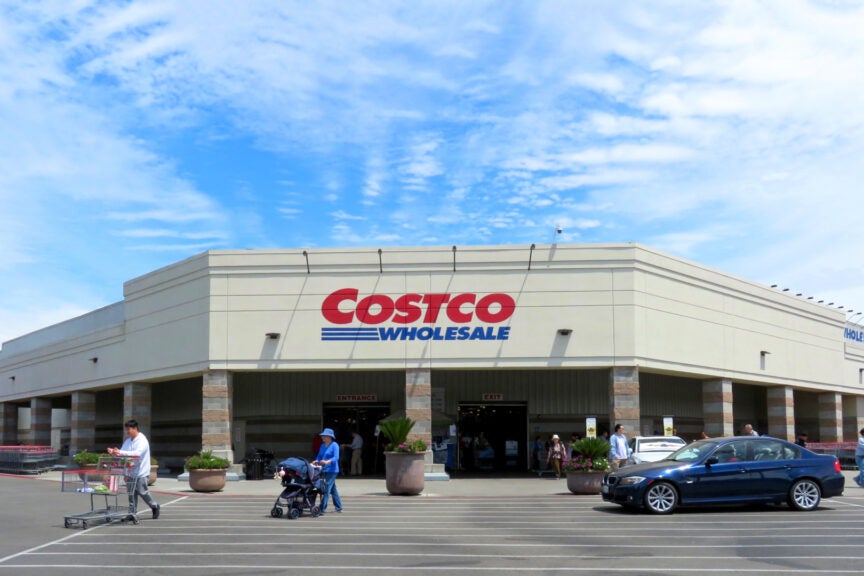
Costco Wholesale Corporation (Costco) operates membership warehouses and e-commerce sites that offer a selection of nationally branded and private-label products in a wide range of categories. The Company buys the majority of its merchandise directly from suppliers and route it to cross-docking consolidation points (depots) or directly to its warehouses. It operates 891 warehouses, including 614 in the United States and Puerto Rico, 108 in Canada, 40 in Mexico, 35 in Japan, 29 in the United Kingdom, 19 in Korea, 15 in Australia, 14 in Taiwan, seven in China, five in Spain, two in France, and one each in Iceland, New Zealand and Sweden. It also operates e-commerce sites in the United States, Canada, the United Kingdom, Mexico, Korea, Taiwan, Japan and Australia. The Company provides wide selection of merchandise, plus the convenience of specialty departments and exclusive member services.
About the author

Emily J. Thompson
Emily J. Thompson, a Chartered Financial Analyst (CFA) with 12 years in investment research, graduated with honors from the Wharton School. Specializing in industrial and technology stocks, she provides in-depth analysis for Intellectia’s earnings and market brief reports.

Costco's High Membership Loyalty and Steady Performance
- Strong Membership Base: Costco boasts 82.9 million paid memberships serving 149 million cardholders, reflecting its strong appeal and customer loyalty in the retail market, with an impressive renewal rate of 92.2% despite a membership price increase.
- Consistent Revenue Growth: Over the past 33 years, Costco has achieved revenue growth in 32 of those years, with the only exception being a modest 1.5% decline during the 2009 recession, indicating the resilience of its business model amid economic fluctuations.
- Stable Stock Performance: Although Costco's stock trades at a high price-to-earnings ratio of 48, indicating it is not cheap, its low volatility (1-year beta of 0.02) allows it to perform well during market swings, attracting investors seeking stable returns.
- Long Dividend History: With 22 consecutive years of increasing quarterly dividends, Costco demonstrates strong cash flow and profitability, providing substantial returns to investors over the long term and establishing itself as a reliable investment choice.
See More
Costco's Resilience in a Volatile Market
- High Membership Loyalty: Costco currently boasts 82.9 million paid memberships serving 149 million cardholders, and despite a price increase two summers ago, its renewal rate remains impressive at 92.2%, reflecting strong customer loyalty and platform stickiness.
- Stable Revenue Growth: Over the past 33 years, Costco has only experienced one revenue decline, a modest 1.5% during the Great Recession of 2009, demonstrating its resilience amid economic uncertainty with consistent positive growth.
- Consistent Dividend Growth: With 22 consecutive years of quarterly dividend increases, Costco showcases its stable cash flow and profitability, attracting investors despite a high current P/E ratio of 48, indicating long-term value potential.
- Robust Market Performance: Since its IPO in 1993, Costco's stock has appreciated 148-fold, and its one-year beta of just 0.02 indicates a very low correlation with market volatility, making it a suitable investment in a turbulent market environment.
See More

Walmart's Path to Rejoin the Trillion-Dollar Club


- Stable Revenue Growth: From fiscal 2022 to 2026, Walmart achieved compound annual growth rates of 5.6% in net sales and 5.3% in adjusted EPS, demonstrating resilience in the face of macro challenges like inflation and trade conflicts, which underscores its strong market position.
- Optimistic Future Outlook: For fiscal 2027, Walmart expects net sales to rise by 3.5%-4.5%, adjusted operating income to improve by 6%-8%, and adjusted EPS to grow by 4.2%-8%, indicating a positive growth outlook despite rising costs and weaker consumer sentiment.
- AI and Digital Upgrades: By enhancing its e-commerce platform, utilizing stores for online order fulfillment, launching more private-label products, and leveraging AI to improve shopping experiences, Walmart has strengthened its competitive edge against Amazon, maintaining its leadership in the retail sector.
- Market Valuation and Investment Opportunity: Currently valued at approximately $932 billion, if Walmart meets analysts' expectations for fiscal 2028 and maintains a 40x price-to-earnings ratio, its stock could rise by 13%, pushing its market cap above $1 trillion, making it an attractive investment for those looking at long-term growth potential.
See More

Walmart Exits $1 Trillion Club After Earnings Report
- Earnings Report Impact: Walmart dropped out of the $1 trillion club following its latest earnings report due to rising fuel and fulfillment costs, weaker consumer sentiment, and high valuation, indicating significant near-term challenges.
- Future Growth Outlook: For fiscal 2027, Walmart expects net sales to rise by 3.5%-4.5% and adjusted EPS to grow by 4.2%-8%, reflecting the company's stability and potential for long-term growth despite current headwinds.
- Competitive Strategy: Walmart continues to compete with Amazon by upgrading its e-commerce platform, expanding its Walmart+ subscription service, and leveraging AI to enhance the shopping experience, thereby maintaining market share and increasing customer loyalty.
- Stock Recovery Potential: Should Walmart meet analysts' expectations for fiscal 2028 in terms of revenue and EPS growth while trading at a forward P/E of 40, its market cap could rebound to $1.05 trillion, demonstrating investor confidence in its future prospects.
See More

Memory Chip Shortage Drives Up Consumer Electronics Prices

- Surging Memory Prices: The skyrocketing prices of memory chips, driven by massive demand for AI data centers, are projected to reduce global personal computer shipments by 10.4% and smartphone shipments by 8.4% in 2026, directly impacting costs for retailers and consumers alike.
- Apple's Price Increase Strategy: Apple announced price hikes for MacBooks and iPads to offset rising memory costs, indicating the company is facing unprecedented challenges, with potential for further price increases in the future.
- Best Buy's Market Expectations: Best Buy's new CEO stated that the computing division is expected to be most affected by price hikes, although increased inventory in Q1 helps mitigate short-term pressure, long-term price increases are inevitable.
- Shifts in Consumer Behavior: Analysts suggest that consumers may extend device upgrade cycles due to rising prices, leading to fundamental changes in upgrade patterns for products like smartphones, necessitating retailers to collaborate with suppliers to alleviate impacts on consumers.
See More

Costco Likely to Announce Special Dividend Soon
- Record Cash Reserves: Costco currently holds $20 billion in cash, an all-time high, which positions the company to potentially announce a new special dividend later this year, thereby enhancing shareholder returns.
- Significance of Special Dividends: The special dividend of $15.00 per share paid in January 2024 significantly exceeded the cumulative $11.54 in quarterly dividends from December 2020 to January 2024, highlighting the appeal of special dividends to shareholders.
- Dividend Growth Potential: Although Costco's quarterly dividend yield is only 0.56%, the company has raised its quarterly dividend for over 20 years, with the current quarterly dividend at $1.47 per share, indicating strong growth potential.
- Enhanced Long-Term Returns: Over the past decade, factoring in the reinvestment of quarterly and special dividends, the stock's total returns surged from 505% to 617%, demonstrating that dividend income and price appreciation can coexist, leading investors to remain optimistic about the future.
See More
Costco's High Membership Loyalty and Steady Performance
- Strong Membership Base: Costco boasts 82.9 million paid memberships serving 149 million cardholders, reflecting its strong appeal and customer loyalty in the retail market, with an impressive renewal rate of 92.2% despite a membership price increase.
- Consistent Revenue Growth: Over the past 33 years, Costco has achieved revenue growth in 32 of those years, with the only exception being a modest 1.5% decline during the 2009 recession, indicating the resilience of its business model amid economic fluctuations.
- Stable Stock Performance: Although Costco's stock trades at a high price-to-earnings ratio of 48, indicating it is not cheap, its low volatility (1-year beta of 0.02) allows it to perform well during market swings, attracting investors seeking stable returns.
- Long Dividend History: With 22 consecutive years of increasing quarterly dividends, Costco demonstrates strong cash flow and profitability, providing substantial returns to investors over the long term and establishing itself as a reliable investment choice.
See More
Costco's Resilience in a Volatile Market
- High Membership Loyalty: Costco currently boasts 82.9 million paid memberships serving 149 million cardholders, and despite a price increase two summers ago, its renewal rate remains impressive at 92.2%, reflecting strong customer loyalty and platform stickiness.
- Stable Revenue Growth: Over the past 33 years, Costco has only experienced one revenue decline, a modest 1.5% during the Great Recession of 2009, demonstrating its resilience amid economic uncertainty with consistent positive growth.
- Consistent Dividend Growth: With 22 consecutive years of quarterly dividend increases, Costco showcases its stable cash flow and profitability, attracting investors despite a high current P/E ratio of 48, indicating long-term value potential.
- Robust Market Performance: Since its IPO in 1993, Costco's stock has appreciated 148-fold, and its one-year beta of just 0.02 indicates a very low correlation with market volatility, making it a suitable investment in a turbulent market environment.
See More
Walmart's Path to Rejoin the Trillion-Dollar Club
- Stable Revenue Growth: From fiscal 2022 to 2026, Walmart achieved compound annual growth rates of 5.6% in net sales and 5.3% in adjusted EPS, demonstrating resilience in the face of macro challenges like inflation and trade conflicts, which underscores its strong market position.
- Optimistic Future Outlook: For fiscal 2027, Walmart expects net sales to rise by 3.5%-4.5%, adjusted operating income to improve by 6%-8%, and adjusted EPS to grow by 4.2%-8%, indicating a positive growth outlook despite rising costs and weaker consumer sentiment.
- AI and Digital Upgrades: By enhancing its e-commerce platform, utilizing stores for online order fulfillment, launching more private-label products, and leveraging AI to improve shopping experiences, Walmart has strengthened its competitive edge against Amazon, maintaining its leadership in the retail sector.
- Market Valuation and Investment Opportunity: Currently valued at approximately $932 billion, if Walmart meets analysts' expectations for fiscal 2028 and maintains a 40x price-to-earnings ratio, its stock could rise by 13%, pushing its market cap above $1 trillion, making it an attractive investment for those looking at long-term growth potential.
See More
Walmart Exits $1 Trillion Club After Earnings Report
- Earnings Report Impact: Walmart dropped out of the $1 trillion club following its latest earnings report due to rising fuel and fulfillment costs, weaker consumer sentiment, and high valuation, indicating significant near-term challenges.
- Future Growth Outlook: For fiscal 2027, Walmart expects net sales to rise by 3.5%-4.5% and adjusted EPS to grow by 4.2%-8%, reflecting the company's stability and potential for long-term growth despite current headwinds.
- Competitive Strategy: Walmart continues to compete with Amazon by upgrading its e-commerce platform, expanding its Walmart+ subscription service, and leveraging AI to enhance the shopping experience, thereby maintaining market share and increasing customer loyalty.
- Stock Recovery Potential: Should Walmart meet analysts' expectations for fiscal 2028 in terms of revenue and EPS growth while trading at a forward P/E of 40, its market cap could rebound to $1.05 trillion, demonstrating investor confidence in its future prospects.
See More
Memory Chip Shortage Drives Up Consumer Electronics Prices
- Surging Memory Prices: The skyrocketing prices of memory chips, driven by massive demand for AI data centers, are projected to reduce global personal computer shipments by 10.4% and smartphone shipments by 8.4% in 2026, directly impacting costs for retailers and consumers alike.
- Apple's Price Increase Strategy: Apple announced price hikes for MacBooks and iPads to offset rising memory costs, indicating the company is facing unprecedented challenges, with potential for further price increases in the future.
- Best Buy's Market Expectations: Best Buy's new CEO stated that the computing division is expected to be most affected by price hikes, although increased inventory in Q1 helps mitigate short-term pressure, long-term price increases are inevitable.
- Shifts in Consumer Behavior: Analysts suggest that consumers may extend device upgrade cycles due to rising prices, leading to fundamental changes in upgrade patterns for products like smartphones, necessitating retailers to collaborate with suppliers to alleviate impacts on consumers.
See More
Costco Likely to Announce Special Dividend Soon
- Record Cash Reserves: Costco currently holds $20 billion in cash, an all-time high, which positions the company to potentially announce a new special dividend later this year, thereby enhancing shareholder returns.
- Significance of Special Dividends: The special dividend of $15.00 per share paid in January 2024 significantly exceeded the cumulative $11.54 in quarterly dividends from December 2020 to January 2024, highlighting the appeal of special dividends to shareholders.
- Dividend Growth Potential: Although Costco's quarterly dividend yield is only 0.56%, the company has raised its quarterly dividend for over 20 years, with the current quarterly dividend at $1.47 per share, indicating strong growth potential.
- Enhanced Long-Term Returns: Over the past decade, factoring in the reinvestment of quarterly and special dividends, the stock's total returns surged from 505% to 617%, demonstrating that dividend income and price appreciation can coexist, leading investors to remain optimistic about the future.
See More