Coca-Cola and P&G Maintain Dividend King Status Amid Global Challenges
Written by Emily J. Thompson, Senior Investment Analyst
Updated: 1 day ago
0mins
Source: Fool
- Stable Dividend Growth: Both Coca-Cola and Procter & Gamble are Dividend Kings, having increased dividends for over 50 consecutive years, demonstrating resilience and reliability through economic cycles, which attracts long-term investors.
- Strong Market Performance: Coca-Cola's current stock price is $80.82 with a market cap of $348 billion and a dividend yield of 2.55%, while Procter & Gamble's stock price is $141.68 with a market cap of $330 billion and a yield of 3.01%, both trading below their five-year average P/E ratios, indicating relative fair valuation.
- Consumer Goods Sector Advantage: Their strong brand presence and marketing capabilities in the consumer goods sector allow both companies to maintain stable sales even amid economic uncertainties, as consumer demand for everyday products remains consistent during downturns.
- Increased Investment Appeal: Amid current trade wars, geopolitical conflicts, and rising energy prices, Coca-Cola and P&G's dividend yields of 2.7% and 2.9%, respectively, are significantly more attractive compared to the S&P 500's yield of 1.1%, making them preferred options for conservative investors.
Trade with 70% Backtested Accuracy
Stop guessing "Should I Buy KO?" and start using high-conviction signals backed by rigorous historical data.
Sign up today to access powerful investing tools and make smarter, data-driven decisions.
Analyst Views on KO
Wall Street analysts forecast KO stock price to fall
14 Analyst Rating
13 Buy
1 Hold
0 Sell
Strong Buy
Current: 80.450

Low
71.00
Averages
79.33
High
85.00
Current: 80.450
Low
71.00
Averages
79.33
High
85.00
About KO
The Coca-Cola Company is a beverage company. The Company's segments include Europe, Middle East and Africa (EMEA); Latin America; North America; Asia Pacific, and Bottling Investments. It sells multiple brands across several beverage categories worldwide. Its portfolio of sparkling soft drink brands includes Coca-Cola, Sprite and Fanta. Its water, sports, coffee and tea brands include Dasani, smartwater, vitaminwater, Topo Chico, BODYARMOR, Powerade, Costa, Georgia, Fuze Tea, Gold Peak and Ayataka. Its juice, value-added dairy and plant-based beverage brands include Minute Maid, Simply, innocent, Del Valle, fairlife and Santa Clara. It operates in two lines of business: concentrate operations and finished product operations. Its concentrate operations sell beverage concentrates, syrups, including fountain syrups, and certain finished beverages to authorized bottling operations. Its finished product operations sell sparkling soft drinks and a variety of other finished beverages.
About the author

Emily J. Thompson
Emily J. Thompson, a Chartered Financial Analyst (CFA) with 12 years in investment research, graduated with honors from the Wharton School. Specializing in industrial and technology stocks, she provides in-depth analysis for Intellectia’s earnings and market brief reports.
Coca-Cola Stock Continues Strong Performance

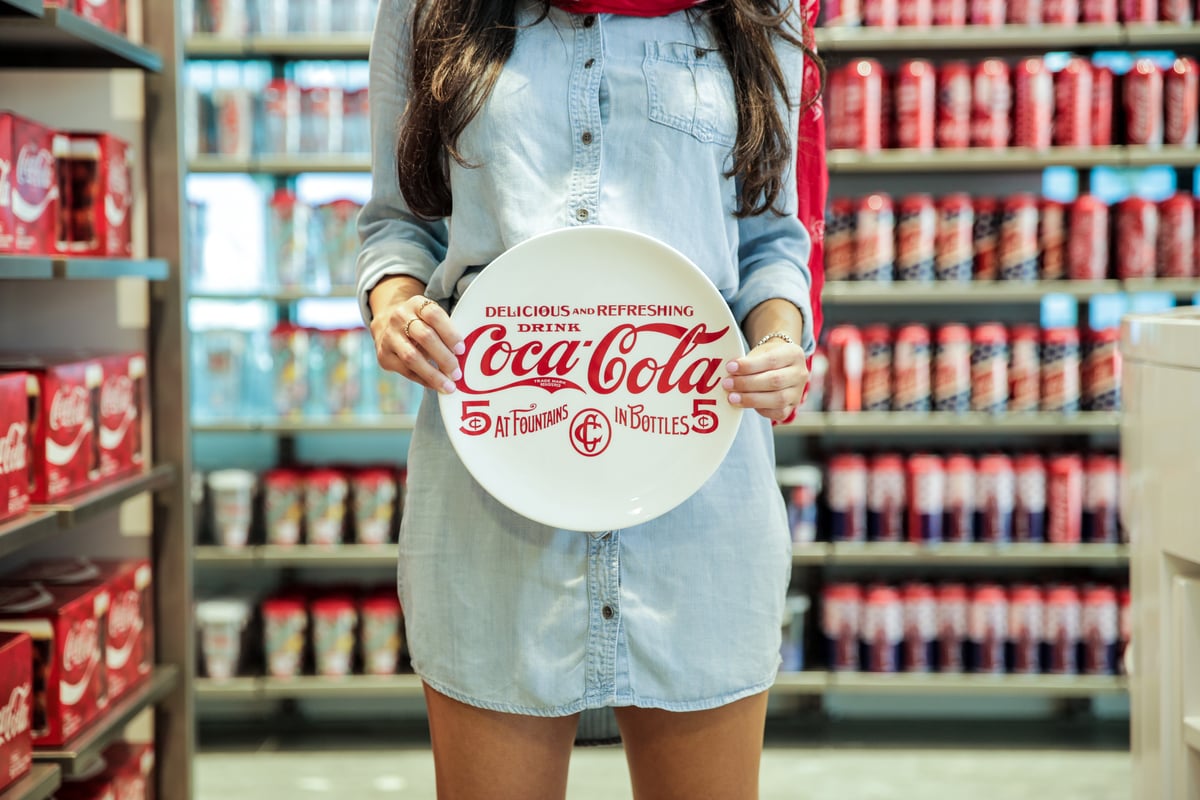
- Brand Expansion Strategy: Over the past decades, Coca-Cola has launched and acquired various beverage brands, including bottled water, tea, fruit juices, and energy drinks, enabling consistent earnings growth despite declining soda consumption rates in several markets.
- Profitability Maintenance: By selling only concentrates and syrups to independent bottlers, Coca-Cola maintains a high gross margin of 61.82%, which reduces risks associated with the capital-intensive production and distribution processes.
- Robust Financial Performance: From 2020 to 2025, Coca-Cola's comparable EPS rose from $1.95 to $3.00, while adjusted free cash flow increased from $8.7 billion to $11.4 billion, demonstrating resilience against inflation and macroeconomic pressures.
- Dividend Appeal: Coca-Cola's stock trades at a forward P/E of 24, offers a 2.6% forward dividend yield, and has raised its dividend for 64 consecutive years, highlighting its attractiveness as a safe investment.
See More
Analysis of Three Stable Dividend Stocks

- Walmart's Market Advantage: With a vast network of 5,212 U.S. retail units and a 15.1% growth in global membership revenue, Walmart demonstrates strong market competitiveness, ensuring the safety of its dividend payments and long-term growth potential.
- Coca-Cola's Brand Power: Coca-Cola, with a 64-year dividend growth history and a gross margin of 61.82%, consistently maintains stable dividend returns amid economic fluctuations; although its annual growth rate is modest, its dividend appeal remains strong.
- McDonald's Asset-Light Model: By owning most of its restaurant real estate and charging franchisees rent, McDonald's showcases higher profit margins than traditional restaurant chains; while it has not yet reached
See More

Berkshire's 13-F Filing Under New CEO Reveals Strategic Investment Shifts


- Stable Apple Holdings: Berkshire maintained its stake in Apple at approximately 228 million shares, which, while below the historical peak of over 900 million shares, still represents 22% of its equity portfolio, reflecting confidence in Apple's long-term value.
- Significant Google Investment: Berkshire's share count in Alphabet surged from about 17.85 million to roughly 58 million, pushing the position's value to nearly $17 billion, indicating CEO Abel's strong confidence and willingness to invest in tech stocks.
- Exploration of New Investment Areas: The new $2.65 billion stake in Delta Air Lines and a minor position in Macy's signal Abel's readiness to enter sectors previously avoided by Buffett, further diversifying the investment portfolio.
- Aggressive Sell-offs: Berkshire exited positions in Amazon, Visa, Mastercard, and others, while slashing its stake in Constellation Brands by 95%, indicating Abel's intent to reshape the investment strategy and reinforce his personal style.
See More

Coca-Cola and P&G Maintain Dividend King Status Amid Global Challenges
- Stable Dividend Growth: Both Coca-Cola and Procter & Gamble are Dividend Kings, having increased dividends for over 50 consecutive years, demonstrating resilience and reliability through economic cycles, which attracts long-term investors.
- Strong Market Performance: Coca-Cola's current stock price is $80.82 with a market cap of $348 billion and a dividend yield of 2.55%, while Procter & Gamble's stock price is $141.68 with a market cap of $330 billion and a yield of 3.01%, both trading below their five-year average P/E ratios, indicating relative fair valuation.
- Consumer Goods Sector Advantage: Their strong brand presence and marketing capabilities in the consumer goods sector allow both companies to maintain stable sales even amid economic uncertainties, as consumer demand for everyday products remains consistent during downturns.
- Increased Investment Appeal: Amid current trade wars, geopolitical conflicts, and rising energy prices, Coca-Cola and P&G's dividend yields of 2.7% and 2.9%, respectively, are significantly more attractive compared to the S&P 500's yield of 1.1%, making them preferred options for conservative investors.
See More

Magnificent Seven Drives Market Recovery

- Significant Market Cap Growth: Since April 2023, the combined market cap of the Magnificent Seven has increased by $4.8 trillion, accounting for about 7% of the total S&P 500 market cap, highlighting their dominant position and robust profitability in the market.
- Earnings-Driven Growth: As of May 14, 2026, companies like Nvidia, Alphabet, and Apple saw their market caps rise by 35.2%, 39.7%, and 17.6% respectively, indicating that their stock prices are propelled by sustained revenue growth and high margins.
- Concentration Risk: As of April 30, 35% of the S&P 500 is composed of tech stocks, reflecting a heavy reliance on a few companies, which could lead to increased market volatility, especially if the AI investment narrative cools down.
- Investment Strategy Adjustment: Investors should consider alternative investment vehicles like equal-weight ETFs to reduce excessive exposure to growth stocks, thereby protecting portfolio stability during market fluctuations.
See More

Buffett Officially Hands CEO Role to Abel
- Leadership Transition: Warren Buffett officially handed over the CEO role to Greg Abel at the end of 2025, while remaining as executive chairman and largest shareholder of Berkshire Hathaway, ensuring his influence over the $284 billion equity portfolio continues.
- Portfolio Overview: As of December 31, 2025, Berkshire's portfolio shows Apple at 22.6% and American Express at 20.5%, highlighting Buffett's definition of a 'wonderful business' and his long-term investment strategy.
- Coca-Cola's Competitive Edge: Coca-Cola, a core holding since 1988, exemplifies Buffett's investment philosophy with its unmatched global brand and strong market moat, demonstrating enduring business value and competitive advantage.
- American Express's Resilience: American Express, functioning as both a payment network and a bank, showcases strong recession resistance due to its premium brand and customer loyalty, with Buffett investing since 1964, reflecting his preference for stable cash flows.
See More
Coca-Cola Stock Continues Strong Performance
- Brand Expansion Strategy: Over the past decades, Coca-Cola has launched and acquired various beverage brands, including bottled water, tea, fruit juices, and energy drinks, enabling consistent earnings growth despite declining soda consumption rates in several markets.
- Profitability Maintenance: By selling only concentrates and syrups to independent bottlers, Coca-Cola maintains a high gross margin of 61.82%, which reduces risks associated with the capital-intensive production and distribution processes.
- Robust Financial Performance: From 2020 to 2025, Coca-Cola's comparable EPS rose from $1.95 to $3.00, while adjusted free cash flow increased from $8.7 billion to $11.4 billion, demonstrating resilience against inflation and macroeconomic pressures.
- Dividend Appeal: Coca-Cola's stock trades at a forward P/E of 24, offers a 2.6% forward dividend yield, and has raised its dividend for 64 consecutive years, highlighting its attractiveness as a safe investment.
See More
Analysis of Three Stable Dividend Stocks
- Walmart's Market Advantage: With a vast network of 5,212 U.S. retail units and a 15.1% growth in global membership revenue, Walmart demonstrates strong market competitiveness, ensuring the safety of its dividend payments and long-term growth potential.
- Coca-Cola's Brand Power: Coca-Cola, with a 64-year dividend growth history and a gross margin of 61.82%, consistently maintains stable dividend returns amid economic fluctuations; although its annual growth rate is modest, its dividend appeal remains strong.
- McDonald's Asset-Light Model: By owning most of its restaurant real estate and charging franchisees rent, McDonald's showcases higher profit margins than traditional restaurant chains; while it has not yet reached
See More
Berkshire's 13-F Filing Under New CEO Reveals Strategic Investment Shifts
- Stable Apple Holdings: Berkshire maintained its stake in Apple at approximately 228 million shares, which, while below the historical peak of over 900 million shares, still represents 22% of its equity portfolio, reflecting confidence in Apple's long-term value.
- Significant Google Investment: Berkshire's share count in Alphabet surged from about 17.85 million to roughly 58 million, pushing the position's value to nearly $17 billion, indicating CEO Abel's strong confidence and willingness to invest in tech stocks.
- Exploration of New Investment Areas: The new $2.65 billion stake in Delta Air Lines and a minor position in Macy's signal Abel's readiness to enter sectors previously avoided by Buffett, further diversifying the investment portfolio.
- Aggressive Sell-offs: Berkshire exited positions in Amazon, Visa, Mastercard, and others, while slashing its stake in Constellation Brands by 95%, indicating Abel's intent to reshape the investment strategy and reinforce his personal style.
See More
Coca-Cola and P&G Maintain Dividend King Status Amid Global Challenges
- Stable Dividend Growth: Both Coca-Cola and Procter & Gamble are Dividend Kings, having increased dividends for over 50 consecutive years, demonstrating resilience and reliability through economic cycles, which attracts long-term investors.
- Strong Market Performance: Coca-Cola's current stock price is $80.82 with a market cap of $348 billion and a dividend yield of 2.55%, while Procter & Gamble's stock price is $141.68 with a market cap of $330 billion and a yield of 3.01%, both trading below their five-year average P/E ratios, indicating relative fair valuation.
- Consumer Goods Sector Advantage: Their strong brand presence and marketing capabilities in the consumer goods sector allow both companies to maintain stable sales even amid economic uncertainties, as consumer demand for everyday products remains consistent during downturns.
- Increased Investment Appeal: Amid current trade wars, geopolitical conflicts, and rising energy prices, Coca-Cola and P&G's dividend yields of 2.7% and 2.9%, respectively, are significantly more attractive compared to the S&P 500's yield of 1.1%, making them preferred options for conservative investors.
See More
Magnificent Seven Drives Market Recovery
- Significant Market Cap Growth: Since April 2023, the combined market cap of the Magnificent Seven has increased by $4.8 trillion, accounting for about 7% of the total S&P 500 market cap, highlighting their dominant position and robust profitability in the market.
- Earnings-Driven Growth: As of May 14, 2026, companies like Nvidia, Alphabet, and Apple saw their market caps rise by 35.2%, 39.7%, and 17.6% respectively, indicating that their stock prices are propelled by sustained revenue growth and high margins.
- Concentration Risk: As of April 30, 35% of the S&P 500 is composed of tech stocks, reflecting a heavy reliance on a few companies, which could lead to increased market volatility, especially if the AI investment narrative cools down.
- Investment Strategy Adjustment: Investors should consider alternative investment vehicles like equal-weight ETFs to reduce excessive exposure to growth stocks, thereby protecting portfolio stability during market fluctuations.
See More
Buffett Officially Hands CEO Role to Abel
- Leadership Transition: Warren Buffett officially handed over the CEO role to Greg Abel at the end of 2025, while remaining as executive chairman and largest shareholder of Berkshire Hathaway, ensuring his influence over the $284 billion equity portfolio continues.
- Portfolio Overview: As of December 31, 2025, Berkshire's portfolio shows Apple at 22.6% and American Express at 20.5%, highlighting Buffett's definition of a 'wonderful business' and his long-term investment strategy.
- Coca-Cola's Competitive Edge: Coca-Cola, a core holding since 1988, exemplifies Buffett's investment philosophy with its unmatched global brand and strong market moat, demonstrating enduring business value and competitive advantage.
- American Express's Resilience: American Express, functioning as both a payment network and a bank, showcases strong recession resistance due to its premium brand and customer loyalty, with Buffett investing since 1964, reflecting his preference for stable cash flows.
See More