Chinese EV Manufacturers' Competitive Edge Over Western Automakers
Written by Emily J. Thompson, Senior Investment Analyst
Updated: 1 hour ago
0mins

Source: CNBC
- Structural Advantages: A report from Rhodium Group indicates that the competitive edge of Chinese EV manufacturers stems primarily from vertical integration, production scale, and lower overhead costs rather than solely relying on government subsidies, challenging the Western narrative on Chinese subsidies.
- Subsidies and Profit Margins: Since 2009, the Chinese government has provided over $29 billion in subsidies to EV manufacturers, which, while critical in early development, have a relatively minor impact on profit margins compared to structural cost advantages.
- BYD's Cost Edge: BYD produces nearly 80% of its core components in-house, allowing it to save approximately $2,369 in supplier markups per unit of its Seal sedan, resulting in a 20% gross profit margin in 2025, surpassing Tesla's 18%.
- Industry Integration Trends: While not all Chinese EV manufacturers exhibit vertical integration, companies like BYD and Leapmotor stand out, highlighting the potential for cost control and production efficiency among Chinese manufacturers.
Trade with 70% Backtested Accuracy
Stop guessing "Should I Buy BA?" and start using high-conviction signals backed by rigorous historical data.
Sign up today to access powerful investing tools and make smarter, data-driven decisions.
Analyst Views on BA
Wall Street analysts forecast BA stock price to rise
16 Analyst Rating
14 Buy
1 Hold
1 Sell
Strong Buy
Current: 227.310

Low
150.00
Averages
269.14
High
298.00
Current: 227.310
Low
150.00
Averages
269.14
High
298.00
About BA
The Boeing Company is an aerospace company. Its segments include Commercial Airplanes (BCA), Defense, Space & Security (BDS), and Global Services (BGS). Its BCA segment develops, produces and markets commercial jet aircraft principally for the commercial airline industry worldwide. Its family of commercial jet aircraft in production includes the 737 narrow-body model and the 767, 777 and 787 wide-body models. Its BDS segment is engaged in the research, development, production and modification of manned and unmanned military aircraft and weapons systems for strike, surveillance and mobility. Its BGS segment provides services to its commercial and defense customers worldwide. It sustains aerospace platforms and systems with a range of products and services, including supply chain and logistics management, engineering, maintenance and modifications, upgrades and conversions, spare parts, pilot and maintenance training systems and services, technical and maintenance documents, and others.
About the author

Emily J. Thompson
Emily J. Thompson, a Chartered Financial Analyst (CFA) with 12 years in investment research, graduated with honors from the Wharton School. Specializing in industrial and technology stocks, she provides in-depth analysis for Intellectia’s earnings and market brief reports.
Chinese EV Manufacturers' Competitive Edge Over Western Automakers


- Structural Advantages: A report from Rhodium Group indicates that the competitive edge of Chinese EV manufacturers stems primarily from vertical integration, production scale, and lower overhead costs rather than solely relying on government subsidies, challenging the Western narrative on Chinese subsidies.
- Subsidies and Profit Margins: Since 2009, the Chinese government has provided over $29 billion in subsidies to EV manufacturers, which, while critical in early development, have a relatively minor impact on profit margins compared to structural cost advantages.
- BYD's Cost Edge: BYD produces nearly 80% of its core components in-house, allowing it to save approximately $2,369 in supplier markups per unit of its Seal sedan, resulting in a 20% gross profit margin in 2025, surpassing Tesla's 18%.
- Industry Integration Trends: While not all Chinese EV manufacturers exhibit vertical integration, companies like BYD and Leapmotor stand out, highlighting the potential for cost control and production efficiency among Chinese manufacturers.
See More
Asia-Pacific Markets Set to Open Lower Amid Rising Oil Prices


- Rising Oil Prices: The Iran conflict has pushed oil prices above $80 per barrel, with Brent futures rising 3.54% to $84.31, directly impacting global market sentiment and potentially causing volatility in related energy stocks.
- Global Trade Uncertainty: New York Attorney General and 23 state prosecutors have sued to block Trump's global tariff regime, following a ruling that companies are entitled to tariff refunds, which could exacerbate market concerns over trade policies.
- Australian Market Decline: Australia's S&P/ASX 200 index fell 1.15% in early trading, primarily dragged down by basic materials stocks, reflecting investor concerns over economic slowdown that may influence future investment decisions.
- U.S. Market Pullback: All three major U.S. indexes declined, with the Dow Jones Industrial Average falling 1.61%, indicating market sensitivity to global economic slowdown, particularly affecting companies like Boeing and Caterpillar, which may lead to further downward pressure in Asia-Pacific markets.
See More
House Rejects Resolution to Limit Trump's Military Authority in Iran

- House Vote Outcome: The House of Representatives rejected a resolution to limit President Trump's military authority in Iran with a vote of 212 to 219, indicating Congress's current unwillingness to restrain Trump's military actions, which could lead to further military interventions.
- Partisan Divisions: The vote saw four Democrats joining Republicans to oppose the resolution, while two Republicans supported it, reflecting deep divisions within Congress regarding Iran policy that may impact future legislative processes.
- Symbolic Vote: Although the vote lacks substantive legal impact, it demonstrates Congress's failure to provide checks on Trump's military actions in Iran, potentially allowing him to expand military operations without congressional approval.
- Constitutional Power Dispute: Democrats and some Republicans argue that Trump requires congressional approval for military operations, as the Constitution grants war declaration authority to Congress, a dispute that may spark broader political discussions and legal challenges.
See More
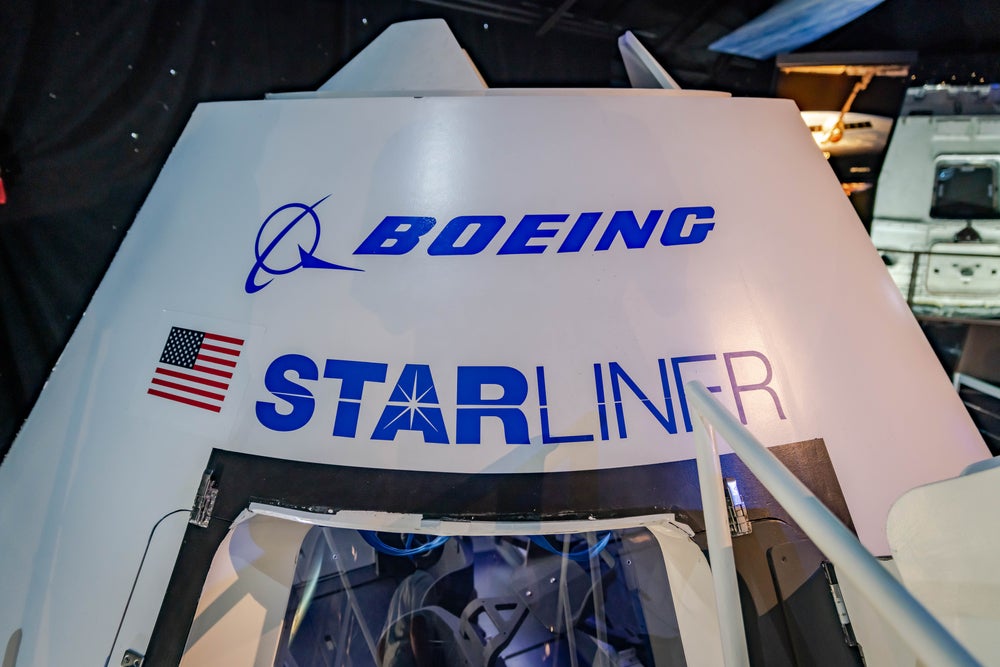
Boeing Shares Under Pressure Amid Aviation Industry Turmoil
- Global Aviation Turmoil: The U.S.-Israel strikes on Iran have led to over 20,000 flight cancellations and more than one million travelers stranded, creating unprecedented chaos in the aviation industry that negatively impacts Boeing's market performance.
- Rising Operational Costs: Airlines are incurring increased fuel and operational costs due to rerouting and canceling flights, which will likely be passed on to consumers in the form of higher ticket prices, potentially dampening travel demand.
- Stock Technical Analysis: Boeing shares are currently trading 6.3% below their 20-day simple moving average but 1% above the 100-day moving average, indicating short-term weakness despite a 35.08% increase over the past 12 months.
- Analyst Ratings and Targets: Boeing stock carries a 'Buy' rating with an average price target of $252.00, and recent analyst upgrades to target prices reflect confidence in Boeing's future performance, even as it faces short-term pressures.
See More

Iran's Foreign Minister Rejects Ceasefire Negotiations


- Clear Stance on War: Iranian Foreign Minister Abbas Araghchi stated in a press conference that Iran is not seeking a ceasefire with the U.S. and Israel and sees no reason to negotiate, indicating a hardline position that may prolong the ongoing conflict.
- Confidence Against U.S. Military: Araghchi expressed confidence in Iran's ability to confront a potential U.S. military invasion, claiming it would be a significant disaster for the U.S., showcasing Iran's assertiveness and challenge to U.S. strategic intentions.
- U.S. Goals Unachieved: He pointed out that the U.S. has failed to achieve its main objective of a quick victory in its military actions against Iran, which could impact U.S. strategic positioning in the Middle East and prompt a reassessment of its policies.
- Clarification on Neighbor Relations: Araghchi emphasized that Iran has not attacked neighboring countries but has targeted American installations, aiming to clear misunderstandings with Arab neighbors and demonstrating a cautious approach to regional relations.
See More

Uber and Joby Launch Air Travel Service with eVTOLs


- Launch of Air Travel Service: Uber and Joby Aviation have announced the launch of Uber Air, allowing passengers to book Joby's electric vertical takeoff and landing (eVTOL) flights, with the first flights planned in Dubai later this year, marking a strategic collaboration in the air travel sector.
- FAA Certification Progress: Joby is actively working towards obtaining FAA certification by 2026, and despite competition from Boeing's subsidiary Wisk, Joby is widely regarded as leading in the certification race, potentially enabling it to commence commercial operations ahead of competitors.
- Technological Collaboration and Innovation: Joby is partnering with Nvidia to develop autonomous flight capabilities, aiming to enhance flight safety and transition towards autonomous operations, which not only strengthens its competitive position in the TaaS market but may also allow it to capture market share in the future.
- Increased Investment Appeal: Joby's business model is viewed as high-risk, high-reward; although it may lag behind Archer in FAA certification, partnerships with Delta and Toyota mitigate risks while enhancing investment attractiveness, likely drawing more customers to its TaaS model.
See More
Chinese EV Manufacturers' Competitive Edge Over Western Automakers
- Structural Advantages: A report from Rhodium Group indicates that the competitive edge of Chinese EV manufacturers stems primarily from vertical integration, production scale, and lower overhead costs rather than solely relying on government subsidies, challenging the Western narrative on Chinese subsidies.
- Subsidies and Profit Margins: Since 2009, the Chinese government has provided over $29 billion in subsidies to EV manufacturers, which, while critical in early development, have a relatively minor impact on profit margins compared to structural cost advantages.
- BYD's Cost Edge: BYD produces nearly 80% of its core components in-house, allowing it to save approximately $2,369 in supplier markups per unit of its Seal sedan, resulting in a 20% gross profit margin in 2025, surpassing Tesla's 18%.
- Industry Integration Trends: While not all Chinese EV manufacturers exhibit vertical integration, companies like BYD and Leapmotor stand out, highlighting the potential for cost control and production efficiency among Chinese manufacturers.
See More
Asia-Pacific Markets Set to Open Lower Amid Rising Oil Prices
- Rising Oil Prices: The Iran conflict has pushed oil prices above $80 per barrel, with Brent futures rising 3.54% to $84.31, directly impacting global market sentiment and potentially causing volatility in related energy stocks.
- Global Trade Uncertainty: New York Attorney General and 23 state prosecutors have sued to block Trump's global tariff regime, following a ruling that companies are entitled to tariff refunds, which could exacerbate market concerns over trade policies.
- Australian Market Decline: Australia's S&P/ASX 200 index fell 1.15% in early trading, primarily dragged down by basic materials stocks, reflecting investor concerns over economic slowdown that may influence future investment decisions.
- U.S. Market Pullback: All three major U.S. indexes declined, with the Dow Jones Industrial Average falling 1.61%, indicating market sensitivity to global economic slowdown, particularly affecting companies like Boeing and Caterpillar, which may lead to further downward pressure in Asia-Pacific markets.
See More
House Rejects Resolution to Limit Trump's Military Authority in Iran
- House Vote Outcome: The House of Representatives rejected a resolution to limit President Trump's military authority in Iran with a vote of 212 to 219, indicating Congress's current unwillingness to restrain Trump's military actions, which could lead to further military interventions.
- Partisan Divisions: The vote saw four Democrats joining Republicans to oppose the resolution, while two Republicans supported it, reflecting deep divisions within Congress regarding Iran policy that may impact future legislative processes.
- Symbolic Vote: Although the vote lacks substantive legal impact, it demonstrates Congress's failure to provide checks on Trump's military actions in Iran, potentially allowing him to expand military operations without congressional approval.
- Constitutional Power Dispute: Democrats and some Republicans argue that Trump requires congressional approval for military operations, as the Constitution grants war declaration authority to Congress, a dispute that may spark broader political discussions and legal challenges.
See More
Boeing Shares Under Pressure Amid Aviation Industry Turmoil
- Global Aviation Turmoil: The U.S.-Israel strikes on Iran have led to over 20,000 flight cancellations and more than one million travelers stranded, creating unprecedented chaos in the aviation industry that negatively impacts Boeing's market performance.
- Rising Operational Costs: Airlines are incurring increased fuel and operational costs due to rerouting and canceling flights, which will likely be passed on to consumers in the form of higher ticket prices, potentially dampening travel demand.
- Stock Technical Analysis: Boeing shares are currently trading 6.3% below their 20-day simple moving average but 1% above the 100-day moving average, indicating short-term weakness despite a 35.08% increase over the past 12 months.
- Analyst Ratings and Targets: Boeing stock carries a 'Buy' rating with an average price target of $252.00, and recent analyst upgrades to target prices reflect confidence in Boeing's future performance, even as it faces short-term pressures.
See More
Iran's Foreign Minister Rejects Ceasefire Negotiations
- Clear Stance on War: Iranian Foreign Minister Abbas Araghchi stated in a press conference that Iran is not seeking a ceasefire with the U.S. and Israel and sees no reason to negotiate, indicating a hardline position that may prolong the ongoing conflict.
- Confidence Against U.S. Military: Araghchi expressed confidence in Iran's ability to confront a potential U.S. military invasion, claiming it would be a significant disaster for the U.S., showcasing Iran's assertiveness and challenge to U.S. strategic intentions.
- U.S. Goals Unachieved: He pointed out that the U.S. has failed to achieve its main objective of a quick victory in its military actions against Iran, which could impact U.S. strategic positioning in the Middle East and prompt a reassessment of its policies.
- Clarification on Neighbor Relations: Araghchi emphasized that Iran has not attacked neighboring countries but has targeted American installations, aiming to clear misunderstandings with Arab neighbors and demonstrating a cautious approach to regional relations.
See More
Uber and Joby Launch Air Travel Service with eVTOLs
- Launch of Air Travel Service: Uber and Joby Aviation have announced the launch of Uber Air, allowing passengers to book Joby's electric vertical takeoff and landing (eVTOL) flights, with the first flights planned in Dubai later this year, marking a strategic collaboration in the air travel sector.
- FAA Certification Progress: Joby is actively working towards obtaining FAA certification by 2026, and despite competition from Boeing's subsidiary Wisk, Joby is widely regarded as leading in the certification race, potentially enabling it to commence commercial operations ahead of competitors.
- Technological Collaboration and Innovation: Joby is partnering with Nvidia to develop autonomous flight capabilities, aiming to enhance flight safety and transition towards autonomous operations, which not only strengthens its competitive position in the TaaS market but may also allow it to capture market share in the future.
- Increased Investment Appeal: Joby's business model is viewed as high-risk, high-reward; although it may lag behind Archer in FAA certification, partnerships with Delta and Toyota mitigate risks while enhancing investment attractiveness, likely drawing more customers to its TaaS model.
See More