BP to Lock Out 800 Workers at Indiana Refinery Amid Labor Dispute
Written by Emily J. Thompson, Senior Investment Analyst
Updated: 1 hour ago
0mins
Should l Buy BP?
Source: seekingalpha
- Lockout Decision: BP announced it will lock out approximately 800 United Steelworkers members at its Whiting, Indiana refinery starting at midnight on March 19, indicating escalating tensions between the company and the union amid failed labor negotiations.
- Negotiation Breakdown: Over several months, the union rejected BP's key proposals twice without addressing the company's primary concerns regarding the long-term sustainability of the refinery, highlighting significant disagreements on core issues.
- Job Cuts Controversy: The union criticized BP's proposed workplace changes as unacceptable, including the elimination of over 200 union jobs and the removal of certain workplace protections, which could lead to decreased employee morale and impact operational efficiency.
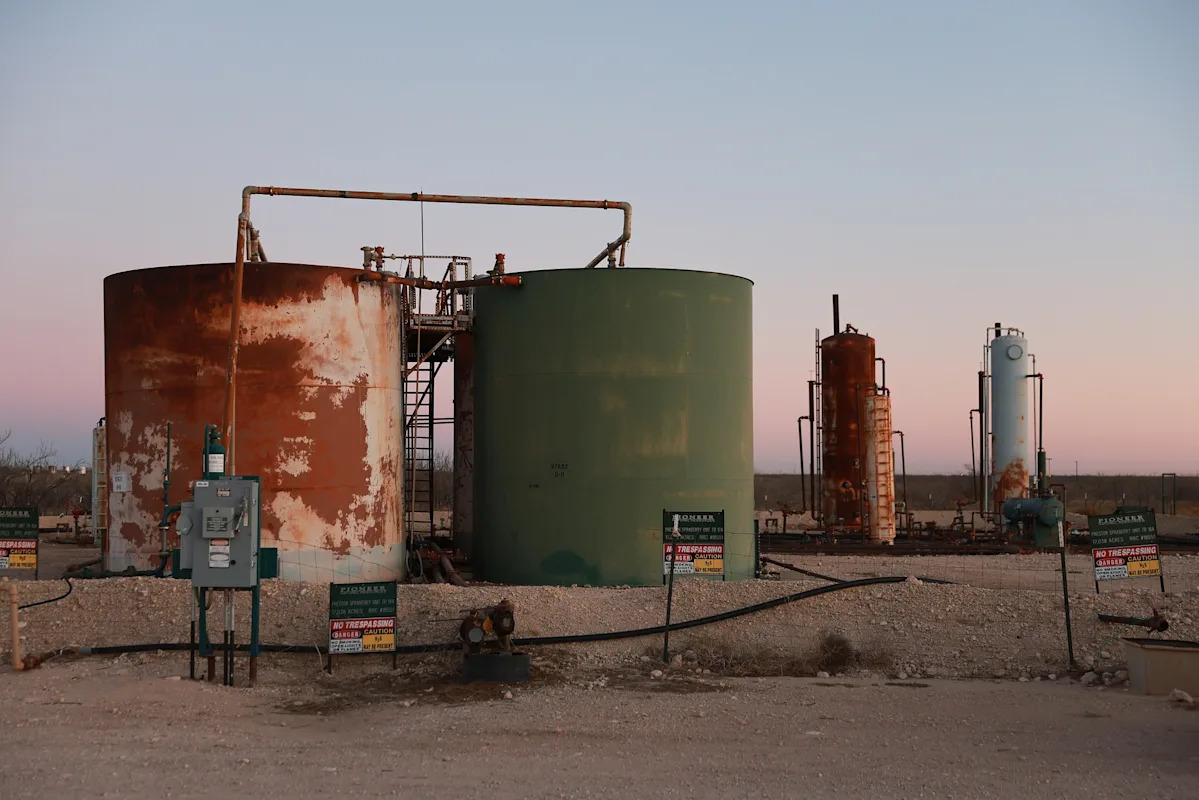
- Refinery Production Capacity: The Whiting refinery, with a processing capacity of 440,000 barrels per day, primarily produces gasoline, diesel, and jet fuel, and the lockout could directly affect fuel supply in the region.
Trade with 70% Backtested Accuracy
Stop guessing "Should I Buy BP?" and start using high-conviction signals backed by rigorous historical data.
Sign up today to access powerful investing tools and make smarter, data-driven decisions.
Analyst Views on BP
Wall Street analysts forecast BP stock price to rise
11 Analyst Rating
5 Buy
5 Hold
1 Sell
Moderate Buy
Current: 42.900

Low
6.38
Averages
84.26
High
503.69
Current: 42.900
Low
6.38
Averages
84.26
High
503.69
About BP
BP p.l.c. is a United Kingdom-based integrated energy company. The Company's segments include Gas & low carbon energy, Oil production & operations, Customers & products, and Other businesses & corporate. Its gas business includes regions with upstream activities that produce natural gas, integrated gas and power, and gas trading. Its low carbon business includes solar, offshore and onshore wind, hydrogen and carbon capture and storage and power trading. Oil production & operations segment comprises regions with upstream activities that predominantly produce crude oil, including bpx energy. Customers & products segment comprises its customer-focused businesses, which include convenience and retail fuels, electric vehicle charging, as well as Castrol, aviation and business to business and midstream. It also includes its products businesses, refining and oil trading, as well as its bioenergy businesses. Other businesses & corporate segment comprises technology and bp ventures.
About the author

Emily J. Thompson
Emily J. Thompson, a Chartered Financial Analyst (CFA) with 12 years in investment research, graduated with honors from the Wharton School. Specializing in industrial and technology stocks, she provides in-depth analysis for Intellectia’s earnings and market brief reports.
BP Receives Approval to Advance Kaskida Project in Gulf of Mexico
- Project Approval: BP has received approval from the Trump administration to advance the Kaskida project, marking the company's first new field development in the Gulf of Mexico since the 2010 Deepwater Horizon disaster, indicating a significant return to deepwater oil and gas operations.
- Production Timeline: The Kaskida project is scheduled to commence crude production in 2029, with the initial phase expected to yield approximately 275 million barrels of oil equivalent from a section of the seafloor, highlighting the project's substantial potential.
- Environmental Concerns: Despite objections from environmental groups warning of another potential Deepwater Horizon-like catastrophe, the U.S. Department of the Interior approved BP's development plan after a year-long review, reflecting the complex balance between energy development and environmental protection.
- Technological Advancements: The Kaskida project showcases decades of technological innovation by BP and the offshore oil and gas industry, demonstrating the company's enhanced capabilities in managing high-pressure and challenging geological conditions, which have previously hindered the field's development.
See More
BP to Lock Out 800 Workers at Indiana Refinery Amid Labor Dispute
- Lockout Decision: BP announced it will lock out approximately 800 United Steelworkers members at its Whiting, Indiana refinery starting at midnight on March 19, indicating escalating tensions between the company and the union amid failed labor negotiations.
- Negotiation Breakdown: Over several months, the union rejected BP's key proposals twice without addressing the company's primary concerns regarding the long-term sustainability of the refinery, highlighting significant disagreements on core issues.
- Job Cuts Controversy: The union criticized BP's proposed workplace changes as unacceptable, including the elimination of over 200 union jobs and the removal of certain workplace protections, which could lead to decreased employee morale and impact operational efficiency.
- Refinery Production Capacity: The Whiting refinery, with a processing capacity of 440,000 barrels per day, primarily produces gasoline, diesel, and jet fuel, and the lockout could directly affect fuel supply in the region.
See More

Asia-Pacific Markets Set to Rise Amid Middle East Tensions

- Escalating Middle East Tensions: Renewed attacks on the UAE's energy infrastructure have heightened concerns over prolonged supply disruptions, potentially impacting global oil prices and the stability of Asia-Pacific markets.
- Slight Oil Price Increase: As of 7:33 PM ET, U.S. crude oil prices rose by 0.06% to $96.27 per barrel, reflecting the market's sensitivity to developments in the Middle East.
- Japanese Stock Futures Rise: Nikkei 225 futures traded at 54,190 in Chicago, up from the previous close of 53,700.39, indicating investor optimism about future market performance.
- Hong Kong Hang Seng Futures Up: Hang Seng index futures were set at 25,891, higher than the last close of 25,868.54, suggesting increased confidence in the Asia-Pacific economic outlook.
See More
Iran War Drives Oil Prices Up, Exacerbating Economic Inequality

- Surge in Oil Prices: Since the onset of the Iran war on February 28, Brent crude prices have risen over 40% to approximately $102 per barrel, pushing the national average gasoline price to $3.79 per gallon, an increase of about 87 cents from a month ago, significantly burdening household spending, particularly for low-income families.
- Worsening Economic Inequality: Economists highlight that rising oil prices act as a tax on household spending power, forcing low-income households to allocate more of their income to fuel, which exacerbates the K-shaped economy phenomenon, where the wealthy continue to prosper while the poor fall further behind.
- Pressure on Consumer Spending: As households spend more on fuel, their disposable income for other goods and services diminishes, and this shift in consumer behavior could negatively impact the U.S. economy, given that consumer spending constitutes a significant portion of the nation's GDP.
- Rising Industry Costs: The volatility in oil prices is also driving up costs in other sectors, with U.S. diesel prices surpassing $5 per gallon for the first time since 2022, increasing transportation costs that could, in turn, elevate food and other goods prices, thereby intensifying economic pressure on consumers.
See More
BP and Eni Launch Natural Gas Production in Angola

- Gas Production Commencement: BP and Eni's Azule Energy joint venture has begun natural gas production from the Quiluma field in Angola, with initial output expected to reach 150 million cubic feet per day, ramping up to 330 million cubic feet per day by the end of 2026, equivalent to approximately 2 million tons of LNG annually, significantly enhancing Angola's energy supply capacity.
- Stable Supply Source: This project marks the first development of a non-associated gas field in Angola, with the produced gas serving as a stable and crucial supply for the Angola LNG plant, catering to the demands of both European and Asian markets, thereby reinforcing Angola's position in the global energy landscape.
- New Resource Discoveries: Since the beginning of 2025, Azule Energy has announced four hydrocarbon discoveries, including the Algaita-01 and Gajajeira-01 gas finds in Angola, as well as the Volans-1X and Capricornus-1X discoveries in Namibia's Orange Basin, showcasing the resource potential in the region.
- Joint Venture Structure: Azule Energy holds a 37.4% stake in the New Gas Consortium, partnering with Cabinda Gulf Oil (31%), Sonangol E&P (19.8%), and TotalEnergies (11.8%), forming a robust collaborative network to drive project development.
See More

European Stocks Open Flat Amid Oil Price Volatility

- Market Opening: The UK's FTSE 100 is expected to open 0.1% higher, while Germany's DAX, France's CAC 40, and Italy's FTSE MIB are projected to remain flat, indicating cautious sentiment amid global economic uncertainties.
- Oil Price Fluctuations: WTI crude oil prices fell to just below $95 a barrel on Monday, down from over $100 at the weekend, reflecting market concerns over Middle East tensions and the impact of a U.S.-led coalition to escort ships.
- Central Bank Focus: As the U.S. Federal Reserve begins a two-day policy meeting on Tuesday, market attention intensifies on interest rate decisions; despite pressure from Trump to lower rates, the ongoing conflict with Iran leads to expectations of a hold on rates.
- Asian Market Performance: Asian markets broadly rose overnight, indicating differing investor sentiment regarding global economic prospects, while U.S. stock futures dipped slightly, reflecting a divergence in market emotions.
See More
BP Receives Approval to Advance Kaskida Project in Gulf of Mexico
- Project Approval: BP has received approval from the Trump administration to advance the Kaskida project, marking the company's first new field development in the Gulf of Mexico since the 2010 Deepwater Horizon disaster, indicating a significant return to deepwater oil and gas operations.
- Production Timeline: The Kaskida project is scheduled to commence crude production in 2029, with the initial phase expected to yield approximately 275 million barrels of oil equivalent from a section of the seafloor, highlighting the project's substantial potential.
- Environmental Concerns: Despite objections from environmental groups warning of another potential Deepwater Horizon-like catastrophe, the U.S. Department of the Interior approved BP's development plan after a year-long review, reflecting the complex balance between energy development and environmental protection.
- Technological Advancements: The Kaskida project showcases decades of technological innovation by BP and the offshore oil and gas industry, demonstrating the company's enhanced capabilities in managing high-pressure and challenging geological conditions, which have previously hindered the field's development.
See More
BP to Lock Out 800 Workers at Indiana Refinery Amid Labor Dispute
- Lockout Decision: BP announced it will lock out approximately 800 United Steelworkers members at its Whiting, Indiana refinery starting at midnight on March 19, indicating escalating tensions between the company and the union amid failed labor negotiations.
- Negotiation Breakdown: Over several months, the union rejected BP's key proposals twice without addressing the company's primary concerns regarding the long-term sustainability of the refinery, highlighting significant disagreements on core issues.
- Job Cuts Controversy: The union criticized BP's proposed workplace changes as unacceptable, including the elimination of over 200 union jobs and the removal of certain workplace protections, which could lead to decreased employee morale and impact operational efficiency.
- Refinery Production Capacity: The Whiting refinery, with a processing capacity of 440,000 barrels per day, primarily produces gasoline, diesel, and jet fuel, and the lockout could directly affect fuel supply in the region.
See More
Asia-Pacific Markets Set to Rise Amid Middle East Tensions
- Escalating Middle East Tensions: Renewed attacks on the UAE's energy infrastructure have heightened concerns over prolonged supply disruptions, potentially impacting global oil prices and the stability of Asia-Pacific markets.
- Slight Oil Price Increase: As of 7:33 PM ET, U.S. crude oil prices rose by 0.06% to $96.27 per barrel, reflecting the market's sensitivity to developments in the Middle East.
- Japanese Stock Futures Rise: Nikkei 225 futures traded at 54,190 in Chicago, up from the previous close of 53,700.39, indicating investor optimism about future market performance.
- Hong Kong Hang Seng Futures Up: Hang Seng index futures were set at 25,891, higher than the last close of 25,868.54, suggesting increased confidence in the Asia-Pacific economic outlook.
See More
Iran War Drives Oil Prices Up, Exacerbating Economic Inequality
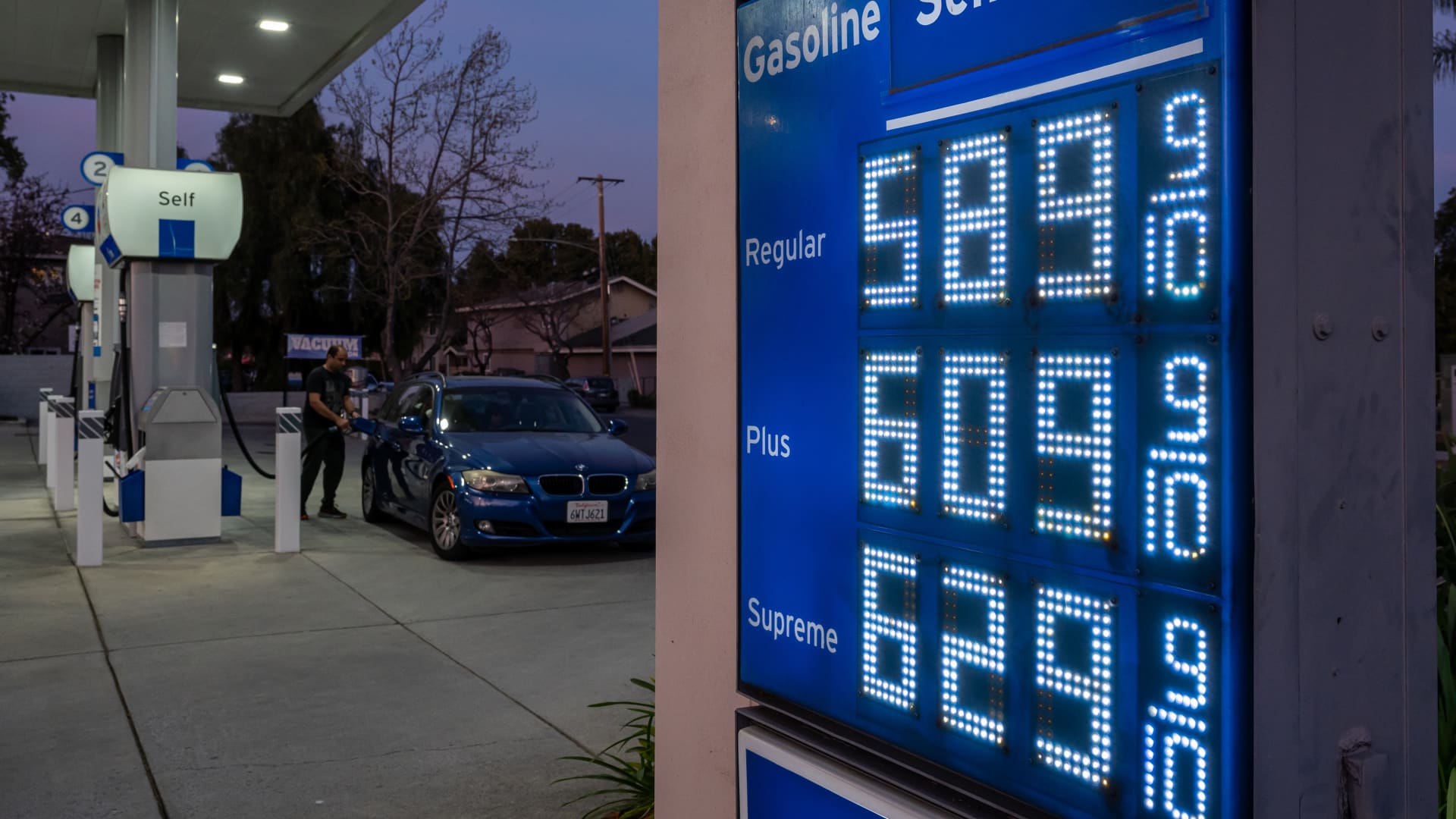
- Surge in Oil Prices: Since the onset of the Iran war on February 28, Brent crude prices have risen over 40% to approximately $102 per barrel, pushing the national average gasoline price to $3.79 per gallon, an increase of about 87 cents from a month ago, significantly burdening household spending, particularly for low-income families.
- Worsening Economic Inequality: Economists highlight that rising oil prices act as a tax on household spending power, forcing low-income households to allocate more of their income to fuel, which exacerbates the K-shaped economy phenomenon, where the wealthy continue to prosper while the poor fall further behind.
- Pressure on Consumer Spending: As households spend more on fuel, their disposable income for other goods and services diminishes, and this shift in consumer behavior could negatively impact the U.S. economy, given that consumer spending constitutes a significant portion of the nation's GDP.
- Rising Industry Costs: The volatility in oil prices is also driving up costs in other sectors, with U.S. diesel prices surpassing $5 per gallon for the first time since 2022, increasing transportation costs that could, in turn, elevate food and other goods prices, thereby intensifying economic pressure on consumers.
See More
BP and Eni Launch Natural Gas Production in Angola
- Gas Production Commencement: BP and Eni's Azule Energy joint venture has begun natural gas production from the Quiluma field in Angola, with initial output expected to reach 150 million cubic feet per day, ramping up to 330 million cubic feet per day by the end of 2026, equivalent to approximately 2 million tons of LNG annually, significantly enhancing Angola's energy supply capacity.
- Stable Supply Source: This project marks the first development of a non-associated gas field in Angola, with the produced gas serving as a stable and crucial supply for the Angola LNG plant, catering to the demands of both European and Asian markets, thereby reinforcing Angola's position in the global energy landscape.
- New Resource Discoveries: Since the beginning of 2025, Azule Energy has announced four hydrocarbon discoveries, including the Algaita-01 and Gajajeira-01 gas finds in Angola, as well as the Volans-1X and Capricornus-1X discoveries in Namibia's Orange Basin, showcasing the resource potential in the region.
- Joint Venture Structure: Azule Energy holds a 37.4% stake in the New Gas Consortium, partnering with Cabinda Gulf Oil (31%), Sonangol E&P (19.8%), and TotalEnergies (11.8%), forming a robust collaborative network to drive project development.
See More
European Stocks Open Flat Amid Oil Price Volatility
- Market Opening: The UK's FTSE 100 is expected to open 0.1% higher, while Germany's DAX, France's CAC 40, and Italy's FTSE MIB are projected to remain flat, indicating cautious sentiment amid global economic uncertainties.
- Oil Price Fluctuations: WTI crude oil prices fell to just below $95 a barrel on Monday, down from over $100 at the weekend, reflecting market concerns over Middle East tensions and the impact of a U.S.-led coalition to escort ships.
- Central Bank Focus: As the U.S. Federal Reserve begins a two-day policy meeting on Tuesday, market attention intensifies on interest rate decisions; despite pressure from Trump to lower rates, the ongoing conflict with Iran leads to expectations of a hold on rates.
- Asian Market Performance: Asian markets broadly rose overnight, indicating differing investor sentiment regarding global economic prospects, while U.S. stock futures dipped slightly, reflecting a divergence in market emotions.
See More