BlackRock Investors Face Securities Fraud Investigation
Written by Emily J. Thompson, Senior Investment Analyst
Updated: Mar 12 2026
0mins
Source: PRnewswire
- Investor Investigation Launched: Pomerantz LLP is investigating on behalf of BlackRock investors regarding potential securities fraud or other unlawful business practices by its executives, highlighting serious concerns about corporate governance.
- Liquidity Restriction Announcement: On March 6, 2026, BlackRock announced it would limit redemptions from its HPS Corporate Lending Fund for the first time, committing to a 5% liquidity threshold each quarter in response to investor redemption requests.
- Significant Stock Price Drop: Following the liquidity restriction news, BlackRock's stock price fell by $79.55, or 7.69%, closing at $955.45 on March 6, 2026, indicating market concerns over the company's financial health.
- Increased Legal Litigation Risk: With the investigation underway, BlackRock faces potential class action lawsuit risks, which could have long-term implications for its financial performance and reputation.
Trade with 70% Backtested Accuracy
Stop guessing "Should I Buy BLK?" and start using high-conviction signals backed by rigorous historical data.
Sign up today to access powerful investing tools and make smarter, data-driven decisions.
Analyst Views on BLK
Wall Street analysts forecast BLK stock price to rise
10 Analyst Rating
8 Buy
2 Hold
0 Sell
Strong Buy
Current: 1073.000

Low
1209
Averages
1354
High
1550
Current: 1073.000
Low
1209
Averages
1354
High
1550
About BLK
BlackRock, Inc. is an investment management company. The Company provides a range of investment management and technology and subscription services to institutional and retail clients. Its diverse platforms of alpha-seeking active, private markets, index and cash management investment strategies across asset classes enable it to tailor investment outcomes and asset allocation solutions for clients. Its product offerings include single- and multi-asset portfolios investing in equities, fixed income, alternatives, and money market instruments. Its products are offered directly and through intermediaries in a range of vehicles, including open-end and closed-end mutual funds, iShares exchange-traded funds, separate accounts, collective investment funds and other pooled investment vehicles. It also offers technology services, including the investment and risk management technology platform, Aladdin, Aladdin Wealth, eFront, and Cachematrix, as well as advisory services and solutions.
About the author

Emily J. Thompson
Emily J. Thompson, a Chartered Financial Analyst (CFA) with 12 years in investment research, graduated with honors from the Wharton School. Specializing in industrial and technology stocks, she provides in-depth analysis for Intellectia’s earnings and market brief reports.

Analysis of XLF ETF's 52-Week Price Fluctuations


- Price Range Analysis: The XLF ETF's 52-week low is $47.67 per share and the high is $56.515, with the last trade at $51.88, indicating stability and potential investment appeal in the current market environment.
- Technical Analysis Tool: Comparing the latest share price to the 200-day moving average provides valuable insights for investors, helping to assess market trends and potential buy or sell opportunities.
- ETF Unit Trading Mechanism: Exchange-traded funds (ETFs) trade similarly to stocks, where investors are buying and selling 'units' that can be created or destroyed based on investor demand, impacting liquidity and market performance.
- Inflows and Outflows Monitoring: Weekly monitoring of changes in shares outstanding helps identify ETFs experiencing notable inflows (new units created) or outflows (old units destroyed), allowing for assessment of their impact on underlying assets and market dynamics.
See More

BlackRock Limits Withdrawals from Private Credit Fund Amid Market Concerns


- Market Confidence Erosion: BlackRock and Blue Owl Capital's decisions to limit withdrawals from their private credit funds signal increasing concerns on Wall Street regarding the private credit market, which could lead to diminished investor confidence and negatively impact stock performance of related companies.
- JPMorgan's Risk Management: CEO Jamie Dimon asserts that while JPMorgan's $50 billion exposure to private credit is modest compared to its $800 billion market cap, it is crucial to monitor shifts in the credit cycle, as potential losses could affect the bank's overall financial health.
- Market Size Comparison: The private credit market, valued at approximately $1.8 trillion, is comparable to the high-yield bond and leveraged loan markets but significantly smaller than the $13 trillion mortgage and investment-grade bond markets, leading Dimon to conclude that private credit does not pose a systemic risk and that JPMorgan's exposure is relatively small.
- Investor Strategy Adjustment: For investors holding business development companies, closely monitoring developments in the private credit space is essential, as even minor shifts in sentiment could lead to significant stock price fluctuations, suggesting a prudent adjustment of exposure to mitigate risks.
See More

Investor Concerns Rise Over Private Credit Market Risks
- Investor Concerns Intensify: The limitation of withdrawals by BlackRock and Blue Owl Capital from their private credit funds due to large withdrawal requests indicates a growing lack of confidence in the private credit market, which could pressure the stock prices of related companies.
- Relative Safety of JPMorgan: Despite JPMorgan Chase's exposure of $50 billion to private credit, this figure is relatively modest compared to its $800 billion market capitalization, highlighting its strength in risk management compared to smaller peers.
- Market Size and Risk Assessment: CEO Jamie Dimon noted that the private credit market is approximately $1.8 trillion in size, and while it faces risks, it does not pose systemic risk when compared to the $13 trillion mortgage and investment-grade bond markets.
- Investment Strategy Adjustment Advice: For investors holding business development companies, Dimon recommends closely monitoring developments in the private credit space and adjusting portfolios accordingly to mitigate potential market volatility.
See More

Digital Asset ETFs Face Heavy Selling Pressure Amid Market Uncertainty
- Outflow Situation: From May 18 to 22, spot Bitcoin ETFs experienced $1.26 billion in net outflows, with BlackRock's iShares Bitcoin Trust (IBIT) leading at $1.01 billion, indicating a significant decline in market confidence that could deter future investor participation.
- Ethereum ETF Pressure: During the same period, spot Ethereum ETFs faced $215 million in net outflows, with BlackRock's iShares Ethereum Trust (ETHA) losing $189.35 million, reflecting heightened investor risk aversion towards Ethereum, which may further shrink its market share.
- Attraction of Alternative Products: Despite the pressure on mainstream digital asset ETFs, spot Solana (SOL-USD) ETFs recorded $15.63 million in net inflows, indicating increased investor interest in emerging crypto products, potentially creating new investment opportunities in the market.
- Macroeconomic Impact: Amid heightened geopolitical uncertainty, with U.S. President Trump’s negotiations with Iran remaining unresolved and the 30-year Treasury yield climbing to 5.20%, market uncertainty has intensified, likely leading to increased risk aversion among investors and affecting the liquidity of digital assets.
See More
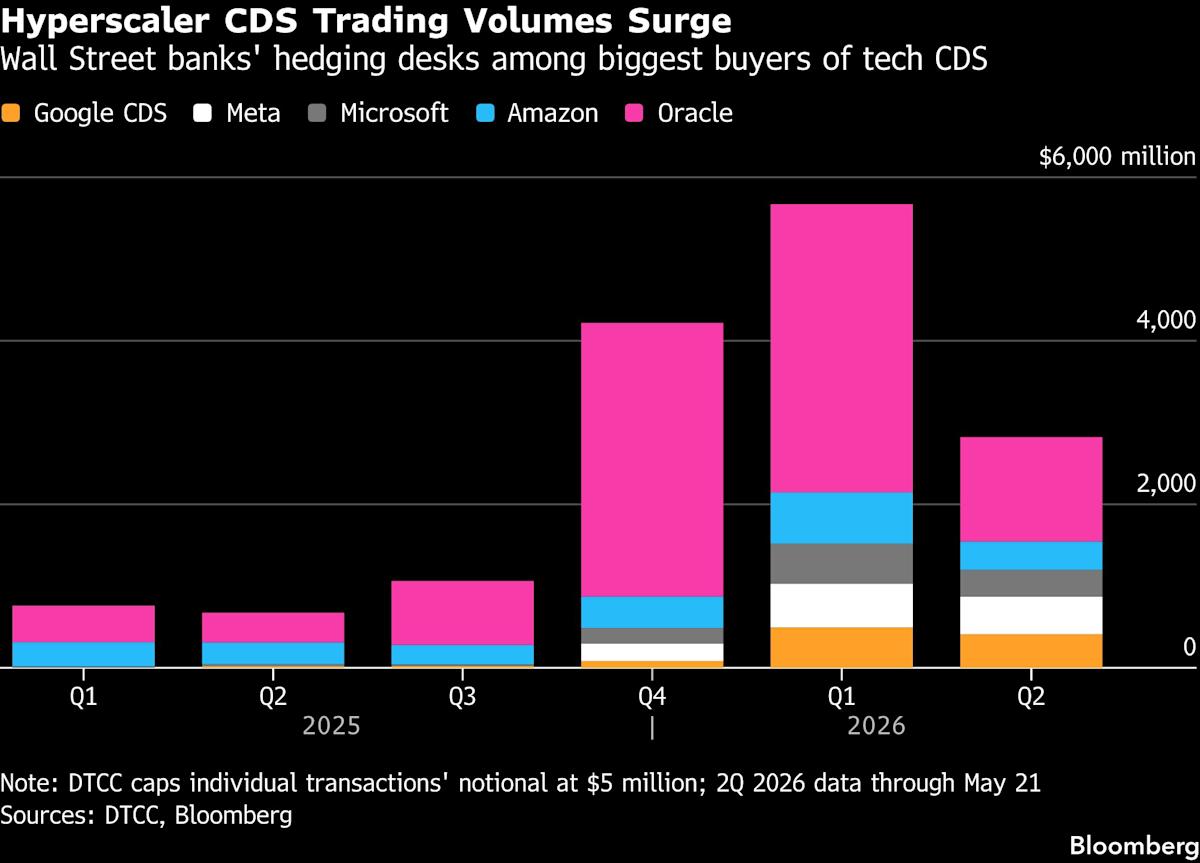
Wall Street Banks Increase Credit Derivative Trading with Hyperscalers


- Surge in Derivative Demand: As hyperscalers like Meta and Alphabet raise over $250 billion for AI, Wall Street banks are experiencing a significant increase in credit derivative trading volumes, driving market activity and rising trading costs.
- Hedging Needs Rise: Banks are purchasing credit derivatives to mitigate risk exposure to single companies, allowing them to increase lending and derivative trading without breaching credit limits, thereby enhancing overall profitability.
- Hedge Fund Profit Opportunities: With credit derivatives for hyperscalers priced unusually high relative to their credit ratings, Andrew Weinberg of Saba Capital Management notes that now is an optimal time to sell high-rated credit default swaps, anticipating substantial returns.
- Market Structure Shift: As borrowing demands from hyperscalers continue to rise, banks' credit valuation adjustment (CVA) desks are actively engaging in trades, leading to record growth in CDS trading volumes, reflecting a dual demand for confidence and risk management in the market.
See More

BlackRock, Thermo Fisher, and Others Declare Dividends

- BlackRock Dividend Announcement: BlackRock's Board of Directors declared a quarterly cash dividend of $5.73 per share, payable on June 23, 2026, to shareholders of record as of June 5, 2026, indicating the company's ongoing cash flow and shareholder return strategy.
- Thermo Fisher Dividend: Thermo Fisher's Board authorized a quarterly cash dividend of $0.47 per share, payable on July 15, 2026, to shareholders of record as of June 15, 2026, reflecting its robust financial performance in the science services sector.
- Franklin Resources Dividend: Franklin Resources announced a quarterly cash dividend of $0.33 per share, payable on July 10, 2026, to stockholders of record as of June 29, 2026, maintaining the same dividend as the previous quarter while representing a 3.1% increase from the same quarter last year, showcasing the company's stable profitability.
- McDonald's Dividend: McDonald's Board declared a quarterly cash dividend of $1.86 per share, payable on June 16, 2026, to shareholders of record as of June 2, 2026, demonstrating its ongoing profitability and commitment to shareholders.
See More
Analysis of XLF ETF's 52-Week Price Fluctuations
- Price Range Analysis: The XLF ETF's 52-week low is $47.67 per share and the high is $56.515, with the last trade at $51.88, indicating stability and potential investment appeal in the current market environment.
- Technical Analysis Tool: Comparing the latest share price to the 200-day moving average provides valuable insights for investors, helping to assess market trends and potential buy or sell opportunities.
- ETF Unit Trading Mechanism: Exchange-traded funds (ETFs) trade similarly to stocks, where investors are buying and selling 'units' that can be created or destroyed based on investor demand, impacting liquidity and market performance.
- Inflows and Outflows Monitoring: Weekly monitoring of changes in shares outstanding helps identify ETFs experiencing notable inflows (new units created) or outflows (old units destroyed), allowing for assessment of their impact on underlying assets and market dynamics.
See More
BlackRock Limits Withdrawals from Private Credit Fund Amid Market Concerns
- Market Confidence Erosion: BlackRock and Blue Owl Capital's decisions to limit withdrawals from their private credit funds signal increasing concerns on Wall Street regarding the private credit market, which could lead to diminished investor confidence and negatively impact stock performance of related companies.
- JPMorgan's Risk Management: CEO Jamie Dimon asserts that while JPMorgan's $50 billion exposure to private credit is modest compared to its $800 billion market cap, it is crucial to monitor shifts in the credit cycle, as potential losses could affect the bank's overall financial health.
- Market Size Comparison: The private credit market, valued at approximately $1.8 trillion, is comparable to the high-yield bond and leveraged loan markets but significantly smaller than the $13 trillion mortgage and investment-grade bond markets, leading Dimon to conclude that private credit does not pose a systemic risk and that JPMorgan's exposure is relatively small.
- Investor Strategy Adjustment: For investors holding business development companies, closely monitoring developments in the private credit space is essential, as even minor shifts in sentiment could lead to significant stock price fluctuations, suggesting a prudent adjustment of exposure to mitigate risks.
See More
Investor Concerns Rise Over Private Credit Market Risks
- Investor Concerns Intensify: The limitation of withdrawals by BlackRock and Blue Owl Capital from their private credit funds due to large withdrawal requests indicates a growing lack of confidence in the private credit market, which could pressure the stock prices of related companies.
- Relative Safety of JPMorgan: Despite JPMorgan Chase's exposure of $50 billion to private credit, this figure is relatively modest compared to its $800 billion market capitalization, highlighting its strength in risk management compared to smaller peers.
- Market Size and Risk Assessment: CEO Jamie Dimon noted that the private credit market is approximately $1.8 trillion in size, and while it faces risks, it does not pose systemic risk when compared to the $13 trillion mortgage and investment-grade bond markets.
- Investment Strategy Adjustment Advice: For investors holding business development companies, Dimon recommends closely monitoring developments in the private credit space and adjusting portfolios accordingly to mitigate potential market volatility.
See More
Digital Asset ETFs Face Heavy Selling Pressure Amid Market Uncertainty
- Outflow Situation: From May 18 to 22, spot Bitcoin ETFs experienced $1.26 billion in net outflows, with BlackRock's iShares Bitcoin Trust (IBIT) leading at $1.01 billion, indicating a significant decline in market confidence that could deter future investor participation.
- Ethereum ETF Pressure: During the same period, spot Ethereum ETFs faced $215 million in net outflows, with BlackRock's iShares Ethereum Trust (ETHA) losing $189.35 million, reflecting heightened investor risk aversion towards Ethereum, which may further shrink its market share.
- Attraction of Alternative Products: Despite the pressure on mainstream digital asset ETFs, spot Solana (SOL-USD) ETFs recorded $15.63 million in net inflows, indicating increased investor interest in emerging crypto products, potentially creating new investment opportunities in the market.
- Macroeconomic Impact: Amid heightened geopolitical uncertainty, with U.S. President Trump’s negotiations with Iran remaining unresolved and the 30-year Treasury yield climbing to 5.20%, market uncertainty has intensified, likely leading to increased risk aversion among investors and affecting the liquidity of digital assets.
See More
Wall Street Banks Increase Credit Derivative Trading with Hyperscalers
- Surge in Derivative Demand: As hyperscalers like Meta and Alphabet raise over $250 billion for AI, Wall Street banks are experiencing a significant increase in credit derivative trading volumes, driving market activity and rising trading costs.
- Hedging Needs Rise: Banks are purchasing credit derivatives to mitigate risk exposure to single companies, allowing them to increase lending and derivative trading without breaching credit limits, thereby enhancing overall profitability.
- Hedge Fund Profit Opportunities: With credit derivatives for hyperscalers priced unusually high relative to their credit ratings, Andrew Weinberg of Saba Capital Management notes that now is an optimal time to sell high-rated credit default swaps, anticipating substantial returns.
- Market Structure Shift: As borrowing demands from hyperscalers continue to rise, banks' credit valuation adjustment (CVA) desks are actively engaging in trades, leading to record growth in CDS trading volumes, reflecting a dual demand for confidence and risk management in the market.
See More
BlackRock, Thermo Fisher, and Others Declare Dividends
- BlackRock Dividend Announcement: BlackRock's Board of Directors declared a quarterly cash dividend of $5.73 per share, payable on June 23, 2026, to shareholders of record as of June 5, 2026, indicating the company's ongoing cash flow and shareholder return strategy.
- Thermo Fisher Dividend: Thermo Fisher's Board authorized a quarterly cash dividend of $0.47 per share, payable on July 15, 2026, to shareholders of record as of June 15, 2026, reflecting its robust financial performance in the science services sector.
- Franklin Resources Dividend: Franklin Resources announced a quarterly cash dividend of $0.33 per share, payable on July 10, 2026, to stockholders of record as of June 29, 2026, maintaining the same dividend as the previous quarter while representing a 3.1% increase from the same quarter last year, showcasing the company's stable profitability.
- McDonald's Dividend: McDonald's Board declared a quarterly cash dividend of $1.86 per share, payable on June 16, 2026, to shareholders of record as of June 2, 2026, demonstrating its ongoing profitability and commitment to shareholders.
See More