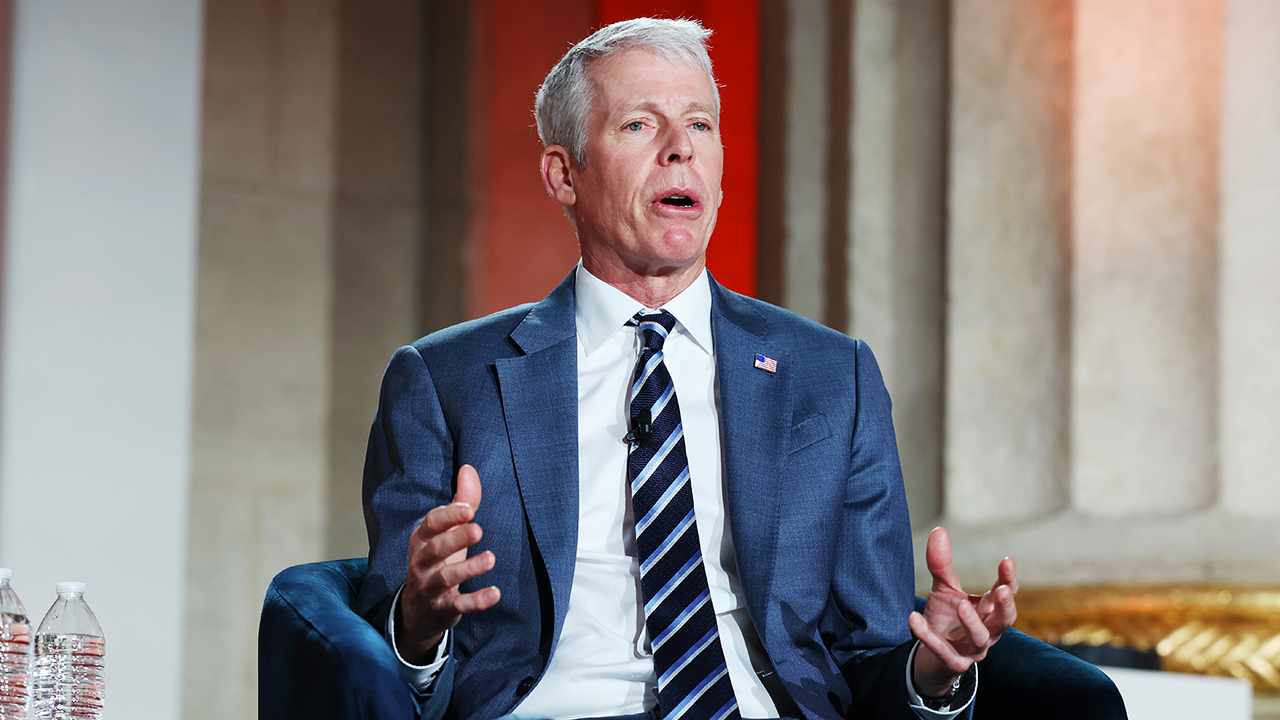
BBC Appoints First Technology Director-General Amid Challenges
Written by Emily J. Thompson, Senior Investment Analyst
Updated: 1 hour ago
0mins
Should l Buy GOOG?
Source: seekingalpha
- Board Approval: The BBC board has approved Matt Brittin's appointment, with an official announcement expected this week as the 18th director-general, reflecting the organization's decision-making efficiency amid leadership changes.
- First Tech Executive: Brittin will be the first technology executive to lead the BBC, facing challenges such as funding model issues, increased competition from streaming services, and a reputational lawsuit from President Trump, potentially bringing new perspectives and strategies to the organization.
- Extensive Industry Experience: At 57, Brittin rowed for Great Britain in the 1988 Seoul Olympics and spent a decade as Google's prominent UK executive, overseeing advertising and sales operations across Europe, the Middle East, and Africa, providing valuable industry insights for his role at the BBC.
- Addressing Funding Challenges: With the BBC facing a real-terms funding freeze in a UK government deal, Brittin's appointment may offer new approaches to tackle these challenges, particularly in the increasingly complex media landscape.
Trade with 70% Backtested Accuracy
Stop guessing "Should I Buy GOOG?" and start using high-conviction signals backed by rigorous historical data.
Sign up today to access powerful investing tools and make smarter, data-driven decisions.
Analyst Views on GOOG
Wall Street analysts forecast GOOG stock price to rise
15 Analyst Rating
14 Buy
1 Hold
0 Sell
Strong Buy
Current: 298.790

Low
255.00
Averages
336.08
High
400.00
Current: 298.790
Low
255.00
Averages
336.08
High
400.00
About GOOG
Alphabet Inc. is a holding company. The Company's segments include Google Services, Google Cloud, and Other Bets. The Google Services segment includes products and services such as ads, Android, Chrome, devices, Google Maps, Google Play, Search, and YouTube. The Google Cloud segment includes infrastructure and platform services, collaboration tools, and other services for enterprise customers. Its Other Bets segment is engaged in the sale of healthcare-related services and Internet services. Its Google Cloud provides enterprise-ready cloud services, including Google Cloud Platform and Google Workspace. Google Cloud Platform provides access to solutions such as artificial intelligence (AI) offerings, including its AI infrastructure, Vertex AI platform, and Gemini for Google Cloud; cybersecurity, and data and analytics. Google Workspace includes cloud-based communication and collaboration tools for enterprises, such as Calendar, Gmail, Docs, Drive, and Meet.
About the author

Emily J. Thompson
Emily J. Thompson, a Chartered Financial Analyst (CFA) with 12 years in investment research, graduated with honors from the Wharton School. Specializing in industrial and technology stocks, she provides in-depth analysis for Intellectia’s earnings and market brief reports.

BBC Appoints First Technology Director-General Amid Challenges


- Board Approval: The BBC board has approved Matt Brittin's appointment, with an official announcement expected this week as the 18th director-general, reflecting the organization's decision-making efficiency amid leadership changes.
- First Tech Executive: Brittin will be the first technology executive to lead the BBC, facing challenges such as funding model issues, increased competition from streaming services, and a reputational lawsuit from President Trump, potentially bringing new perspectives and strategies to the organization.
- Extensive Industry Experience: At 57, Brittin rowed for Great Britain in the 1988 Seoul Olympics and spent a decade as Google's prominent UK executive, overseeing advertising and sales operations across Europe, the Middle East, and Africa, providing valuable industry insights for his role at the BBC.
- Addressing Funding Challenges: With the BBC facing a real-terms funding freeze in a UK government deal, Brittin's appointment may offer new approaches to tackle these challenges, particularly in the increasingly complex media landscape.
See More

U.S. Bans Import of Foreign-Made Wi-Fi Routers Over Security Concerns
- National Security Concerns: The FCC has officially updated its 'Covered List' to ban the import of new foreign-made Wi-Fi routers, citing national security as the primary reason to safeguard digital infrastructure.
- Supply Chain Vulnerability: The FCC warns that foreign routers introduce supply chain vulnerabilities that could threaten the U.S. economy, critical infrastructure, and national defense, highlighting significant cybersecurity risks.
- Broad Impact: While the ban primarily targets Chinese manufacturers like TP-Link, it also affects U.S.-based companies such as Netgear, Eero, and Google Nest, which design products domestically but rely heavily on Asian manufacturing.
- Market Reaction Anticipation: The implementation of this policy may lead to production and supply chain challenges for affected companies, potentially impacting their market performance and stock prices amid increasing global economic uncertainty.
See More

Alphabet's Leading Position in the Enterprise LLM Market
- Market Share Growth: Alphabet's Google Gemini has captured 21% of the enterprise large language model (LLM) market, indicating strong growth potential in AI, especially compared to competitors like OpenAI and Anthropic.
- Project Mariner Launch: Alphabet offers its high-paying customers the experimental AI agent Project Mariner for $250 per month, which can perform online tasks like purchasing tickets and groceries through Chrome, showcasing its innovative approach to AI applications despite current limitations in physical interactions.
- Hardware Advantage: Unlike competitors relying on Nvidia GPUs, Alphabet is developing its own tensor processing units (TPUs), providing a unique competitive edge in AI hardware, with Anthropic planning to add one million TPUs by 2026, further solidifying Alphabet's market position.
- Profitability Comparison: In Q4 2025, Alphabet generated $113.8 billion in revenue with a net profit margin of 32.81%, while competitors OpenAI and Anthropic have yet to achieve profitability, highlighting Alphabet's significant resource and financial strength to invest in ongoing AI innovation and development.
See More

Google's Leading Position in Agentic AI
- Rise of Agentic AI: Jensen Huang, CEO of Nvidia, emphasizes the significance of agentic AI, representing the next leap in AI technology; although still in its infancy, its potential could transform human-computer interaction.
- Google's Market Advantage: Alphabet reported $113.8 billion in revenue for Q4 2025, an 18% increase year-over-year, with a net profit margin of 32.81%, showcasing its strong resources and profitability in AI, far surpassing OpenAI and Anthropic.
- Market Share Shifts: By the end of 2025, Google's Gemini AI market share rose to 21%, while ChatGPT's share fell to 27%, indicating Google's rapid ascent in the enterprise large language model market, likely to soon surpass competitors.
- Hardware Innovation: Unique among its AI peers, Alphabet is developing its own tensor processing units (TPUs), competing with Nvidia's GPUs; Anthropic plans to add one million TPUs by 2026, further solidifying Google's leading position in AI hardware.
See More

Broadcom Reports 106% Revenue Growth in AI Segment


- AI Revenue Surge: Broadcom's AI revenue reached $8.4 billion in Q1 2026, reflecting a remarkable 106% year-over-year growth, which underscores its robust momentum in the AI hardware sector and solidifies its market position.
- Overall Financial Performance: The company reported total revenue of $19.31 billion for the quarter, a 29% increase year-over-year, with diluted earnings per share (EPS) at $1.50, up 32% from Q1 2024, indicating a strong overall financial health.
- Significant Customer Orders: Broadcom's partnership with Anthropic has deepened, with the latter placing an additional $11 billion order for TPUs after a previous $10 billion order, aiming to add 1 million TPU chips by 2026, which will further drive Broadcom's revenue growth.
- Strategic Partnerships: Beyond designing TPUs for Google, Broadcom collaborates with companies like OpenAI, highlighting its critical role in the AI hardware landscape and reinforcing its status as an
See More
Broadcom's Partnership with Google on TPU Shows Huge Potential
- AI Revenue Surge: Broadcom's AI revenue more than doubled in Q1 2026, reaching $8.4 billion, reflecting a robust growth trajectory in the AI hardware sector that solidifies its market position.
- Total Revenue Growth: The company's total revenue for the quarter was $19.31 billion, a 29% increase from Q1 2025, indicating strong performance across multiple business segments and boosting investor confidence in its future prospects.
- Strong Profitability: Broadcom reported diluted earnings per share (EPS) of $1.50, up 32% year-over-year, with a net profit margin of 36.57%, showcasing its excellence in cost control and profitability enhancement.
- Strategic Partnerships: The collaboration with Google on TPU and significant orders from Anthropic worth $10 billion and $11 billion highlight Broadcom's critical role in AI chip design, with potential for further market share expansion in the future.
See More
BBC Appoints First Technology Director-General Amid Challenges
- Board Approval: The BBC board has approved Matt Brittin's appointment, with an official announcement expected this week as the 18th director-general, reflecting the organization's decision-making efficiency amid leadership changes.
- First Tech Executive: Brittin will be the first technology executive to lead the BBC, facing challenges such as funding model issues, increased competition from streaming services, and a reputational lawsuit from President Trump, potentially bringing new perspectives and strategies to the organization.
- Extensive Industry Experience: At 57, Brittin rowed for Great Britain in the 1988 Seoul Olympics and spent a decade as Google's prominent UK executive, overseeing advertising and sales operations across Europe, the Middle East, and Africa, providing valuable industry insights for his role at the BBC.
- Addressing Funding Challenges: With the BBC facing a real-terms funding freeze in a UK government deal, Brittin's appointment may offer new approaches to tackle these challenges, particularly in the increasingly complex media landscape.
See More
U.S. Bans Import of Foreign-Made Wi-Fi Routers Over Security Concerns
- National Security Concerns: The FCC has officially updated its 'Covered List' to ban the import of new foreign-made Wi-Fi routers, citing national security as the primary reason to safeguard digital infrastructure.
- Supply Chain Vulnerability: The FCC warns that foreign routers introduce supply chain vulnerabilities that could threaten the U.S. economy, critical infrastructure, and national defense, highlighting significant cybersecurity risks.
- Broad Impact: While the ban primarily targets Chinese manufacturers like TP-Link, it also affects U.S.-based companies such as Netgear, Eero, and Google Nest, which design products domestically but rely heavily on Asian manufacturing.
- Market Reaction Anticipation: The implementation of this policy may lead to production and supply chain challenges for affected companies, potentially impacting their market performance and stock prices amid increasing global economic uncertainty.
See More
Alphabet's Leading Position in the Enterprise LLM Market
- Market Share Growth: Alphabet's Google Gemini has captured 21% of the enterprise large language model (LLM) market, indicating strong growth potential in AI, especially compared to competitors like OpenAI and Anthropic.
- Project Mariner Launch: Alphabet offers its high-paying customers the experimental AI agent Project Mariner for $250 per month, which can perform online tasks like purchasing tickets and groceries through Chrome, showcasing its innovative approach to AI applications despite current limitations in physical interactions.
- Hardware Advantage: Unlike competitors relying on Nvidia GPUs, Alphabet is developing its own tensor processing units (TPUs), providing a unique competitive edge in AI hardware, with Anthropic planning to add one million TPUs by 2026, further solidifying Alphabet's market position.
- Profitability Comparison: In Q4 2025, Alphabet generated $113.8 billion in revenue with a net profit margin of 32.81%, while competitors OpenAI and Anthropic have yet to achieve profitability, highlighting Alphabet's significant resource and financial strength to invest in ongoing AI innovation and development.
See More
Google's Leading Position in Agentic AI
- Rise of Agentic AI: Jensen Huang, CEO of Nvidia, emphasizes the significance of agentic AI, representing the next leap in AI technology; although still in its infancy, its potential could transform human-computer interaction.
- Google's Market Advantage: Alphabet reported $113.8 billion in revenue for Q4 2025, an 18% increase year-over-year, with a net profit margin of 32.81%, showcasing its strong resources and profitability in AI, far surpassing OpenAI and Anthropic.
- Market Share Shifts: By the end of 2025, Google's Gemini AI market share rose to 21%, while ChatGPT's share fell to 27%, indicating Google's rapid ascent in the enterprise large language model market, likely to soon surpass competitors.
- Hardware Innovation: Unique among its AI peers, Alphabet is developing its own tensor processing units (TPUs), competing with Nvidia's GPUs; Anthropic plans to add one million TPUs by 2026, further solidifying Google's leading position in AI hardware.
See More
Broadcom Reports 106% Revenue Growth in AI Segment
- AI Revenue Surge: Broadcom's AI revenue reached $8.4 billion in Q1 2026, reflecting a remarkable 106% year-over-year growth, which underscores its robust momentum in the AI hardware sector and solidifies its market position.
- Overall Financial Performance: The company reported total revenue of $19.31 billion for the quarter, a 29% increase year-over-year, with diluted earnings per share (EPS) at $1.50, up 32% from Q1 2024, indicating a strong overall financial health.
- Significant Customer Orders: Broadcom's partnership with Anthropic has deepened, with the latter placing an additional $11 billion order for TPUs after a previous $10 billion order, aiming to add 1 million TPU chips by 2026, which will further drive Broadcom's revenue growth.
- Strategic Partnerships: Beyond designing TPUs for Google, Broadcom collaborates with companies like OpenAI, highlighting its critical role in the AI hardware landscape and reinforcing its status as an
See More
Broadcom's Partnership with Google on TPU Shows Huge Potential
- AI Revenue Surge: Broadcom's AI revenue more than doubled in Q1 2026, reaching $8.4 billion, reflecting a robust growth trajectory in the AI hardware sector that solidifies its market position.
- Total Revenue Growth: The company's total revenue for the quarter was $19.31 billion, a 29% increase from Q1 2025, indicating strong performance across multiple business segments and boosting investor confidence in its future prospects.
- Strong Profitability: Broadcom reported diluted earnings per share (EPS) of $1.50, up 32% year-over-year, with a net profit margin of 36.57%, showcasing its excellence in cost control and profitability enhancement.
- Strategic Partnerships: The collaboration with Google on TPU and significant orders from Anthropic worth $10 billion and $11 billion highlight Broadcom's critical role in AI chip design, with potential for further market share expansion in the future.
See More