Bally's swooped for Star after Australian casino group's fire sale, chairman says
Written by Emily J. Thompson, Senior Investment Analyst
Updated: Apr 14 2025
0mins

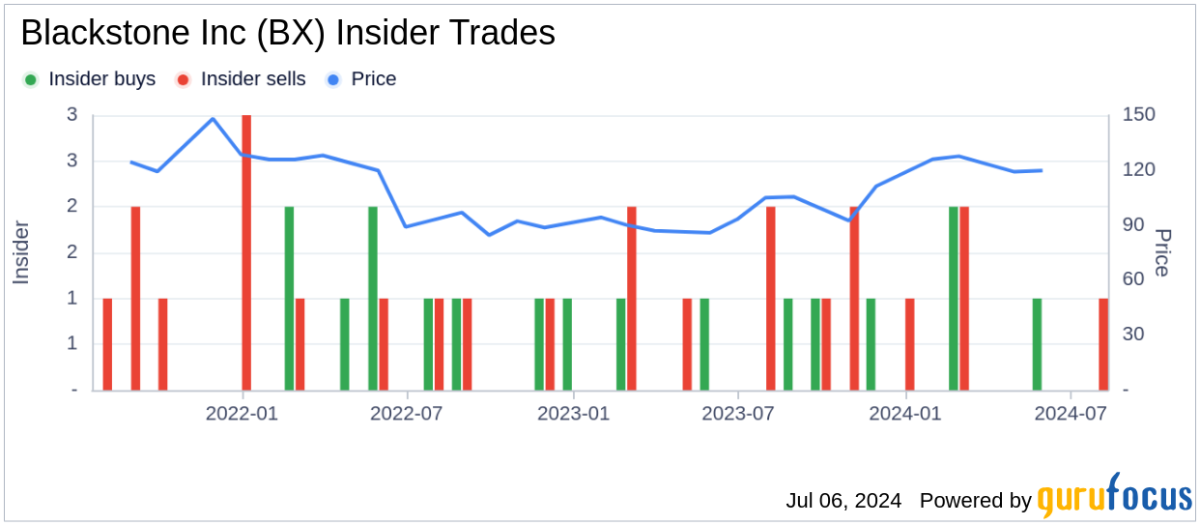
Should l Buy BX?
Source: Reuters
Bally's Corp Investment in Star Entertainment: Bally's Corp has initiated a A$300 million rescue package for Star Entertainment, which is struggling with debt and regulatory issues. The initial A$100 million will help keep Star operational for 15 months while awaiting full investment approval.
Strategic Shift and Future Plans: Bally's plans to refocus Star on Australian gaming customers rather than attracting international high-rollers, as it prepares for potential control of Star pending shareholder approval.
Trade with 70% Backtested Accuracy
Stop guessing "Should I Buy BX?" and start using high-conviction signals backed by rigorous historical data.
Sign up today to access powerful investing tools and make smarter, data-driven decisions.
Analyst Views on BX
Wall Street analysts forecast BX stock price to rise
12 Analyst Rating
5 Buy
7 Hold
0 Sell
Moderate Buy
Current: 114.990

Low
166.00
Averages
176.60
High
205.00
Current: 114.990
Low
166.00
Averages
176.60
High
205.00
About BX
Blackstone Inc. is an alternative asset manager. Its asset management includes global investment strategies focused on real estate, private equity, infrastructure, life sciences, growth equity, credit, real assets, secondaries, and hedge funds. Its Real Estate segment comprises its management of opportunistic real estate funds, Core+ real estate funds, and real estate debt strategies. Its Private Equity segment includes its management of flagship Corporate Private Equity funds, sector and geographically focused Corporate Private Equity funds, core private equity funds, an investment platform, and others. Its Credit & Insurance segment consists of Blackstone Credit & Insurance, which is organized into three overarching strategies: private corporate credit, liquid corporate credit and infrastructure and asset-based credit. Its Multi-Asset Investing segment is organized into four investment platforms: Absolute Return, Multi-Strategy, Total Portfolio Management, and Public Real Assets.
About the author

Emily J. Thompson
Emily J. Thompson, a Chartered Financial Analyst (CFA) with 12 years in investment research, graduated with honors from the Wharton School. Specializing in industrial and technology stocks, she provides in-depth analysis for Intellectia’s earnings and market brief reports.
BLACKSTONE COMPLETES FINAL CLOSE OF HISTORIC $6.3 BILLION LIFE SCIENCES FUND – THE LARGEST PRIVATE FUND FOCUSED ON LIFE SCIENCES

- Final Closure Announcement: Blackstone has announced the final closure of its record $6.3 billion Life Sciences Fund.
- Largest Private Fund: This fund is noted as the largest private fund dedicated to life sciences investments.
See More

Indian Markets Rattle Amid Iran War Turmoil


- Foreign Capital Exodus: Amid the turmoil of the Iran war, Indian markets experienced a record foreign investor sell-off exceeding $12 billion in March, resulting in a more than 10% drop in the Nifty 50 index, highlighting significant concerns over future economic growth prospects.
- Diminished Growth Outlook: India's Chief Economic Advisor V. Anantha Nageswaran warned that rising energy costs and supply chain disruptions pose considerable downside risks to the forecasted 7.0%-7.4% growth for FY 2027, with expectations of a significant widening of the trade deficit exacerbating fiscal pressures.
- Government Intervention: In response to economic strains, the Indian government implemented two key measures, including limiting banks' currency-hedging positions and cutting excise duties on petrol and diesel by 10 rupees per liter, which will significantly impact tax revenues and potentially hinder government spending capabilities.
- Weak Job Market: While India's consumption narrative continues to attract foreign investment, the lack of white-collar job creation undermines this story, with reports indicating that only a small percentage of graduates secure stable employment within a year of graduation, posing a long-term challenge to economic growth.
See More

Democrats Question Wall Street's Private Credit Firms

- Regulatory Scrutiny Intensifies: The Democratic faction of the House Financial Services Committee is questioning major Wall Street private credit firms, including Blackstone (BX) and Ares Management (ARES), focusing on their marketing, valuation, and management practices, highlighting increasing regulatory pressure on the private credit market.
- Broad Inquiry Scope: The inquiries extend to several firms such as Apollo Global Management (APO), BlackRock (BLK), Blue Owl Capital (OWL), Carlyle Group (CG), and KKR (KKR), emphasizing lawmakers' strong interest in the transparency of private credit vehicles' structures and operations.
- Risk Management Concerns: The investigations cover sales practices, leverage, fees, incentives, audits, and risk management, indicating lawmakers' worries about liquidity constraints, borrower stress, and potential disruptions from artificial intelligence, which could impact the broader economy.
- Market Dynamics Shift: As scrutiny of risks in the private credit market increases, Washington regulators are reassessing the operational frameworks of this asset class, potentially leading to stricter regulatory policies in the future, which could affect the overall development of the industry and investor confidence.
See More

Trump Administration Proposes Easing 401(k) Investment Rules

- Diversified Investment Options: The Trump administration's proposal allows 401(k) plans to include alternative investments such as private credit, private equity, cryptocurrency, and real estate, aiming to provide millions of Americans with broader retirement investment choices, thereby enhancing the growth potential of retirement assets.
- Clear Compliance Process: The new rule mandates that plan fiduciaries must objectively and thoroughly assess factors like performance, fees, and liquidity of alternative assets, ensuring a prudent decision-making process when selecting investment products to protect investor interests.
- Supportive Policy Background: This proposal responds to President Trump's August 7 Executive Order, aiming to implement changes in a safe and smart manner while broadening retirement plan options and emphasizing the importance of protecting retirement assets, reflecting the government's commitment to improving the retirement investment landscape.
- Increased Industry Competition: With the introduction of the new rule, asset management firms like Blackstone, KKR, and Apollo Global Management are expected to benefit from access to alternative investment opportunities in 401(k) accounts, likely intensifying competition within the industry and promoting diversification and innovation in investment products.
See More

Mortgage Stocks Surge 30% After Ackman's Remarks

- Mortgage Stocks Rally: Shares of Fannie Mae and Freddie Mac surged over 30% on Monday after billionaire Bill Ackman labeled them as 'stupidly cheap' in a social media post, indicating strong market confidence in their future potential.
- Boston Scientific Downgrade: Boston Scientific's stock fell more than 9% after Raymond James downgraded it from strong buy to outperform, reflecting concerns over weakening trends in its key growth areas and leading investors to adopt a cautious stance on its future performance.
- Cybersecurity Gains: Palo Alto Networks saw its shares jump over 7% after CEO Nikesh Arora disclosed a $10 million stock purchase, demonstrating market confidence in the company's growth prospects amid rising demand for cybersecurity solutions.
- United Therapeutics Innovation: United Therapeutics' stock rose nearly 13%, reaching a 52-week high, following positive phase 3 clinical trial results for its main product Tyvaso, and its plan to seek priority FDA review to expand the drug's label, showcasing strategic advancements in lung disease treatment.
See More

Concerns Over Private Credit Market Risks Emerge

- Market Growth: According to Barclays, the private credit market ballooned to $1.8 trillion in the first half of 2025, up from approximately $250 billion during the financial crisis, indicating strong demand for financing among mid-sized businesses.
- High-Risk Alerts: The bankruptcies of First Brands and Tricolor prompted JPMorgan CEO Jamie Dimon to warn of potential systemic issues in private credit, highlighting vulnerabilities within the sector.
- Investor Structure Shift: Unlike the depositors during the 2008 crisis, the current investor base for private credit consists mainly of institutional investors such as pensions and sovereign wealth funds, which are more capable of locking up capital for extended periods, thereby reducing systemic risk.
- Normalizing Credit Conditions: While the private credit market faces increased stress, the majority of investments are in investment-grade loans, with only a small portion in high-yield loans, suggesting that the overall stability of the market remains relatively strong.
See More
BLACKSTONE COMPLETES FINAL CLOSE OF HISTORIC $6.3 BILLION LIFE SCIENCES FUND – THE LARGEST PRIVATE FUND FOCUSED ON LIFE SCIENCES
- Final Closure Announcement: Blackstone has announced the final closure of its record $6.3 billion Life Sciences Fund.
- Largest Private Fund: This fund is noted as the largest private fund dedicated to life sciences investments.
See More
Indian Markets Rattle Amid Iran War Turmoil
- Foreign Capital Exodus: Amid the turmoil of the Iran war, Indian markets experienced a record foreign investor sell-off exceeding $12 billion in March, resulting in a more than 10% drop in the Nifty 50 index, highlighting significant concerns over future economic growth prospects.
- Diminished Growth Outlook: India's Chief Economic Advisor V. Anantha Nageswaran warned that rising energy costs and supply chain disruptions pose considerable downside risks to the forecasted 7.0%-7.4% growth for FY 2027, with expectations of a significant widening of the trade deficit exacerbating fiscal pressures.
- Government Intervention: In response to economic strains, the Indian government implemented two key measures, including limiting banks' currency-hedging positions and cutting excise duties on petrol and diesel by 10 rupees per liter, which will significantly impact tax revenues and potentially hinder government spending capabilities.
- Weak Job Market: While India's consumption narrative continues to attract foreign investment, the lack of white-collar job creation undermines this story, with reports indicating that only a small percentage of graduates secure stable employment within a year of graduation, posing a long-term challenge to economic growth.
See More
Democrats Question Wall Street's Private Credit Firms
- Regulatory Scrutiny Intensifies: The Democratic faction of the House Financial Services Committee is questioning major Wall Street private credit firms, including Blackstone (BX) and Ares Management (ARES), focusing on their marketing, valuation, and management practices, highlighting increasing regulatory pressure on the private credit market.
- Broad Inquiry Scope: The inquiries extend to several firms such as Apollo Global Management (APO), BlackRock (BLK), Blue Owl Capital (OWL), Carlyle Group (CG), and KKR (KKR), emphasizing lawmakers' strong interest in the transparency of private credit vehicles' structures and operations.
- Risk Management Concerns: The investigations cover sales practices, leverage, fees, incentives, audits, and risk management, indicating lawmakers' worries about liquidity constraints, borrower stress, and potential disruptions from artificial intelligence, which could impact the broader economy.
- Market Dynamics Shift: As scrutiny of risks in the private credit market increases, Washington regulators are reassessing the operational frameworks of this asset class, potentially leading to stricter regulatory policies in the future, which could affect the overall development of the industry and investor confidence.
See More
Trump Administration Proposes Easing 401(k) Investment Rules
- Diversified Investment Options: The Trump administration's proposal allows 401(k) plans to include alternative investments such as private credit, private equity, cryptocurrency, and real estate, aiming to provide millions of Americans with broader retirement investment choices, thereby enhancing the growth potential of retirement assets.
- Clear Compliance Process: The new rule mandates that plan fiduciaries must objectively and thoroughly assess factors like performance, fees, and liquidity of alternative assets, ensuring a prudent decision-making process when selecting investment products to protect investor interests.
- Supportive Policy Background: This proposal responds to President Trump's August 7 Executive Order, aiming to implement changes in a safe and smart manner while broadening retirement plan options and emphasizing the importance of protecting retirement assets, reflecting the government's commitment to improving the retirement investment landscape.
- Increased Industry Competition: With the introduction of the new rule, asset management firms like Blackstone, KKR, and Apollo Global Management are expected to benefit from access to alternative investment opportunities in 401(k) accounts, likely intensifying competition within the industry and promoting diversification and innovation in investment products.
See More
Mortgage Stocks Surge 30% After Ackman's Remarks
- Mortgage Stocks Rally: Shares of Fannie Mae and Freddie Mac surged over 30% on Monday after billionaire Bill Ackman labeled them as 'stupidly cheap' in a social media post, indicating strong market confidence in their future potential.
- Boston Scientific Downgrade: Boston Scientific's stock fell more than 9% after Raymond James downgraded it from strong buy to outperform, reflecting concerns over weakening trends in its key growth areas and leading investors to adopt a cautious stance on its future performance.
- Cybersecurity Gains: Palo Alto Networks saw its shares jump over 7% after CEO Nikesh Arora disclosed a $10 million stock purchase, demonstrating market confidence in the company's growth prospects amid rising demand for cybersecurity solutions.
- United Therapeutics Innovation: United Therapeutics' stock rose nearly 13%, reaching a 52-week high, following positive phase 3 clinical trial results for its main product Tyvaso, and its plan to seek priority FDA review to expand the drug's label, showcasing strategic advancements in lung disease treatment.
See More
Concerns Over Private Credit Market Risks Emerge
- Market Growth: According to Barclays, the private credit market ballooned to $1.8 trillion in the first half of 2025, up from approximately $250 billion during the financial crisis, indicating strong demand for financing among mid-sized businesses.
- High-Risk Alerts: The bankruptcies of First Brands and Tricolor prompted JPMorgan CEO Jamie Dimon to warn of potential systemic issues in private credit, highlighting vulnerabilities within the sector.
- Investor Structure Shift: Unlike the depositors during the 2008 crisis, the current investor base for private credit consists mainly of institutional investors such as pensions and sovereign wealth funds, which are more capable of locking up capital for extended periods, thereby reducing systemic risk.
- Normalizing Credit Conditions: While the private credit market faces increased stress, the majority of investments are in investment-grade loans, with only a small portion in high-yield loans, suggesting that the overall stability of the market remains relatively strong.
See More