Analysis of Iran War's Impact on Nvidia Stock
Written by Emily J. Thompson, Senior Investment Analyst
Updated: 1 hour ago
0mins

Should l Buy NVDA?
Source: CNBC
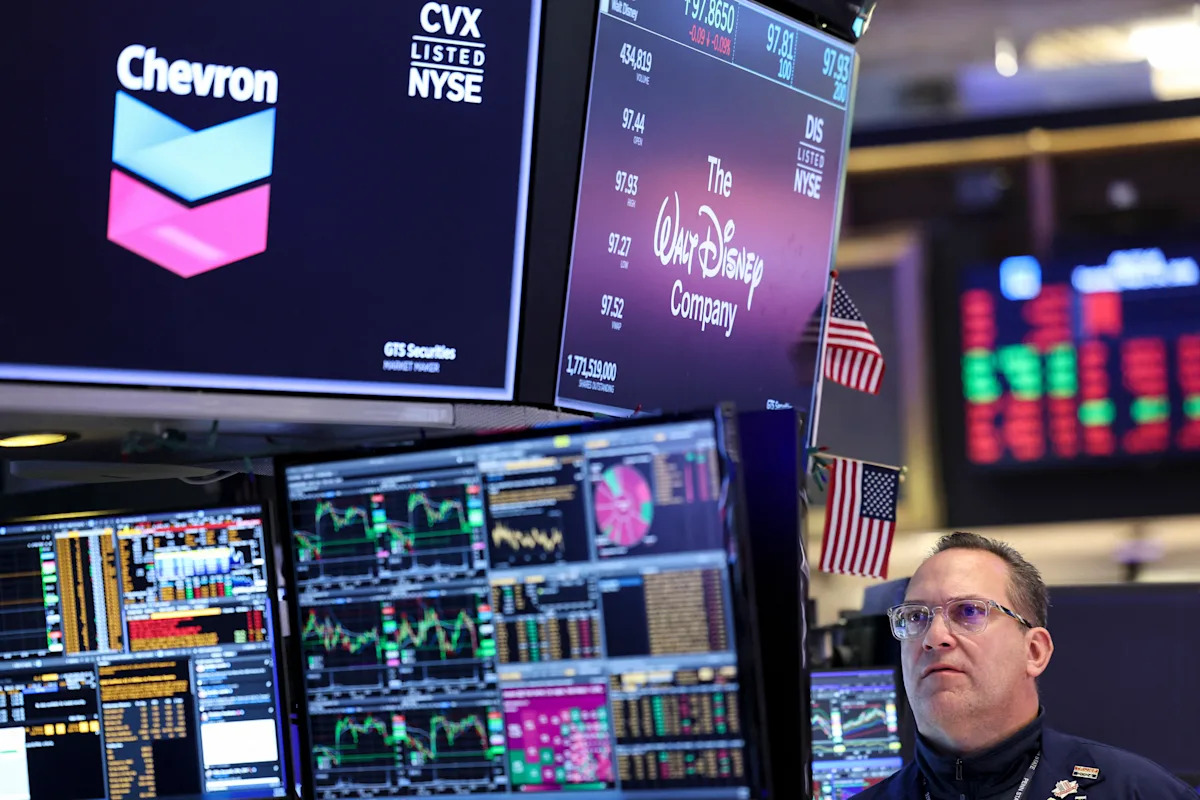
- War Impact Assessment: According to Jim Cramer, while the direct impact of the Iran war on Nvidia's stock is difficult to quantify, shares have fallen over 3% since February 27, reflecting market concerns over uncertainty.
- Interest Rate Factors: Cramer notes that rising interest rates could increase borrowing costs, potentially slowing down data center buildouts, which poses a threat to Nvidia's long-term demand, especially if the war continues.
- Intrinsic Demand Analysis: Despite high memory prices potentially affecting demand for Nvidia chips, Cramer learned at the Nvidia GTC conference that demand remains incredibly strong, indicating the company's fundamentals are still healthy.
- Investment Timing Consideration: Cramer advises investors to consider buying Nvidia stock at current prices, as there may be more downside in the short term, but the opportunity to invest in a high-quality stock should not be missed in the long run.
Trade with 70% Backtested Accuracy
Stop guessing "Should I Buy NVDA?" and start using high-conviction signals backed by rigorous historical data.
Sign up today to access powerful investing tools and make smarter, data-driven decisions.
Analyst Views on NVDA
Wall Street analysts forecast NVDA stock price to rise
41 Analyst Rating
39 Buy
1 Hold
1 Sell
Strong Buy
Current: 178.680

Low
200.00
Averages
264.97
High
352.00
Current: 178.680
Low
200.00
Averages
264.97
High
352.00
About NVDA
NVIDIA Corporation is a full-stack computing infrastructure company. The Company is engaged in accelerated computing to help solve the challenging computational problems. The Company’s segments include Compute & Networking and Graphics. The Compute & Networking segment includes its Data Center accelerated computing platforms and artificial intelligence (AI) solutions and software; networking; automotive platforms and autonomous and electric vehicle solutions; Jetson for robotics and other embedded platforms, and DGX Cloud computing services. The Graphics segment includes GeForce GPUs for gaming and PCs, the GeForce NOW game streaming service and related infrastructure, and solutions for gaming platforms; Quadro/NVIDIA RTX GPUs for enterprise workstation graphics; virtual GPU software for cloud-based visual and virtual computing; automotive platforms for infotainment systems, and Omniverse Enterprise software for building and operating industrial AI and digital twin applications.
About the author

Emily J. Thompson
Emily J. Thompson, a Chartered Financial Analyst (CFA) with 12 years in investment research, graduated with honors from the Wharton School. Specializing in industrial and technology stocks, she provides in-depth analysis for Intellectia’s earnings and market brief reports.

Nvidia Projects Over $1 Trillion in Chip Sales by 2027

- Strong Sales Outlook: CEO Jensen Huang expects Nvidia to achieve at least $1 trillion in sales from Blackwell and Vera Rubin chips by 2027, indicating the company's ongoing growth potential in the AI sector.
- Massive Order Backlog: Huang noted that Nvidia had a backlog of $500 billion in orders for 2026, with an additional $500 billion projected for 2027, providing robust support for future revenue.
- Significant Revenue Growth: Nvidia generated $215.9 billion in revenue for the fiscal year 2026, reflecting a 65% year-over-year increase, demonstrating strong demand in the AI market and ample room for future growth.
- Reasonable Valuation: Despite its large market cap, Nvidia's forward P/E ratio stands at 21 times, which is an increase from last April's lows, suggesting that Nvidia's stock remains attractive amid ongoing earnings growth.
See More
Reflection Negotiating to Secure $2.5 Billion Funding - WSJ
- Reflection on Talks: Ongoing discussions are taking place regarding a significant financial matter.
- Financial Implications: The talks are centered around a potential $2.5 billion deal.
See More

NVIDIA-Supported Startup Reflection Aims for $25 Billion Valuation - WSJ
NVIDIA's Investment: NVIDIA has backed a startup named Reflection, which is focused on innovative technologies in the AI sector.
Valuation Milestone: The startup Reflection has achieved a significant valuation of $25 billion, highlighting its potential in the market.
See More

Nvidia Projects $1 Trillion in Chip Sales
- Sales Forecast Surge: Nvidia anticipates lifetime sales of its Blackwell and Rubin graphics processing units to reach $1 trillion, doubling last year's estimate of $500 billion, indicating robust demand that could drive stock price increases.
- Data Center Spending Growth: Global data center capital expenditures are projected to rise to $3 trillion to $4 trillion annually by the end of 2030, and with ongoing AI spending trends, this forecast may not be far-fetched, presenting significant market opportunities for Nvidia.
- AI Spending Trends: Despite investor skepticism regarding the ROI of AI spending, major tech companies like Meta, Microsoft, Amazon, and Alphabet are expected to spend around $650 billion this year on data center construction and chip costs, positioning Nvidia as a primary beneficiary.
- Market Rebound Expectations: Analysts believe Nvidia's stock is poised to hit new highs in the coming years, especially if major AI hyperscalers continue to ramp up spending in 2027, signaling to investors that Nvidia's growth potential remains strong.
See More

U.S. Stocks Plummet Amid Rising Oil Prices and Iran Negotiation Concerns

- Nasdaq Index Plunge: The Nasdaq 100 experienced its worst one-day drop since October, while the S&P 500 and Nasdaq Composite recorded their worst performance since January 20, indicating heightened market concerns over economic outlook.
- Sector Performance Divergence: Tech stocks have fallen 15.5% from their October highs, whereas the energy sector has risen 10.5% since the onset of the Iran conflict, suggesting a potential reevaluation of asset allocation by investors based on sector resilience.
- Oversold Stocks: Only five stocks in the Nasdaq 100 are considered 'oversold' with an RSI of 30, indicating a bearish market sentiment that may lead to selling pressure, particularly affecting well-known companies like Microsoft and Disney.
- Cruise Line Performance Decline: Carnival Cruise Line's shares have dropped 17.6% over the past three months and 25% since the February 6 high, reflecting a sluggish recovery in the travel industry that could undermine future investor confidence.
See More

Intensifying Competition in AI Chip Market


- Rise of TPU: Alphabet's introduction of the TPU chip, specifically designed for its AI program Gemini, signals a shift in the AI industry from Nvidia GPUs to custom chips, enhancing competitive dynamics in the market.
- Broadcom's Strategic Partnership: The multi-year design partnership between Broadcom and OpenAI aims to develop 10 gigawatts of custom AI accelerators, with projected AI chip revenue reaching $100 billion by 2027, indicating strong growth potential in the AI sector.
- Market Share Expectations: Broadcom is expected to capture a 60% share of the AI server compute application-specific integrated circuit market by 2027, bolstered by collaborations with Microsoft, Amazon, and Meta, further solidifying its market position.
- TSMC's Manufacturing Capacity: Taiwan Semiconductor, as the world's leading chip foundry controlling 72% of the market, is projected to generate $122.42 billion in revenue by 2025, underscoring its critical role in the global semiconductor landscape.
See More
Nvidia Projects Over $1 Trillion in Chip Sales by 2027
- Strong Sales Outlook: CEO Jensen Huang expects Nvidia to achieve at least $1 trillion in sales from Blackwell and Vera Rubin chips by 2027, indicating the company's ongoing growth potential in the AI sector.
- Massive Order Backlog: Huang noted that Nvidia had a backlog of $500 billion in orders for 2026, with an additional $500 billion projected for 2027, providing robust support for future revenue.
- Significant Revenue Growth: Nvidia generated $215.9 billion in revenue for the fiscal year 2026, reflecting a 65% year-over-year increase, demonstrating strong demand in the AI market and ample room for future growth.
- Reasonable Valuation: Despite its large market cap, Nvidia's forward P/E ratio stands at 21 times, which is an increase from last April's lows, suggesting that Nvidia's stock remains attractive amid ongoing earnings growth.
See More
Reflection Negotiating to Secure $2.5 Billion Funding - WSJ
- Reflection on Talks: Ongoing discussions are taking place regarding a significant financial matter.
- Financial Implications: The talks are centered around a potential $2.5 billion deal.
See More
NVIDIA-Supported Startup Reflection Aims for $25 Billion Valuation - WSJ
NVIDIA's Investment: NVIDIA has backed a startup named Reflection, which is focused on innovative technologies in the AI sector.
Valuation Milestone: The startup Reflection has achieved a significant valuation of $25 billion, highlighting its potential in the market.
See More
Nvidia Projects $1 Trillion in Chip Sales
- Sales Forecast Surge: Nvidia anticipates lifetime sales of its Blackwell and Rubin graphics processing units to reach $1 trillion, doubling last year's estimate of $500 billion, indicating robust demand that could drive stock price increases.
- Data Center Spending Growth: Global data center capital expenditures are projected to rise to $3 trillion to $4 trillion annually by the end of 2030, and with ongoing AI spending trends, this forecast may not be far-fetched, presenting significant market opportunities for Nvidia.
- AI Spending Trends: Despite investor skepticism regarding the ROI of AI spending, major tech companies like Meta, Microsoft, Amazon, and Alphabet are expected to spend around $650 billion this year on data center construction and chip costs, positioning Nvidia as a primary beneficiary.
- Market Rebound Expectations: Analysts believe Nvidia's stock is poised to hit new highs in the coming years, especially if major AI hyperscalers continue to ramp up spending in 2027, signaling to investors that Nvidia's growth potential remains strong.
See More
U.S. Stocks Plummet Amid Rising Oil Prices and Iran Negotiation Concerns
- Nasdaq Index Plunge: The Nasdaq 100 experienced its worst one-day drop since October, while the S&P 500 and Nasdaq Composite recorded their worst performance since January 20, indicating heightened market concerns over economic outlook.
- Sector Performance Divergence: Tech stocks have fallen 15.5% from their October highs, whereas the energy sector has risen 10.5% since the onset of the Iran conflict, suggesting a potential reevaluation of asset allocation by investors based on sector resilience.
- Oversold Stocks: Only five stocks in the Nasdaq 100 are considered 'oversold' with an RSI of 30, indicating a bearish market sentiment that may lead to selling pressure, particularly affecting well-known companies like Microsoft and Disney.
- Cruise Line Performance Decline: Carnival Cruise Line's shares have dropped 17.6% over the past three months and 25% since the February 6 high, reflecting a sluggish recovery in the travel industry that could undermine future investor confidence.
See More
Intensifying Competition in AI Chip Market
- Rise of TPU: Alphabet's introduction of the TPU chip, specifically designed for its AI program Gemini, signals a shift in the AI industry from Nvidia GPUs to custom chips, enhancing competitive dynamics in the market.
- Broadcom's Strategic Partnership: The multi-year design partnership between Broadcom and OpenAI aims to develop 10 gigawatts of custom AI accelerators, with projected AI chip revenue reaching $100 billion by 2027, indicating strong growth potential in the AI sector.
- Market Share Expectations: Broadcom is expected to capture a 60% share of the AI server compute application-specific integrated circuit market by 2027, bolstered by collaborations with Microsoft, Amazon, and Meta, further solidifying its market position.
- TSMC's Manufacturing Capacity: Taiwan Semiconductor, as the world's leading chip foundry controlling 72% of the market, is projected to generate $122.42 billion in revenue by 2025, underscoring its critical role in the global semiconductor landscape.
See More