Amazon's Cloud Business Encounters Fresh AI Rivals in Microsoft and Google


AWS Outage and Competition: Amazon Web Services (AWS) experienced a significant 15-hour outage affecting numerous clients, while Google strengthened its position in AI by partnering with Anthropic, posing a direct challenge to AWS.
Market Share Decline: AWS's market share has decreased from nearly 50% in 2018 to 38% in 2024, indicating a perception that it is falling behind competitors like Google and Microsoft in the AI sector.
Analyst Insights on Growth: Analysts express optimism for Amazon's future, citing potential growth from new data center capacity and the success of its AI partner Anthropic, despite AWS lagging behind in corporate sales compared to Microsoft.
Stock Performance: As of the latest publication, Amazon's stock is up 0.28%, while Microsoft and Alphabet's stocks have also seen slight increases, reflecting ongoing competition in the tech industry.
Trade with 70% Backtested Accuracy
Analyst Views on MSFT

About MSFT
About the author

Candy Crush Surprises Fans at Intuit Dome with Celebrity Appearance

- Celebrity Surprise: Anna Faris surprised fans by appearing as the Bubblegum Troll during the LA Clippers vs. Portland Trail Blazers game, significantly enhancing brand visibility and fan engagement.
- Enhanced Interactive Experience: Through its partnership with Intuit Dome, Candy Crush transformed the game night into a fun-filled interactive experience, attracting over 1,000 attendees and strengthening emotional connections between the brand and consumers.
- Diverse Activity Schedule: Throughout the game, characters like Bubblegum Troll, Yeti, and Tiffi made frequent appearances, providing rich visual effects and live activities that enhanced the overall spectator experience, further solidifying Candy Crush's market position.
- Long-term Partnership Outlook: The collaboration between Candy Crush and Intuit Dome is set to continue until 2028, with plans for more innovative interactive events that will further boost the brand's influence and market share among younger consumers.
Microsoft's $5.5 Billion Singapore Investment Amid AI Challenges
- Quarterly Decline: Microsoft faced its steepest quarterly decline since the 2008 financial crisis in Q1 2026, losing nearly a quarter of its market value, which raises concerns about its profitability and market position.
- Singapore Investment Plan: The company announced a $5.5 billion investment in Singapore aimed at expanding cloud and AI infrastructure by 2029, positioning Microsoft’s technology at the heart of Singapore's digital economy and potentially driving long-term growth.
- AI Investment Return Concerns: Despite efforts to boost revenue through the AI-powered Microsoft 365 Copilot, only about 3% of commercial Office customers currently hold licenses, leading investors to express skepticism regarding the returns on its AI investments.
- Azure Division Growth: Microsoft’s Azure division reported a 39% revenue growth in the December quarter, with a backlog of $625 billion in commercial commitments, providing a strong foundation for future growth despite overall performance pressures.
Market Volatility and Amazon's Acquisition Talks


- Market Volatility: Stocks experienced significant declines at the open on Thursday due to President Trump's hawkish remarks on the Iran war, which raised concerns and caused oil prices to surge; however, news of Iran working with Oman on a shipping protocol eased oil price pressures, allowing the S&P 500 to briefly trade higher, reflecting the market's high uncertainty.
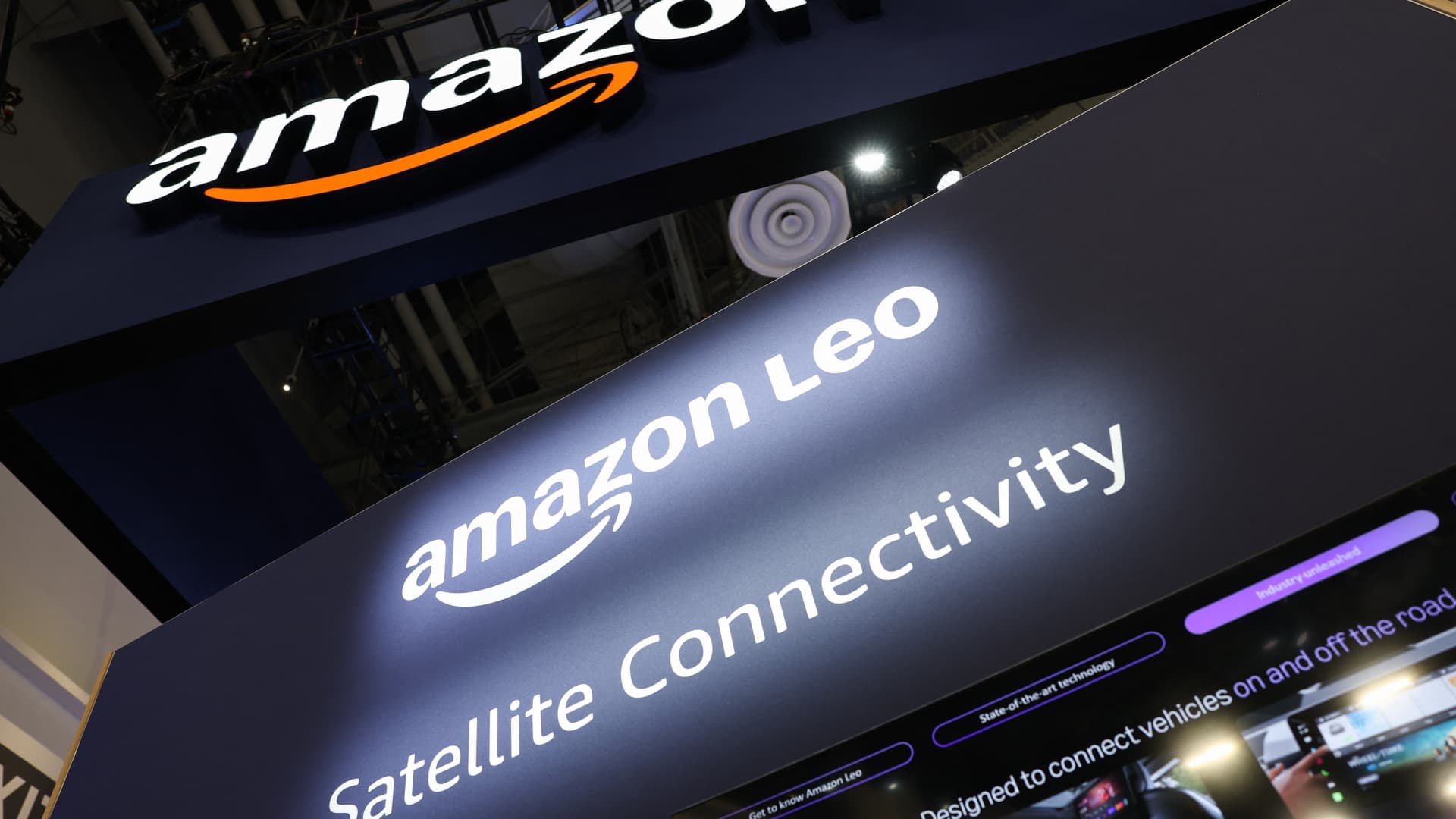
- Amazon Acquisition Talks: Amazon is in negotiations to acquire satellite company Globalstar to advance its internet-from-space service, Leo, having launched about 200 low Earth orbit satellites despite competition from SpaceX's Starlink, which has over 10,000 satellites; this move is expected to enhance rural internet access and make Prime membership more attractive.
- Microsoft's AI Investment Lag: A profile on Microsoft CFO Amy Mood highlighted the company's conservative approach to AI spending, which has led to a competitive disadvantage, with the stock down 23% year-to-date; nevertheless, analysts remain optimistic about management's ability to address these challenges, maintaining a $600 price target.
- Rapid Stock Review: Stocks mentioned in Thursday's rapid-fire segment included Brinker, Texas Roadhouse, and Constellation Brands, indicating a focus on diversified investment strategies while emphasizing Jim Cramer's long-term holding approach in specific stocks within his charitable trust.

Microsoft Launches New AI Models to Compete with Google

- New AI Model Launch: Microsoft has unveiled three new AI models, including the world's most accurate transcription model, MAI-Transcribe-1, which supports 25 languages and is priced at $0.36 per hour, aimed at enhancing developer productivity and directly competing with Google and OpenAI.
- Pricing Competitive Edge: MAI-Voice-1 is priced at $22 per million characters, while MAI-Image-2 costs $5 per million tokens for text input and $33 for image output, significantly undercutting Google's Gemini 3 Pro image generation model at $120 per million tokens, thereby increasing market appeal.
- Accuracy Leadership: MAI-Transcribe-1 boasts a mean word error rate of 3.9%, outperforming OpenAI's GPT-Transcribe (4.2%) and Gemini 3.1 Flash (4.9%), which positions Microsoft advantageously in the transcription technology space and solidifies its market standing.
- Human-Centric AI Strategy: Mustafa Suleyman, CEO of Microsoft AI, emphasizes the company's human-centered approach in model development, with plans to release more models in the future, aiming to optimize human communication and enhance user experience, showcasing Microsoft's long-term strategic vision in the AI sector.

Investment Opportunities Amidst Tech Stock Declines

- Market Correction Impact: The Nasdaq Composite has fallen nearly 13% from its peak, significantly impacting tech stocks and highlighting market instability, which requires cautious navigation by investors.
- ETF Investment Strategy: Despite the Vanguard Information Technology ETF's 16.4% drop from its 2025 peak, its share price has decreased from $800 to $665, presenting an opportunity for long-term investors to buy at a discount.
- Diversified Risk Management: This ETF holds 318 stocks, with the top three holdings accounting for 44%, while the remaining assets are spread across various tech sectors, reducing single-stock risk and enhancing resilience against downturns.
- Long-Term Return Potential: Since its launch in 2004, the ETF has achieved a total return of approximately 1,550%, meaning a $5,000 investment would now be worth about $82,000, demonstrating the value and potential of long-term holding.

Investment Opportunities Amid Tech Stock Corrections
- Market Correction Impact: Major market indexes have been steadily declining, with tech stocks particularly affected, as the Nasdaq Composite has fallen nearly 13% from its peak, reflecting a bearish sentiment and cautious investor behavior.
- ETF Investment Strategy: Despite the Vanguard Information Technology ETF's price dropping over 16% from approximately $801 in October 2025 to $665, I continue to invest, viewing the current price as an opportunity for long-term investment at a discount.
- Diversified Risk Management: The ETF holds 318 stocks, with the top three holdings (Nvidia, Apple, and Microsoft) accounting for 44% of assets, while the remainder is diversified across various tech sectors, reducing single-stock risk and enhancing portfolio stability.
- Long-Term Investment Returns: Since its inception in 2004, the Vanguard Information Technology ETF has achieved total returns of about 1,550%, meaning a $5,000 investment would now be worth approximately $82,000, highlighting the potential and value of maintaining a long-term investment approach amid market volatility.
Candy Crush Surprises Fans at Intuit Dome with Celebrity Appearance
- Celebrity Surprise: Anna Faris surprised fans by appearing as the Bubblegum Troll during the LA Clippers vs. Portland Trail Blazers game, significantly enhancing brand visibility and fan engagement.
- Enhanced Interactive Experience: Through its partnership with Intuit Dome, Candy Crush transformed the game night into a fun-filled interactive experience, attracting over 1,000 attendees and strengthening emotional connections between the brand and consumers.
- Diverse Activity Schedule: Throughout the game, characters like Bubblegum Troll, Yeti, and Tiffi made frequent appearances, providing rich visual effects and live activities that enhanced the overall spectator experience, further solidifying Candy Crush's market position.
- Long-term Partnership Outlook: The collaboration between Candy Crush and Intuit Dome is set to continue until 2028, with plans for more innovative interactive events that will further boost the brand's influence and market share among younger consumers.
Microsoft's $5.5 Billion Singapore Investment Amid AI Challenges
- Quarterly Decline: Microsoft faced its steepest quarterly decline since the 2008 financial crisis in Q1 2026, losing nearly a quarter of its market value, which raises concerns about its profitability and market position.
- Singapore Investment Plan: The company announced a $5.5 billion investment in Singapore aimed at expanding cloud and AI infrastructure by 2029, positioning Microsoft’s technology at the heart of Singapore's digital economy and potentially driving long-term growth.
- AI Investment Return Concerns: Despite efforts to boost revenue through the AI-powered Microsoft 365 Copilot, only about 3% of commercial Office customers currently hold licenses, leading investors to express skepticism regarding the returns on its AI investments.
- Azure Division Growth: Microsoft’s Azure division reported a 39% revenue growth in the December quarter, with a backlog of $625 billion in commercial commitments, providing a strong foundation for future growth despite overall performance pressures.
Market Volatility and Amazon's Acquisition Talks
- Market Volatility: Stocks experienced significant declines at the open on Thursday due to President Trump's hawkish remarks on the Iran war, which raised concerns and caused oil prices to surge; however, news of Iran working with Oman on a shipping protocol eased oil price pressures, allowing the S&P 500 to briefly trade higher, reflecting the market's high uncertainty.
- Amazon Acquisition Talks: Amazon is in negotiations to acquire satellite company Globalstar to advance its internet-from-space service, Leo, having launched about 200 low Earth orbit satellites despite competition from SpaceX's Starlink, which has over 10,000 satellites; this move is expected to enhance rural internet access and make Prime membership more attractive.
- Microsoft's AI Investment Lag: A profile on Microsoft CFO Amy Mood highlighted the company's conservative approach to AI spending, which has led to a competitive disadvantage, with the stock down 23% year-to-date; nevertheless, analysts remain optimistic about management's ability to address these challenges, maintaining a $600 price target.
- Rapid Stock Review: Stocks mentioned in Thursday's rapid-fire segment included Brinker, Texas Roadhouse, and Constellation Brands, indicating a focus on diversified investment strategies while emphasizing Jim Cramer's long-term holding approach in specific stocks within his charitable trust.
Microsoft Launches New AI Models to Compete with Google
- New AI Model Launch: Microsoft has unveiled three new AI models, including the world's most accurate transcription model, MAI-Transcribe-1, which supports 25 languages and is priced at $0.36 per hour, aimed at enhancing developer productivity and directly competing with Google and OpenAI.
- Pricing Competitive Edge: MAI-Voice-1 is priced at $22 per million characters, while MAI-Image-2 costs $5 per million tokens for text input and $33 for image output, significantly undercutting Google's Gemini 3 Pro image generation model at $120 per million tokens, thereby increasing market appeal.
- Accuracy Leadership: MAI-Transcribe-1 boasts a mean word error rate of 3.9%, outperforming OpenAI's GPT-Transcribe (4.2%) and Gemini 3.1 Flash (4.9%), which positions Microsoft advantageously in the transcription technology space and solidifies its market standing.
- Human-Centric AI Strategy: Mustafa Suleyman, CEO of Microsoft AI, emphasizes the company's human-centered approach in model development, with plans to release more models in the future, aiming to optimize human communication and enhance user experience, showcasing Microsoft's long-term strategic vision in the AI sector.
Investment Opportunities Amidst Tech Stock Declines
- Market Correction Impact: The Nasdaq Composite has fallen nearly 13% from its peak, significantly impacting tech stocks and highlighting market instability, which requires cautious navigation by investors.
- ETF Investment Strategy: Despite the Vanguard Information Technology ETF's 16.4% drop from its 2025 peak, its share price has decreased from $800 to $665, presenting an opportunity for long-term investors to buy at a discount.
- Diversified Risk Management: This ETF holds 318 stocks, with the top three holdings accounting for 44%, while the remaining assets are spread across various tech sectors, reducing single-stock risk and enhancing resilience against downturns.
- Long-Term Return Potential: Since its launch in 2004, the ETF has achieved a total return of approximately 1,550%, meaning a $5,000 investment would now be worth about $82,000, demonstrating the value and potential of long-term holding.
Investment Opportunities Amid Tech Stock Corrections
- Market Correction Impact: Major market indexes have been steadily declining, with tech stocks particularly affected, as the Nasdaq Composite has fallen nearly 13% from its peak, reflecting a bearish sentiment and cautious investor behavior.
- ETF Investment Strategy: Despite the Vanguard Information Technology ETF's price dropping over 16% from approximately $801 in October 2025 to $665, I continue to invest, viewing the current price as an opportunity for long-term investment at a discount.
- Diversified Risk Management: The ETF holds 318 stocks, with the top three holdings (Nvidia, Apple, and Microsoft) accounting for 44% of assets, while the remainder is diversified across various tech sectors, reducing single-stock risk and enhancing portfolio stability.
- Long-Term Investment Returns: Since its inception in 2004, the Vanguard Information Technology ETF has achieved total returns of about 1,550%, meaning a $5,000 investment would now be worth approximately $82,000, highlighting the potential and value of maintaining a long-term investment approach amid market volatility.