Amazon Shares Drop After Rothschild & Co Lowers Rating

Stock Downgrade: Amazon's shares fell after Rothschild & Co downgraded the stock from Buy to Neutral, maintaining a price target of $250 amid bearish market momentum.
Tech Sector Concerns: The downgrade follows a significant selloff in the Nasdaq 100, driven by fears that AI stocks are overpriced and concerns over the high capital intensity and depreciation rates associated with Gen-AI investments.
Contrasting Analyst Ratings: Despite Rothschild's downgrade, other analysts like Rosenblatt and Mizuho have maintained positive outlooks on Amazon, with target prices set at $305.00 and $315.00, respectively.
Current Stock Performance: As of the latest update, Amazon's stock was down 4.10%, trading at $223.32, reflecting the ongoing volatility in the tech market.
Trade with 70% Backtested Accuracy
Analyst Views on AMZN

About AMZN
About the author


Amazon Web Services Sees Significant Revenue Growth

- Accelerated Revenue Growth: Amazon Web Services (AWS) saw a 24% year-over-year revenue surge in Q4 2025, reaching $35.6 billion, significantly up from 20% growth in Q3, indicating strong enterprise demand for generative AI applications driving data infrastructure modernization.
- Substantial Capital Expenditure Increase: Management expects capital expenditures to reach $200 billion in 2026, sharply up from $131 billion in 2025, reflecting Amazon's ambitious goals in AI and a significant financial commitment to infrastructure development.
- Diversified Revenue Support: Although Amazon's trailing-12-month free cash flow fell to $11.2 billion, its operating cash flow increased by 20% year-over-year to $139.5 billion, demonstrating strong performance in high-margin segments like advertising and subscriptions, enabling self-funding for AI infrastructure investments.
- Market Risks and Opportunities: Despite risks of waning market appetite for AI software, Amazon's diversified business model and robust operating cash flow present an attractive long-term investment opportunity, allowing investors to capitalize on the current stock price pullback for future growth.

Space Stocks Surge Amid Acquisition Rumors and IPO Anticipation

- Acquisition Rumors Boost Stocks: Multiple space companies saw stock price surges due to reports of Amazon's acquisition talks with Globalstar, whose shares rose 13.43% to $9.20, indicating strong market demand for satellite internet services and investor optimism.
- Strong Market Performance: According to S&P Global Market Intelligence, Intuitive Machines' stock jumped 37%, while Iridium Communications and Planet Labs rose 18% and 16% respectively, reflecting investor confidence in the future growth potential of the space industry.
- SpaceX IPO Anticipation: SpaceX is reportedly seeking a staggering $1.75 trillion market valuation and could go public as early as June, which would further attract market attention to the space sector and potentially drive up related companies' stock prices.
- NASA Contract Fuels Growth: Intuitive Machines secured a $180 million contract from NASA to deliver payloads to the Moon's surface, enhancing its market position and providing strong support for its leadership in space infrastructure development.

SpaceX Could Be the Blockbuster IPO of 2026
- Market Surge: Multiple space-focused stocks surged last week due to acquisition rumors and anticipation of IPOs, indicating strong investor interest and enthusiasm in the burgeoning space industry.
- Amazon Acquisition Plans: Amazon is reportedly in talks to acquire Globalstar to accelerate its satellite internet service rollout, which could significantly enhance its competitive position in the communications market.
- SpaceX IPO Potential: SpaceX has quietly filed for an IPO, with a staggering potential valuation of $1.75 trillion, which is expected to draw further investor attention to the massive growth potential of the space market, with the IPO possibly occurring in June 2026.
- NASA Contract Support: Intuitive Machines secured a $180 million contract from NASA to deliver payloads to the Moon's surface, which not only boosts the company's market position but also lays the groundwork for its future space exploration projects.
Roku Faces Competitive Pressure and Valuation Risks

- Financial Recovery: Roku's total revenue for Q4 2025 increased by 16% year-over-year to $1.39 billion, with its high-margin advertising platform revenue rising 18% to $1.22 billion, indicating significant progress in revenue growth.
- Profitability Improvement: The company reported a net income of $80.5 million for Q4, a substantial improvement from the net losses of the previous year, while generating $484 million in free cash flow for the full year, up over 100%, providing funds for future investments and share repurchases.
- Intense Competitive Landscape: Despite positive financial metrics, Roku faces fierce competition from giants like Amazon, Alphabet, and Apple across multiple fronts, which possess deeper pockets and stronger market integration capabilities, posing structural challenges to Roku's long-term growth.
- Significant Valuation Risks: With a current price-to-earnings ratio of about 165, the market's expectations for Roku's future high growth appear overly optimistic, and if platform growth slows or user acquisition costs rise, the stock price could face significant pressure, necessitating careful risk-reward assessment by investors.

Roku Reports 18% Revenue Growth in Q4, Achieves Profitability
- Significant Revenue Growth: Roku's total revenue for Q4 increased by 16% year-over-year to $1.39 billion, with platform revenue rising 18% to $1.22 billion, demonstrating strong performance in digital advertising and streaming distribution, thereby enhancing its position in a competitive market.
- Profitability Recovery: The company reported a net income of $80.5 million for Q4, marking a significant improvement from the net losses posted a year earlier, indicating a shift towards profitability that may attract more investor interest in its future growth.
- Strong Cash Flow: Roku generated $484 million in free cash flow for the full year, up over 100% year-over-year, providing a solid foundation for future investments and shareholder returns while also reflecting improved operational efficiency.
- Increased Competitive Pressure: Despite financial progress, Roku's device gross margin was negative 23.3%, highlighting the challenges it faces in competing against giants like Amazon, Alphabet, and Apple, prompting investors to carefully assess whether its high price-to-earnings ratio of 165 is justified.
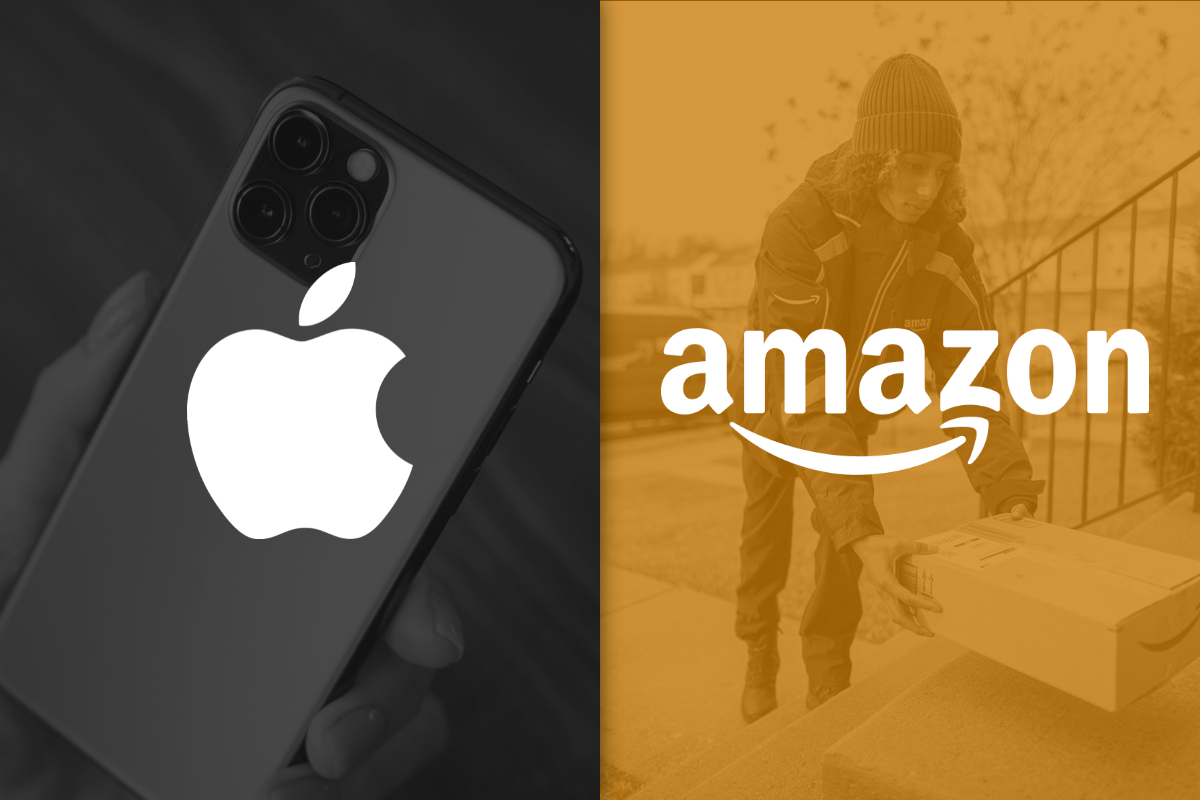
Amazon and Apple: Investment Opportunities in Uncertain Markets

- Amazon's Market Leadership: With a market cap of $2.3 trillion and over 1 million robots, Amazon has established the largest e-commerce and cloud computing business globally, enhancing customer loyalty through an efficient logistics network and AI technology, ensuring it remains competitive in a fierce market.
- Ongoing Investment in Cloud Computing: Amazon's capital expenditures in cloud computing are on the rise, particularly in AI infrastructure, aiming to capture growth opportunities in future cloud workloads, further solidifying its position as the world's largest cloud service provider.
- Apple's Ecosystem Advantage: With a market cap of $3.8 trillion and a gross margin of 47.33%, Apple attracts affluent customers through its high-end electronics and service ecosystem, creating a strong lock-in effect that drives high-margin recurring revenue growth.
- Attractiveness of Long-Term Investment: In uncertain market conditions, Amazon and Apple, with their robust business models and market leadership, emerge as core stocks worth long-term investment, capable of achieving sustained growth in the future.
Amazon Web Services Sees Significant Revenue Growth
- Accelerated Revenue Growth: Amazon Web Services (AWS) saw a 24% year-over-year revenue surge in Q4 2025, reaching $35.6 billion, significantly up from 20% growth in Q3, indicating strong enterprise demand for generative AI applications driving data infrastructure modernization.
- Substantial Capital Expenditure Increase: Management expects capital expenditures to reach $200 billion in 2026, sharply up from $131 billion in 2025, reflecting Amazon's ambitious goals in AI and a significant financial commitment to infrastructure development.
- Diversified Revenue Support: Although Amazon's trailing-12-month free cash flow fell to $11.2 billion, its operating cash flow increased by 20% year-over-year to $139.5 billion, demonstrating strong performance in high-margin segments like advertising and subscriptions, enabling self-funding for AI infrastructure investments.
- Market Risks and Opportunities: Despite risks of waning market appetite for AI software, Amazon's diversified business model and robust operating cash flow present an attractive long-term investment opportunity, allowing investors to capitalize on the current stock price pullback for future growth.
Space Stocks Surge Amid Acquisition Rumors and IPO Anticipation
- Acquisition Rumors Boost Stocks: Multiple space companies saw stock price surges due to reports of Amazon's acquisition talks with Globalstar, whose shares rose 13.43% to $9.20, indicating strong market demand for satellite internet services and investor optimism.
- Strong Market Performance: According to S&P Global Market Intelligence, Intuitive Machines' stock jumped 37%, while Iridium Communications and Planet Labs rose 18% and 16% respectively, reflecting investor confidence in the future growth potential of the space industry.
- SpaceX IPO Anticipation: SpaceX is reportedly seeking a staggering $1.75 trillion market valuation and could go public as early as June, which would further attract market attention to the space sector and potentially drive up related companies' stock prices.
- NASA Contract Fuels Growth: Intuitive Machines secured a $180 million contract from NASA to deliver payloads to the Moon's surface, enhancing its market position and providing strong support for its leadership in space infrastructure development.
SpaceX Could Be the Blockbuster IPO of 2026
- Market Surge: Multiple space-focused stocks surged last week due to acquisition rumors and anticipation of IPOs, indicating strong investor interest and enthusiasm in the burgeoning space industry.
- Amazon Acquisition Plans: Amazon is reportedly in talks to acquire Globalstar to accelerate its satellite internet service rollout, which could significantly enhance its competitive position in the communications market.
- SpaceX IPO Potential: SpaceX has quietly filed for an IPO, with a staggering potential valuation of $1.75 trillion, which is expected to draw further investor attention to the massive growth potential of the space market, with the IPO possibly occurring in June 2026.
- NASA Contract Support: Intuitive Machines secured a $180 million contract from NASA to deliver payloads to the Moon's surface, which not only boosts the company's market position but also lays the groundwork for its future space exploration projects.
Roku Faces Competitive Pressure and Valuation Risks
- Financial Recovery: Roku's total revenue for Q4 2025 increased by 16% year-over-year to $1.39 billion, with its high-margin advertising platform revenue rising 18% to $1.22 billion, indicating significant progress in revenue growth.
- Profitability Improvement: The company reported a net income of $80.5 million for Q4, a substantial improvement from the net losses of the previous year, while generating $484 million in free cash flow for the full year, up over 100%, providing funds for future investments and share repurchases.
- Intense Competitive Landscape: Despite positive financial metrics, Roku faces fierce competition from giants like Amazon, Alphabet, and Apple across multiple fronts, which possess deeper pockets and stronger market integration capabilities, posing structural challenges to Roku's long-term growth.
- Significant Valuation Risks: With a current price-to-earnings ratio of about 165, the market's expectations for Roku's future high growth appear overly optimistic, and if platform growth slows or user acquisition costs rise, the stock price could face significant pressure, necessitating careful risk-reward assessment by investors.
Roku Reports 18% Revenue Growth in Q4, Achieves Profitability
- Significant Revenue Growth: Roku's total revenue for Q4 increased by 16% year-over-year to $1.39 billion, with platform revenue rising 18% to $1.22 billion, demonstrating strong performance in digital advertising and streaming distribution, thereby enhancing its position in a competitive market.
- Profitability Recovery: The company reported a net income of $80.5 million for Q4, marking a significant improvement from the net losses posted a year earlier, indicating a shift towards profitability that may attract more investor interest in its future growth.
- Strong Cash Flow: Roku generated $484 million in free cash flow for the full year, up over 100% year-over-year, providing a solid foundation for future investments and shareholder returns while also reflecting improved operational efficiency.
- Increased Competitive Pressure: Despite financial progress, Roku's device gross margin was negative 23.3%, highlighting the challenges it faces in competing against giants like Amazon, Alphabet, and Apple, prompting investors to carefully assess whether its high price-to-earnings ratio of 165 is justified.
Amazon and Apple: Investment Opportunities in Uncertain Markets
- Amazon's Market Leadership: With a market cap of $2.3 trillion and over 1 million robots, Amazon has established the largest e-commerce and cloud computing business globally, enhancing customer loyalty through an efficient logistics network and AI technology, ensuring it remains competitive in a fierce market.
- Ongoing Investment in Cloud Computing: Amazon's capital expenditures in cloud computing are on the rise, particularly in AI infrastructure, aiming to capture growth opportunities in future cloud workloads, further solidifying its position as the world's largest cloud service provider.
- Apple's Ecosystem Advantage: With a market cap of $3.8 trillion and a gross margin of 47.33%, Apple attracts affluent customers through its high-end electronics and service ecosystem, creating a strong lock-in effect that drives high-margin recurring revenue growth.
- Attractiveness of Long-Term Investment: In uncertain market conditions, Amazon and Apple, with their robust business models and market leadership, emerge as core stocks worth long-term investment, capable of achieving sustained growth in the future.