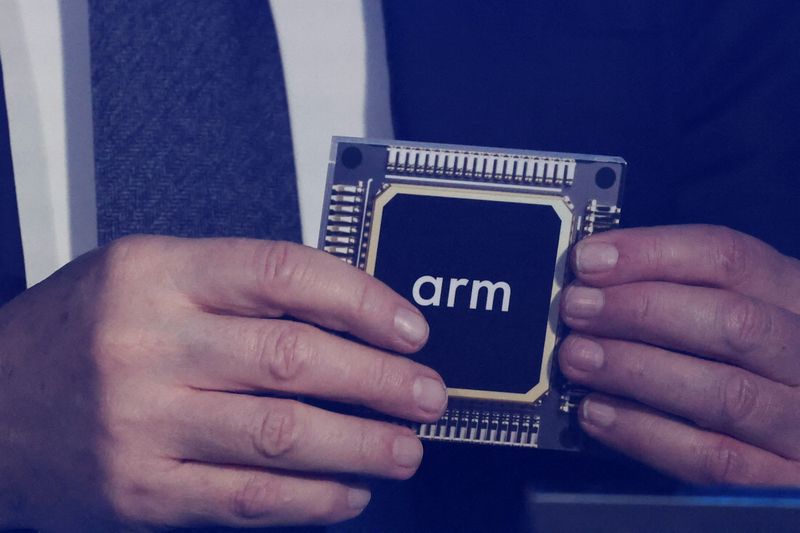
Alibaba's cloud division is flourishing with a new AI chip in development, leading to a surge in stock prices.

Alibaba's Quarterly Earnings Report
- Revenue Performance: Alibaba Group reported $34.6 billion in sales for the first quarter of fiscal 2026, falling short of the $35.2 billion consensus estimate, marking a 2% increase year-over-year.
- Net Income Surge: The company achieved a net income of $5.9 billion, significantly exceeding expectations and reflecting a remarkable 76% year-over-year growth, surpassing the consensus estimate of $3.7 billion.
- Earnings Per Share: Adjusted earnings per share were reported at $2.06, which was above the consensus of $1.97, although this represents a 10% decline compared to the previous year.
AI Developments
- Focus on Artificial Intelligence: The earnings report highlighted that Alibaba's advancements in artificial intelligence are gaining momentum, indicating a strategic focus on this technology as a growth driver for the company.
Trade with 70% Backtested Accuracy
Analyst Views on NVDA

About NVDA
About the author


Nvidia Projects $1 Trillion in GPU Sales by 2027

- Sales Forecast Surge: Nvidia anticipates cumulative sales of Blackwell and Vera Rubin GPUs to reach $1 trillion by 2027, a significant increase from last year's $500 billion estimate, highlighting the company's robust growth potential in the AI sector.
- Attractive Market Valuation: Currently, Nvidia's stock trades at a price-to-earnings ratio of 21.5, lower than the S&P 500's 24.1, indicating that the market's expectations for its future growth remain conservative, making it an opportune time for investors to consider increasing their holdings.
- Revenue Growth Outlook: Analysts project Nvidia's revenue to grow by 71% this year to $369 billion, with a 29% growth forecast for next year, and CEO Jensen Huang's insights suggest this growth rate may be underestimated, further underscoring the company's investment appeal.
- Sustained AI Investment: Despite overall negative market sentiment, Nvidia remains a direct beneficiary of ongoing data center build-outs, indicating that the company will maintain its competitive edge in the market moving forward.

Younger Investors Optimistic About AI Stocks
- Young Investor Confidence: According to The Motley Fool's survey, 68% of Gen Z and 64% of millennials plan to increase stock investments in 2026, reflecting optimism about market potential despite recession and inflation concerns.
- Generational Investment Divide: The survey reveals that over half of baby boomers and 44% of Gen X plan to hold stocks in 2026, compared to only 31% of millennials and 25% of Gen Z, indicating a more active participation from younger investors in the market.
- AI Stock Potential: Nvidia commands about 90% of the GPU market share and is expected to reach $1 trillion in data center sales by 2027, showcasing its strong leadership in AI, which attracts younger investors' attention.
- Rising Capital Expenditures: Tech giants like Meta, Alphabet, and Microsoft are set to spend $650 billion on capital expenditures in 2026, indicating a surge in investment in AI data centers, further fueling young investors' interest in related stocks.

Tech Stocks Rise on Wednesday Afternoon


- Tech Stock Recovery: On Wednesday afternoon, tech stocks broadly rose, indicating a gradual recovery in market confidence towards the tech sector, likely driven by optimistic investor expectations for future growth potential.
- ETF Performance: The rise of the State Street Technology Select Sector SPDR ETF reflects sustained investor interest in tech stocks, suggesting that market enthusiasm for the tech sector remains strong, potentially attracting more capital inflows.
- Improved Market Sentiment: The increase in tech stocks may be linked to an overall improvement in market sentiment, as investors begin to reassess the long-term value of tech companies after recent volatility, driving stock prices higher.
- Investor Focus on Future: With the rebound in tech stocks, investors may pay closer attention to upcoming earnings reports and market dynamics to seize potential investment opportunities, further propelling positive market trends.

Microsoft Executives Depart Amid Accelerated AI Transformation

- Executive Departures: Microsoft's Chief Diversity Officer Lindsay-Rae McIntyre will leave at the end of March to become a Chief People Officer at another organization, indicating significant HR changes during the company's AI transformation, which may impact corporate culture and employee morale.
- AI Transformation Strategy: The company is undergoing an 'AI-powered transformation,' with increased investments in data center infrastructure, particularly Nvidia graphics chips to support AI model operations, highlighting its commitment to future technologies despite the lack of specific details.
- Increased Market Pressure: Microsoft shares have dropped 23% in 2026, primarily due to rising concerns about intensified competition from generative AI products, which could affect the company's market share and investor confidence.
- Talent Strategy Restructuring: Microsoft is consolidating its engineering HR teams and plans to appoint a new head of talent acquisition to address fierce market competition, ensuring the ability to attract top talent and maintain a competitive edge in the AI sector.

Two Lesser-Known Photonics Companies Could Have a Significant Impact on AI

Impact of the Iran War on AI Industry: The uncertainty surrounding the Iran war has not significantly disrupted the rapid growth of the artificial intelligence industry, with losses in the sector not outpacing the broader S&P 500's 4% year-to-date loss.
NVIDIA's Investment in Photonics: NVIDIA's recent $2 billion investment in smaller photonics companies, Lumentum Holdings and Coherent Inc., indicates a strategic focus on this developing branch of AI-adjacent technology, potentially enhancing AI infrastructure.
Cohere's Performance and Valuation: Cohere's shares have surged over 45% year-to-date, exceeding analyst price targets, and the company has shown strong revenue growth, indicating a favorable outlook among analysts despite concerns about its high valuation.
Nova's Growth in the AI Market: Nova Ltd. has reported significant revenue growth and is positioned to benefit from long-term partnerships in the semiconductor manufacturing space, contributing to its strong performance in the booming AI market.

Microsoft's HR Executive Changes Amid AI Transformation
- Executive Departures: Microsoft's Chief Diversity Officer, Lindsay-Rae McIntyre, is set to leave at the end of March to become a Chief People Officer elsewhere, highlighting a trend of executive turnover during the company's AI transformation, which may impact its culture and diversity initiatives.
- New Talent Acquisition Strategy: The company is close to hiring a new head of talent acquisition who will report directly to Chief People Officer Amy Coleman, indicating a strong focus on attracting top talent amid intense market competition, aimed at enhancing recruitment efficiency and talent quality.
- AI-Powered Transformation: Coleman noted in a memo that Microsoft is undergoing an
Nvidia Projects $1 Trillion in GPU Sales by 2027
- Sales Forecast Surge: Nvidia anticipates cumulative sales of Blackwell and Vera Rubin GPUs to reach $1 trillion by 2027, a significant increase from last year's $500 billion estimate, highlighting the company's robust growth potential in the AI sector.
- Attractive Market Valuation: Currently, Nvidia's stock trades at a price-to-earnings ratio of 21.5, lower than the S&P 500's 24.1, indicating that the market's expectations for its future growth remain conservative, making it an opportune time for investors to consider increasing their holdings.
- Revenue Growth Outlook: Analysts project Nvidia's revenue to grow by 71% this year to $369 billion, with a 29% growth forecast for next year, and CEO Jensen Huang's insights suggest this growth rate may be underestimated, further underscoring the company's investment appeal.
- Sustained AI Investment: Despite overall negative market sentiment, Nvidia remains a direct beneficiary of ongoing data center build-outs, indicating that the company will maintain its competitive edge in the market moving forward.
Younger Investors Optimistic About AI Stocks
- Young Investor Confidence: According to The Motley Fool's survey, 68% of Gen Z and 64% of millennials plan to increase stock investments in 2026, reflecting optimism about market potential despite recession and inflation concerns.
- Generational Investment Divide: The survey reveals that over half of baby boomers and 44% of Gen X plan to hold stocks in 2026, compared to only 31% of millennials and 25% of Gen Z, indicating a more active participation from younger investors in the market.
- AI Stock Potential: Nvidia commands about 90% of the GPU market share and is expected to reach $1 trillion in data center sales by 2027, showcasing its strong leadership in AI, which attracts younger investors' attention.
- Rising Capital Expenditures: Tech giants like Meta, Alphabet, and Microsoft are set to spend $650 billion on capital expenditures in 2026, indicating a surge in investment in AI data centers, further fueling young investors' interest in related stocks.
Tech Stocks Rise on Wednesday Afternoon
- Tech Stock Recovery: On Wednesday afternoon, tech stocks broadly rose, indicating a gradual recovery in market confidence towards the tech sector, likely driven by optimistic investor expectations for future growth potential.
- ETF Performance: The rise of the State Street Technology Select Sector SPDR ETF reflects sustained investor interest in tech stocks, suggesting that market enthusiasm for the tech sector remains strong, potentially attracting more capital inflows.
- Improved Market Sentiment: The increase in tech stocks may be linked to an overall improvement in market sentiment, as investors begin to reassess the long-term value of tech companies after recent volatility, driving stock prices higher.
- Investor Focus on Future: With the rebound in tech stocks, investors may pay closer attention to upcoming earnings reports and market dynamics to seize potential investment opportunities, further propelling positive market trends.
Microsoft Executives Depart Amid Accelerated AI Transformation
- Executive Departures: Microsoft's Chief Diversity Officer Lindsay-Rae McIntyre will leave at the end of March to become a Chief People Officer at another organization, indicating significant HR changes during the company's AI transformation, which may impact corporate culture and employee morale.
- AI Transformation Strategy: The company is undergoing an 'AI-powered transformation,' with increased investments in data center infrastructure, particularly Nvidia graphics chips to support AI model operations, highlighting its commitment to future technologies despite the lack of specific details.
- Increased Market Pressure: Microsoft shares have dropped 23% in 2026, primarily due to rising concerns about intensified competition from generative AI products, which could affect the company's market share and investor confidence.
- Talent Strategy Restructuring: Microsoft is consolidating its engineering HR teams and plans to appoint a new head of talent acquisition to address fierce market competition, ensuring the ability to attract top talent and maintain a competitive edge in the AI sector.
Two Lesser-Known Photonics Companies Could Have a Significant Impact on AI
Impact of the Iran War on AI Industry: The uncertainty surrounding the Iran war has not significantly disrupted the rapid growth of the artificial intelligence industry, with losses in the sector not outpacing the broader S&P 500's 4% year-to-date loss.
NVIDIA's Investment in Photonics: NVIDIA's recent $2 billion investment in smaller photonics companies, Lumentum Holdings and Coherent Inc., indicates a strategic focus on this developing branch of AI-adjacent technology, potentially enhancing AI infrastructure.
Cohere's Performance and Valuation: Cohere's shares have surged over 45% year-to-date, exceeding analyst price targets, and the company has shown strong revenue growth, indicating a favorable outlook among analysts despite concerns about its high valuation.
Nova's Growth in the AI Market: Nova Ltd. has reported significant revenue growth and is positioned to benefit from long-term partnerships in the semiconductor manufacturing space, contributing to its strong performance in the booming AI market.
Microsoft's HR Executive Changes Amid AI Transformation
- Executive Departures: Microsoft's Chief Diversity Officer, Lindsay-Rae McIntyre, is set to leave at the end of March to become a Chief People Officer elsewhere, highlighting a trend of executive turnover during the company's AI transformation, which may impact its culture and diversity initiatives.
- New Talent Acquisition Strategy: The company is close to hiring a new head of talent acquisition who will report directly to Chief People Officer Amy Coleman, indicating a strong focus on attracting top talent amid intense market competition, aimed at enhancing recruitment efficiency and talent quality.
- AI-Powered Transformation: Coleman noted in a memo that Microsoft is undergoing an