Alibaba Reports Weak Earnings Growth Amid AI Spending
Written by Emily J. Thompson, Senior Investment Analyst
Updated: 1 day ago
0mins
Source: seekingalpha
- Alibaba Earnings Report: Alibaba's fiscal fourth-quarter results revealed a mere 3% revenue growth, while on a like-for-like basis, excluding disposed businesses, it would have shown an 11% year-over-year increase; however, profitability sharply declined due to increased AI-related spending, compressing adjusted EBITA and net income, indicating significant pressure on earnings in a rapidly evolving market.
- Nebius Revenue Surge: Nebius reported a staggering 684% year-over-year revenue increase to $399 million for the quarter ending March 31, driven by soaring artificial intelligence expenditures, although it posted an adjusted net loss of $100.3 million, its GAAP earnings per share of $2.82 reflect strong market demand and growth potential.
- Two Harbors Rejects Acquisition: Two Harbors Investment's board unanimously rejected UWM Holdings' revised acquisition proposal, citing unresolved “core deficiencies and material risks” from previous proposals, leading to a 2.1% decline in its stock price during premarket trading, showcasing the company's cautious stance on acquisitions.
- Pfizer Drug Approval: Pfizer announced that its hemophilia therapy Hympavzi received marketing authorization from the European Commission to expand its label for use in adolescents, now indicated in all 27 EU member states as well as Iceland, Liechtenstein, and Norway for hemophilia A or B patients aged 12 and older, despite a 0.50% drop in premarket trading, this approval could open new market opportunities for the company.
Trade with 70% Backtested Accuracy
Stop guessing "Should I Buy PFE?" and start using high-conviction signals backed by rigorous historical data.
Sign up today to access powerful investing tools and make smarter, data-driven decisions.
Analyst Views on PFE
Wall Street analysts forecast PFE stock price to rise
16 Analyst Rating
5 Buy
11 Hold
0 Sell
Moderate Buy
Current: 25.960

Low
24.00
Averages
28.56
High
35.00
Current: 25.960
Low
24.00
Averages
28.56
High
35.00
About PFE
Pfizer Inc. is a research-based, global biopharmaceutical company. The Company is engaged in the discovery, development, manufacture, marketing, sale and distribution of biopharmaceutical products worldwide. Its Biopharma segment includes the Pfizer U.S. Commercial Division, and the Pfizer International Commercial Division. Its product categories include oncology, primary care and specialty care. Its oncology products include Ibrance, Xtandi, Padcev, Adcetris, Inlyta, Lorbrena, Bosulif, Tukysa, Braftovi, Mektovi, Orgovyx, Elrexfio, Tivdak and Talzenna. Its primary care products include Eliquis, Nurtec ODT/Vydura, Zavzpret, the Prevnar family, Comirnaty, Abrysvo, FSME/IMMUN-TicoVac, Nimenrix, Trumenba, and Paxlovid. Its specialty care products include Xeljanz, Enbrel (outside the United States and Canada), Inflectra, Abrilada, Cibinqo, Litfulo, Eucrisa, Velsipity, the Vyndaqel family, Genotropin, and others. Its PF-08653944 is an ultra-long-acting fully biased GLP-1 receptor agonist.
About the author

Emily J. Thompson
Emily J. Thompson, a Chartered Financial Analyst (CFA) with 12 years in investment research, graduated with honors from the Wharton School. Specializing in industrial and technology stocks, she provides in-depth analysis for Intellectia’s earnings and market brief reports.
Trump's Drug Policy May Harm US Biopharma Innovation


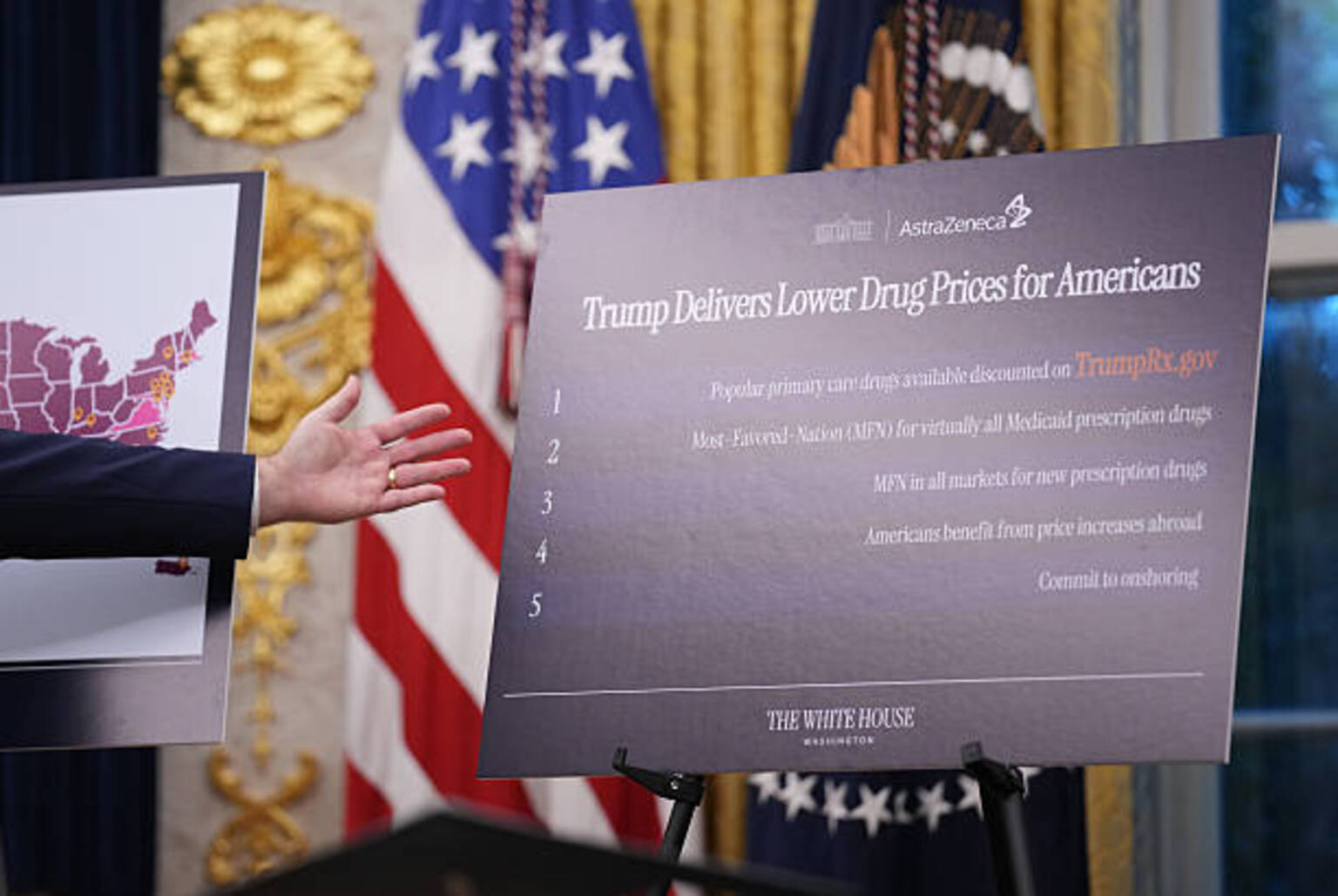
- Drug Prices vs. Innovation: PhRMA COO Lori Reilly indicated that Trump's 'Most Favored Nation' drug policy could depress funding for US drug R&D, thereby weakening the country's biopharma innovation capabilities, particularly in competition with China.
- Policy Impact Analysis: Reilly emphasized that adopting international drug policies that undervalue innovation could invite China to surpass the US in biopharma innovation, affecting future market leadership.
- Trade Tool Recommendations: She suggested that the Trump administration should leverage Section 301 of the Trade Act more to impose tariffs and import restrictions on unjustifiable trade practices, thereby protecting US intellectual property and market policies.
- Market Strategy Adjustments: Experts at the conference noted that companies might opt not to sell drugs in Europe due to profit-maximizing strategies, potentially leading to increased drug purchases from Chinese biopharma firms, further impacting US market share.
See More

Eli Lilly Leads the Weight Loss Drug Market

- Market Leadership: Eli Lilly is positioned to lead the weight loss drug market, projected to reach $100 billion in the next decade from a current value of $40 billion, indicating strong performance in a rapidly growing sector.
- Significant Sales Growth: In the recent quarter, Mounjaro and Zepbound generated over $12 billion in total sales, reflecting robust consumer demand for GLP-1 drugs and the company's competitive edge in this field.
- New Product Launch: Lilly received FDA approval for its oral weight loss drug Foundayo, treating 20,000 patients in its first month, showcasing strong appeal among new users and potentially providing new growth avenues for the company.
- Managing Competitive Risks: While new products from Novo Nordisk and other competitors pose risks to Zepbound sales, the introduction of Foundayo may broaden the potential audience for GLP-1 drugs, creating new market opportunities for Eli Lilly.
See More

Hantavirus Outbreak Sparks Rally in Biotech Stocks

- Impact Assessment: The recent hantavirus outbreak on a cruise ship has sparked a rally in the biotech sector; however, due to its transmission primarily through contact and a much lower contagion rate compared to COVID-19, the market for hantavirus vaccines may be limited, affecting the long-term profitability of related companies.
- Predicting Winners: Even if the situation worsens, it remains challenging for investors to identify which companies will successfully develop hantavirus vaccines, as historical data shows that even major pharmaceutical firms like Sanofi and Merck failed to dominate the COVID-19 vaccine market, highlighting the complexities of investment risks.
- Return on Investment Risks: Even if investors choose companies that successfully develop vaccines, market-beating returns are not guaranteed; data indicates that companies like Pfizer and Moderna, which excelled during the COVID-19 peak, have underperformed the S&P 500 since then, reflecting market uncertainties.
- Potential Investment Opportunities: Despite challenges, Moderna and Pfizer are still considered attractive vaccine manufacturers; Moderna has been working on a hantavirus vaccine and has a promising pipeline, while Pfizer's replenished pipeline and upcoming pivotal trials make it a stock worth serious consideration for long-term returns.
See More

Three Contrarian Stocks to Buy Now

- Duolingo Stock Decline: Duolingo's shares have plummeted nearly 80% over the past year, yet the company generated $1.1 billion in sales and $422 million in net income, reflecting a robust 38% margin, indicating that the market may be overly pessimistic about its prospects.
- Pfizer's Future Uncertainty: Pfizer's stock has risen 16% in the past year but has fallen about 56% since 2022, currently trading at just nine times earnings; despite facing patent cliffs, its pipeline of 96 potential drug candidates could significantly enhance its growth outlook if successful.
- Robinhood Market Challenges: Robinhood's shares are down nearly 30% this year, largely due to a weak crypto market, with a recent growth rate of 15% in the last quarter; however, its high valuation at over 40 times earnings raises expectations for future performance.
- Investment Opportunity Analysis: Despite the challenges these stocks face, their strong fundamentals, particularly Duolingo and Robinhood's popularity among young investors, may provide growth momentum, making them worth considering for investment during this downturn.
See More

Alibaba Reports Weak Earnings Growth Amid AI Spending

- Alibaba Earnings Report: Alibaba's fiscal fourth-quarter results revealed a mere 3% revenue growth, while on a like-for-like basis, excluding disposed businesses, it would have shown an 11% year-over-year increase; however, profitability sharply declined due to increased AI-related spending, compressing adjusted EBITA and net income, indicating significant pressure on earnings in a rapidly evolving market.
- Nebius Revenue Surge: Nebius reported a staggering 684% year-over-year revenue increase to $399 million for the quarter ending March 31, driven by soaring artificial intelligence expenditures, although it posted an adjusted net loss of $100.3 million, its GAAP earnings per share of $2.82 reflect strong market demand and growth potential.
- Two Harbors Rejects Acquisition: Two Harbors Investment's board unanimously rejected UWM Holdings' revised acquisition proposal, citing unresolved “core deficiencies and material risks” from previous proposals, leading to a 2.1% decline in its stock price during premarket trading, showcasing the company's cautious stance on acquisitions.
- Pfizer Drug Approval: Pfizer announced that its hemophilia therapy Hympavzi received marketing authorization from the European Commission to expand its label for use in adolescents, now indicated in all 27 EU member states as well as Iceland, Liechtenstein, and Norway for hemophilia A or B patients aged 12 and older, despite a 0.50% drop in premarket trading, this approval could open new market opportunities for the company.
See More
Pfizer Expands Hympavzi Indication to Adolescents
- Market Authorization Expansion: Pfizer (PFE) announced that the European Commission has granted marketing authorization to expand the indication of its hemophilia therapy, Hympavzi, to adolescents aged 12 and older, covering all 27 EU member states as well as Iceland, Liechtenstein, and Norway, significantly enhancing the drug's market potential.
- Patient Need Addressed: Approximately 20% of hemophilia A patients and 3% of hemophilia B patients are unable to continue factor replacement therapies due to the development of inhibitory antibodies, and the approval of Hympavzi will provide new treatment options for these patients, improving their quality of life.
- FDA Priority Review: Earlier this year, Pfizer received priority review from the FDA for its marketing application aimed at expanding the Hympavzi label in the U.S. for hemophilia A or B patients aged six and older, with a final decision expected in Q2 2026, further strengthening Pfizer's competitive position in the hemophilia treatment space.
- Strategic Implications: This indication expansion not only enhances Pfizer's standing in the hemophilia market but may also drive future revenue growth for the company, particularly in the context of increasing patient demand and market competition.
See More
Trump's Drug Policy May Harm US Biopharma Innovation
- Drug Prices vs. Innovation: PhRMA COO Lori Reilly indicated that Trump's 'Most Favored Nation' drug policy could depress funding for US drug R&D, thereby weakening the country's biopharma innovation capabilities, particularly in competition with China.
- Policy Impact Analysis: Reilly emphasized that adopting international drug policies that undervalue innovation could invite China to surpass the US in biopharma innovation, affecting future market leadership.
- Trade Tool Recommendations: She suggested that the Trump administration should leverage Section 301 of the Trade Act more to impose tariffs and import restrictions on unjustifiable trade practices, thereby protecting US intellectual property and market policies.
- Market Strategy Adjustments: Experts at the conference noted that companies might opt not to sell drugs in Europe due to profit-maximizing strategies, potentially leading to increased drug purchases from Chinese biopharma firms, further impacting US market share.
See More
Eli Lilly Leads the Weight Loss Drug Market
- Market Leadership: Eli Lilly is positioned to lead the weight loss drug market, projected to reach $100 billion in the next decade from a current value of $40 billion, indicating strong performance in a rapidly growing sector.
- Significant Sales Growth: In the recent quarter, Mounjaro and Zepbound generated over $12 billion in total sales, reflecting robust consumer demand for GLP-1 drugs and the company's competitive edge in this field.
- New Product Launch: Lilly received FDA approval for its oral weight loss drug Foundayo, treating 20,000 patients in its first month, showcasing strong appeal among new users and potentially providing new growth avenues for the company.
- Managing Competitive Risks: While new products from Novo Nordisk and other competitors pose risks to Zepbound sales, the introduction of Foundayo may broaden the potential audience for GLP-1 drugs, creating new market opportunities for Eli Lilly.
See More
Hantavirus Outbreak Sparks Rally in Biotech Stocks
- Impact Assessment: The recent hantavirus outbreak on a cruise ship has sparked a rally in the biotech sector; however, due to its transmission primarily through contact and a much lower contagion rate compared to COVID-19, the market for hantavirus vaccines may be limited, affecting the long-term profitability of related companies.
- Predicting Winners: Even if the situation worsens, it remains challenging for investors to identify which companies will successfully develop hantavirus vaccines, as historical data shows that even major pharmaceutical firms like Sanofi and Merck failed to dominate the COVID-19 vaccine market, highlighting the complexities of investment risks.
- Return on Investment Risks: Even if investors choose companies that successfully develop vaccines, market-beating returns are not guaranteed; data indicates that companies like Pfizer and Moderna, which excelled during the COVID-19 peak, have underperformed the S&P 500 since then, reflecting market uncertainties.
- Potential Investment Opportunities: Despite challenges, Moderna and Pfizer are still considered attractive vaccine manufacturers; Moderna has been working on a hantavirus vaccine and has a promising pipeline, while Pfizer's replenished pipeline and upcoming pivotal trials make it a stock worth serious consideration for long-term returns.
See More
Three Contrarian Stocks to Buy Now
- Duolingo Stock Decline: Duolingo's shares have plummeted nearly 80% over the past year, yet the company generated $1.1 billion in sales and $422 million in net income, reflecting a robust 38% margin, indicating that the market may be overly pessimistic about its prospects.
- Pfizer's Future Uncertainty: Pfizer's stock has risen 16% in the past year but has fallen about 56% since 2022, currently trading at just nine times earnings; despite facing patent cliffs, its pipeline of 96 potential drug candidates could significantly enhance its growth outlook if successful.
- Robinhood Market Challenges: Robinhood's shares are down nearly 30% this year, largely due to a weak crypto market, with a recent growth rate of 15% in the last quarter; however, its high valuation at over 40 times earnings raises expectations for future performance.
- Investment Opportunity Analysis: Despite the challenges these stocks face, their strong fundamentals, particularly Duolingo and Robinhood's popularity among young investors, may provide growth momentum, making them worth considering for investment during this downturn.
See More
Alibaba Reports Weak Earnings Growth Amid AI Spending
- Alibaba Earnings Report: Alibaba's fiscal fourth-quarter results revealed a mere 3% revenue growth, while on a like-for-like basis, excluding disposed businesses, it would have shown an 11% year-over-year increase; however, profitability sharply declined due to increased AI-related spending, compressing adjusted EBITA and net income, indicating significant pressure on earnings in a rapidly evolving market.
- Nebius Revenue Surge: Nebius reported a staggering 684% year-over-year revenue increase to $399 million for the quarter ending March 31, driven by soaring artificial intelligence expenditures, although it posted an adjusted net loss of $100.3 million, its GAAP earnings per share of $2.82 reflect strong market demand and growth potential.
- Two Harbors Rejects Acquisition: Two Harbors Investment's board unanimously rejected UWM Holdings' revised acquisition proposal, citing unresolved “core deficiencies and material risks” from previous proposals, leading to a 2.1% decline in its stock price during premarket trading, showcasing the company's cautious stance on acquisitions.
- Pfizer Drug Approval: Pfizer announced that its hemophilia therapy Hympavzi received marketing authorization from the European Commission to expand its label for use in adolescents, now indicated in all 27 EU member states as well as Iceland, Liechtenstein, and Norway for hemophilia A or B patients aged 12 and older, despite a 0.50% drop in premarket trading, this approval could open new market opportunities for the company.
See More
Pfizer Expands Hympavzi Indication to Adolescents
- Market Authorization Expansion: Pfizer (PFE) announced that the European Commission has granted marketing authorization to expand the indication of its hemophilia therapy, Hympavzi, to adolescents aged 12 and older, covering all 27 EU member states as well as Iceland, Liechtenstein, and Norway, significantly enhancing the drug's market potential.
- Patient Need Addressed: Approximately 20% of hemophilia A patients and 3% of hemophilia B patients are unable to continue factor replacement therapies due to the development of inhibitory antibodies, and the approval of Hympavzi will provide new treatment options for these patients, improving their quality of life.
- FDA Priority Review: Earlier this year, Pfizer received priority review from the FDA for its marketing application aimed at expanding the Hympavzi label in the U.S. for hemophilia A or B patients aged six and older, with a final decision expected in Q2 2026, further strengthening Pfizer's competitive position in the hemophilia treatment space.
- Strategic Implications: This indication expansion not only enhances Pfizer's standing in the hemophilia market but may also drive future revenue growth for the company, particularly in the context of increasing patient demand and market competition.
See More