AeroVironment Secures Prototype Agreement for LASSO Program with U.S. Army
Written by Emily J. Thompson, Senior Investment Analyst
Updated: 1 hour ago
0mins
Should l Buy AVAV?
Source: seekingalpha
- Prototype Agreement Secured: AeroVironment has been selected by the U.S. Army for a prototype agreement under the Low-Altitude Stalking and Strike Ordnance (LASSO) program, advancing the development and testing of the Switchblade 400 loitering munition, highlighting the Army's emphasis on precision strike capabilities in contested environments.
- Lightweight Design: The Switchblade 400 system weighs under 40 pounds and is designed for individual soldier operation, capable of automatically identifying and engaging targets in various conditions, including at night, thereby enhancing soldiers' flexibility and operational efficiency on the battlefield.
- Modular Architecture: This system employs an open systems approach that facilitates future updates and integration with other platforms, aligning with AeroVironment's modular control architecture, which connects sensors and weapons across a networked battlefield to enhance combat effectiveness.
- Strategic Implications: This agreement not only reflects the Army's confidence in the Switchblade 400 but also underscores AeroVironment's delivery capabilities in the unmanned strike systems sector, further solidifying the demand for loitering munitions in modern warfare.
Trade with 70% Backtested Accuracy
Stop guessing "Should I Buy AVAV?" and start using high-conviction signals backed by rigorous historical data.
Sign up today to access powerful investing tools and make smarter, data-driven decisions.
Analyst Views on AVAV
Wall Street analysts forecast AVAV stock price to rise
13 Analyst Rating
13 Buy
0 Hold
0 Sell
Strong Buy
Current: 184.970

Low
315.00
Averages
390.75
High
450.00
Current: 184.970
Low
315.00
Averages
390.75
High
450.00
About AVAV
AeroVironment, Inc. is a defense technology provider delivering integrated capabilities across air, land, sea, space, and cyber. The Company develops and deploys autonomous systems, precision strike systems, counter-UAS technologies, space-based platforms, directed energy systems, and cyber and electronic warfare capabilities. The Company’s segments include Autonomous Systems (AxS) and Space, Cyber, and Directed Energy (SCDE). The AxS segment focuses on the design, development, production, delivery, and support of intelligent, multi-domain robotic systems, including uncrewed aircraft systems (UAS) and ground robot systems. It includes the Company’s former Uncrewed Systems, Loitering Munitions Systems, and MacCready Works segments as well as Radio Frequency and Kinetic Counter-UAS Electronic Warfare Systems and others. The SCDE segment focuses on advanced technologies in the space domain providing space-based and ground-based platforms, cyber capabilities, and directed energy systems.
About the author

Emily J. Thompson
Emily J. Thompson, a Chartered Financial Analyst (CFA) with 12 years in investment research, graduated with honors from the Wharton School. Specializing in industrial and technology stocks, she provides in-depth analysis for Intellectia’s earnings and market brief reports.

Switchblade 400 Awarded U.S. Army LASSO Program Contract

- Increased Military Trust: The U.S. Army awarded AeroVironment a prototype agreement for the Switchblade 400, establishing it as a key component of the Low-Altitude Stalking and Strike Ordnance (LASSO) program, which supports rapid development and testing, thereby enhancing the Army's precision strike capabilities.
- Technological Innovation: Switchblade 400 incorporates advanced target recognition and autonomous capabilities, enabling it to detect and engage targets day or night in contested environments while delivering anti-armor performance comparable to larger systems like the Switchblade 600 Blk 2, thus enhancing battlefield adaptability.
- Lightweight Design: Weighing under 40 pounds, the system allows for single-soldier operation and supports a sensor-to-shooter concept, shortening decision timelines and increasing tactical flexibility to meet modern battlefield demands for rapid response.
- Continuous Feedback Mechanism: The development of Switchblade 400 is driven by soldier feedback, with AeroVironment continuously integrating new capabilities, enhancing performance, and reducing soldier burden to ensure effectiveness and relevance in future conflicts.
See More

AeroVironment Secures Prototype Agreement for LASSO Program with U.S. Army
- Prototype Agreement Secured: AeroVironment has been selected by the U.S. Army for a prototype agreement under the Low-Altitude Stalking and Strike Ordnance (LASSO) program, advancing the development and testing of the Switchblade 400 loitering munition, highlighting the Army's emphasis on precision strike capabilities in contested environments.
- Lightweight Design: The Switchblade 400 system weighs under 40 pounds and is designed for individual soldier operation, capable of automatically identifying and engaging targets in various conditions, including at night, thereby enhancing soldiers' flexibility and operational efficiency on the battlefield.
- Modular Architecture: This system employs an open systems approach that facilitates future updates and integration with other platforms, aligning with AeroVironment's modular control architecture, which connects sensors and weapons across a networked battlefield to enhance combat effectiveness.
- Strategic Implications: This agreement not only reflects the Army's confidence in the Switchblade 400 but also underscores AeroVironment's delivery capabilities in the unmanned strike systems sector, further solidifying the demand for loitering munitions in modern warfare.
See More

VisionWave Files Provisional Patent for xCalibre AI Surveillance Technology


- Patent Application Progress: VisionWave Holdings filed a provisional patent for its xCalibre™ visual intelligence platform on April 24, 2026, aiming to transform conventional cameras into intelligent sensors that enhance detection and response capabilities, thereby strengthening the company's competitive edge in the AI surveillance market.
- Significant Market Potential: The military AI video surveillance market is projected to grow from $655 million in 2024 to approximately $3 billion by 2030, reflecting rapid growth in defense budgets and urgent demand for intelligent monitoring solutions, aligning perfectly with VisionWave's technology.
- Innovative Technical Architecture: xCalibre™ features a multi-stage architecture capable of processing data from various camera types, providing functionalities such as object recognition and threat scoring, which will significantly enhance the efficiency and practicality of surveillance systems to meet increasingly complex security needs.
- Competitive Industry Advantage: The patent application may bolster VisionWave's intellectual property position in AI-driven computer vision and edge intelligence, as the market increasingly favors companies that own the underlying architecture, potentially leading to long-term commercial value for the technology.
See More

VisionWave Files Provisional Patent for xCalibre AI Surveillance Platform

- Patent Application Progress: VisionWave Holdings filed a U.S. provisional patent application on April 24, 2026, for its xCalibre™ visual intelligence platform, aiming to convert conventional camera streams into structured, machine-actionable sensor intelligence, potentially providing a competitive edge in the rapidly growing military AI surveillance market.
- Significant Market Potential: The military AI video surveillance segment was valued at approximately $655 million in 2024 and is projected to reach about $3 billion by 2030, indicating strong growth potential that could enhance the company's value in defense intellectual property.
- Industry Developments: Kratos Defense was awarded a contract worth up to $446.8 million to support the U.S. Space Force's missile warning and tracking program, reflecting a trend of increasing defense spending that may create more opportunities for related technology companies.
- Technological Innovation: The xCalibre™ platform is designed to utilize not only visible light but also thermal, infrared, and stereoscopic camera inputs, aiming to enhance the intelligence level of surveillance systems, thereby providing more effective threat detection and response capabilities in an increasingly complex security environment.
See More
AeroVironment Launches Halo_Shield Counter-UAS System
- Modular Defense Architecture: AeroVironment's Halo_Shield system features a unique modular and distributed design that effectively predicts, detects, tracks, and defeats advanced aerial threats, including drone swarms and subsonic cruise missiles, significantly enhancing the protection of critical infrastructure and deployed forces.
- Multi-Domain Defense Capability: At its core, the system employs a mission-tailored distributed tile architecture that integrates sensors and effectors from AeroVironment and its partners, providing an efficient defense solution that ensures decisive advantages in modern battlefields.
- Rapid Deployment and Integration: Halo_Shield can be quickly deployed as portable fly-away kits and integrates seamlessly with existing customer sensors and command-and-control systems, greatly reducing training and personnel demands, thereby enhancing overall operational efficiency.
- Emerging Threat Response: The system maximizes weapon carrying capacity by optimizing sensor and effector placement, enabling proactive defense before threats materialize, ensuring effective responses to various threat scenarios in complex battlefield environments.
See More
U.S. Defense Budget Marks Record Investment in Drones


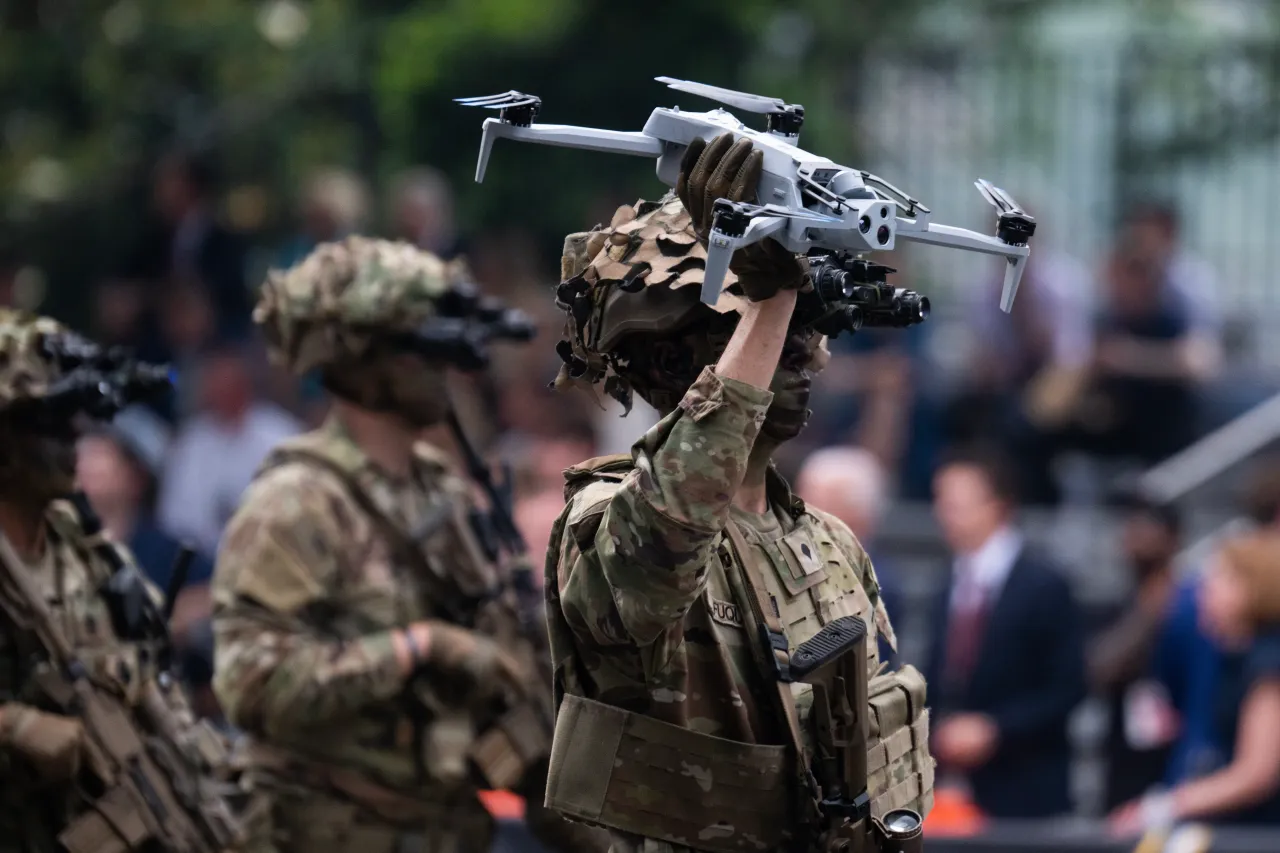
- Record Drone Investment: The U.S. government allocates over $74 billion to drone and counter-drone programs, marking a historic investment that underscores a strategic shift in military conflict approaches.
- Missile Defense System Funding: The proposal includes $18 billion for the new layered missile defense system known as the Golden Dome, which is expected to integrate space-based sensors and intercept technologies to counter emerging threats.
- Emerging Market Leaders: AeroVironment and Kratos Defense are positioned as key suppliers in loitering munitions and jet-powered drones, while Ondas and Red Cat gain traction in swarm and counter-drone technologies.
- Growing Order Momentum: Ondas' subsidiary Airobotics secures a $20 million order as part of a national program for autonomous border protection infrastructure, with expectations for expansion through additional development and procurement rounds.
See More
Switchblade 400 Awarded U.S. Army LASSO Program Contract
- Increased Military Trust: The U.S. Army awarded AeroVironment a prototype agreement for the Switchblade 400, establishing it as a key component of the Low-Altitude Stalking and Strike Ordnance (LASSO) program, which supports rapid development and testing, thereby enhancing the Army's precision strike capabilities.
- Technological Innovation: Switchblade 400 incorporates advanced target recognition and autonomous capabilities, enabling it to detect and engage targets day or night in contested environments while delivering anti-armor performance comparable to larger systems like the Switchblade 600 Blk 2, thus enhancing battlefield adaptability.
- Lightweight Design: Weighing under 40 pounds, the system allows for single-soldier operation and supports a sensor-to-shooter concept, shortening decision timelines and increasing tactical flexibility to meet modern battlefield demands for rapid response.
- Continuous Feedback Mechanism: The development of Switchblade 400 is driven by soldier feedback, with AeroVironment continuously integrating new capabilities, enhancing performance, and reducing soldier burden to ensure effectiveness and relevance in future conflicts.
See More
AeroVironment Secures Prototype Agreement for LASSO Program with U.S. Army
- Prototype Agreement Secured: AeroVironment has been selected by the U.S. Army for a prototype agreement under the Low-Altitude Stalking and Strike Ordnance (LASSO) program, advancing the development and testing of the Switchblade 400 loitering munition, highlighting the Army's emphasis on precision strike capabilities in contested environments.
- Lightweight Design: The Switchblade 400 system weighs under 40 pounds and is designed for individual soldier operation, capable of automatically identifying and engaging targets in various conditions, including at night, thereby enhancing soldiers' flexibility and operational efficiency on the battlefield.
- Modular Architecture: This system employs an open systems approach that facilitates future updates and integration with other platforms, aligning with AeroVironment's modular control architecture, which connects sensors and weapons across a networked battlefield to enhance combat effectiveness.
- Strategic Implications: This agreement not only reflects the Army's confidence in the Switchblade 400 but also underscores AeroVironment's delivery capabilities in the unmanned strike systems sector, further solidifying the demand for loitering munitions in modern warfare.
See More
VisionWave Files Provisional Patent for xCalibre AI Surveillance Technology
- Patent Application Progress: VisionWave Holdings filed a provisional patent for its xCalibre™ visual intelligence platform on April 24, 2026, aiming to transform conventional cameras into intelligent sensors that enhance detection and response capabilities, thereby strengthening the company's competitive edge in the AI surveillance market.
- Significant Market Potential: The military AI video surveillance market is projected to grow from $655 million in 2024 to approximately $3 billion by 2030, reflecting rapid growth in defense budgets and urgent demand for intelligent monitoring solutions, aligning perfectly with VisionWave's technology.
- Innovative Technical Architecture: xCalibre™ features a multi-stage architecture capable of processing data from various camera types, providing functionalities such as object recognition and threat scoring, which will significantly enhance the efficiency and practicality of surveillance systems to meet increasingly complex security needs.
- Competitive Industry Advantage: The patent application may bolster VisionWave's intellectual property position in AI-driven computer vision and edge intelligence, as the market increasingly favors companies that own the underlying architecture, potentially leading to long-term commercial value for the technology.
See More
VisionWave Files Provisional Patent for xCalibre AI Surveillance Platform
- Patent Application Progress: VisionWave Holdings filed a U.S. provisional patent application on April 24, 2026, for its xCalibre™ visual intelligence platform, aiming to convert conventional camera streams into structured, machine-actionable sensor intelligence, potentially providing a competitive edge in the rapidly growing military AI surveillance market.
- Significant Market Potential: The military AI video surveillance segment was valued at approximately $655 million in 2024 and is projected to reach about $3 billion by 2030, indicating strong growth potential that could enhance the company's value in defense intellectual property.
- Industry Developments: Kratos Defense was awarded a contract worth up to $446.8 million to support the U.S. Space Force's missile warning and tracking program, reflecting a trend of increasing defense spending that may create more opportunities for related technology companies.
- Technological Innovation: The xCalibre™ platform is designed to utilize not only visible light but also thermal, infrared, and stereoscopic camera inputs, aiming to enhance the intelligence level of surveillance systems, thereby providing more effective threat detection and response capabilities in an increasingly complex security environment.
See More
AeroVironment Launches Halo_Shield Counter-UAS System
- Modular Defense Architecture: AeroVironment's Halo_Shield system features a unique modular and distributed design that effectively predicts, detects, tracks, and defeats advanced aerial threats, including drone swarms and subsonic cruise missiles, significantly enhancing the protection of critical infrastructure and deployed forces.
- Multi-Domain Defense Capability: At its core, the system employs a mission-tailored distributed tile architecture that integrates sensors and effectors from AeroVironment and its partners, providing an efficient defense solution that ensures decisive advantages in modern battlefields.
- Rapid Deployment and Integration: Halo_Shield can be quickly deployed as portable fly-away kits and integrates seamlessly with existing customer sensors and command-and-control systems, greatly reducing training and personnel demands, thereby enhancing overall operational efficiency.
- Emerging Threat Response: The system maximizes weapon carrying capacity by optimizing sensor and effector placement, enabling proactive defense before threats materialize, ensuring effective responses to various threat scenarios in complex battlefield environments.
See More
U.S. Defense Budget Marks Record Investment in Drones
- Record Drone Investment: The U.S. government allocates over $74 billion to drone and counter-drone programs, marking a historic investment that underscores a strategic shift in military conflict approaches.
- Missile Defense System Funding: The proposal includes $18 billion for the new layered missile defense system known as the Golden Dome, which is expected to integrate space-based sensors and intercept technologies to counter emerging threats.
- Emerging Market Leaders: AeroVironment and Kratos Defense are positioned as key suppliers in loitering munitions and jet-powered drones, while Ondas and Red Cat gain traction in swarm and counter-drone technologies.
- Growing Order Momentum: Ondas' subsidiary Airobotics secures a $20 million order as part of a national program for autonomous border protection infrastructure, with expectations for expansion through additional development and procurement rounds.
See More