Rocket Companies' stock declines amid market strength

Rocket Companies Inc's stock fell by 5.19% as it crossed below its 5-day SMA, indicating a bearish trend.
Despite the broader market strength, with the Nasdaq-100 and S&P 500 both up, Rocket's stock decline is attributed to sector rotation as investors shift focus to other opportunities in the market. The recent Super Bowl ad campaign with Redfin, while highlighting community values, has not translated into immediate positive market sentiment for Rocket, reflecting the challenges the company faces in a competitive landscape.
This decline may raise concerns among investors about Rocket's ability to maintain its market position, especially as the housing market dynamics continue to evolve. The emphasis on community in their advertising may resonate in the long term, but immediate stock performance suggests a need for stronger financial results to regain investor confidence.
Trade with 70% Backtested Accuracy
Analyst Views on RKT

About RKT
About the author

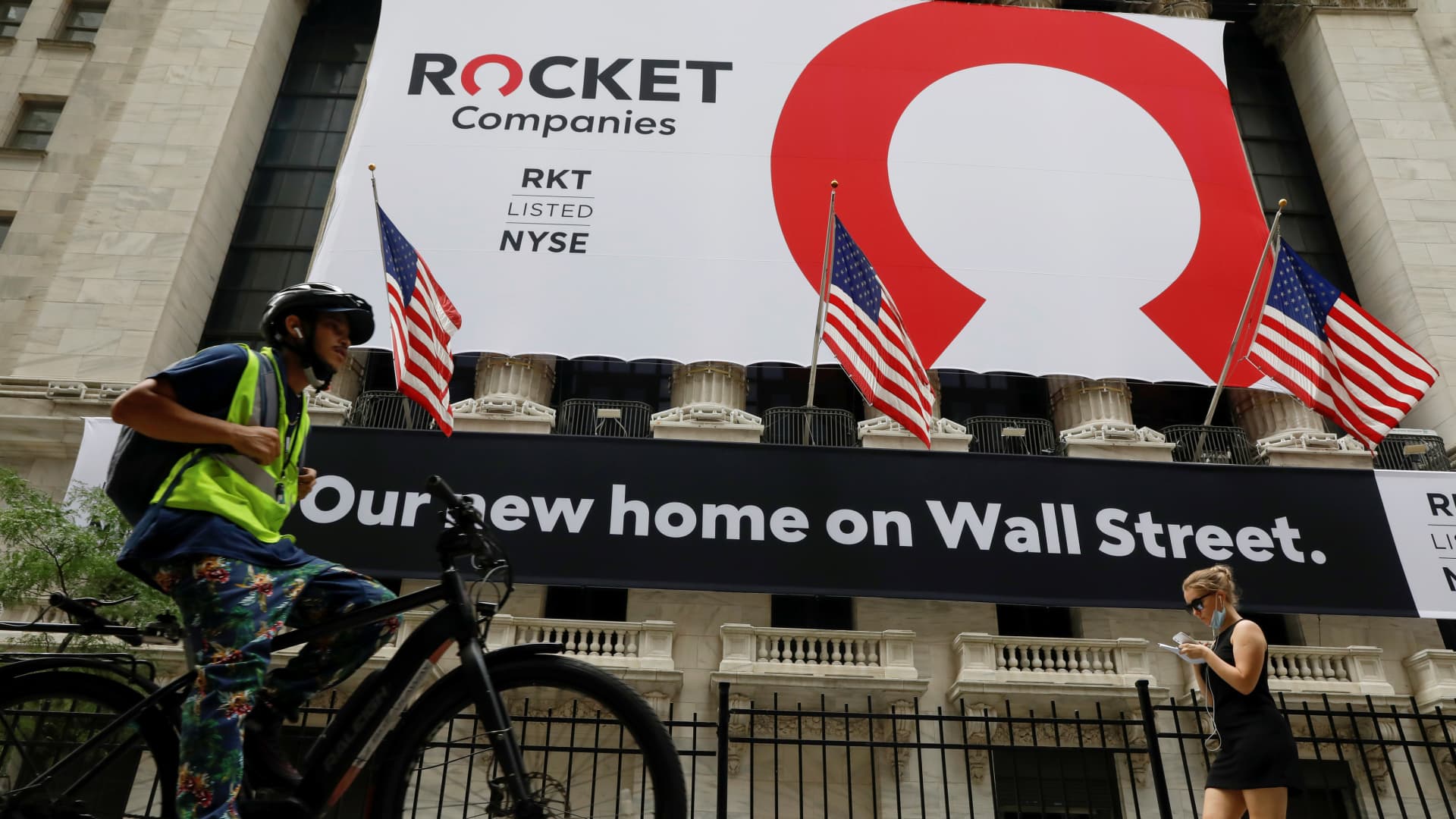
Rocket Companies' Acquisitions May Boost Stock Recovery

- Acquisition Strategy: Following a roughly 20% decline in stock price, Rocket Companies has expanded its service range through acquisitions like Mr. Cooper, now servicing nearly 10 million homeowners, showcasing its integration capabilities in the real estate market.
- Market Recovery Potential: Despite Rocket's poor stock performance this year, the overall rally in the real estate sector, with the State Street Real Estate Select Sector SPDR ETF rising 7% year-to-date, provides a favorable backdrop for a potential stock rebound.
- Interest Rate Policy Impact: With traders expecting no action from the Federal Reserve at next week's policy meeting, any future rate cuts or a pullback in Treasury yields could lead to further upside for Rocket and its peers, enhancing investor confidence.
- CEO Vision: Josh Brown, CEO of Ritholtz Wealth Management, emphasized that Rocket's CEO is on the right track towards building a dominant mortgage-to-housing platform, a strategic vision that may attract more investor attention and drive stock recovery.
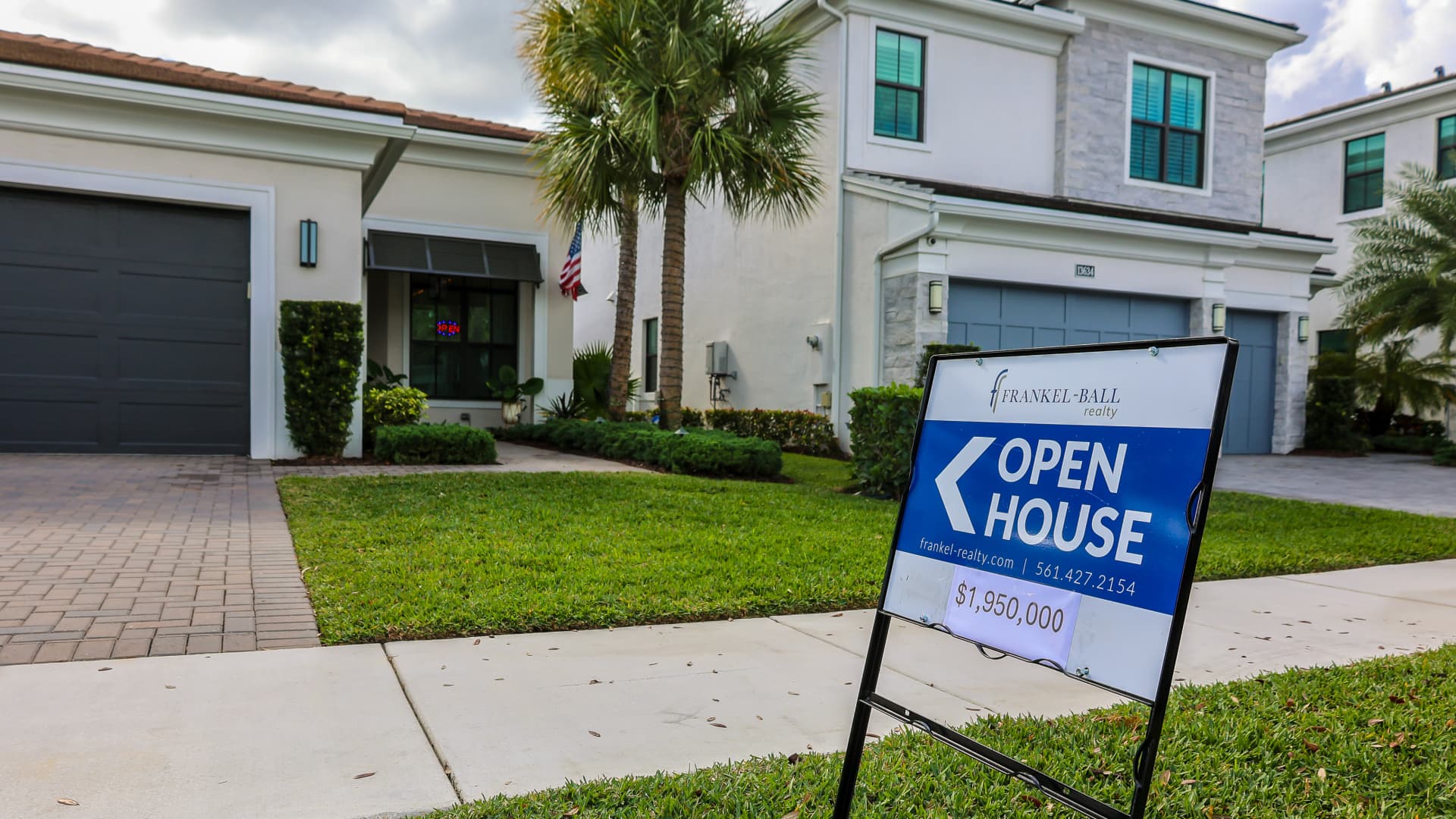
February Home Sales Show Modest Rebound Amid Challenges


- Sales Increase: Existing home sales in February rose by 1.7% from January to an annualized rate of 4.09 million units, according to the National Association of Realtors, although this reflects a 1.4% decline year-over-year, indicating ongoing market weakness.
- Wage vs. Price Growth: Chief Economist Lawrence Yun highlighted that wage growth is now outpacing home price growth by nearly four percentage points, and while mortgage rates are significantly lower than last year, actual housing demand remains muted.
- Inventory Levels: There were 1.29 million units for sale at the end of February, a 2.4% increase from January, yet this remains below the six-month supply considered balanced, reflecting a sluggish supply growth trend.
- First-Time Buyer Share: First-time buyers accounted for 34% of total sales, up from 31% a year ago, indicating an increase in market participation among new buyers despite low inventory and high prices.

Latest Wall Street Rating Updates

- BofA Downgrades Qualcomm: Bank of America has downgraded Qualcomm from neutral to underperform with a price target of $145, citing lukewarm projected sales and EPS growth of only 2% and 1% CAGR from 2025 to 2028, significantly lagging the semiconductor sector's expected 17% growth.
- Deutsche Bank Upgrades Teladoc: Deutsche Bank upgraded Teladoc from hold to buy, highlighting an attractive risk/reward profile due to compelling valuation and a deliverable strategy for its BetterHelp business, indicating a strong potential for future growth.
- TD Cowen Upgrades Rivian: TD Cowen upgraded Rivian from hold to buy, projecting full-scale demand for its R2 model to reach between 212,000 and 335,000 units, suggesting significant upside potential against 2027 consensus estimates.
- Morgan Stanley Reiterates Microsoft Overweight: Morgan Stanley reiterated its overweight rating on Microsoft, emphasizing the readiness of its Office product suite for the upcoming Agentic AI offerings, with general availability expected on May 1, 2026, priced at $99 per user per month.

Ten Large-Cap Stocks with Worst Performance Last Week


- Lumentum Holdings Decline: Lumentum Holdings Inc. saw a 24.65% drop this week, despite its upcoming inclusion in the S&P 500 on March 23, 2026, indicating a significant loss of investor confidence in its future performance.
- Celsius Holdings Struggles: Celsius Holdings, Inc. experienced a 17.86% decline this week, reflecting investor concerns over its profitability, particularly in a challenging overall market environment.
- Pressure on Precious Metals: First Majestic Silver Corp. dropped 17.69% this week, as rising dollar strength and yields exerted greater market pressure on precious metal companies amid escalating conflict in the Middle East.
- Carnival Corporation Impacted: Carnival Corporation's stock fell 10.45% this week, as coordinated U.S. and Israeli strikes on Iranian targets heightened geopolitical risks, leading to diminished investor confidence in cruise operators.

Mitek and PepsiCo Options Trading Volume Surge

- Mitek Options Volume: Mitek Systems, Inc. has seen an options trading volume of 4,761 contracts today, equating to approximately 476,100 shares, which represents 40.4% of its average daily trading volume of 1.2 million shares over the past month, indicating a significant increase in market interest.
- High-Frequency Contracts: Among Mitek's options, the $17.50 strike call option is particularly active, with 4,335 contracts traded today, representing about 433,500 shares, reflecting investor expectations for future price increases.
- PepsiCo Options Activity: PepsiCo Inc. has also shown strong options trading, with a volume of 32,243 contracts today, approximately 3.2 million shares, accounting for 40.1% of its average daily trading volume of 8 million shares over the past month, demonstrating sustained investor interest.
- Key Contract Analysis: For PepsiCo, the $140 strike put option has seen a trading volume of 5,019 contracts, equating to about 501,900 shares, indicating market concerns regarding potential downside risks for the stock.
Bank Stocks Decline While Fertilizer Stocks Rally Amid Supply Concerns

- Bank Stocks Decline: All 101 stocks in the State Street SPDR S&P Bank ETF (KBE) fell on Friday as the spread between the 2- and 10-year Treasury yields widened, with Western Alliance Bancorp down nearly 12%, indicating rising future inflation expectations that could compress banks' net interest margins and increase credit risk.
- Fertilizer Stocks Rally: Fertilizer stocks surged again due to tight supplies from the Iran conflict, with CF Industries climbing 5% to a new 52-week high and a week-to-date gain of about 17%, reflecting strong market expectations for fertilizer demand amid geopolitical tensions.
- Airline Stocks Under Pressure: United Airlines shares tumbled nearly 4% after CEO Scott Kirby warned that rising fuel prices would have a
Rocket Companies' Acquisitions May Boost Stock Recovery
- Acquisition Strategy: Following a roughly 20% decline in stock price, Rocket Companies has expanded its service range through acquisitions like Mr. Cooper, now servicing nearly 10 million homeowners, showcasing its integration capabilities in the real estate market.
- Market Recovery Potential: Despite Rocket's poor stock performance this year, the overall rally in the real estate sector, with the State Street Real Estate Select Sector SPDR ETF rising 7% year-to-date, provides a favorable backdrop for a potential stock rebound.
- Interest Rate Policy Impact: With traders expecting no action from the Federal Reserve at next week's policy meeting, any future rate cuts or a pullback in Treasury yields could lead to further upside for Rocket and its peers, enhancing investor confidence.
- CEO Vision: Josh Brown, CEO of Ritholtz Wealth Management, emphasized that Rocket's CEO is on the right track towards building a dominant mortgage-to-housing platform, a strategic vision that may attract more investor attention and drive stock recovery.
February Home Sales Show Modest Rebound Amid Challenges
- Sales Increase: Existing home sales in February rose by 1.7% from January to an annualized rate of 4.09 million units, according to the National Association of Realtors, although this reflects a 1.4% decline year-over-year, indicating ongoing market weakness.
- Wage vs. Price Growth: Chief Economist Lawrence Yun highlighted that wage growth is now outpacing home price growth by nearly four percentage points, and while mortgage rates are significantly lower than last year, actual housing demand remains muted.
- Inventory Levels: There were 1.29 million units for sale at the end of February, a 2.4% increase from January, yet this remains below the six-month supply considered balanced, reflecting a sluggish supply growth trend.
- First-Time Buyer Share: First-time buyers accounted for 34% of total sales, up from 31% a year ago, indicating an increase in market participation among new buyers despite low inventory and high prices.
Latest Wall Street Rating Updates
- BofA Downgrades Qualcomm: Bank of America has downgraded Qualcomm from neutral to underperform with a price target of $145, citing lukewarm projected sales and EPS growth of only 2% and 1% CAGR from 2025 to 2028, significantly lagging the semiconductor sector's expected 17% growth.
- Deutsche Bank Upgrades Teladoc: Deutsche Bank upgraded Teladoc from hold to buy, highlighting an attractive risk/reward profile due to compelling valuation and a deliverable strategy for its BetterHelp business, indicating a strong potential for future growth.
- TD Cowen Upgrades Rivian: TD Cowen upgraded Rivian from hold to buy, projecting full-scale demand for its R2 model to reach between 212,000 and 335,000 units, suggesting significant upside potential against 2027 consensus estimates.
- Morgan Stanley Reiterates Microsoft Overweight: Morgan Stanley reiterated its overweight rating on Microsoft, emphasizing the readiness of its Office product suite for the upcoming Agentic AI offerings, with general availability expected on May 1, 2026, priced at $99 per user per month.
Ten Large-Cap Stocks with Worst Performance Last Week
- Lumentum Holdings Decline: Lumentum Holdings Inc. saw a 24.65% drop this week, despite its upcoming inclusion in the S&P 500 on March 23, 2026, indicating a significant loss of investor confidence in its future performance.
- Celsius Holdings Struggles: Celsius Holdings, Inc. experienced a 17.86% decline this week, reflecting investor concerns over its profitability, particularly in a challenging overall market environment.
- Pressure on Precious Metals: First Majestic Silver Corp. dropped 17.69% this week, as rising dollar strength and yields exerted greater market pressure on precious metal companies amid escalating conflict in the Middle East.
- Carnival Corporation Impacted: Carnival Corporation's stock fell 10.45% this week, as coordinated U.S. and Israeli strikes on Iranian targets heightened geopolitical risks, leading to diminished investor confidence in cruise operators.
Mitek and PepsiCo Options Trading Volume Surge
- Mitek Options Volume: Mitek Systems, Inc. has seen an options trading volume of 4,761 contracts today, equating to approximately 476,100 shares, which represents 40.4% of its average daily trading volume of 1.2 million shares over the past month, indicating a significant increase in market interest.
- High-Frequency Contracts: Among Mitek's options, the $17.50 strike call option is particularly active, with 4,335 contracts traded today, representing about 433,500 shares, reflecting investor expectations for future price increases.
- PepsiCo Options Activity: PepsiCo Inc. has also shown strong options trading, with a volume of 32,243 contracts today, approximately 3.2 million shares, accounting for 40.1% of its average daily trading volume of 8 million shares over the past month, demonstrating sustained investor interest.
- Key Contract Analysis: For PepsiCo, the $140 strike put option has seen a trading volume of 5,019 contracts, equating to about 501,900 shares, indicating market concerns regarding potential downside risks for the stock.
Bank Stocks Decline While Fertilizer Stocks Rally Amid Supply Concerns
- Bank Stocks Decline: All 101 stocks in the State Street SPDR S&P Bank ETF (KBE) fell on Friday as the spread between the 2- and 10-year Treasury yields widened, with Western Alliance Bancorp down nearly 12%, indicating rising future inflation expectations that could compress banks' net interest margins and increase credit risk.
- Fertilizer Stocks Rally: Fertilizer stocks surged again due to tight supplies from the Iran conflict, with CF Industries climbing 5% to a new 52-week high and a week-to-date gain of about 17%, reflecting strong market expectations for fertilizer demand amid geopolitical tensions.
- Airline Stocks Under Pressure: United Airlines shares tumbled nearly 4% after CEO Scott Kirby warned that rising fuel prices would have a