Paccar Reports Earnings Beat but Stock Declines Amid Market Disappointment
Paccar Inc's stock rose 3.01% and reached a 52-week high, despite broader market declines with the Nasdaq-100 down 1.65% and S&P 500 down 0.91%.
The company reported Q4 2025 earnings of $1.06 per share, surpassing analyst expectations of $1.05, with sales of $6.8 billion. However, the stock fell 1.9% due to a significant year-over-year sales decline of 14% and a full-year sales drop of 16%, indicating market disappointment despite the earnings beat. Analysts are cautious about Paccar's future growth, forecasting only 5% long-term earnings growth, which has led to a bleak market outlook.
This mixed performance highlights the challenges Paccar faces in a weak demand environment, despite strong cash flow management. Investors remain concerned about the company's growth trajectory, which could impact future stock performance.
Trade with 70% Backtested Accuracy
Analyst Views on PCAR

About PCAR
About the author


PACCAR Recognizes 2025 Quality Suppliers

- Supplier Recognition: PACCAR honored 359 suppliers from 28 countries in 2025 for exceeding the 10 ppm quality standard, which translates to only 10 defective parts per million shipped, showcasing their exceptional performance in the global market.
- Quality Commitment: PACCAR's VP of Quality, Stephan Olsen, stated that the award-winning suppliers achieved and maintained exceptional quality under dynamic market conditions, reinforcing PACCAR's commitment to delivering high-quality trucks and transportation solutions to customers.
- Continuous Improvement: Senior VP Laura Bloch highlighted that top suppliers not only improved quality but also managed costs effectively in a competitive landscape, indicating that strong partnerships with suppliers are crucial for business success.
- Global Leadership: As a global technology leader in the design and manufacture of high-quality trucks, PACCAR's recognition of these suppliers enhances their brand image and further solidifies PACCAR's competitive advantage in the global market.

Bill Gates Recommends Paccar Stock as a Top Buy
- Tax Policy Impact: A proposed bill in the Senate to eliminate the 12% tax on heavy-duty trucks could increase new truck sales by $15,000 to $30,000, potentially boosting Paccar's (PCAR) sales and enhancing its market competitiveness.
- Optimistic Market Outlook: Although Paccar's stock has only risen 2.5% year-to-date, analysts predict that the stock will gain momentum over the next 12 months as market conditions improve, reflecting investor confidence in the company's future.
- Old Vehicle Replacement: With approximately one-fifth of heavy trucks on the road using engines produced before 2010, the elimination of the tax could encourage the purchase of newer, safer, and more efficient trucks, further driving Paccar's sales and market share.
- Diverse Product Line: Paccar manufactures not only light, medium, and heavy-duty trucks but also advanced diesel engines and offers financial services, enhancing its competitive edge in the commercial truck market.

Q1 Earnings Review of Heavy Transportation Equipment Sector
- PACCAR Performance Review: PACCAR reported revenues of $6.78 billion, down 8.9% year-on-year, falling short of analysts' expectations by 0.9%, and despite beating EBITDA estimates, the mixed results led to a 12.4% decline in stock price since reporting.
- Douglas Dynamics Strong Results: Douglas Dynamics achieved revenues of $137.8 million, up 19.8% year-on-year, outperforming analysts' expectations by 3.4%, and raised its full-year guidance the most among peers, although its stock has traded sideways since the report.
- Greenbrier Disappointing Quarter: Greenbrier's revenues were $587.5 million, down 22.9% year-on-year, significantly missing analysts' expectations by 11.5%, and it provided weak full-year revenue and EPS guidance, yet its stock rose 4.4% post-results.
- Commercial Vehicle Group Growth: Commercial Vehicle Group reported revenues of $171.5 million, up 1% year-on-year, exceeding analysts' expectations by 7.2%, and its stock has surged 26.7% since reporting, indicating strong market performance.

North American Class 8 Truck Market Shows Improvement Amid Seasonal Headwinds

- Significant Order Growth: According to ACT Research, North American Class 8 net orders reached 24,800 units in April, marking a substantial 201% year-over-year increase, reflecting the low base effect from last year's 'Liberation Day'; however, month-over-month, orders fell by 24%, indicating signs of seasonal weakness.
- Strong Demand Context: March's net orders totaled 38,050 units, up 131% year-over-year, demonstrating robust market demand despite mounting macroeconomic pressures, primarily driven by improving freight rates and tightening driver supply.
- Future Challenges Warning: Analysts warn that while current orders are strong, fuel costs are expected to be a concern for the industry, particularly as even the best-case scenario for a deal with Iran could leave fuel prices elevated through the summer, impacting transportation costs.
- Policy Impact Analysis: With new regulations set to take effect in 2027, fleet operators are accelerating orders in anticipation of rising equipment costs, a strategy that not only reflects foresight into future market conditions but may also lead to fluctuations in order volumes in the short term.
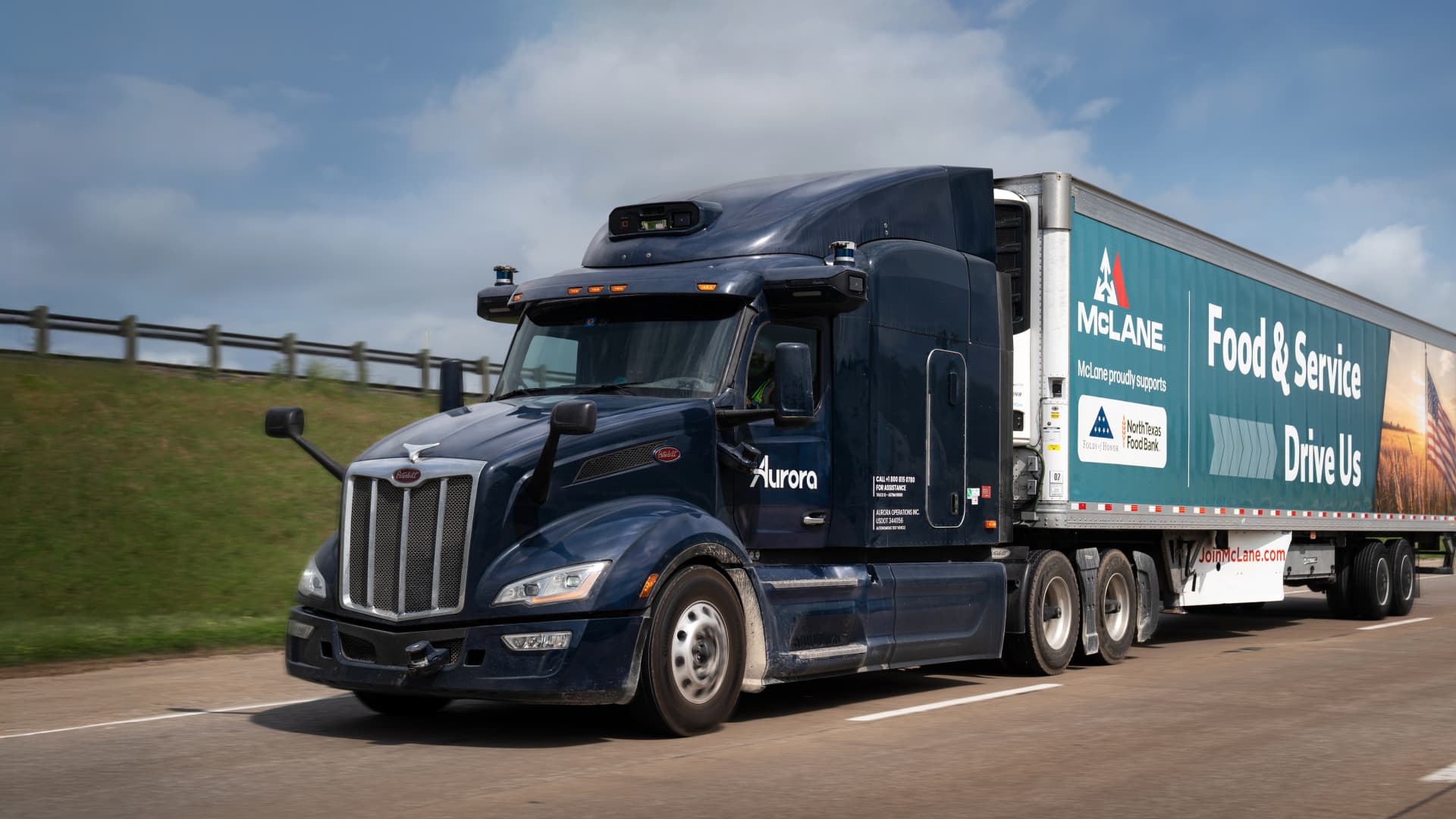
McLane Partners with Aurora Innovation to Advance Autonomous Trucking

- Autonomous Pilot Program: McLane's pilot program with Aurora Innovation, initiated in 2023, currently operates two daily round trips between Dallas and Houston, logging 280,000 miles and delivering 1,400 loads, significantly enhancing transportation efficiency.
- New Route Planning: McLane plans to launch new autonomous freight routes between its distribution centers and restaurants across the U.S. Sun Belt by year-end, further expanding its footprint in autonomous trucking and expected to improve overall supply chain efficiency.
- Technology Upgrade and Collaboration: McLane will utilize Aurora Driver technology for long-haul trucking, and while a human observer is currently present in the cab, Aurora plans to deploy a new fleet of 200 observer-free trucks by year-end, enhancing operational capabilities.
- Broad Market Prospects: With the rapid advancement of autonomous freight technology, Texas has emerged as a primary deployment point, and McLane's autonomous trucks are poised to meet the growing freight demand, particularly in the Sun Belt region, which is expected to drive future business growth.

AI-Driven Surge Propels S&P 500 to New Heights


- Market Performance Review: The S&P 500 index surged approximately 10.5% in April, marking its best monthly performance since 2020, despite ongoing economic uncertainties from conflicts in the Middle East, indicating strong market confidence in future growth.
- AI Investment Surge: U.S. hyperscalers are projected to invest $670 billion in AI infrastructure in 2023, with analysts predicting this figure could rise to $770 billion by 2026, highlighting the profound impact of AI investments on the overall economy.
- Industry Revenue Boost: The AI investment boom is driving revenue and profit growth across various sectors, particularly in cloud computing and semiconductors, with Nvidia and Micron Technology rising 20% and 61% in April, respectively, reflecting strong market demand for AI-related technologies.
- Surging Power Demand: Due to the immense power needs of AI data centers, Dominion Energy plans to invest nearly $55 billion in building facilities to support these demands, demonstrating the far-reaching effects of AI on the energy sector.
PACCAR Recognizes 2025 Quality Suppliers
- Supplier Recognition: PACCAR honored 359 suppliers from 28 countries in 2025 for exceeding the 10 ppm quality standard, which translates to only 10 defective parts per million shipped, showcasing their exceptional performance in the global market.
- Quality Commitment: PACCAR's VP of Quality, Stephan Olsen, stated that the award-winning suppliers achieved and maintained exceptional quality under dynamic market conditions, reinforcing PACCAR's commitment to delivering high-quality trucks and transportation solutions to customers.
- Continuous Improvement: Senior VP Laura Bloch highlighted that top suppliers not only improved quality but also managed costs effectively in a competitive landscape, indicating that strong partnerships with suppliers are crucial for business success.
- Global Leadership: As a global technology leader in the design and manufacture of high-quality trucks, PACCAR's recognition of these suppliers enhances their brand image and further solidifies PACCAR's competitive advantage in the global market.
Bill Gates Recommends Paccar Stock as a Top Buy
- Tax Policy Impact: A proposed bill in the Senate to eliminate the 12% tax on heavy-duty trucks could increase new truck sales by $15,000 to $30,000, potentially boosting Paccar's (PCAR) sales and enhancing its market competitiveness.
- Optimistic Market Outlook: Although Paccar's stock has only risen 2.5% year-to-date, analysts predict that the stock will gain momentum over the next 12 months as market conditions improve, reflecting investor confidence in the company's future.
- Old Vehicle Replacement: With approximately one-fifth of heavy trucks on the road using engines produced before 2010, the elimination of the tax could encourage the purchase of newer, safer, and more efficient trucks, further driving Paccar's sales and market share.
- Diverse Product Line: Paccar manufactures not only light, medium, and heavy-duty trucks but also advanced diesel engines and offers financial services, enhancing its competitive edge in the commercial truck market.
Q1 Earnings Review of Heavy Transportation Equipment Sector
- PACCAR Performance Review: PACCAR reported revenues of $6.78 billion, down 8.9% year-on-year, falling short of analysts' expectations by 0.9%, and despite beating EBITDA estimates, the mixed results led to a 12.4% decline in stock price since reporting.
- Douglas Dynamics Strong Results: Douglas Dynamics achieved revenues of $137.8 million, up 19.8% year-on-year, outperforming analysts' expectations by 3.4%, and raised its full-year guidance the most among peers, although its stock has traded sideways since the report.
- Greenbrier Disappointing Quarter: Greenbrier's revenues were $587.5 million, down 22.9% year-on-year, significantly missing analysts' expectations by 11.5%, and it provided weak full-year revenue and EPS guidance, yet its stock rose 4.4% post-results.
- Commercial Vehicle Group Growth: Commercial Vehicle Group reported revenues of $171.5 million, up 1% year-on-year, exceeding analysts' expectations by 7.2%, and its stock has surged 26.7% since reporting, indicating strong market performance.
North American Class 8 Truck Market Shows Improvement Amid Seasonal Headwinds
- Significant Order Growth: According to ACT Research, North American Class 8 net orders reached 24,800 units in April, marking a substantial 201% year-over-year increase, reflecting the low base effect from last year's 'Liberation Day'; however, month-over-month, orders fell by 24%, indicating signs of seasonal weakness.
- Strong Demand Context: March's net orders totaled 38,050 units, up 131% year-over-year, demonstrating robust market demand despite mounting macroeconomic pressures, primarily driven by improving freight rates and tightening driver supply.
- Future Challenges Warning: Analysts warn that while current orders are strong, fuel costs are expected to be a concern for the industry, particularly as even the best-case scenario for a deal with Iran could leave fuel prices elevated through the summer, impacting transportation costs.
- Policy Impact Analysis: With new regulations set to take effect in 2027, fleet operators are accelerating orders in anticipation of rising equipment costs, a strategy that not only reflects foresight into future market conditions but may also lead to fluctuations in order volumes in the short term.
McLane Partners with Aurora Innovation to Advance Autonomous Trucking
- Autonomous Pilot Program: McLane's pilot program with Aurora Innovation, initiated in 2023, currently operates two daily round trips between Dallas and Houston, logging 280,000 miles and delivering 1,400 loads, significantly enhancing transportation efficiency.
- New Route Planning: McLane plans to launch new autonomous freight routes between its distribution centers and restaurants across the U.S. Sun Belt by year-end, further expanding its footprint in autonomous trucking and expected to improve overall supply chain efficiency.
- Technology Upgrade and Collaboration: McLane will utilize Aurora Driver technology for long-haul trucking, and while a human observer is currently present in the cab, Aurora plans to deploy a new fleet of 200 observer-free trucks by year-end, enhancing operational capabilities.
- Broad Market Prospects: With the rapid advancement of autonomous freight technology, Texas has emerged as a primary deployment point, and McLane's autonomous trucks are poised to meet the growing freight demand, particularly in the Sun Belt region, which is expected to drive future business growth.
AI-Driven Surge Propels S&P 500 to New Heights
- Market Performance Review: The S&P 500 index surged approximately 10.5% in April, marking its best monthly performance since 2020, despite ongoing economic uncertainties from conflicts in the Middle East, indicating strong market confidence in future growth.
- AI Investment Surge: U.S. hyperscalers are projected to invest $670 billion in AI infrastructure in 2023, with analysts predicting this figure could rise to $770 billion by 2026, highlighting the profound impact of AI investments on the overall economy.
- Industry Revenue Boost: The AI investment boom is driving revenue and profit growth across various sectors, particularly in cloud computing and semiconductors, with Nvidia and Micron Technology rising 20% and 61% in April, respectively, reflecting strong market demand for AI-related technologies.
- Surging Power Demand: Due to the immense power needs of AI data centers, Dominion Energy plans to invest nearly $55 billion in building facilities to support these demands, demonstrating the far-reaching effects of AI on the energy sector.