Disney Reports Earnings Beat but Faces Cash Flow Challenges
Walt Disney Co's stock fell 5% after the company reported earnings that surpassed expectations but revealed a negative cash flow of $2.28 billion.
Despite reporting $26 billion in revenue and an adjusted EPS of $1.63, the market reacted negatively due to a lukewarm Q2 forecast and concerns over leadership changes. The appointment of new executives aims to revitalize the company's content strategy, but investor sentiment remains cautious amid ongoing challenges in the streaming and linear networks segments.
The mixed market reaction highlights the complexities Disney faces as it navigates growth in its streaming business while addressing cash flow issues. The company reaffirmed its commitment to returning value to shareholders, planning $9.7 billion in buybacks and dividends, which may help restore investor confidence in the long term.
Trade with 70% Backtested Accuracy
Analyst Views on DIS

About DIS
About the author


Escalating Middle East Tensions and World Cup Broadcast Rights Battle


- Middle East Escalation: On June 8, clashes between Israel and Iran severely tested a fragile truce, with attacks from Iran and its backed Houthi rebels further heightening tensions and threatening hopes for an end to the Middle East war.
- U.S. Retaliation: The U.S. revoked Iran's oil sales authorization in response to attacks in the Strait of Hormuz, stating that Iran's actions were unacceptable and would face consequences, demonstrating a firm U.S. military stance in the region.
- Ukrainian Offensive Intensifies: Ukrainian drones struck a major oil refinery in western Siberia, marking a significant escalation in attacks on Russian oil facilities, indicating Ukraine's strategic initiative in the ongoing conflict.
- World Cup Rights Competition: Companies like Netflix, Disney, and YouTube are vying for U.S. broadcast rights to the 2030 and 2034 World Cups, potentially igniting a bidding war with Fox, with discussions expected to commence in the next three months.

Streaming Giants Compete for FIFA Broadcast Rights

- Bidding War Begins: Companies like Netflix, Disney, YouTube, Amazon, and Apple are actively vying for the U.S. broadcast rights to the 2030 and 2034 FIFA World Cups, with media executives budgeting between $1.5 billion and $2 billion per tournament, significantly exceeding current rights costs, indicating a highly competitive landscape.
- Language Bundling Strategy: FIFA plans to bundle English and Spanish broadcast rights into a single package, a strategy that could substantially increase bids and potentially squeeze out traditional broadcasters like NBCUniversal, which is currently reassessing its financial position.
- Involvement of Tech Giants: Tech giants such as Amazon and Apple may emerge as potential bidders, unencumbered by traditional television distribution models, highlighting the increasing reliance on live sports as a key subscriber acquisition tool for digital platforms.
- Market Sentiment Analysis: While retail sentiment on Stocktwits is bullish for both Netflix and Disney, with low message volume for Netflix and high for Disney, Netflix has seen a 14% decline year-to-date, while Disney has dropped 19%, reflecting cautious market sentiment regarding the upcoming bidding for broadcast rights.

Media Companies Compete for World Cup Broadcast Rights

- Broadcast Rights Bidding: Companies like Netflix, Disney, and YouTube are vying for U.S. broadcast rights to the 2030 and 2034 World Cups, with budgets expected between $1.5 billion and $2 billion for each tournament, significantly enhancing their streaming service appeal.
- Language Rights Integration: FIFA plans to bundle English and Spanish broadcast rights, a strategy that could drive up bidding prices and attract more media partners, especially given that U.S. viewership has rivaled NFL playoff ratings.
- Viewership Potential: This year's World Cup has seen record viewership, with the U.S. match against Bosnia and Herzegovina attracting 26 million viewers, highlighting the immense advertising opportunities in the U.S. market and further boosting the value of broadcast rights.
- Time Zone Challenges: The 2030 and 2034 World Cups will be held in Morocco, Portugal, Spain, and Saudi Arabia, where time zone differences may affect U.S. viewership; however, the success of this year's tournament is likely to drive up broadcast rights prices.

Media Giants Compete for World Cup Broadcast Rights
- Massive Budgets: Media companies like Netflix, Disney, and YouTube are budgeting between $1.5 billion and $2 billion for the U.S. broadcast rights to the 2030 and 2034 World Cups, indicating their recognition of the event's immense market potential and viewer engagement.
- Combined Rights Strategy: FIFA's plan to sell English and Spanish broadcast rights as a single package could drive up prices, attracting more media companies to bid, thereby enhancing the overall value of the tournaments and fostering competitive bidding.
- Viewership Surge: This year's World Cup has seen record viewership, with the U.S. match against Bosnia and Herzegovina drawing over 26 million viewers, highlighting significant advertising opportunities and a robust audience base that could lead to a substantial increase in broadcast rights prices.
- Time Zone Challenges: Although the 2030 and 2034 World Cups will be held in less favorable time zones for U.S. viewers, the success of this year's tournament is expected to drive up broadcast rights prices, as media companies remain optimistic about future viewership potential.
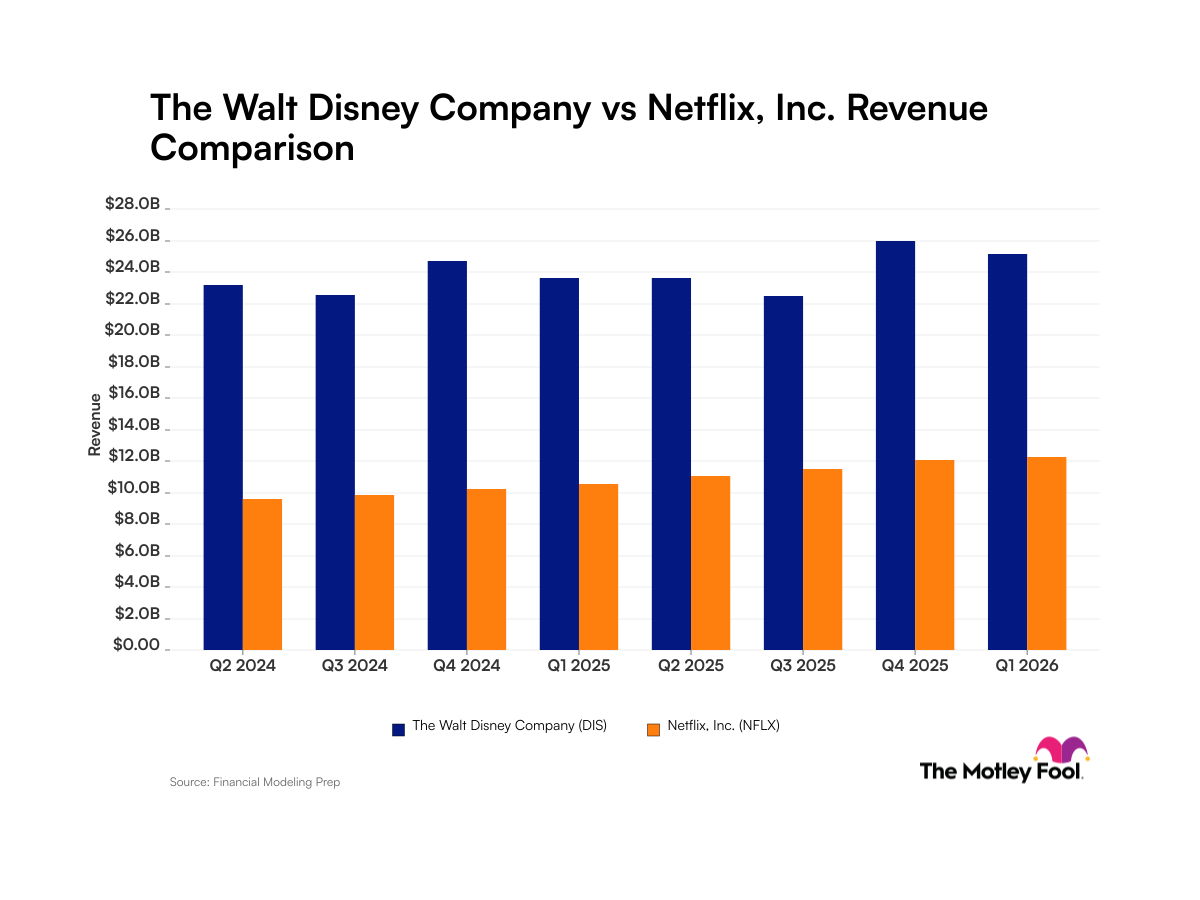
Comparison of Revenue Trends Between Disney and Netflix
- Disney's Revenue Performance: In Q1 2026, Disney reported revenue of $25.2 billion, reflecting a 7% year-over-year growth, and despite the leadership transition to new CEO Josh D'Amaro, its diversified business model in theme parks and entertainment content continues to support strong revenue growth.
- Netflix's Steady Revenue: Netflix achieved $12.2 billion in revenue for Q1 2026, marking a 16% year-over-year increase, and its 43% net income margin underscores its strong competitive position in the streaming market, despite navigating regulatory challenges and expanding its ad-supported subscription tier.
- Market Reaction Analysis: Despite Netflix's strong Q1 sales performance, its stock fell to a 52-week low of $70.86 on June 25, indicating investor concerns over potential growth slowdowns, particularly in light of the co-founder's retirement.
- Leadership Transition Impact: Disney's new CEO Josh D'Amaro took office on March 18, and while the company performed well under former CEO Bob Iger, the upcoming quarters will be critical to assess how the new leadership influences future performance.

Financial Comparison Between Disney and Netflix
- Revenue Growth Trends: Netflix has shown steady quarter-over-quarter growth over the past eight quarters, with first-quarter sales of $12.2 billion reflecting a 16% year-over-year increase, yet management forecasts a slowdown to 13.5% growth for Q2, raising concerns about growth deceleration.
- Net Income Margin Comparison: Netflix boasts a net income margin of 43%, significantly higher than Disney's 9%, highlighting the advantages of Netflix's focused streaming service model, while Disney's revenue streams are more diversified, including theme parks and merchandise sales.
- Leadership Change Impact: Disney's new CEO, Josh D'Amaro, took over on March 18, and while the company reported second-quarter sales of $25.2 billion, a 7% year-over-year increase under former CEO Bob Iger, the performance under new leadership remains to be seen.
- Investor Focus: As the revenue gap between Disney and Netflix narrows, investors should monitor upcoming quarters closely, particularly as Netflix navigates regulatory challenges in Europe and expands its advertising-supported subscription tier.
Escalating Middle East Tensions and World Cup Broadcast Rights Battle
- Middle East Escalation: On June 8, clashes between Israel and Iran severely tested a fragile truce, with attacks from Iran and its backed Houthi rebels further heightening tensions and threatening hopes for an end to the Middle East war.
- U.S. Retaliation: The U.S. revoked Iran's oil sales authorization in response to attacks in the Strait of Hormuz, stating that Iran's actions were unacceptable and would face consequences, demonstrating a firm U.S. military stance in the region.
- Ukrainian Offensive Intensifies: Ukrainian drones struck a major oil refinery in western Siberia, marking a significant escalation in attacks on Russian oil facilities, indicating Ukraine's strategic initiative in the ongoing conflict.
- World Cup Rights Competition: Companies like Netflix, Disney, and YouTube are vying for U.S. broadcast rights to the 2030 and 2034 World Cups, potentially igniting a bidding war with Fox, with discussions expected to commence in the next three months.
Streaming Giants Compete for FIFA Broadcast Rights
- Bidding War Begins: Companies like Netflix, Disney, YouTube, Amazon, and Apple are actively vying for the U.S. broadcast rights to the 2030 and 2034 FIFA World Cups, with media executives budgeting between $1.5 billion and $2 billion per tournament, significantly exceeding current rights costs, indicating a highly competitive landscape.
- Language Bundling Strategy: FIFA plans to bundle English and Spanish broadcast rights into a single package, a strategy that could substantially increase bids and potentially squeeze out traditional broadcasters like NBCUniversal, which is currently reassessing its financial position.
- Involvement of Tech Giants: Tech giants such as Amazon and Apple may emerge as potential bidders, unencumbered by traditional television distribution models, highlighting the increasing reliance on live sports as a key subscriber acquisition tool for digital platforms.
- Market Sentiment Analysis: While retail sentiment on Stocktwits is bullish for both Netflix and Disney, with low message volume for Netflix and high for Disney, Netflix has seen a 14% decline year-to-date, while Disney has dropped 19%, reflecting cautious market sentiment regarding the upcoming bidding for broadcast rights.
Media Companies Compete for World Cup Broadcast Rights
- Broadcast Rights Bidding: Companies like Netflix, Disney, and YouTube are vying for U.S. broadcast rights to the 2030 and 2034 World Cups, with budgets expected between $1.5 billion and $2 billion for each tournament, significantly enhancing their streaming service appeal.
- Language Rights Integration: FIFA plans to bundle English and Spanish broadcast rights, a strategy that could drive up bidding prices and attract more media partners, especially given that U.S. viewership has rivaled NFL playoff ratings.
- Viewership Potential: This year's World Cup has seen record viewership, with the U.S. match against Bosnia and Herzegovina attracting 26 million viewers, highlighting the immense advertising opportunities in the U.S. market and further boosting the value of broadcast rights.
- Time Zone Challenges: The 2030 and 2034 World Cups will be held in Morocco, Portugal, Spain, and Saudi Arabia, where time zone differences may affect U.S. viewership; however, the success of this year's tournament is likely to drive up broadcast rights prices.
Media Giants Compete for World Cup Broadcast Rights
- Massive Budgets: Media companies like Netflix, Disney, and YouTube are budgeting between $1.5 billion and $2 billion for the U.S. broadcast rights to the 2030 and 2034 World Cups, indicating their recognition of the event's immense market potential and viewer engagement.
- Combined Rights Strategy: FIFA's plan to sell English and Spanish broadcast rights as a single package could drive up prices, attracting more media companies to bid, thereby enhancing the overall value of the tournaments and fostering competitive bidding.
- Viewership Surge: This year's World Cup has seen record viewership, with the U.S. match against Bosnia and Herzegovina drawing over 26 million viewers, highlighting significant advertising opportunities and a robust audience base that could lead to a substantial increase in broadcast rights prices.
- Time Zone Challenges: Although the 2030 and 2034 World Cups will be held in less favorable time zones for U.S. viewers, the success of this year's tournament is expected to drive up broadcast rights prices, as media companies remain optimistic about future viewership potential.
Comparison of Revenue Trends Between Disney and Netflix
- Disney's Revenue Performance: In Q1 2026, Disney reported revenue of $25.2 billion, reflecting a 7% year-over-year growth, and despite the leadership transition to new CEO Josh D'Amaro, its diversified business model in theme parks and entertainment content continues to support strong revenue growth.
- Netflix's Steady Revenue: Netflix achieved $12.2 billion in revenue for Q1 2026, marking a 16% year-over-year increase, and its 43% net income margin underscores its strong competitive position in the streaming market, despite navigating regulatory challenges and expanding its ad-supported subscription tier.
- Market Reaction Analysis: Despite Netflix's strong Q1 sales performance, its stock fell to a 52-week low of $70.86 on June 25, indicating investor concerns over potential growth slowdowns, particularly in light of the co-founder's retirement.
- Leadership Transition Impact: Disney's new CEO Josh D'Amaro took office on March 18, and while the company performed well under former CEO Bob Iger, the upcoming quarters will be critical to assess how the new leadership influences future performance.
Financial Comparison Between Disney and Netflix
- Revenue Growth Trends: Netflix has shown steady quarter-over-quarter growth over the past eight quarters, with first-quarter sales of $12.2 billion reflecting a 16% year-over-year increase, yet management forecasts a slowdown to 13.5% growth for Q2, raising concerns about growth deceleration.
- Net Income Margin Comparison: Netflix boasts a net income margin of 43%, significantly higher than Disney's 9%, highlighting the advantages of Netflix's focused streaming service model, while Disney's revenue streams are more diversified, including theme parks and merchandise sales.
- Leadership Change Impact: Disney's new CEO, Josh D'Amaro, took over on March 18, and while the company reported second-quarter sales of $25.2 billion, a 7% year-over-year increase under former CEO Bob Iger, the performance under new leadership remains to be seen.
- Investor Focus: As the revenue gap between Disney and Netflix narrows, investors should monitor upcoming quarters closely, particularly as Netflix navigates regulatory challenges in Europe and expands its advertising-supported subscription tier.