UBS Reports 56% Increase in Q4 Earnings
Written by Emily J. Thompson, Senior Investment Analyst
Updated: Mar 02 2026
0mins

Source: Benzinga
- Earnings Growth Analysis: UBS reported a net profit of $1.2 billion for Q4 on February 6, marking a 56% year-over-year increase, with a full-year profit of $7.8 billion; however, much of this growth stemmed from the release of litigation reserves, raising questions about the sustainability of earnings.
- Ongoing Legal Risks: Despite management discussing cost savings and revenue momentum in core businesses during the investment call, persistent scrutiny from Swiss regulators and client lawsuits could impact future profitability, indicating a challenging environment ahead.
- Poor Market Performance: UBS's stock has declined 10% this year, underperforming JPMorgan and Goldman Sachs, as investor concerns over legal issues have pressured the stock price, leading to a cautious sentiment among investors despite quarterly earnings beats.
- Reputation Risk Emerges: Ultra-high-net-worth individuals are closely monitoring UBS's developments, and the outcomes of ongoing lawsuits may inflict lasting damage on its reputation in emerging markets, with the next earnings call scheduled for April 26.
Trade with 70% Backtested Accuracy
Stop guessing "Should I Buy BAC?" and start using high-conviction signals backed by rigorous historical data.
Sign up today to access powerful investing tools and make smarter, data-driven decisions.
Analyst Views on BAC
Wall Street analysts forecast BAC stock price to rise
19 Analyst Rating
15 Buy
4 Hold
0 Sell
Strong Buy
Current: 48.640

Low
55.00
Averages
61.64
High
71.00
Current: 48.640
Low
55.00
Averages
61.64
High
71.00
About BAC
Bank of America Corporation is a bank holding company and a financial holding company. Its segments include Consumer Banking, Global Wealth & Investment Management (GWIM), Global Banking and Global Markets. Consumer Banking segment offers a range of credit, banking and investment products and services to consumers and small businesses. The GWIM includes two businesses: Merrill Wealth Management, which provides tailored solutions to meet clients' needs through a full set of investment management, brokerage, banking and retirement products and Bank of America Private Bank, which provides comprehensive wealth management solutions. Global Banking segment provides a range of lending-related products and services, integrated working capital management and treasury solutions, and underwriting and advisory services. Global Markets segment offers sales and trading services and research services to institutional clients across fixed-income, credit, currency, commodity, and equity businesses.
About the author

Emily J. Thompson
Emily J. Thompson, a Chartered Financial Analyst (CFA) with 12 years in investment research, graduated with honors from the Wharton School. Specializing in industrial and technology stocks, she provides in-depth analysis for Intellectia’s earnings and market brief reports.
Bank of America Reports U.S. Art Market Recovery Trends
- Market Recovery: U.S. auction sales reached $3.17 billion in 2025, marking a 23% year-over-year increase and the first annual growth since 2022, indicating stabilization after two years of contraction.
- Sales Structure Shift: The number of lots sold declined by nearly 20%, yet sell-through rates hit a three-year high, reflecting improved alignment on pricing and expectations, showcasing a market preference for high-quality works.
- Significant Role of Guarantees: The share of guaranteed value in New York Evening Sales rose to 78% in 2025, the highest in a decade, indicating risk aversion among consignors, while guaranteed lots outperformed their low estimates by over 10%, further boosting market confidence.
- Strong Performance of Women Artists: Sales of works by women artists rebounded after a dip in 2024, increasing by 105% over the past decade, and outperforming male artists in resale returns, highlighting the market's long-term recognition and support for female artists.
See More

Unity Software Shares Drop Over 50% Amid Industry Decline

- Significant Price Drop: As of March 4, 2026, Unity Software Inc. (NYSE:U) shares have plummeted over 50% year-to-date, indicating intense selling pressure, while the broader software applications industry has declined approximately 30%, highlighting a challenging market environment.
- Analyst Rating Adjustment: On March 3, 2026, BofA upgraded Unity from Underperform to Neutral, raising the price target from $18 to $19, suggesting that despite short-term negatives, there are positive signals that may indicate a potential recovery ahead.
- Strategic Options in China: Bloomberg reported on February 25, 2026, that Unity is considering strategic options for its operations in China, including a potential sale that could value the company at over $1 billion, reflecting an active effort to reshape its portfolio.
- Growth Potential Assessment: Despite the challenges facing Unity, analysts remain optimistic about its future, believing that aggressive Q2 guidance may indicate acceleration in the company's growth segment, further bolstering investor confidence.
See More

Berkshire Hathaway's Cash Reserves Analysis

- Cash Reserve Status: Berkshire Hathaway ended 2025 with a cash reserve of $373.3 billion, down from $381.6 billion in Q3, yet still demonstrating strong financial strength, indicating the company's resilience amid market fluctuations.
- Stock Trading Dynamics: The company has been a net seller for the 13th consecutive quarter, primarily raising funds through sales of Apple and Bank of America stocks, reflecting its ongoing focus on these core holdings and risk management strategies.
- Buyback Strategy Adjustment: Although the company has not repurchased shares for six straight quarters, it began buying back stock earlier this month, indicating a reassessment of current stock prices, particularly as the price-to-book ratio has decreased from 1.8 to 1.4.
- CEO Strategic Outlook: New CEO Abel emphasized patience in managing the cash reserves in his annual letter, stating the need for disciplined investment timing while also highlighting the importance of risk management beyond its large insurance operations.
See More

Berkshire Ends 2025 with Record Cash Reserves
- Cash Reserve Status: Berkshire ended 2025 with a cash reserve of $373.3 billion, down from $381.6 billion in Q3, yet still demonstrating strong financial strength that allows for flexibility in future investment opportunities.
- Stock Trading Strategy: The company has been a net seller for the 13th consecutive quarter, primarily raising funds through sales of Apple and Bank of America stocks, indicating a cautious approach to these holdings, while Apple remains its largest investment, reflecting stability in its long-term investment strategy.
- Stock Buyback Decision: Berkshire has not repurchased any shares for six consecutive quarters, although it has recently begun to reconsider its buyback strategy, indicating a more cautious approach to assessing the intrinsic value of its stock, especially with the current P/B ratio at 1.4.
- Impact of Management Changes: New CEO Abel emphasizes the importance of patience and risk management, and while investors express frustration over the company's inaction, he believes that maintaining discipline and a prudent investment strategy is wise in a rapidly evolving technological landscape.
See More
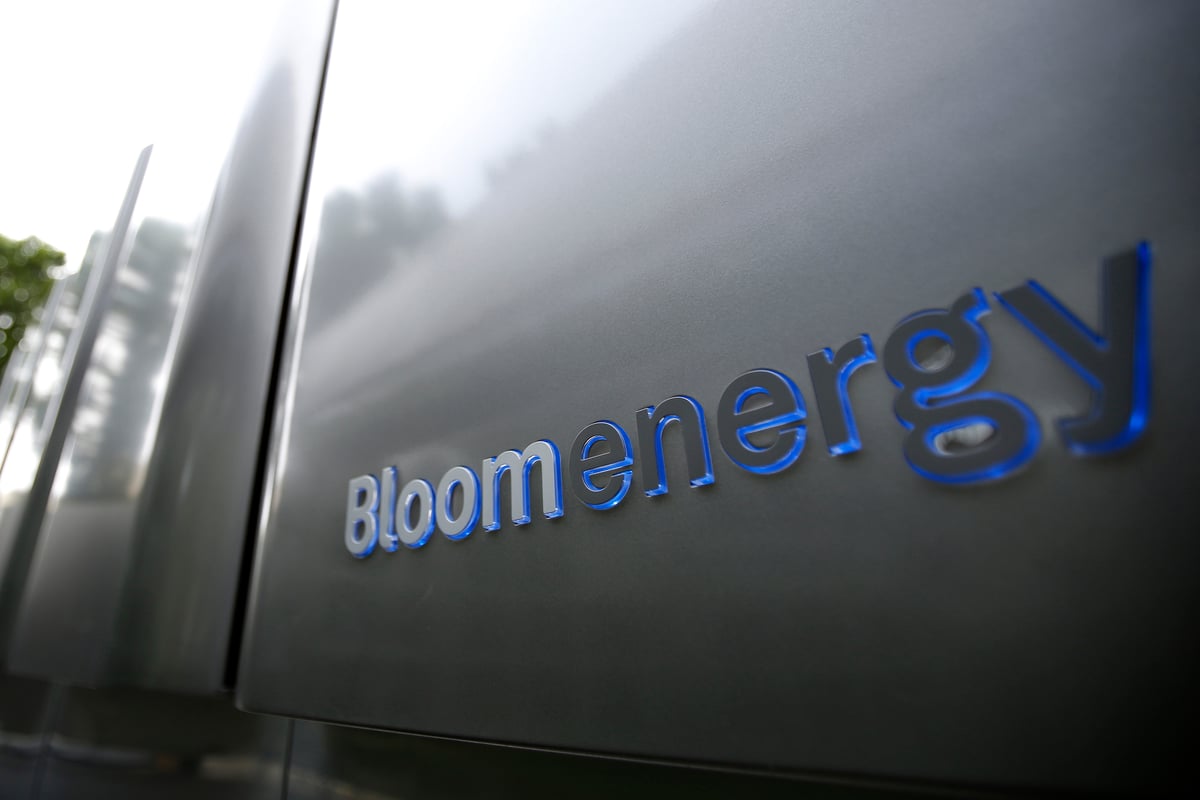
Bloom Energy Stock Soars 602% Amid AI Demand

- Surging Demand: Bloom Energy has seen explosive demand for its solid oxide fuel cells, becoming a key power supplier for AI data centers, with its backlog growing 2.5 times year-over-year to $6 billion, indicating strong market demand and future growth potential.
- Financing Framework: The company entered a financing framework with Brookfield Asset Management worth up to $5 billion to support its data center projects, providing crucial funding for Bloom Energy's expansion and further solidifying its market position.
- Revenue Guidance Upgrade: Bloom Energy raised its 2026 revenue guidance to $3.1 billion to $3.3 billion, significantly above Wall Street's $2.58 billion estimate, demonstrating strong profitability and competitive strength in a rapidly growing market.
- Expansion Risks: Despite the optimistic outlook, Bloom Energy aims to double its manufacturing capacity from 1 GW to 2 GW by the end of 2026, but this capital-intensive expansion carries execution risks, including potential cost overruns and supply chain disruptions, prompting investors to carefully assess the risks associated with its current high valuation.
See More
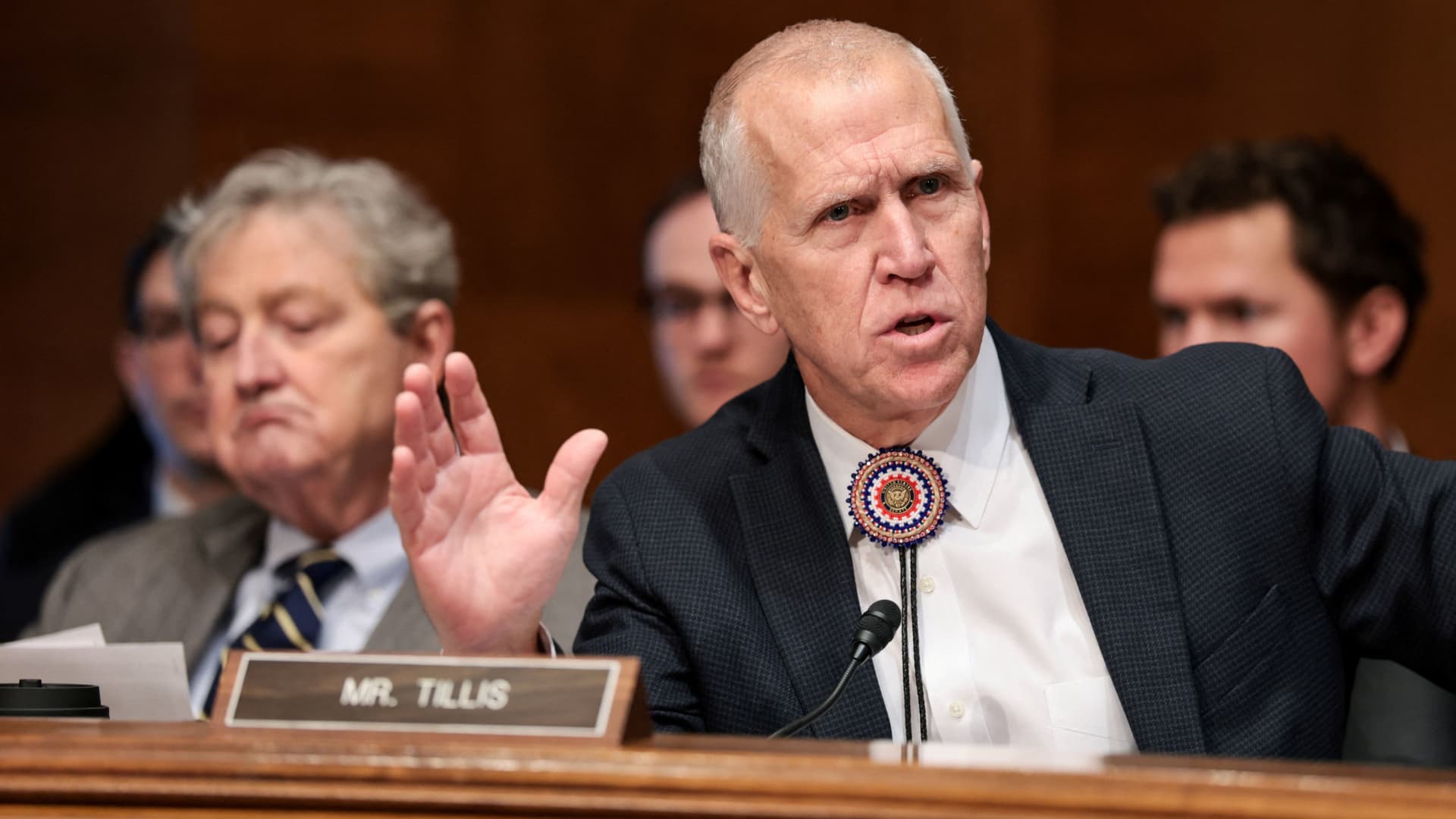
Federal Reserve Chair Nominee Faces Blockage

- Nomination Blockage: Federal Reserve chair nominee Kevin Warsh is set to meet with Senator Thom Tillis, who is blocking his nomination due to objections over President Trump's attacks on the central bank, highlighting the political dynamics affecting the nomination process.
- Investigation Impact: Tillis has stated he will not vote to confirm any Fed nominees until the Department of Justice drops its criminal investigation into current chair Jerome Powell, a stance that could delay Warsh's nomination and impact the stability of Fed leadership.
- Interest Rate Outlook: Powell's term ends on May 15, although he can remain on the Fed board until 2028, with the current benchmark interest rate at 3.5%-3.75%, while Trump desires a reduction to 1% or lower, indicating a divergence in policy direction.
- Market Expectations: Despite oil disruptions from the Iran war prompting some Fed officials to question the feasibility of further rate cuts, investors overwhelmingly expect the Fed to keep rates steady in next week's meeting, reflecting uncertainty in future policy actions.
See More
Bank of America Reports U.S. Art Market Recovery Trends
- Market Recovery: U.S. auction sales reached $3.17 billion in 2025, marking a 23% year-over-year increase and the first annual growth since 2022, indicating stabilization after two years of contraction.
- Sales Structure Shift: The number of lots sold declined by nearly 20%, yet sell-through rates hit a three-year high, reflecting improved alignment on pricing and expectations, showcasing a market preference for high-quality works.
- Significant Role of Guarantees: The share of guaranteed value in New York Evening Sales rose to 78% in 2025, the highest in a decade, indicating risk aversion among consignors, while guaranteed lots outperformed their low estimates by over 10%, further boosting market confidence.
- Strong Performance of Women Artists: Sales of works by women artists rebounded after a dip in 2024, increasing by 105% over the past decade, and outperforming male artists in resale returns, highlighting the market's long-term recognition and support for female artists.
See More
Unity Software Shares Drop Over 50% Amid Industry Decline
- Significant Price Drop: As of March 4, 2026, Unity Software Inc. (NYSE:U) shares have plummeted over 50% year-to-date, indicating intense selling pressure, while the broader software applications industry has declined approximately 30%, highlighting a challenging market environment.
- Analyst Rating Adjustment: On March 3, 2026, BofA upgraded Unity from Underperform to Neutral, raising the price target from $18 to $19, suggesting that despite short-term negatives, there are positive signals that may indicate a potential recovery ahead.
- Strategic Options in China: Bloomberg reported on February 25, 2026, that Unity is considering strategic options for its operations in China, including a potential sale that could value the company at over $1 billion, reflecting an active effort to reshape its portfolio.
- Growth Potential Assessment: Despite the challenges facing Unity, analysts remain optimistic about its future, believing that aggressive Q2 guidance may indicate acceleration in the company's growth segment, further bolstering investor confidence.
See More
Berkshire Hathaway's Cash Reserves Analysis
- Cash Reserve Status: Berkshire Hathaway ended 2025 with a cash reserve of $373.3 billion, down from $381.6 billion in Q3, yet still demonstrating strong financial strength, indicating the company's resilience amid market fluctuations.
- Stock Trading Dynamics: The company has been a net seller for the 13th consecutive quarter, primarily raising funds through sales of Apple and Bank of America stocks, reflecting its ongoing focus on these core holdings and risk management strategies.
- Buyback Strategy Adjustment: Although the company has not repurchased shares for six straight quarters, it began buying back stock earlier this month, indicating a reassessment of current stock prices, particularly as the price-to-book ratio has decreased from 1.8 to 1.4.
- CEO Strategic Outlook: New CEO Abel emphasized patience in managing the cash reserves in his annual letter, stating the need for disciplined investment timing while also highlighting the importance of risk management beyond its large insurance operations.
See More
Berkshire Ends 2025 with Record Cash Reserves
- Cash Reserve Status: Berkshire ended 2025 with a cash reserve of $373.3 billion, down from $381.6 billion in Q3, yet still demonstrating strong financial strength that allows for flexibility in future investment opportunities.
- Stock Trading Strategy: The company has been a net seller for the 13th consecutive quarter, primarily raising funds through sales of Apple and Bank of America stocks, indicating a cautious approach to these holdings, while Apple remains its largest investment, reflecting stability in its long-term investment strategy.
- Stock Buyback Decision: Berkshire has not repurchased any shares for six consecutive quarters, although it has recently begun to reconsider its buyback strategy, indicating a more cautious approach to assessing the intrinsic value of its stock, especially with the current P/B ratio at 1.4.
- Impact of Management Changes: New CEO Abel emphasizes the importance of patience and risk management, and while investors express frustration over the company's inaction, he believes that maintaining discipline and a prudent investment strategy is wise in a rapidly evolving technological landscape.
See More
Bloom Energy Stock Soars 602% Amid AI Demand
- Surging Demand: Bloom Energy has seen explosive demand for its solid oxide fuel cells, becoming a key power supplier for AI data centers, with its backlog growing 2.5 times year-over-year to $6 billion, indicating strong market demand and future growth potential.
- Financing Framework: The company entered a financing framework with Brookfield Asset Management worth up to $5 billion to support its data center projects, providing crucial funding for Bloom Energy's expansion and further solidifying its market position.
- Revenue Guidance Upgrade: Bloom Energy raised its 2026 revenue guidance to $3.1 billion to $3.3 billion, significantly above Wall Street's $2.58 billion estimate, demonstrating strong profitability and competitive strength in a rapidly growing market.
- Expansion Risks: Despite the optimistic outlook, Bloom Energy aims to double its manufacturing capacity from 1 GW to 2 GW by the end of 2026, but this capital-intensive expansion carries execution risks, including potential cost overruns and supply chain disruptions, prompting investors to carefully assess the risks associated with its current high valuation.
See More
Federal Reserve Chair Nominee Faces Blockage
- Nomination Blockage: Federal Reserve chair nominee Kevin Warsh is set to meet with Senator Thom Tillis, who is blocking his nomination due to objections over President Trump's attacks on the central bank, highlighting the political dynamics affecting the nomination process.
- Investigation Impact: Tillis has stated he will not vote to confirm any Fed nominees until the Department of Justice drops its criminal investigation into current chair Jerome Powell, a stance that could delay Warsh's nomination and impact the stability of Fed leadership.
- Interest Rate Outlook: Powell's term ends on May 15, although he can remain on the Fed board until 2028, with the current benchmark interest rate at 3.5%-3.75%, while Trump desires a reduction to 1% or lower, indicating a divergence in policy direction.
- Market Expectations: Despite oil disruptions from the Iran war prompting some Fed officials to question the feasibility of further rate cuts, investors overwhelmingly expect the Fed to keep rates steady in next week's meeting, reflecting uncertainty in future policy actions.
See More