Top Three AI Stocks to Invest In Now
Written by Emily J. Thompson, Senior Investment Analyst
Updated: 1 day ago
0mins

Should l Buy NVDA?
Source: Fool
- Nvidia's Sustained Growth: Nvidia achieved a remarkable 73% year-over-year revenue growth in 2023, with expectations of 77% growth next quarter, driven by insatiable demand for AI computing, underscoring its leadership and future growth potential in the AI market.
- Alphabet's AI Strategy: Alphabet, the parent company of Google, reported a 63% year-over-year revenue increase through its Gemini model and Google Cloud services, with plans to invest hundreds of billions in data centers, ensuring ongoing profitability and market share in the AI sector.
- Nebius's Rapid Ascent: Nebius is projected to reach an annual revenue of $7 billion to $9 billion by 2026, with analysts forecasting a staggering 523% revenue growth in 2026, highlighting its immense potential in the AI cloud computing market, albeit with higher risks compared to its peers.
- AI Investment Trends: As AI technology rapidly evolves, investors should monitor the performance of these companies, particularly the robust growth of Nvidia and Alphabet, alongside the high-risk, high-reward profile of Nebius, to create a diversified portfolio that can withstand market fluctuations.
Trade with 70% Backtested Accuracy
Stop guessing "Should I Buy NVDA?" and start using high-conviction signals backed by rigorous historical data.
Sign up today to access powerful investing tools and make smarter, data-driven decisions.
Analyst Views on NVDA
Wall Street analysts forecast NVDA stock price to rise
41 Analyst Rating
39 Buy
1 Hold
1 Sell
Strong Buy
Current: 198.480

Low
200.00
Averages
264.97
High
352.00
Current: 198.480
Low
200.00
Averages
264.97
High
352.00
About NVDA
NVIDIA Corporation is an artificial intelligence (AI) infrastructure company. The Company is engaged in accelerated computing to help solve the challenging computational problems. Its segments include Compute & Networking and Graphics. The Compute & Networking segment includes its Data Center accelerated computing and networking platforms and AI solutions and software, and automotive platforms and autonomous and electric vehicle solutions, including software. The Graphics segment includes GeForce GPUs for gaming and personal computers (PCs), and Quadro/NVIDIA RTX GPUs for enterprise workstation graphics. Its technology stack includes the foundational NVIDIA CUDA development platform that runs on all NVIDIA GPUs, as well as hundreds of domain-specific software libraries, frameworks, algorithms, software development kits (SDKs), and application programming interfaces (APIs). Its platforms address four markets, which include Data Center, Gaming, Professional Visualization, and Automotive.
About the author

Emily J. Thompson
Emily J. Thompson, a Chartered Financial Analyst (CFA) with 12 years in investment research, graduated with honors from the Wharton School. Specializing in industrial and technology stocks, she provides in-depth analysis for Intellectia’s earnings and market brief reports.
Nvidia's Optimistic Earnings Outlook Amid Surge in AI Demand

- Earnings Growth Expectation: Nvidia anticipates first-quarter revenue for fiscal 2027 to reach $78 billion, reflecting a 77% increase from the previous year, indicating strong ongoing demand for data center GPUs will continue to drive performance growth.
- New Product Launch: The upcoming Rubin platform from Nvidia will reduce the number of GPUs required for AI model training by 75%, leading to a 90% reduction in inference costs, significantly enhancing profit margins for data center operators and promoting broader AI application adoption.
- Increased Customer Spending: Major clients like Meta and Microsoft have raised their capital expenditure forecasts, with Meta increasing its upper limit from $135 billion to $145 billion and Microsoft planning $190 billion in spending for 2026, which may lead analysts to underestimate Nvidia's revenue potential.
- Attractive Stock Valuation: Nvidia's adjusted earnings per share stand at $4.77, with a current P/E ratio of 40.5, below its 10-year average of 61.7, suggesting the stock may be undervalued; if the earnings report exceeds expectations, the stock price could see significant appreciation.
See More
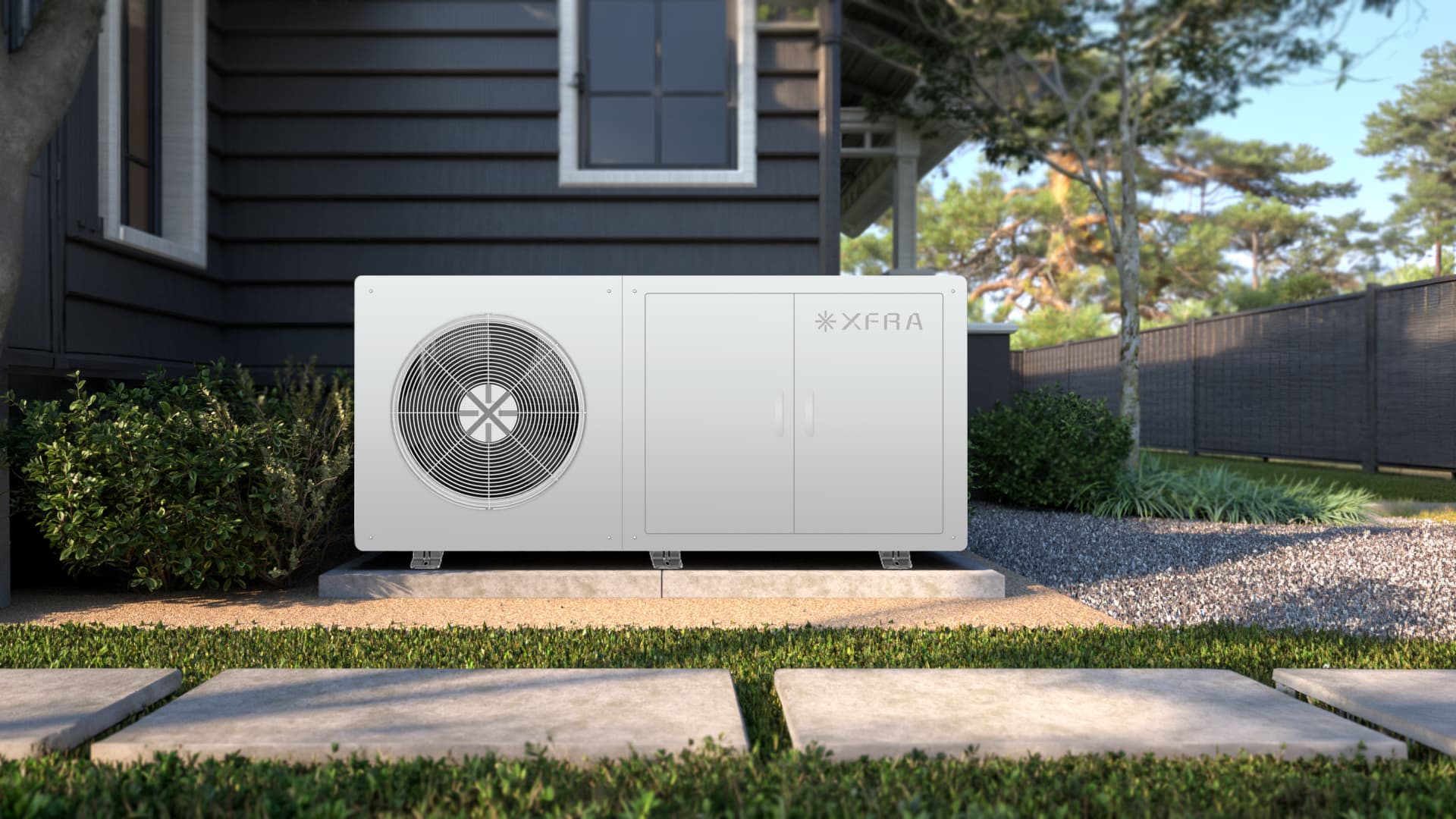
Span Introduces New Home Data Center Model

- Home Data Center Innovation: Span, in collaboration with Nvidia, has launched XFRA units, small data centers that can be installed on residential walls, leveraging unused local grid power, which is expected to significantly reduce household electricity costs and enhance energy efficiency.
- Rapid Installation Advantage: Span claims that its XFRA units can be installed six times faster and at five times lower cost than traditional 100-megawatt data centers, making it easier for homeowners and small businesses to access efficient computing infrastructure.
- Smart Electrical Panel Integration: The Span system includes smart electrical panels, XFRA units, and home backup batteries, effectively utilizing existing power resources, allowing homeowners to receive compensation through flat-rate electricity and Wi-Fi, thereby enhancing economic benefits for users.
- Market Potential Assessment: PulteGroup is testing the capabilities and economics of XFRA nodes, and if the technology proves viable, it could alleviate local infrastructure burdens while providing homeowners with innovative technology and potential income sources.
See More

Summer Investment Strategy: Focus on Three Tech Stocks

- Nvidia's Growth Potential: As the world's largest company by market value, Nvidia's Q1 revenue is projected to increase by 79% year-over-year, driven by strong AI chip demand, indicating significant upside potential in the coming months with a current P/E ratio of just 24, showcasing its investment appeal.
- Broadcom's Custom Chip Business: Broadcom's TPU, developed in partnership with Alphabet, is highly sought after in the AI training sector, with management projecting annual revenue exceeding $100 billion by 2027, up from $8.4 billion in Q1, highlighting its robust growth potential and making it a stock worth investing in.
- Nebius's Rapid Growth: Despite a market cap of only $44 billion, Nebius is expected to grow at an astonishing rate of 523% this year and 206% next year, indicating its significant potential in the AI cloud computing space, with the market yet to fully price in this growth outlook.
- Timing the Investment: As summer approaches, investors should focus on the potential upside of these tech stocks, particularly in the context of surging AI demand, with Nvidia, Broadcom, and Nebius all demonstrating strong growth momentum, making them suitable for long-term holding.
See More

Poet Technologies: A Potential Millionaire-Maker Stock


- Market Potential: Poet Technologies has a market cap of just $1.1 billion, significantly smaller than industry leader Nvidia's $4.8 trillion, suggesting that if it can replicate its technology, early investors could see life-changing returns.
- Technological Innovation: The company aims to disrupt AI computing infrastructure with its photonics technology, which moves data through light waves, potentially offering better performance and lower energy costs, thereby alleviating industry bottlenecks if successful.
- Client Loss Risk: The cancellation of all purchase orders by Celestial AI, worth $5 million, represents a significant setback for Poet, impacting its market validation and future growth prospects.
- Financial Challenges: Although revenues are projected to soar nearly 2,500% to $1.07 million in 2025, the company faces an operating loss of $42.1 million, lacking a clear path to profitability, which necessitates caution from investors.
See More

Google Begins Selling TPU Chips, Challenging Nvidia's Dominance

- Surging Market Demand: Alphabet CEO Sundar Pichai revealed during the earnings call that significant demand from AI labs, capital markets firms, and high-performance computing applications has prompted Google to sell TPUs externally for the first time, which is expected to significantly expand Alphabet's market opportunities.
- Revenue Expectations: CFO Anat Ashkenazi indicated that the company will recognize a small percentage of revenue from TPU agreements in 2026, with most revenue expected next year, suggesting that TPU sales will provide a new revenue stream and enhance Alphabet's financial performance.
- Changing Competitive Landscape: While Nvidia CEO Jensen Huang believes Google's TPUs won't pose a significant threat to its GPU business, analyst Gil Luria predicts that if Google sells TPUs to other companies, it could capture around 20% of the market share, highlighting Alphabet's potential in the AI chip market.
- Technological Advantages: TPUs are often more cost-effective and energy-efficient for AI workloads, making them a preferred choice for AI developers, especially in scenarios where power resources are constrained, thereby intensifying competition for Nvidia in the market.
See More

Alphabet Begins Selling TPUs, Challenging Nvidia's Dominance
- Increased Market Competition: Alphabet's decision to sell TPUs for the first time addresses the demand from AI labs and high-performance computing, potentially impacting Nvidia's market share, although Nvidia's CEO remains unconcerned.
- Revenue Expectations Rise: Alphabet anticipates recognizing a small percentage of revenue from TPU agreements in 2026, indicating an expanding market opportunity in AI infrastructure that boosts investor confidence.
- Technological Advantages: TPUs are more cost-effective and energy-efficient for AI workloads, particularly appealing to customers facing power constraints, thereby enhancing Alphabet's competitive position in the market.
- Optimistic Industry Outlook: Analysts predict that Alphabet's TPUs could capture around 20% of the market share, although this estimate may be overly optimistic, it still highlights Alphabet's potential in the AI chip market, prompting Nvidia to accelerate its technology development in response to competition.
See More
Nvidia's Optimistic Earnings Outlook Amid Surge in AI Demand
- Earnings Growth Expectation: Nvidia anticipates first-quarter revenue for fiscal 2027 to reach $78 billion, reflecting a 77% increase from the previous year, indicating strong ongoing demand for data center GPUs will continue to drive performance growth.
- New Product Launch: The upcoming Rubin platform from Nvidia will reduce the number of GPUs required for AI model training by 75%, leading to a 90% reduction in inference costs, significantly enhancing profit margins for data center operators and promoting broader AI application adoption.
- Increased Customer Spending: Major clients like Meta and Microsoft have raised their capital expenditure forecasts, with Meta increasing its upper limit from $135 billion to $145 billion and Microsoft planning $190 billion in spending for 2026, which may lead analysts to underestimate Nvidia's revenue potential.
- Attractive Stock Valuation: Nvidia's adjusted earnings per share stand at $4.77, with a current P/E ratio of 40.5, below its 10-year average of 61.7, suggesting the stock may be undervalued; if the earnings report exceeds expectations, the stock price could see significant appreciation.
See More
Span Introduces New Home Data Center Model
- Home Data Center Innovation: Span, in collaboration with Nvidia, has launched XFRA units, small data centers that can be installed on residential walls, leveraging unused local grid power, which is expected to significantly reduce household electricity costs and enhance energy efficiency.
- Rapid Installation Advantage: Span claims that its XFRA units can be installed six times faster and at five times lower cost than traditional 100-megawatt data centers, making it easier for homeowners and small businesses to access efficient computing infrastructure.
- Smart Electrical Panel Integration: The Span system includes smart electrical panels, XFRA units, and home backup batteries, effectively utilizing existing power resources, allowing homeowners to receive compensation through flat-rate electricity and Wi-Fi, thereby enhancing economic benefits for users.
- Market Potential Assessment: PulteGroup is testing the capabilities and economics of XFRA nodes, and if the technology proves viable, it could alleviate local infrastructure burdens while providing homeowners with innovative technology and potential income sources.
See More
Summer Investment Strategy: Focus on Three Tech Stocks
- Nvidia's Growth Potential: As the world's largest company by market value, Nvidia's Q1 revenue is projected to increase by 79% year-over-year, driven by strong AI chip demand, indicating significant upside potential in the coming months with a current P/E ratio of just 24, showcasing its investment appeal.
- Broadcom's Custom Chip Business: Broadcom's TPU, developed in partnership with Alphabet, is highly sought after in the AI training sector, with management projecting annual revenue exceeding $100 billion by 2027, up from $8.4 billion in Q1, highlighting its robust growth potential and making it a stock worth investing in.
- Nebius's Rapid Growth: Despite a market cap of only $44 billion, Nebius is expected to grow at an astonishing rate of 523% this year and 206% next year, indicating its significant potential in the AI cloud computing space, with the market yet to fully price in this growth outlook.
- Timing the Investment: As summer approaches, investors should focus on the potential upside of these tech stocks, particularly in the context of surging AI demand, with Nvidia, Broadcom, and Nebius all demonstrating strong growth momentum, making them suitable for long-term holding.
See More
Poet Technologies: A Potential Millionaire-Maker Stock
- Market Potential: Poet Technologies has a market cap of just $1.1 billion, significantly smaller than industry leader Nvidia's $4.8 trillion, suggesting that if it can replicate its technology, early investors could see life-changing returns.
- Technological Innovation: The company aims to disrupt AI computing infrastructure with its photonics technology, which moves data through light waves, potentially offering better performance and lower energy costs, thereby alleviating industry bottlenecks if successful.
- Client Loss Risk: The cancellation of all purchase orders by Celestial AI, worth $5 million, represents a significant setback for Poet, impacting its market validation and future growth prospects.
- Financial Challenges: Although revenues are projected to soar nearly 2,500% to $1.07 million in 2025, the company faces an operating loss of $42.1 million, lacking a clear path to profitability, which necessitates caution from investors.
See More
Google Begins Selling TPU Chips, Challenging Nvidia's Dominance
- Surging Market Demand: Alphabet CEO Sundar Pichai revealed during the earnings call that significant demand from AI labs, capital markets firms, and high-performance computing applications has prompted Google to sell TPUs externally for the first time, which is expected to significantly expand Alphabet's market opportunities.
- Revenue Expectations: CFO Anat Ashkenazi indicated that the company will recognize a small percentage of revenue from TPU agreements in 2026, with most revenue expected next year, suggesting that TPU sales will provide a new revenue stream and enhance Alphabet's financial performance.
- Changing Competitive Landscape: While Nvidia CEO Jensen Huang believes Google's TPUs won't pose a significant threat to its GPU business, analyst Gil Luria predicts that if Google sells TPUs to other companies, it could capture around 20% of the market share, highlighting Alphabet's potential in the AI chip market.
- Technological Advantages: TPUs are often more cost-effective and energy-efficient for AI workloads, making them a preferred choice for AI developers, especially in scenarios where power resources are constrained, thereby intensifying competition for Nvidia in the market.
See More
Alphabet Begins Selling TPUs, Challenging Nvidia's Dominance
- Increased Market Competition: Alphabet's decision to sell TPUs for the first time addresses the demand from AI labs and high-performance computing, potentially impacting Nvidia's market share, although Nvidia's CEO remains unconcerned.
- Revenue Expectations Rise: Alphabet anticipates recognizing a small percentage of revenue from TPU agreements in 2026, indicating an expanding market opportunity in AI infrastructure that boosts investor confidence.
- Technological Advantages: TPUs are more cost-effective and energy-efficient for AI workloads, particularly appealing to customers facing power constraints, thereby enhancing Alphabet's competitive position in the market.
- Optimistic Industry Outlook: Analysts predict that Alphabet's TPUs could capture around 20% of the market share, although this estimate may be overly optimistic, it still highlights Alphabet's potential in the AI chip market, prompting Nvidia to accelerate its technology development in response to competition.
See More