The old software investing playbook is dead. Here’s where to put your money now.
Written by Emily J. Thompson, Senior Investment Analyst
Updated: Aug 16 2025
0mins


Should l Buy NVDA?
Source: MarketWatch
Impact of AI on Software Companies: U.S. and European software companies are experiencing a decline in share prices due to concerns over artificial intelligence and its implications for the future of the software sector.
Changing Economic Landscape: The previous surge in software valuations driven by pandemic demand and low interest rates is now challenged by higher capital costs and the rapid advancement of AI technology.
Trade with 70% Backtested Accuracy
Stop guessing "Should I Buy NVDA?" and start using high-conviction signals backed by rigorous historical data.
Sign up today to access powerful investing tools and make smarter, data-driven decisions.
Analyst Views on NVDA
Wall Street analysts forecast NVDA stock price to rise
41 Analyst Rating
39 Buy
1 Hold
1 Sell
Strong Buy
Current: 167.520

Low
200.00
Averages
264.97
High
352.00
Current: 167.520
Low
200.00
Averages
264.97
High
352.00
About NVDA
NVIDIA Corporation is an artificial intelligence (AI) infrastructure company. The Company is engaged in accelerated computing to help solve the challenging computational problems. Its segments include Compute & Networking and Graphics. The Compute & Networking segment includes its Data Center accelerated computing and networking platforms and AI solutions and software, and automotive platforms and autonomous and electric vehicle solutions, including software. The Graphics segment includes GeForce GPUs for gaming and personal computers (PCs), and Quadro/NVIDIA RTX GPUs for enterprise workstation graphics. Its technology stack includes the foundational NVIDIA CUDA development platform that runs on all NVIDIA GPUs, as well as hundreds of domain-specific software libraries, frameworks, algorithms, software development kits (SDKs), and application programming interfaces (APIs). Its platforms address four markets, which include Data Center, Gaming, Professional Visualization, and Automotive.
About the author

Emily J. Thompson
Emily J. Thompson, a Chartered Financial Analyst (CFA) with 12 years in investment research, graduated with honors from the Wharton School. Specializing in industrial and technology stocks, she provides in-depth analysis for Intellectia’s earnings and market brief reports.

Nvidia Reports 65% Revenue Growth in Fiscal 2026

- Significant Revenue Growth: Nvidia reported a revenue of $215.9 billion for fiscal 2026, reflecting a 65% year-over-year increase, despite a 10.2% decline in stock price so far in 2026, indicating market concerns about the sustainability of AI infrastructure spending.
- Robust AI Demand Outlook: CEO Jensen Huang announced at the GTC AI Conference that demand for AI systems is projected to reach at least $1 trillion in 2026 and 2027, a substantial increase from the previous estimate of $500 billion, highlighting the long-term trend in AI infrastructure development.
- Diversified Customer Base: Nvidia's business is composed of 60% from hyperscalers and 40% from enterprises, sovereign AI projects, startups, and emerging applications, ensuring that the company is not overly reliant on any single industry, thereby mitigating market risks.
- Continuous Product Innovation: Nvidia is actively launching new products, with ongoing deployments of Hopper systems and ramping up Blackwell systems, while future platforms like Rubin and Feynman are already in development, enhancing the company's competitive edge in the market.
See More

Harbor Capital's Strategic Buy and Sell Moves in Q1 2026
- New Stock Additions: In Q1 2026, Harbor Capital added three stocks, with Merck & Co (MRK) being the largest at 2,020,767 shares, accounting for 0.86% of the portfolio and valued at $222.83 million, indicating confidence in the pharmaceutical sector.
- Key Position Increases: The fund increased its stake in Amphenol Corp (APH) by 818,193 shares, representing a significant 58.39% increase, bringing total holdings to 2,219,459 shares with an overall investment value of $319.78 million, reflecting optimism about its growth potential.
- Complete Exits: Harbor Capital fully exited four holdings in Q1, including Nike (NKE) and Boston Scientific (BSX), impacting the portfolio by -0.74% and -0.45% respectively, indicating a cautious outlook on these companies.
- Position Reductions: The fund reduced stakes in 34 stocks, notably cutting NVIDIA (NVDA) by 3,792,310 shares, resulting in a 20.42% decrease and a -2.61% portfolio impact, showcasing a strategic response to market volatility.
See More

Huawei's Cloud Computing Growth Slows

- Cloud Revenue Decline: Huawei reported a 3.5% drop in external cloud computing revenue for 2025, falling to 32.16 billion yuan ($4.6 billion), indicating increased competitive pressure amid rapid global cloud market growth.
- Overall Revenue Stagnation: The company's total revenue for 2025 reached 880.9 billion yuan, up only 2%, while the growth rate of its ICT infrastructure segment slowed from 4.9% in 2024 to 2.6%, reflecting a deceleration in key business areas.
- Innovative R&D Investment: Huawei's R&D expenditure in 2025 hit a record 192.3 billion yuan, accounting for 21.8% of total revenue; however, the lack of significant revenue growth from its self-developed AI chips highlights challenges in achieving technological self-sufficiency.
- Automotive Business Slowdown: The intelligent automotive solutions unit generated 45.02 billion yuan in revenue for 2025, growing 72% year-on-year, but this is a sharp decline from 474.4% growth in 2024, suggesting that initial surges in the electric vehicle market are stabilizing.
See More
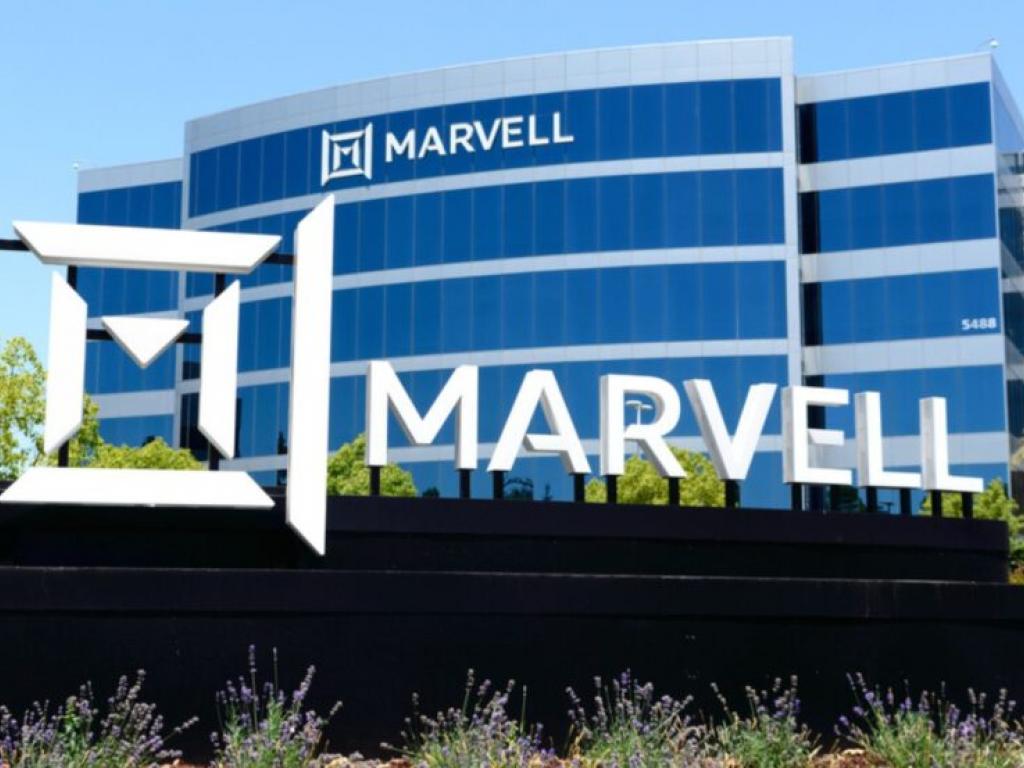
Nvidia Invests $2 Billion in Marvell to Boost AI Collaboration

- Stock Surge: Marvell's shares jumped over 11% following Nvidia's announcement of a $2 billion investment, reflecting strong market optimism about the collaboration, which could enhance the company's market valuation and investor confidence.
- Strategic Partnership: This investment connects Marvell to Nvidia's AI factory and radio access network ecosystems, not only strengthening Marvell's competitive position in the semiconductor industry but also laying the groundwork for collaboration in the AI sector.
- Joint Technology Innovation: The two companies will collaborate on silicon photonics technology and telecommunications networking, expected to drive advancements in next-generation communication technologies, thereby enhancing product performance and meeting increasing market demands.
- Surging Market Demand: Nvidia CEO Jensen Huang emphasized that as AI factory construction accelerates, demand for inference is surging, and this partnership will enable customers to leverage Nvidia's AI infrastructure ecosystem, further propelling Marvell's business growth.
See More
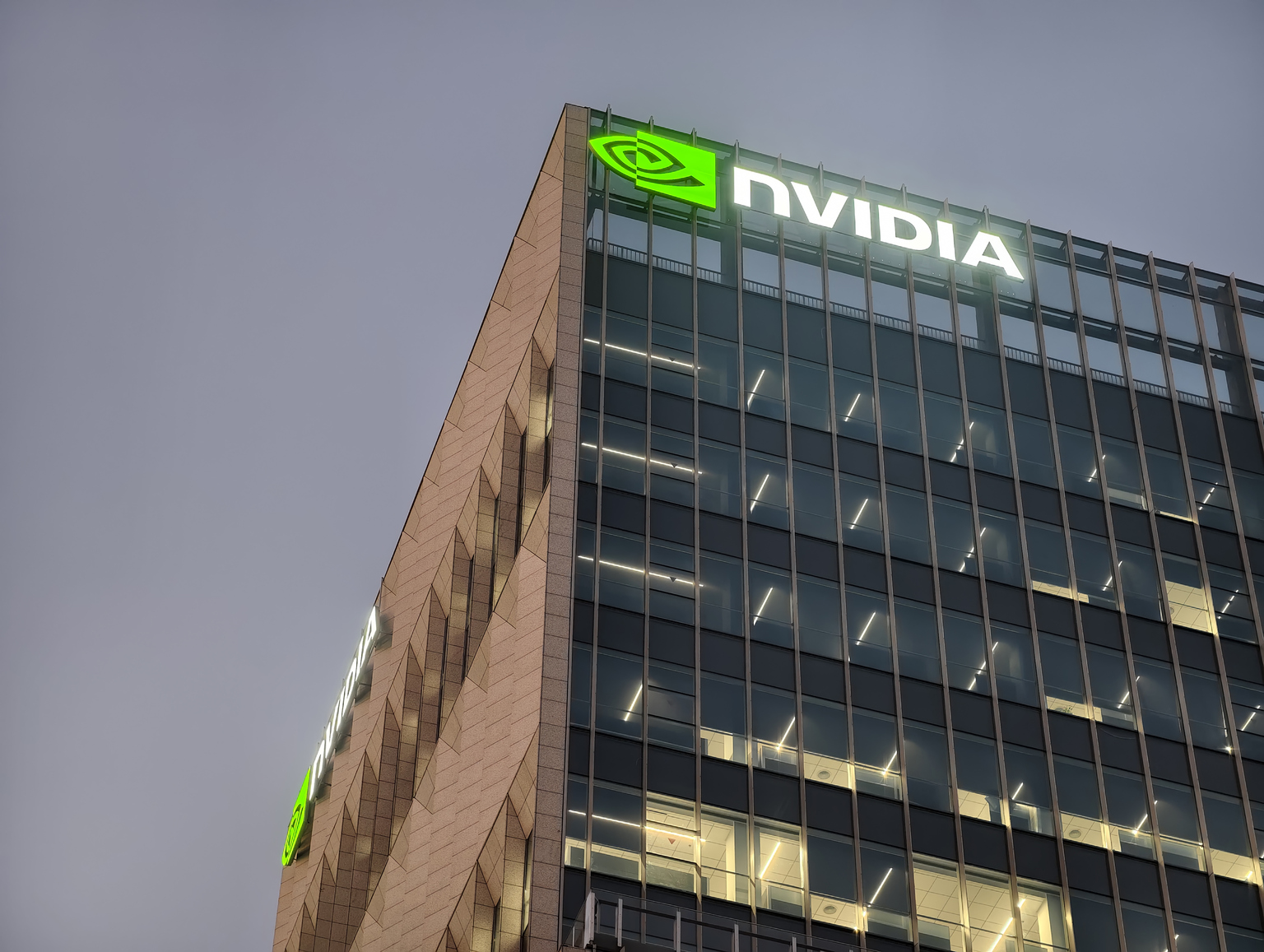
Nvidia's Vera Rubin GPU Design Change Impacts Memory Stocks

- Design Change Impact: Nvidia's shift from a 4-die to a 2-die design for its Vera Rubin GPU line has led to significant declines in memory stocks, with companies like Micron Technology (MU) and Western Digital (WDC) seeing drops between 4.5% and 10% on Monday, indicating market concerns over the new design's viability.
- Market Reaction: Analyst Jeff Pu from GF Securities noted that the complexity of 4-die packaging makes its likelihood low, and he now expects two versions: Rubin Ultra 2-die and Rubin Ultra 2-die x 2, which may affect demand for related memory components.
- Memory Component Stability: Despite the design changes, Pu believes the impact on components within Vera Rubin is minimal, as fewer packaged dies are expected to lead to a higher volume of packaged Rubin Ultra, maintaining the expectation of using next-generation high-bandwidth memory (HBM4E) at 64 GB per cube.
- Industry Outlook: The decline in memory, storage, and optical stocks has dragged down the entire chip sector, although Pu pointed out that other components like optical are unaffected in terms of bandwidth, suggesting that market confidence in Nvidia and its partners remains intact.
See More
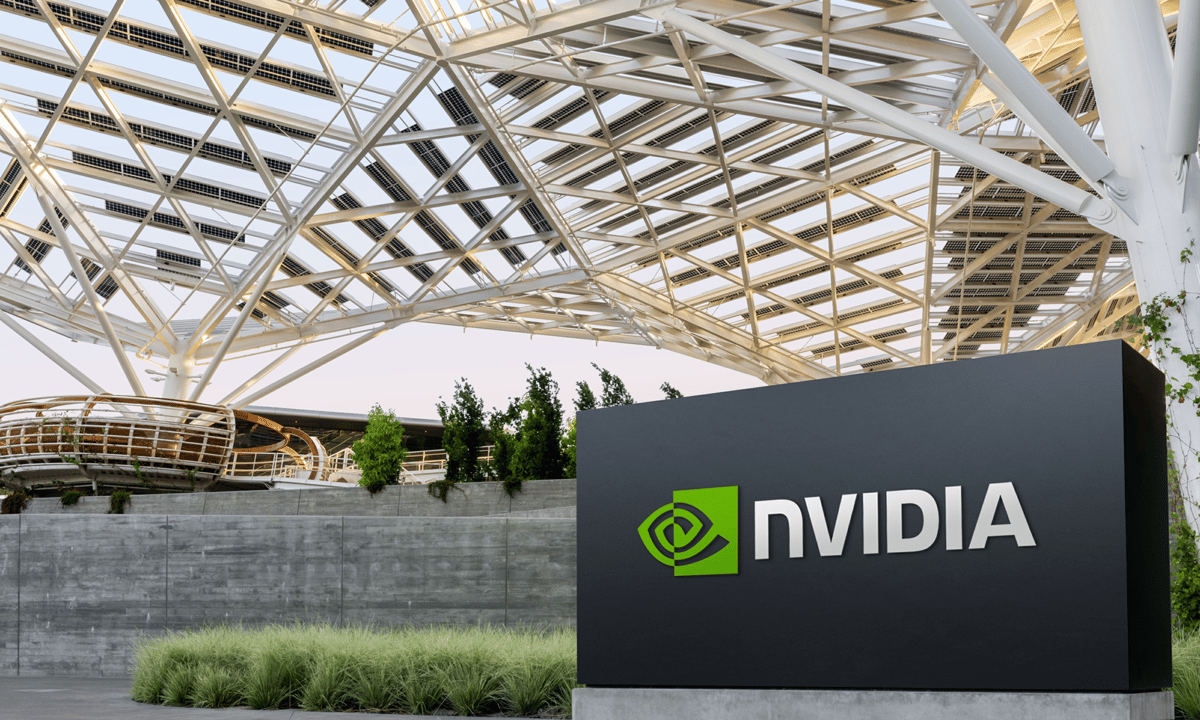
Nvidia Stock Declines Yet Remains a Strong Investment Opportunity
- Stock Decline: Nvidia (NVDA) shares have fallen 19% from their October peak and are nearing a six-month low, with a current market capitalization of $4.07 trillion, yet the market remains optimistic about its future growth potential.
- High Growth Potential: Despite a trailing P/E ratio of 35.7 and a P/S ratio of 19.9, Nvidia reported a staggering 73% year-over-year revenue growth in its latest quarter, with earnings per share nearly doubling, indicating strong growth potential that may lead to undervaluation.
- New Revenue Stream: After halting H200 AI chip production in 2025, costing approximately $8 billion per quarter, Nvidia is reportedly resuming H200 production and developing a Chinese-friendly version of its Groq 3 AI inference chips, which could add an unexpected $32 billion in annual revenue.
- Valuation Appeal: Should this new revenue stream materialize, Nvidia's forward P/S ratio could drop below 11, and its P/E ratio might even fall below 20, making it an attractive investment opportunity given its robust growth trajectory.
See More
Nvidia Reports 65% Revenue Growth in Fiscal 2026
- Significant Revenue Growth: Nvidia reported a revenue of $215.9 billion for fiscal 2026, reflecting a 65% year-over-year increase, despite a 10.2% decline in stock price so far in 2026, indicating market concerns about the sustainability of AI infrastructure spending.
- Robust AI Demand Outlook: CEO Jensen Huang announced at the GTC AI Conference that demand for AI systems is projected to reach at least $1 trillion in 2026 and 2027, a substantial increase from the previous estimate of $500 billion, highlighting the long-term trend in AI infrastructure development.
- Diversified Customer Base: Nvidia's business is composed of 60% from hyperscalers and 40% from enterprises, sovereign AI projects, startups, and emerging applications, ensuring that the company is not overly reliant on any single industry, thereby mitigating market risks.
- Continuous Product Innovation: Nvidia is actively launching new products, with ongoing deployments of Hopper systems and ramping up Blackwell systems, while future platforms like Rubin and Feynman are already in development, enhancing the company's competitive edge in the market.
See More
Harbor Capital's Strategic Buy and Sell Moves in Q1 2026
- New Stock Additions: In Q1 2026, Harbor Capital added three stocks, with Merck & Co (MRK) being the largest at 2,020,767 shares, accounting for 0.86% of the portfolio and valued at $222.83 million, indicating confidence in the pharmaceutical sector.
- Key Position Increases: The fund increased its stake in Amphenol Corp (APH) by 818,193 shares, representing a significant 58.39% increase, bringing total holdings to 2,219,459 shares with an overall investment value of $319.78 million, reflecting optimism about its growth potential.
- Complete Exits: Harbor Capital fully exited four holdings in Q1, including Nike (NKE) and Boston Scientific (BSX), impacting the portfolio by -0.74% and -0.45% respectively, indicating a cautious outlook on these companies.
- Position Reductions: The fund reduced stakes in 34 stocks, notably cutting NVIDIA (NVDA) by 3,792,310 shares, resulting in a 20.42% decrease and a -2.61% portfolio impact, showcasing a strategic response to market volatility.
See More
Huawei's Cloud Computing Growth Slows
- Cloud Revenue Decline: Huawei reported a 3.5% drop in external cloud computing revenue for 2025, falling to 32.16 billion yuan ($4.6 billion), indicating increased competitive pressure amid rapid global cloud market growth.
- Overall Revenue Stagnation: The company's total revenue for 2025 reached 880.9 billion yuan, up only 2%, while the growth rate of its ICT infrastructure segment slowed from 4.9% in 2024 to 2.6%, reflecting a deceleration in key business areas.
- Innovative R&D Investment: Huawei's R&D expenditure in 2025 hit a record 192.3 billion yuan, accounting for 21.8% of total revenue; however, the lack of significant revenue growth from its self-developed AI chips highlights challenges in achieving technological self-sufficiency.
- Automotive Business Slowdown: The intelligent automotive solutions unit generated 45.02 billion yuan in revenue for 2025, growing 72% year-on-year, but this is a sharp decline from 474.4% growth in 2024, suggesting that initial surges in the electric vehicle market are stabilizing.
See More
Nvidia Invests $2 Billion in Marvell to Boost AI Collaboration
- Stock Surge: Marvell's shares jumped over 11% following Nvidia's announcement of a $2 billion investment, reflecting strong market optimism about the collaboration, which could enhance the company's market valuation and investor confidence.
- Strategic Partnership: This investment connects Marvell to Nvidia's AI factory and radio access network ecosystems, not only strengthening Marvell's competitive position in the semiconductor industry but also laying the groundwork for collaboration in the AI sector.
- Joint Technology Innovation: The two companies will collaborate on silicon photonics technology and telecommunications networking, expected to drive advancements in next-generation communication technologies, thereby enhancing product performance and meeting increasing market demands.
- Surging Market Demand: Nvidia CEO Jensen Huang emphasized that as AI factory construction accelerates, demand for inference is surging, and this partnership will enable customers to leverage Nvidia's AI infrastructure ecosystem, further propelling Marvell's business growth.
See More
Nvidia's Vera Rubin GPU Design Change Impacts Memory Stocks
- Design Change Impact: Nvidia's shift from a 4-die to a 2-die design for its Vera Rubin GPU line has led to significant declines in memory stocks, with companies like Micron Technology (MU) and Western Digital (WDC) seeing drops between 4.5% and 10% on Monday, indicating market concerns over the new design's viability.
- Market Reaction: Analyst Jeff Pu from GF Securities noted that the complexity of 4-die packaging makes its likelihood low, and he now expects two versions: Rubin Ultra 2-die and Rubin Ultra 2-die x 2, which may affect demand for related memory components.
- Memory Component Stability: Despite the design changes, Pu believes the impact on components within Vera Rubin is minimal, as fewer packaged dies are expected to lead to a higher volume of packaged Rubin Ultra, maintaining the expectation of using next-generation high-bandwidth memory (HBM4E) at 64 GB per cube.
- Industry Outlook: The decline in memory, storage, and optical stocks has dragged down the entire chip sector, although Pu pointed out that other components like optical are unaffected in terms of bandwidth, suggesting that market confidence in Nvidia and its partners remains intact.
See More
Nvidia Stock Declines Yet Remains a Strong Investment Opportunity
- Stock Decline: Nvidia (NVDA) shares have fallen 19% from their October peak and are nearing a six-month low, with a current market capitalization of $4.07 trillion, yet the market remains optimistic about its future growth potential.
- High Growth Potential: Despite a trailing P/E ratio of 35.7 and a P/S ratio of 19.9, Nvidia reported a staggering 73% year-over-year revenue growth in its latest quarter, with earnings per share nearly doubling, indicating strong growth potential that may lead to undervaluation.
- New Revenue Stream: After halting H200 AI chip production in 2025, costing approximately $8 billion per quarter, Nvidia is reportedly resuming H200 production and developing a Chinese-friendly version of its Groq 3 AI inference chips, which could add an unexpected $32 billion in annual revenue.
- Valuation Appeal: Should this new revenue stream materialize, Nvidia's forward P/S ratio could drop below 11, and its P/E ratio might even fall below 20, making it an attractive investment opportunity given its robust growth trajectory.
See More