Stock Market Rebounds Led by Tech Stocks
Written by Emily J. Thompson, Senior Investment Analyst
Updated: Feb 21 2026
0mins


Should l Buy AVGO?
Source: CNBC
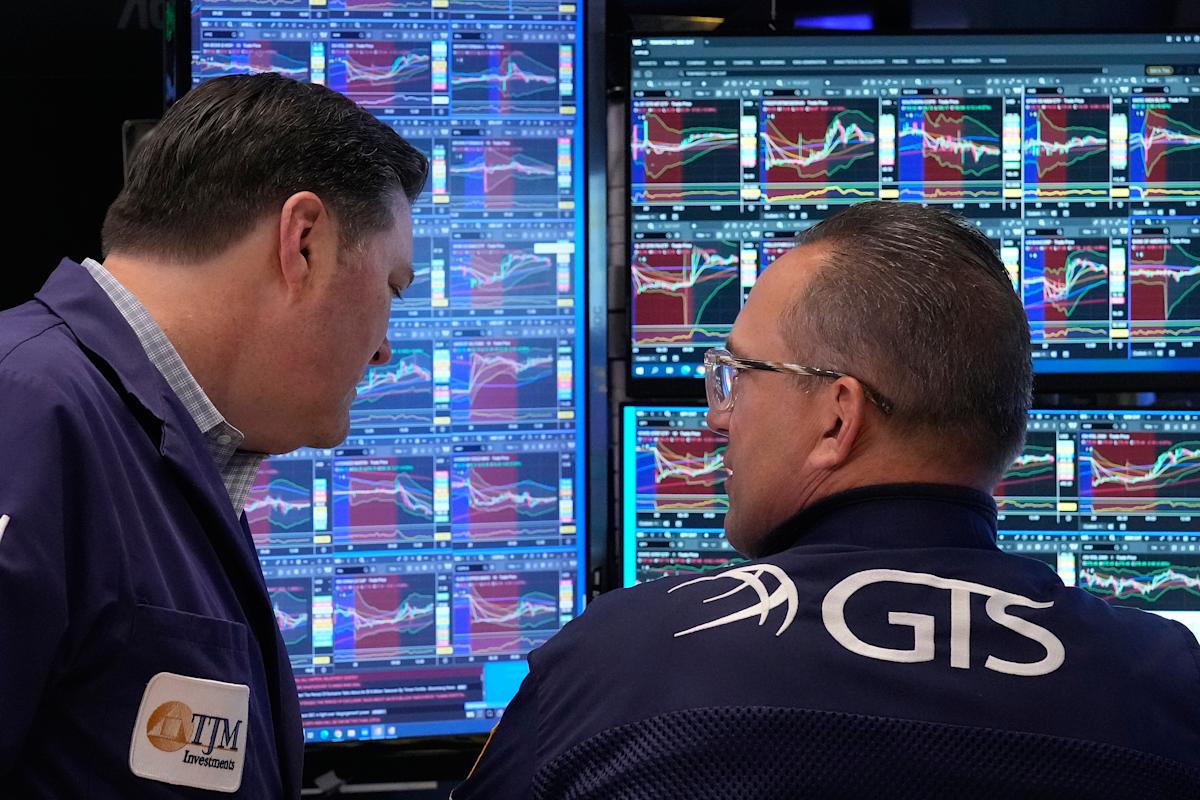
- Nasdaq Rebound: The Nasdaq index ended its five-week losing streak with a 1.9% increase last Friday, primarily driven by strong performances from major tech stocks like Meta, Nvidia, and Amazon, indicating a potential recovery in the tech sector.
- Supreme Court Ruling Impact: The U.S. Supreme Court's 6-3 decision to overturn Trump's emergency tariff policy led to a 0.7% rise in the S&P 500 on Friday, although uncertainty regarding future tariff policies continues to affect stocks like Nike, which faces a $1.5 billion tariff headwind.
- Private Credit Crisis: Concerns over Blue Owl Capital's restriction on retail investor withdrawals caused its shares to drop nearly 6% on Thursday, raising alarms about potential issues in the private credit market and impacting major financial firms like Ares and Blackstone.
- Strong Performance from Big Tech: Meta and Nvidia saw increases of 2.5% and 3.8%, respectively, while Amazon surged 5.6% after Bill Ackman's fund significantly increased its stake, reflecting strong investor confidence in AI demand and boosting optimism in tech stocks.
Trade with 70% Backtested Accuracy
Stop guessing "Should I Buy AVGO?" and start using high-conviction signals backed by rigorous historical data.
Sign up today to access powerful investing tools and make smarter, data-driven decisions.
Analyst Views on AVGO
Wall Street analysts forecast AVGO stock price to rise
30 Analyst Rating
29 Buy
1 Hold
0 Sell
Strong Buy
Current: 399.630

Low
370.00
Averages
457.75
High
525.00
Current: 399.630
Low
370.00
Averages
457.75
High
525.00
About AVGO
Broadcom Inc. is a global technology firm that designs, develops, and supplies a range of semiconductors, enterprise software and security solutions. The Company operates through two segments: semiconductor solutions and infrastructure software. Its semiconductor solutions segment includes all of its product lines and intellectual property (IP) licensing. It provides a variety of radio frequency semiconductor devices, wireless connectivity solutions, custom touch controllers, and inductive charging solutions for mobile applications. Its infrastructure software segment includes its private and hybrid cloud, application development and delivery, software-defined edge, application networking and security, mainframe, distributed and cybersecurity solutions, and its FC SAN business. It provides a portfolio of software solutions that enable customers to plan, develop, automate, manage and secure applications across mainframe, distributed, mobile and cloud platforms.
About the author

Emily J. Thompson
Emily J. Thompson, a Chartered Financial Analyst (CFA) with 12 years in investment research, graduated with honors from the Wharton School. Specializing in industrial and technology stocks, she provides in-depth analysis for Intellectia’s earnings and market brief reports.

OpenAI and Anthropic Poised for IPOs Amid Mixed Public Sentiment


- Strong Investor Confidence: Despite 57% of voters believing the risks of AI outweigh its benefits, 62% of investors express confidence in the long-term returns of AI companies, indicating robust interest in the upcoming IPOs of OpenAI and Anthropic.
- Massive Funding Rounds: OpenAI raised $122 billion last month, pushing its valuation to $852 billion, while Anthropic secured $30 billion, elevating its valuation to $380 billion, providing substantial backing for their IPOs.
- Large User Base: OpenAI boasts 900 million weekly users and projects annual revenues of $280 billion by 2030, while Anthropic anticipates $150 billion in annual revenues by 2029, highlighting their strong growth potential in the market.
- Accelerated Industry Transformation: As tech companies pivot towards AI, investors' portfolios are increasingly filled with AI stocks, suggesting that even if the public remains skeptical about AI, the IPOs of OpenAI and Anthropic could yield long-term benefits for average investors.
See More

Public Distrust of AI Unlikely to Impact Upcoming IPOs
- Strong Investor Confidence: According to a survey by The Motley Fool, 62% of investors believe AI stocks will deliver strong long-term returns, indicating that despite public skepticism towards AI, investors remain optimistic about the upcoming IPOs of OpenAI and Anthropic.
- Optimistic IPO Outlook: OpenAI and Anthropic are on the verge of going public, with OpenAI recently raising $122 billion, pushing its valuation to $852 billion, while Anthropic raised $30 billion, reaching a valuation of $380 billion, reflecting strong market interest and trust in these companies.
- Large User Base: OpenAI currently boasts 900 million weekly active users, projecting annual revenues of $280 billion by 2030, while Anthropic estimates annual revenues of $150 billion by 2029, showcasing their immense potential and market demand in the AI sector.
- Shift in Tech Investment: As tech investing evolves, nearly all tech companies are pivoting towards AI; although the public may be hesitant about AI, the average investor's retirement accounts are now filled with AI companies, and the IPOs of OpenAI and Anthropic will further accelerate this trend.
See More

Broadcom's Strong Growth Outlook Analysis


- Surge in AI Revenue: Broadcom's AI-related revenue has skyrocketed from approximately 15% two years ago to 44% today, with the segment growing 106% year-over-year in the latest quarter, indicating strong demand for custom AI accelerators, and projecting AI revenue to reach $100 billion by 2027.
- Outstanding Financial Performance: The stock has compounded at an annual rate of 39% over the past decade and gained over 140% in the last 12 months, with sales projected to increase by more than 60% this year and earnings expected to climb 68%, showcasing robust performance amid rapid expansion.
- Positive Analyst Sentiment: Earnings estimates for Broadcom have been revised upward by nearly 14% over the past 60 days, with next year's projections up nearly 25%, reflecting analysts' optimism about the company's future growth, supporting its Zacks Rank #1 (Strong Buy) rating.
- Technical Breakout: After nearly nine months of consolidation, Broadcom's stock has broken out from a nested base and is now approaching all-time highs, with a constructive technical setup suggesting that a breakout could lead to testing historical highs, while any short-term pullback may present a secondary entry opportunity.
See More

Anthropic Partners with Broadcom to Drive AI Growth

- TPU Usage Announcement: Anthropic has announced that starting in 2027, it will utilize multiple gigawatts of next-generation TPU computing power, providing investors with clarity on future expectations and demonstrating the company's ongoing expansion potential in the AI sector.
- Broadcom Revenue Growth: Broadcom anticipates that by 2027, its custom AI chip business will generate over $100 billion annually, with its AI semiconductor division reporting $8.4 billion in revenue last quarter, reflecting a remarkable 106% year-over-year growth and strong market demand.
- Alphabet Cloud Revenue Surge: Alphabet is recognizing TPU revenue through its Google Cloud division, which saw a 48% year-over-year revenue increase last quarter, indicating rapid growth in the AI market, with expanded partnerships with Anthropic expected to further boost this crucial segment.
- Market Competition Dynamics: While Nvidia maintains a leadership position in AI, Anthropic's collaborations with Broadcom and Alphabet position these companies as strong challengers in the market share battle, suggesting diverse investment opportunities in the AI landscape moving forward.
See More

Alphabet and Broadcom's TPU Growth Potential
- TPU Usage Growth: Anthropic announced that starting in 2027, it will utilize multiple gigawatts of next-generation TPU computing power, providing investors with clarity on future expectations and highlighting the significance of TPUs in the AI sector.
- Broadcom Revenue Outlook: Broadcom expects its custom AI chip business to exceed $100 billion in annual revenue by 2027, with its AI semiconductor division generating $8.4 billion last quarter, reflecting a robust market demand and growth potential.
- Alphabet Cloud Business Growth: Alphabet's Google Cloud segment saw a 48% year-over-year revenue increase last quarter, indicating the company's strategic success in cloud computing and TPU partnerships, which are expected to continue driving strong growth in this critical business area.
- Market Competition Landscape: While Nvidia holds a leadership position in the AI hardware market, Alphabet and Broadcom are actively seeking market share, and with deepening partnerships with AI leaders like Anthropic, the future growth outlook appears optimistic, showcasing their competitiveness in the AI space.
See More

Tech Stocks Rise Amid Market Decline as AI Boom Resurfaces

- Market Pullback: Major indexes fell for the second consecutive day as negotiations between Iran and the U.S. did not proceed as scheduled, reminding investors that the Iran war situation remains unresolved, making further stock market gains challenging.
- Tech Sector Resilience: Despite rising tensions in the Middle East, the technology sector continued to rise, with the State Street Technology ETF and iShares Semiconductor ETF marking their 15th consecutive day of gains, indicating a potential decoupling of tech stocks from the broader market.
- AI Investment Resurgence: As concerns over the Iran war fade, the AI investment landscape is revitalizing, with Anthropic's powerful AI model and SpaceX's $60 billion deal to acquire Cursor signaling that the AI boom is alive, likely channeling tens of billions into chip stocks.
- Chip Industry Developments: Intel's participation in the Terafab Project aims for 1 terawatt of computing power annually, while Broadcom signed a long-term deal with Google, and Nvidia announced its first open-source quantum AI model, showcasing positive momentum in the chip sector that could drive stock prices higher.
See More
OpenAI and Anthropic Poised for IPOs Amid Mixed Public Sentiment
- Strong Investor Confidence: Despite 57% of voters believing the risks of AI outweigh its benefits, 62% of investors express confidence in the long-term returns of AI companies, indicating robust interest in the upcoming IPOs of OpenAI and Anthropic.
- Massive Funding Rounds: OpenAI raised $122 billion last month, pushing its valuation to $852 billion, while Anthropic secured $30 billion, elevating its valuation to $380 billion, providing substantial backing for their IPOs.
- Large User Base: OpenAI boasts 900 million weekly users and projects annual revenues of $280 billion by 2030, while Anthropic anticipates $150 billion in annual revenues by 2029, highlighting their strong growth potential in the market.
- Accelerated Industry Transformation: As tech companies pivot towards AI, investors' portfolios are increasingly filled with AI stocks, suggesting that even if the public remains skeptical about AI, the IPOs of OpenAI and Anthropic could yield long-term benefits for average investors.
See More
Public Distrust of AI Unlikely to Impact Upcoming IPOs
- Strong Investor Confidence: According to a survey by The Motley Fool, 62% of investors believe AI stocks will deliver strong long-term returns, indicating that despite public skepticism towards AI, investors remain optimistic about the upcoming IPOs of OpenAI and Anthropic.
- Optimistic IPO Outlook: OpenAI and Anthropic are on the verge of going public, with OpenAI recently raising $122 billion, pushing its valuation to $852 billion, while Anthropic raised $30 billion, reaching a valuation of $380 billion, reflecting strong market interest and trust in these companies.
- Large User Base: OpenAI currently boasts 900 million weekly active users, projecting annual revenues of $280 billion by 2030, while Anthropic estimates annual revenues of $150 billion by 2029, showcasing their immense potential and market demand in the AI sector.
- Shift in Tech Investment: As tech investing evolves, nearly all tech companies are pivoting towards AI; although the public may be hesitant about AI, the average investor's retirement accounts are now filled with AI companies, and the IPOs of OpenAI and Anthropic will further accelerate this trend.
See More
Broadcom's Strong Growth Outlook Analysis
- Surge in AI Revenue: Broadcom's AI-related revenue has skyrocketed from approximately 15% two years ago to 44% today, with the segment growing 106% year-over-year in the latest quarter, indicating strong demand for custom AI accelerators, and projecting AI revenue to reach $100 billion by 2027.
- Outstanding Financial Performance: The stock has compounded at an annual rate of 39% over the past decade and gained over 140% in the last 12 months, with sales projected to increase by more than 60% this year and earnings expected to climb 68%, showcasing robust performance amid rapid expansion.
- Positive Analyst Sentiment: Earnings estimates for Broadcom have been revised upward by nearly 14% over the past 60 days, with next year's projections up nearly 25%, reflecting analysts' optimism about the company's future growth, supporting its Zacks Rank #1 (Strong Buy) rating.
- Technical Breakout: After nearly nine months of consolidation, Broadcom's stock has broken out from a nested base and is now approaching all-time highs, with a constructive technical setup suggesting that a breakout could lead to testing historical highs, while any short-term pullback may present a secondary entry opportunity.
See More
Anthropic Partners with Broadcom to Drive AI Growth
- TPU Usage Announcement: Anthropic has announced that starting in 2027, it will utilize multiple gigawatts of next-generation TPU computing power, providing investors with clarity on future expectations and demonstrating the company's ongoing expansion potential in the AI sector.
- Broadcom Revenue Growth: Broadcom anticipates that by 2027, its custom AI chip business will generate over $100 billion annually, with its AI semiconductor division reporting $8.4 billion in revenue last quarter, reflecting a remarkable 106% year-over-year growth and strong market demand.
- Alphabet Cloud Revenue Surge: Alphabet is recognizing TPU revenue through its Google Cloud division, which saw a 48% year-over-year revenue increase last quarter, indicating rapid growth in the AI market, with expanded partnerships with Anthropic expected to further boost this crucial segment.
- Market Competition Dynamics: While Nvidia maintains a leadership position in AI, Anthropic's collaborations with Broadcom and Alphabet position these companies as strong challengers in the market share battle, suggesting diverse investment opportunities in the AI landscape moving forward.
See More
Alphabet and Broadcom's TPU Growth Potential
- TPU Usage Growth: Anthropic announced that starting in 2027, it will utilize multiple gigawatts of next-generation TPU computing power, providing investors with clarity on future expectations and highlighting the significance of TPUs in the AI sector.
- Broadcom Revenue Outlook: Broadcom expects its custom AI chip business to exceed $100 billion in annual revenue by 2027, with its AI semiconductor division generating $8.4 billion last quarter, reflecting a robust market demand and growth potential.
- Alphabet Cloud Business Growth: Alphabet's Google Cloud segment saw a 48% year-over-year revenue increase last quarter, indicating the company's strategic success in cloud computing and TPU partnerships, which are expected to continue driving strong growth in this critical business area.
- Market Competition Landscape: While Nvidia holds a leadership position in the AI hardware market, Alphabet and Broadcom are actively seeking market share, and with deepening partnerships with AI leaders like Anthropic, the future growth outlook appears optimistic, showcasing their competitiveness in the AI space.
See More
Tech Stocks Rise Amid Market Decline as AI Boom Resurfaces
- Market Pullback: Major indexes fell for the second consecutive day as negotiations between Iran and the U.S. did not proceed as scheduled, reminding investors that the Iran war situation remains unresolved, making further stock market gains challenging.
- Tech Sector Resilience: Despite rising tensions in the Middle East, the technology sector continued to rise, with the State Street Technology ETF and iShares Semiconductor ETF marking their 15th consecutive day of gains, indicating a potential decoupling of tech stocks from the broader market.
- AI Investment Resurgence: As concerns over the Iran war fade, the AI investment landscape is revitalizing, with Anthropic's powerful AI model and SpaceX's $60 billion deal to acquire Cursor signaling that the AI boom is alive, likely channeling tens of billions into chip stocks.
- Chip Industry Developments: Intel's participation in the Terafab Project aims for 1 terawatt of computing power annually, while Broadcom signed a long-term deal with Google, and Nvidia announced its first open-source quantum AI model, showcasing positive momentum in the chip sector that could drive stock prices higher.
See More