Market Pullback May Present Long-Term Buying Opportunities
Written by Emily J. Thompson, Senior Investment Analyst
Updated: May 02 2026
0mins


Should l Buy TSM?
Source: Fool
- TSMC's Market Position: Taiwan Semiconductor Manufacturing (TSM) holds over two-thirds of the global foundry market share, and despite the chip industry's efforts to reduce dependence on it, the ongoing demand for AI processing chips has led to a consistent bullish trend since late 2022, indicating strong future potential.
- Roku's Financial Performance: Roku's Q1 revenue increased by 22% year-over-year, with a 27% improvement in gross profit, demonstrating its resilience and adaptability in the streaming industry; despite misconceptions about its business model, it profits regardless of the streaming services' popularity, showcasing robust market competitiveness.
- Growth Potential of Arm Holdings: Arm Holdings (ARM) has seen a 70% increase recently, and although it has pulled back, its price-to-earnings ratio remains above 100, reflecting market expectations for its future profitability, especially as significant agreements with Meta and OpenAI have yet to fully impact its financials, suggesting long-term investment benefits.
- Market Sentiment Shift: Despite the market rally in April, high valuations and mixed first-quarter earnings reports have led investors to reconsider their strategies, potentially resulting in another market correction that could present long-term buying opportunities.
Trade with 70% Backtested Accuracy
Stop guessing "Should I Buy TSM?" and start using high-conviction signals backed by rigorous historical data.
Sign up today to access powerful investing tools and make smarter, data-driven decisions.
Analyst Views on TSM
Wall Street analysts forecast TSM stock price to fall
8 Analyst Rating
7 Buy
1 Hold
0 Sell
Strong Buy
Current: 411.680

Low
63.24
Averages
313.46
High
390.00
Current: 411.680
Low
63.24
Averages
313.46
High
390.00
About TSM
Taiwan Semiconductor Manufacturing Co Ltd is a Taiwan-based integrated circuit foundry service provider. The Company is primarily engaged in integrated circuit manufacturing services. It offers advanced process technologies, specialised process solutions, advanced photomask and silicon stacking, and packaging-related technologies, while supporting a comprehensive design ecosystem. The Company's products serve diverse electronic sectors including artificial intelligence, high-performance computing, wired and wireless communications, automotive and industrial equipment, personal computing, information applications, consumer electronics, smart internet of things, and wearable devices.
About the author

Emily J. Thompson
Emily J. Thompson, a Chartered Financial Analyst (CFA) with 12 years in investment research, graduated with honors from the Wharton School. Specializing in industrial and technology stocks, she provides in-depth analysis for Intellectia’s earnings and market brief reports.
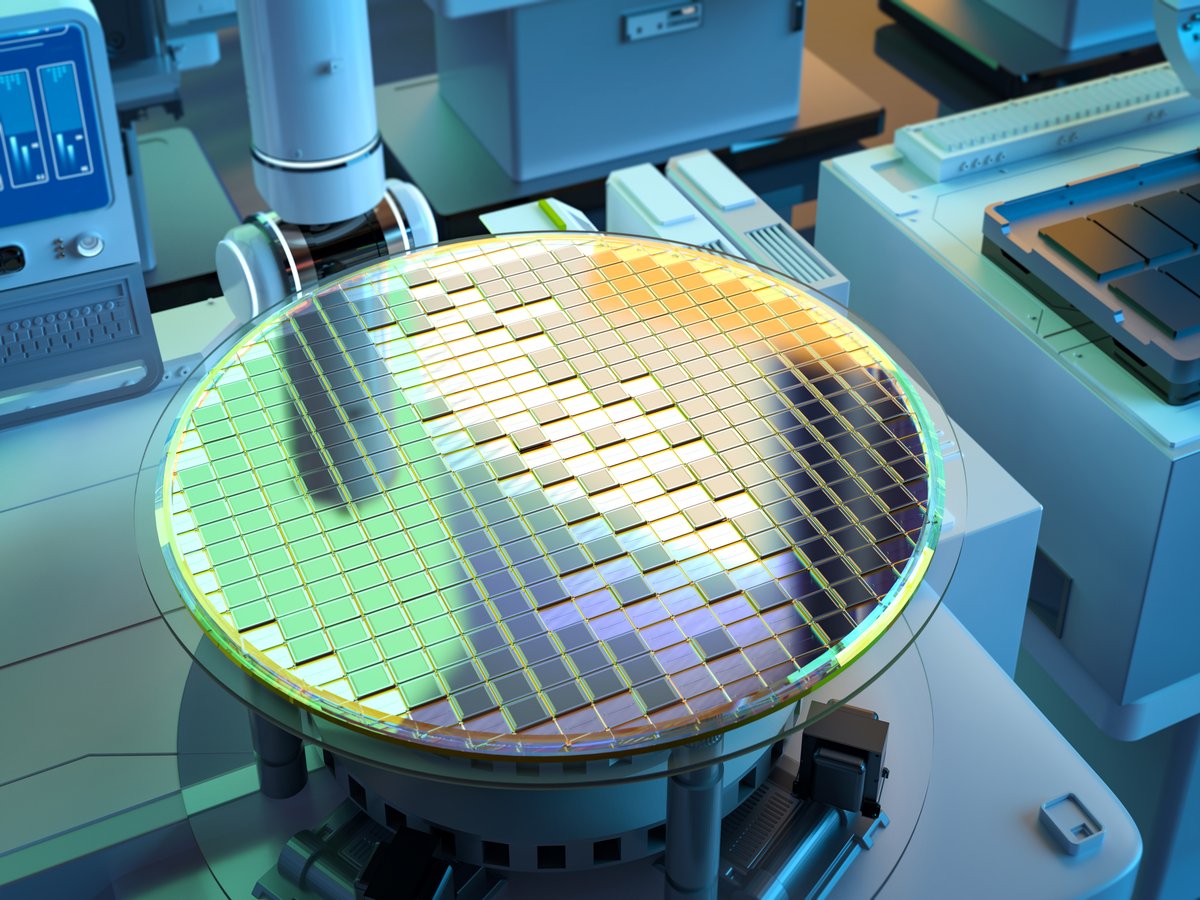
Taiwan Semiconductor: The Giant of the Semiconductor Industry
- Market Share Dominance: Taiwan Semiconductor controls 72% of the global pure foundry chip market, significantly outpacing its nearest competitor, Samsung, at 7%, which solidifies its leadership position in the AI hardware sector and further strengthens its market dominance.
- Strong Financial Performance: In 2025, Taiwan Semiconductor generated over $122 billion in revenue with a net profit margin of 44.5%, and its debt-to-equity ratio stands at a mere 0.2, showcasing its financial robustness in a capital-intensive industry.
- Quarterly Earnings Growth: In Q1 2026, Taiwan Semiconductor reported net revenue of $35.9 billion, a 40.6% increase year-over-year, with earnings per share (EPS) surging 58.3% and net profit margin rising to 50.5%, indicating a continued enhancement in profitability.
- Future Growth Outlook: Taiwan Semiconductor targets an operating margin of 56.5% to 58.5% for Q2 2026, with projected total revenue between $39 billion and $40.2 billion, and aims for a 30% revenue growth over 2025, reflecting strong growth potential.
See More

TSMC Raises 2030 Semiconductor Spending Estimate by 50%
- Optimistic Market Outlook: TSMC forecasts the semiconductor market will reach $1.5 trillion by 2030, doubling from 2025, indicating strong long-term growth potential, particularly in the AI chip sector, further solidifying its market leadership.
- Increased Capital Expenditure: The company expects full-year revenue growth to exceed 30% in 2026 and plans to spend near the high end of its $52 billion to $56 billion capex guidance for 2023, reflecting strong confidence in future demand.
- Technological Leadership: Investments in advanced manufacturing and packaging capabilities will enable TSMC to maintain its technology lead in the coming years, with 55% of spending by 2030 expected to go towards high-performance chips, further expanding its market share.
- Attractive Stock Valuation: Despite strong performance expectations for 2026, TSMC shares trade at less than 27 times forward earnings, compared to Intel's over 100 times, highlighting its investment value and certainty of future growth.
See More
Markets Underestimate Long-Term AI Memory Chip Demand


- Long-Term Demand Outlook: Several Wall Street banks believe that the market is underestimating the long-term need for memory chips in AI buildout, with Micron Technology's shares expected to gain over 30% from current levels, significantly boosting investor confidence.
- Price Target Increase: DA Davidson has raised Micron's price target to $1,000, with analyst Gil Luria noting that memory chip demand will exceed market expectations, particularly in the infrastructure for large language models, creating a virtuous cycle.
- Changing Market Dynamics: Deutsche Bank has also set a $1,000 price target, asserting that Micron will benefit from changing cyclical dynamics in the sector, with expectations for its shares to be re-rated higher due to strong fundamentals.
- Data Center Growth: According to Barclays' analysis, data center capacity is expected to double between 2025 and 2030, and despite the increase in capacity, demand remains strong, which is anticipated to continue driving rent growth and low vacancy rates.
See More
Trade Desk Downgrade Leads to Stock Plunge


- Trade Desk Downgrade: The stock of Trade Desk fell nearly 7% after HSBC downgraded its rating from hold to reduce and slashed the price target from $31 to $20, indicating about a 13% downside, marking the company's fourth consecutive negative trading day.
- Corning Stock Surge: Corning's shares jumped 10% after Nvidia announced a $3.2 billion investment and a partnership to open three new manufacturing plants, leading to its inclusion in Bank of America's U.S. 1 List, reflecting strong market confidence in its growth prospects.
- Wendy's Rating Cut: JPMorgan downgraded Wendy's from neutral to underweight with a new price target of $6, implying an 18% downside, primarily due to a continued decline in U.S. same-store sales trends and uncertainty about the company's future, resulting in a 6% drop in stock price.
- Circle Internet Group Mixed Results: Circle's stock rose 15% after reporting earnings per share of 21 cents, beating expectations, although its revenue of $694 million fell short of the $722 million forecast, while successfully raising $222 million from various institutions, indicating market confidence in its stablecoin.
See More

Helium Supply Crisis Impacts AI Industry
- Helium Price Surge: Following Iranian drone strikes on Qatar's Ras Laffan Industrial City, which accounts for one-third of global helium supply, spot prices doubled within weeks, directly impacting semiconductor manufacturers' cost structures.
- Supply Chain Vulnerability: Taiwan Semiconductor Manufacturing Company consumes approximately 500,000 cubic feet of helium annually and has begun monitoring its inventory, while Samsung and SK Hynix have entered a six-month inventory window, highlighting their heavy reliance on helium supply amid market uncertainty.
- Industry Giants Benefit: Air Products and Chemicals and Linde PLC hold pricing power during helium shortages, with Air Products reporting Q1 2026 results that exceeded expectations and raising its full-year adjusted EPS guidance to $13.00-$13.25, reflecting strong market demand.
- Ongoing Geopolitical Risks: Despite a fragile ceasefire brokered in April, Iran's frequent attacks on commercial vessels indicate that the helium supply chain risks have not dissipated, necessitating investor attention on the long-term stability of this critical infrastructure.
See More

Iranian Drone Strikes Disrupt Global Helium Supply
- Helium Supply Crisis: Iranian drone strikes on Qatar's Ras Laffan Industrial City have disrupted global helium supply, with QatarEnergy declaring force majeure within days, affecting about one-third of the world's helium production and causing spot prices to double within weeks, significantly pressuring the semiconductor industry.
- Chip Manufacturing Impact: Taiwan Semiconductor Manufacturing Company, which consumes approximately 500,000 cubic feet of helium annually, has begun monitoring its inventory, while Samsung and SK Hynix have entered a six-month inventory window expected to close in June or July, highlighting the direct impact of helium shortages on advanced chip manufacturing.
- Market Reaction: U.S. industrial gas distributor Airgas declared force majeure on helium shipments in April, indicating supply chain vulnerabilities, and Moody's Ratings warned that even if tensions ease, Qatar's helium production infrastructure has sustained physical damage, complicating recovery efforts.
- Industry Consolidation: Air Products and Chemicals and Linde PLC control a significant share of global helium supply, granting them pricing power during shortages that semiconductor customers cannot easily negotiate away, underscoring the underestimated importance of the helium supply chain in the AI supercycle.
See More
Taiwan Semiconductor: The Giant of the Semiconductor Industry
- Market Share Dominance: Taiwan Semiconductor controls 72% of the global pure foundry chip market, significantly outpacing its nearest competitor, Samsung, at 7%, which solidifies its leadership position in the AI hardware sector and further strengthens its market dominance.
- Strong Financial Performance: In 2025, Taiwan Semiconductor generated over $122 billion in revenue with a net profit margin of 44.5%, and its debt-to-equity ratio stands at a mere 0.2, showcasing its financial robustness in a capital-intensive industry.
- Quarterly Earnings Growth: In Q1 2026, Taiwan Semiconductor reported net revenue of $35.9 billion, a 40.6% increase year-over-year, with earnings per share (EPS) surging 58.3% and net profit margin rising to 50.5%, indicating a continued enhancement in profitability.
- Future Growth Outlook: Taiwan Semiconductor targets an operating margin of 56.5% to 58.5% for Q2 2026, with projected total revenue between $39 billion and $40.2 billion, and aims for a 30% revenue growth over 2025, reflecting strong growth potential.
See More
TSMC Raises 2030 Semiconductor Spending Estimate by 50%
- Optimistic Market Outlook: TSMC forecasts the semiconductor market will reach $1.5 trillion by 2030, doubling from 2025, indicating strong long-term growth potential, particularly in the AI chip sector, further solidifying its market leadership.
- Increased Capital Expenditure: The company expects full-year revenue growth to exceed 30% in 2026 and plans to spend near the high end of its $52 billion to $56 billion capex guidance for 2023, reflecting strong confidence in future demand.
- Technological Leadership: Investments in advanced manufacturing and packaging capabilities will enable TSMC to maintain its technology lead in the coming years, with 55% of spending by 2030 expected to go towards high-performance chips, further expanding its market share.
- Attractive Stock Valuation: Despite strong performance expectations for 2026, TSMC shares trade at less than 27 times forward earnings, compared to Intel's over 100 times, highlighting its investment value and certainty of future growth.
See More
Markets Underestimate Long-Term AI Memory Chip Demand
- Long-Term Demand Outlook: Several Wall Street banks believe that the market is underestimating the long-term need for memory chips in AI buildout, with Micron Technology's shares expected to gain over 30% from current levels, significantly boosting investor confidence.
- Price Target Increase: DA Davidson has raised Micron's price target to $1,000, with analyst Gil Luria noting that memory chip demand will exceed market expectations, particularly in the infrastructure for large language models, creating a virtuous cycle.
- Changing Market Dynamics: Deutsche Bank has also set a $1,000 price target, asserting that Micron will benefit from changing cyclical dynamics in the sector, with expectations for its shares to be re-rated higher due to strong fundamentals.
- Data Center Growth: According to Barclays' analysis, data center capacity is expected to double between 2025 and 2030, and despite the increase in capacity, demand remains strong, which is anticipated to continue driving rent growth and low vacancy rates.
See More
Trade Desk Downgrade Leads to Stock Plunge
- Trade Desk Downgrade: The stock of Trade Desk fell nearly 7% after HSBC downgraded its rating from hold to reduce and slashed the price target from $31 to $20, indicating about a 13% downside, marking the company's fourth consecutive negative trading day.
- Corning Stock Surge: Corning's shares jumped 10% after Nvidia announced a $3.2 billion investment and a partnership to open three new manufacturing plants, leading to its inclusion in Bank of America's U.S. 1 List, reflecting strong market confidence in its growth prospects.
- Wendy's Rating Cut: JPMorgan downgraded Wendy's from neutral to underweight with a new price target of $6, implying an 18% downside, primarily due to a continued decline in U.S. same-store sales trends and uncertainty about the company's future, resulting in a 6% drop in stock price.
- Circle Internet Group Mixed Results: Circle's stock rose 15% after reporting earnings per share of 21 cents, beating expectations, although its revenue of $694 million fell short of the $722 million forecast, while successfully raising $222 million from various institutions, indicating market confidence in its stablecoin.
See More
Helium Supply Crisis Impacts AI Industry
- Helium Price Surge: Following Iranian drone strikes on Qatar's Ras Laffan Industrial City, which accounts for one-third of global helium supply, spot prices doubled within weeks, directly impacting semiconductor manufacturers' cost structures.
- Supply Chain Vulnerability: Taiwan Semiconductor Manufacturing Company consumes approximately 500,000 cubic feet of helium annually and has begun monitoring its inventory, while Samsung and SK Hynix have entered a six-month inventory window, highlighting their heavy reliance on helium supply amid market uncertainty.
- Industry Giants Benefit: Air Products and Chemicals and Linde PLC hold pricing power during helium shortages, with Air Products reporting Q1 2026 results that exceeded expectations and raising its full-year adjusted EPS guidance to $13.00-$13.25, reflecting strong market demand.
- Ongoing Geopolitical Risks: Despite a fragile ceasefire brokered in April, Iran's frequent attacks on commercial vessels indicate that the helium supply chain risks have not dissipated, necessitating investor attention on the long-term stability of this critical infrastructure.
See More
Iranian Drone Strikes Disrupt Global Helium Supply
- Helium Supply Crisis: Iranian drone strikes on Qatar's Ras Laffan Industrial City have disrupted global helium supply, with QatarEnergy declaring force majeure within days, affecting about one-third of the world's helium production and causing spot prices to double within weeks, significantly pressuring the semiconductor industry.
- Chip Manufacturing Impact: Taiwan Semiconductor Manufacturing Company, which consumes approximately 500,000 cubic feet of helium annually, has begun monitoring its inventory, while Samsung and SK Hynix have entered a six-month inventory window expected to close in June or July, highlighting the direct impact of helium shortages on advanced chip manufacturing.
- Market Reaction: U.S. industrial gas distributor Airgas declared force majeure on helium shipments in April, indicating supply chain vulnerabilities, and Moody's Ratings warned that even if tensions ease, Qatar's helium production infrastructure has sustained physical damage, complicating recovery efforts.
- Industry Consolidation: Air Products and Chemicals and Linde PLC control a significant share of global helium supply, granting them pricing power during shortages that semiconductor customers cannot easily negotiate away, underscoring the underestimated importance of the helium supply chain in the AI supercycle.
See More