King Charles Meets U.S. Tech Leaders to Discuss Startup Challenges
Written by Emily J. Thompson, Senior Investment Analyst
Updated: Apr 28 2026
0mins


Should l Buy AMZN?
Source: Newsfilter
- Startup Challenges: During a meeting with tech leaders including Amazon's Jeff Bezos and Apple's Tim Cook, King Charles highlighted the funding difficulties faced by university-originated startups, emphasizing that these companies often fall into a 'valley of death' that hampers their growth potential.
- Investment Opportunities: Nvidia's CEO Jensen Huang pointed out significant opportunities in AI and quantum robotics, advocating for a vibrant venture capital ecosystem and startup culture to foster innovation and technological advancement.
- Historical Reflection: Bezos recounted his struggles in 1995 to raise $1 million for Amazon, facing rejection from 40 investors, to which King Charles humorously remarked that those investors must now regret their decisions, illustrating the challenges of securing funding for startups.
- UK Investment Commitment: This meeting follows the announcement made during President Trump's visit in September, where companies like Microsoft, Nvidia, Google, and OpenAI pledged £31 billion ($42 billion) in investments in the UK over the next few years, aimed at advancing AI, quantum computing, and civil nuclear energy.
Trade with 70% Backtested Accuracy
Stop guessing "Should I Buy AMZN?" and start using high-conviction signals backed by rigorous historical data.
Sign up today to access powerful investing tools and make smarter, data-driven decisions.
Analyst Views on AMZN
Wall Street analysts forecast AMZN stock price to rise
44 Analyst Rating
41 Buy
3 Hold
0 Sell
Strong Buy
Current: 265.820

Low
175.00
Averages
280.01
High
325.00
Current: 265.820
Low
175.00
Averages
280.01
High
325.00
About AMZN
Amazon.com, Inc. provides a range of products and services to customers. The products offered through its stores include merchandise and content it has purchased for resale and products offered by third-party sellers. The Company’s segments include North America, International and Amazon Web Services (AWS). It serves consumers through its online and physical stores and focuses on selection, price, and convenience. Customers access its offerings through its websites, mobile apps, Alexa, devices, streaming, and physically visiting its stores. It also manufactures and sells electronic devices, including Kindle, Fire tablet, Fire TV, Echo, Ring, Blink, and eero, and develops and produces media content. It serves developers and enterprises of all sizes, including start-ups, government agencies, and academic institutions, through AWS, which offers a set of on-demand technology services, including compute, storage, database, analytics, and machine learning, and other services.
About the author

Emily J. Thompson
Emily J. Thompson, a Chartered Financial Analyst (CFA) with 12 years in investment research, graduated with honors from the Wharton School. Specializing in industrial and technology stocks, she provides in-depth analysis for Intellectia’s earnings and market brief reports.
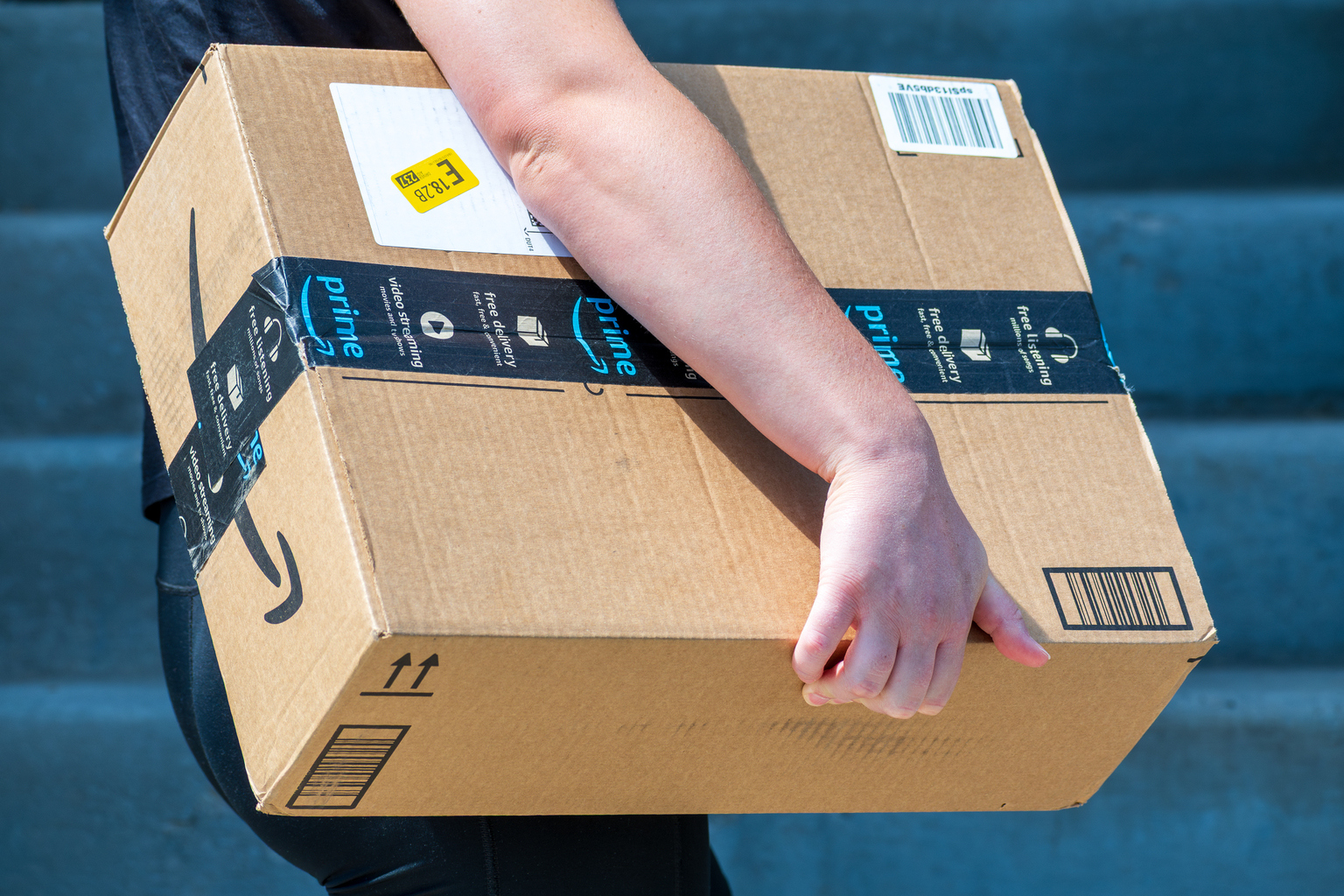
Amazon Expands Ultra-Fast Delivery Service to More U.S. Cities

- Service Expansion: Amazon is expanding its ultra-fast delivery service to cities including Austin, Houston, Minneapolis, Orlando, Phoenix, Denver, and Oklahoma City, aiming to provide 30-minute delivery to millions of customers through a network of smaller fulfillment centers located closer to customers.
- Fee Structure: Prime members will pay a delivery fee of $3.99, while non-members will incur a fee of $13.99, with additional charges for orders under $15, a pricing strategy designed to attract more users to join Prime membership.
- Product Variety: Amazon offers thousands of items for ultra-fast delivery, including groceries for dinner, AirPods before flights, and household essentials like laundry detergent and toothpaste, catering to diverse customer needs and enhancing customer loyalty.
- Market Impact: Amazon's rapid delivery options have enabled it to deliver 13 billion items globally on the same or next day, with over 8 billion in the U.S. alone, marking a 30% year-over-year increase, which has pressured competitors like Instacart, causing its shares to drop more than 3%.
See More

Amazon Reshapes AI Shopping Strategy with Alexa

- Rufus Chatbot Discontinuation: Amazon has decided to discontinue its Rufus chatbot, making Alexa the centerpiece of its AI shopping strategy, aiming to enhance personalized shopping experiences by integrating user history data, thereby increasing user engagement and market competitiveness.
- Launch of Alexa for Shopping: The newly introduced Alexa for Shopping can answer user queries and perform actions, combining the functionalities of Rufus and Alexa+, marking a significant technological integration in Amazon's e-commerce sector, which is expected to enhance shopping efficiency and customer satisfaction.
- Search Results Integration: Amazon is integrating Alexa into search results, where users will see a chat window and recommended products while browsing, a strategy that not only optimizes user experience but may also impact third-party sellers' advertising revenue, increasing Amazon's market share.
- AI Shopping Tool Competition: Amazon executives noted that the Alexa shopping assistant, with its rich customer data and extensive product catalog, is superior to other AI shopping tools, which is expected to position the company more favorably in the highly competitive e-commerce market.
See More

France's Highest Court Rejects Amazon's Appeal on Minimum Delivery Fees
- Court Ruling: France's highest administrative court, the Conseil d'Etat, rejected Amazon's challenge to the minimum delivery fees for books on Wednesday, affirming the legality of the government's policy.
- Minimum Fee Implementation: The French government introduced a minimum fee of three euros (approximately $3.5) for book deliveries in October 2023 to support local independent bookstores, reflecting a protective measure for local businesses.
- Amazon's Opposition: Amazon argued that this fee was protectionist and a violation of European Union law, indicating its concerns over the competitive landscape.
- Fee Applicability: The fee does not apply to purchases over 35 euros, aiming to balance competition between large e-commerce platforms and small bookstores, thereby promoting fair trade.
See More
Amazon Launches New Business Credit Cards

- Dynamic Rewards System: Amazon's newly launched Prime Business Card offers Prime members 5% cash back on up to $150,000 in annual U.S. purchases, while non-members receive 3%, significantly enhancing customer value and loyalty in Amazon spending.
- Flexible Payment Options: The new cards allow users to split eligible Amazon purchases into fixed monthly payments at 0% APR for up to 12 months, aiding businesses in managing cash flow and reducing financial strain.
- Spending Management Tools: The built-in spending management capabilities enable businesses to track expenses in real-time, set spending limits, and establish approval rules, enhancing financial transparency and control to meet modern business needs.
- Global Acceptance and Security: The new cards are accepted at over 100 million locations worldwide, leveraging Mastercard's secure network and AI-driven fraud monitoring to ensure transaction safety, empowering businesses to pay confidently in a complex global marketplace.
See More

Wall Street's Latest Ratings Overview


- Nvidia's Positive Outlook: Oppenheimer reiterates Nvidia as an outperform, projecting CY26 free cash flow to approach $200 billion, and if half is allocated for dividends, the yield could reach nearly 2.5%, which would bolster investor confidence and drive stock price appreciation.
- Apple's Strong Ecosystem: Daiwa raises Apple's price target from $310 to $325, emphasizing its vast ecosystem as a core strength, while acknowledging potential memory management challenges in 2H CY26, the long-term outlook remains favorable for this core holding.
- Positive Outlook for Housing Platform: UBS upgrades KE Holdings to buy from neutral, citing significant upside due to its agency business in tier 1 cities, particularly as the market recovery is led by the secondary market, positioning the company for strong performance.
- Wendy's Potential Privatization: Argus upgrades Wendy's to buy from neutral, driven by news of a potential move to take the restaurant chain private, with Trian Fund Management owning about 40% of the stock, indicating strong market confidence in this strategic shift.
See More

The Evolution and Future of Software Subscription Models


- Rise of Subscription Model: Salesforce introduced the concept of software rental in 1999, transforming the traditional one-time purchase model into a monthly billing system, which significantly enhanced customer retention and revenue stability by promoting acceptance of more flexible upgrade paths.
- Adobe's Transformation: In 2013, Adobe announced the discontinuation of Creative Suite DVDs in favor of the Creative Cloud subscription service, which, despite initial user backlash, ultimately led to predictable revenue streams and a stock price increase of threefold from 2013 to 2015, setting a benchmark for the industry.
- Diverse Billing Models: With the rise of cloud computing, companies like Amazon AWS adopted a pay-as-you-go billing model, allowing businesses to pay based on actual usage of computing power and storage, which, while enhancing cost efficiency, introduced budgeting uncertainties for finance teams.
- Future Hybrid Billing: By 2026, software billing is expected to blend base subscriptions, per-seat fees, and usage charges, requiring companies to balance predictable base payments with variable components to adapt to evolving market demands.
See More
Amazon Expands Ultra-Fast Delivery Service to More U.S. Cities
- Service Expansion: Amazon is expanding its ultra-fast delivery service to cities including Austin, Houston, Minneapolis, Orlando, Phoenix, Denver, and Oklahoma City, aiming to provide 30-minute delivery to millions of customers through a network of smaller fulfillment centers located closer to customers.
- Fee Structure: Prime members will pay a delivery fee of $3.99, while non-members will incur a fee of $13.99, with additional charges for orders under $15, a pricing strategy designed to attract more users to join Prime membership.
- Product Variety: Amazon offers thousands of items for ultra-fast delivery, including groceries for dinner, AirPods before flights, and household essentials like laundry detergent and toothpaste, catering to diverse customer needs and enhancing customer loyalty.
- Market Impact: Amazon's rapid delivery options have enabled it to deliver 13 billion items globally on the same or next day, with over 8 billion in the U.S. alone, marking a 30% year-over-year increase, which has pressured competitors like Instacart, causing its shares to drop more than 3%.
See More
Amazon Reshapes AI Shopping Strategy with Alexa
- Rufus Chatbot Discontinuation: Amazon has decided to discontinue its Rufus chatbot, making Alexa the centerpiece of its AI shopping strategy, aiming to enhance personalized shopping experiences by integrating user history data, thereby increasing user engagement and market competitiveness.
- Launch of Alexa for Shopping: The newly introduced Alexa for Shopping can answer user queries and perform actions, combining the functionalities of Rufus and Alexa+, marking a significant technological integration in Amazon's e-commerce sector, which is expected to enhance shopping efficiency and customer satisfaction.
- Search Results Integration: Amazon is integrating Alexa into search results, where users will see a chat window and recommended products while browsing, a strategy that not only optimizes user experience but may also impact third-party sellers' advertising revenue, increasing Amazon's market share.
- AI Shopping Tool Competition: Amazon executives noted that the Alexa shopping assistant, with its rich customer data and extensive product catalog, is superior to other AI shopping tools, which is expected to position the company more favorably in the highly competitive e-commerce market.
See More
France's Highest Court Rejects Amazon's Appeal on Minimum Delivery Fees
- Court Ruling: France's highest administrative court, the Conseil d'Etat, rejected Amazon's challenge to the minimum delivery fees for books on Wednesday, affirming the legality of the government's policy.
- Minimum Fee Implementation: The French government introduced a minimum fee of three euros (approximately $3.5) for book deliveries in October 2023 to support local independent bookstores, reflecting a protective measure for local businesses.
- Amazon's Opposition: Amazon argued that this fee was protectionist and a violation of European Union law, indicating its concerns over the competitive landscape.
- Fee Applicability: The fee does not apply to purchases over 35 euros, aiming to balance competition between large e-commerce platforms and small bookstores, thereby promoting fair trade.
See More
Amazon Launches New Business Credit Cards
- Dynamic Rewards System: Amazon's newly launched Prime Business Card offers Prime members 5% cash back on up to $150,000 in annual U.S. purchases, while non-members receive 3%, significantly enhancing customer value and loyalty in Amazon spending.
- Flexible Payment Options: The new cards allow users to split eligible Amazon purchases into fixed monthly payments at 0% APR for up to 12 months, aiding businesses in managing cash flow and reducing financial strain.
- Spending Management Tools: The built-in spending management capabilities enable businesses to track expenses in real-time, set spending limits, and establish approval rules, enhancing financial transparency and control to meet modern business needs.
- Global Acceptance and Security: The new cards are accepted at over 100 million locations worldwide, leveraging Mastercard's secure network and AI-driven fraud monitoring to ensure transaction safety, empowering businesses to pay confidently in a complex global marketplace.
See More
Wall Street's Latest Ratings Overview
- Nvidia's Positive Outlook: Oppenheimer reiterates Nvidia as an outperform, projecting CY26 free cash flow to approach $200 billion, and if half is allocated for dividends, the yield could reach nearly 2.5%, which would bolster investor confidence and drive stock price appreciation.
- Apple's Strong Ecosystem: Daiwa raises Apple's price target from $310 to $325, emphasizing its vast ecosystem as a core strength, while acknowledging potential memory management challenges in 2H CY26, the long-term outlook remains favorable for this core holding.
- Positive Outlook for Housing Platform: UBS upgrades KE Holdings to buy from neutral, citing significant upside due to its agency business in tier 1 cities, particularly as the market recovery is led by the secondary market, positioning the company for strong performance.
- Wendy's Potential Privatization: Argus upgrades Wendy's to buy from neutral, driven by news of a potential move to take the restaurant chain private, with Trian Fund Management owning about 40% of the stock, indicating strong market confidence in this strategic shift.
See More
The Evolution and Future of Software Subscription Models
- Rise of Subscription Model: Salesforce introduced the concept of software rental in 1999, transforming the traditional one-time purchase model into a monthly billing system, which significantly enhanced customer retention and revenue stability by promoting acceptance of more flexible upgrade paths.
- Adobe's Transformation: In 2013, Adobe announced the discontinuation of Creative Suite DVDs in favor of the Creative Cloud subscription service, which, despite initial user backlash, ultimately led to predictable revenue streams and a stock price increase of threefold from 2013 to 2015, setting a benchmark for the industry.
- Diverse Billing Models: With the rise of cloud computing, companies like Amazon AWS adopted a pay-as-you-go billing model, allowing businesses to pay based on actual usage of computing power and storage, which, while enhancing cost efficiency, introduced budgeting uncertainties for finance teams.
- Future Hybrid Billing: By 2026, software billing is expected to blend base subscriptions, per-seat fees, and usage charges, requiring companies to balance predictable base payments with variable components to adapt to evolving market demands.
See More