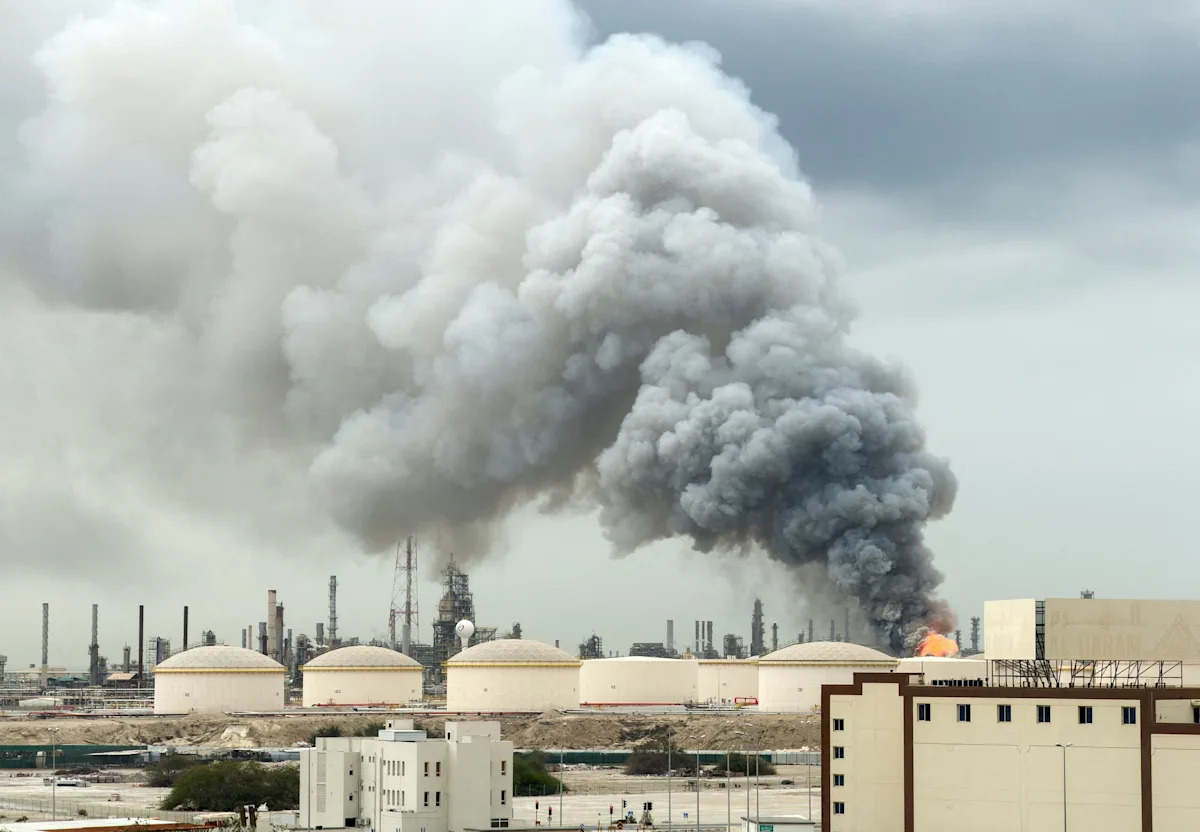
Kazakhstan's Uranium Supply Peak Approaches
Written by Emily J. Thompson, Senior Investment Analyst
Updated: Feb 09 2026
0mins
Source: Benzinga
- Structural Supply Shock: Kazakhstan has historically supplied about 40% of global uranium, but its major mines are nearing peak output, with production expected to decline sharply over the next two decades, leading to a structural supply shock that will impact global uranium prices.
- Rising Demand Context: As governments revive nuclear energy for energy security, grid stability, and carbon reduction, particularly to power AI data centers, the demand for uranium is quietly increasing, exacerbating the supply tightness in the market.
- Cameco's Scale Advantage: Cameco possesses significant scale and strength in the nuclear fuel cycle, with tier-one assets in Canada's Athabasca Basin and long-term contracts that provide a competitive edge in a rising-price environment, positioning it as a strategic fuel supplier.
- Energy Fuels' M&A Optionality: As the leading U.S. uranium producer, Energy Fuels is not only generating yellowcake but also expanding into critical minerals, with a proposed $299 million acquisition of Australian Strategic Materials aimed at strengthening its balance sheet and diversifying its operations, enhancing its market competitiveness.
Trade with 70% Backtested Accuracy
Stop guessing "Should I Buy CCJ?" and start using high-conviction signals backed by rigorous historical data.
Sign up today to access powerful investing tools and make smarter, data-driven decisions.
Analyst Views on CCJ
Wall Street analysts forecast CCJ stock price to fall
12 Analyst Rating
11 Buy
1 Hold
0 Sell
Strong Buy
Current: 110.230

Low
71.80
Averages
105.67
High
118.78
Current: 110.230
Low
71.80
Averages
105.67
High
118.78
About CCJ
Cameco Corporation is a provider of uranium fuel to generate baseload electricity around the globe. Its segments include uranium, fuel services and Westinghouse. The uranium segment involves the exploration for, mining, milling, purchase and sale of uranium concentrate. The fuel services segment involves the refining, conversion and fabrication of uranium concentrate and the purchase and sale of conversion services. The Westinghouse segment reflects its earnings from this equity-accounted investment. Westinghouse is a nuclear reactor technology original equipment manufacturer and a global provider of products and services to commercial utilities and government agencies. It provides outage and maintenance services, engineering support, instrumentation and controls equipment, plant modification, and components and parts to nuclear reactors. It has two operating mines, Cigar Lake and McArthur River as well as a mill at Key Lake. It also has ownership interests in Global Laser Enrichment.
About the author

Emily J. Thompson
Emily J. Thompson, a Chartered Financial Analyst (CFA) with 12 years in investment research, graduated with honors from the Wharton School. Specializing in industrial and technology stocks, she provides in-depth analysis for Intellectia’s earnings and market brief reports.
U.S. Nuclear Development Accelerates with $80 Billion Government Commitment

- Government Investment Commitment: The U.S. government has entered a strategic partnership with Cameco and Brookfield, committing at least $80 billion to accelerate the deployment of nuclear technologies, which will significantly enhance the reconstruction of domestic nuclear supply chains and improve America's competitiveness in the global nuclear market.
- Eagle Nuclear Drilling Program: Eagle Nuclear Energy Corp. announced a 27,000-foot drilling program at the Aurora uranium project aimed at advancing it to the Pre-Feasibility Study stage, which is expected to provide critical data for resource expansion and classification enhancement, further solidifying its position in the domestic uranium market.
- NexGen Energy Construction Approval: NexGen Energy received final approval from the Canadian Nuclear Safety Commission to prepare for construction at its Rook I uranium project in Saskatchewan, designed to produce 30 million pounds of uranium annually at a cash cost below $10 per pound, further solidifying its critical role in global uranium supply.
- Cameco Stock Surge: Cameco's stock surged approximately 20% due to the partnership agreement with the government, with plans to extend the Cigar Lake mine's operation to 2036, and projected earnings growth of 55% for fiscal 2026, indicating a strong demand signal for domestic uranium.
See More

Nuclear Energy Renaissance and Investment Opportunities
- Uranium Production Leader: Cameco, the world's second-largest uranium miner, accounted for 15% of global uranium production in 2025, leveraging its high-grade mines, McArthur River and Cigar Lake, with average grades of 6.48% and 16.33%, respectively, solidifying its critical role in nuclear infrastructure.
- Nuclear Expansion Plans: Constellation Energy, the largest nuclear power operator in the U.S., saw an 8.34% revenue increase in 2025 and partnered with Microsoft to revive the Three Mile Island nuclear plant to meet the power demands of AI data centers, highlighting its strategic importance in the green energy transition.
- Small Modular Reactor Innovation: BWX Technologies is developing small modular reactors (SMRs), with its BWXT Advanced Nuclear Reactor (BANR) designed for factory assembly and transport to final locations, expected to provide flexible power solutions for military bases and data centers, pushing the frontier of nuclear technology.
- Financial Health: Cameco and Constellation Energy reported net profit margins of 16.93% and 9.1%, respectively, with both companies maintaining debt-to-equity ratios below industry averages, demonstrating robust financial health in a capital-intensive sector and providing a solid foundation for future expansion and investment.
See More
Nuclear Energy Renaissance: Investment Opportunities Analysis
- Nuclear Market Growth: The World Nuclear Association reports that there are currently 75 nuclear reactors under construction and another 120 planned, indicating a robust recovery in the nuclear energy market that is expected to meet future clean energy demands.
- Cameco's Leadership: As the world's second-largest uranium miner, Cameco accounted for 15% of global uranium production in 2025, with its McArthur River mine boasting an impressive average grade of 6.48%, providing critical support for nuclear infrastructure.
- Constellation's Expansion Plans: Constellation Energy, the largest nuclear power provider in the U.S., operates 21 reactors and saw an 8.34% revenue increase in 2025, partnering with Microsoft to revive the Three Mile Island nuclear plant to meet the power needs of AI data centers.
- BWX's Innovative Technology: BWX Technologies is developing small modular reactors (SMRs) with its BANR design aimed at factory production and on-site assembly, which is expected to drive further advancements in nuclear technology, with an 18% revenue growth in 2025.
See More

U.S. Nuclear Energy Industry Revival Plan


- Nuclear Capacity Goals: President Trump aims to quadruple U.S. nuclear energy capacity to 400 gigawatts by 2050, a target that will significantly enhance the use of clean energy and help meet the surging global energy demand.
- Major Acquisition Deal: Constellation Energy's $16.4 billion acquisition of Calpine expands its nearly 60 gigawatts of zero-emission energy portfolio, solidifying its leadership in the U.S. nuclear market and expected to enhance market share and profitability.
- Strategic Partnership Agreement: Constellation signed a 20-year power supply agreement with Microsoft, planning to restart the Three Mile Island nuclear plant by the end of 2027, backed by a $1 billion federal loan guarantee, showcasing strong government support for nuclear revival.
- ETF Investment Opportunity: The VanEck Uranium and Nuclear ETF, holding 30 nuclear-related stocks, has surged nearly 80% over the past year, but a recent 10% pullback presents a buying opportunity, reflecting the critical role of nuclear energy in the global decarbonization trend.
See More

U.S. Accelerates Nuclear Energy Industry Rebuilding Amid Rising Demand
- Government Support for Nuclear: The U.S. government aims to quadruple nuclear energy capacity to 400 gigawatts by 2050, demonstrating strong backing for nuclear energy, which is expected to drive stock prices higher amid surging electricity demand.
- Constellation Energy Expansion: Constellation Energy's $16.4 billion acquisition of Calpine boosts its total capacity to nearly 60 GW, solidifying its position as the largest clean energy producer in the U.S., which is likely to enhance its leadership in the nuclear market.
- Cameco's Strategic Position: As one of the world's largest uranium mining companies with a 15% market share, Cameco's $2.6 billion uranium supply deal with the Indian government underscores its critical role in the global nuclear supply chain, expected to bolster its financial stability.
- Nuclear ETF Investment Opportunity: The VanEck Uranium and Nuclear ETF, holding 30 nuclear-related stocks, has surged nearly 80% over the past year, but a recent 10% pullback presents a buying opportunity, as nuclear demand is anticipated to grow amid global decarbonization efforts.
See More

Middle East Conflict Reshapes Global Energy Security

- Logistical Advantage of Uranium: According to Bernstein's report, global reactors consume only about 0.6 million pounds of uranium daily, which requires minimal transport compared to oil and LNG that depend on large-scale maritime transport, making nuclear energy more resilient amid current Middle Eastern tensions.
- Strategic Asset for Energy Independence: In the context of the Iran War, governments are re-emphasizing energy independence, with uranium's compactness becoming a key strategic asset that effectively mitigates supply shocks from maritime disruptions, ensuring stable energy supplies.
- Accelerated Nuclear Investment: As awareness of the fragility of fossil fuel markets grows, nations are expected to accelerate investments in nuclear infrastructure to reduce uncertainties associated with maritime energy routes, thereby driving growth in the uranium sector.
- Capital Reallocation Trend: Bernstein anticipates that as the conflict continues, the distinction between transport-heavy and transport-light energy sources will lead to significant capital reallocation towards nuclear energy, which is being re-evaluated as a solution for providing stable baseload power with lower logistical overhead.
See More
U.S. Nuclear Development Accelerates with $80 Billion Government Commitment
- Government Investment Commitment: The U.S. government has entered a strategic partnership with Cameco and Brookfield, committing at least $80 billion to accelerate the deployment of nuclear technologies, which will significantly enhance the reconstruction of domestic nuclear supply chains and improve America's competitiveness in the global nuclear market.
- Eagle Nuclear Drilling Program: Eagle Nuclear Energy Corp. announced a 27,000-foot drilling program at the Aurora uranium project aimed at advancing it to the Pre-Feasibility Study stage, which is expected to provide critical data for resource expansion and classification enhancement, further solidifying its position in the domestic uranium market.
- NexGen Energy Construction Approval: NexGen Energy received final approval from the Canadian Nuclear Safety Commission to prepare for construction at its Rook I uranium project in Saskatchewan, designed to produce 30 million pounds of uranium annually at a cash cost below $10 per pound, further solidifying its critical role in global uranium supply.
- Cameco Stock Surge: Cameco's stock surged approximately 20% due to the partnership agreement with the government, with plans to extend the Cigar Lake mine's operation to 2036, and projected earnings growth of 55% for fiscal 2026, indicating a strong demand signal for domestic uranium.
See More
Nuclear Energy Renaissance and Investment Opportunities
- Uranium Production Leader: Cameco, the world's second-largest uranium miner, accounted for 15% of global uranium production in 2025, leveraging its high-grade mines, McArthur River and Cigar Lake, with average grades of 6.48% and 16.33%, respectively, solidifying its critical role in nuclear infrastructure.
- Nuclear Expansion Plans: Constellation Energy, the largest nuclear power operator in the U.S., saw an 8.34% revenue increase in 2025 and partnered with Microsoft to revive the Three Mile Island nuclear plant to meet the power demands of AI data centers, highlighting its strategic importance in the green energy transition.
- Small Modular Reactor Innovation: BWX Technologies is developing small modular reactors (SMRs), with its BWXT Advanced Nuclear Reactor (BANR) designed for factory assembly and transport to final locations, expected to provide flexible power solutions for military bases and data centers, pushing the frontier of nuclear technology.
- Financial Health: Cameco and Constellation Energy reported net profit margins of 16.93% and 9.1%, respectively, with both companies maintaining debt-to-equity ratios below industry averages, demonstrating robust financial health in a capital-intensive sector and providing a solid foundation for future expansion and investment.
See More
Nuclear Energy Renaissance: Investment Opportunities Analysis
- Nuclear Market Growth: The World Nuclear Association reports that there are currently 75 nuclear reactors under construction and another 120 planned, indicating a robust recovery in the nuclear energy market that is expected to meet future clean energy demands.
- Cameco's Leadership: As the world's second-largest uranium miner, Cameco accounted for 15% of global uranium production in 2025, with its McArthur River mine boasting an impressive average grade of 6.48%, providing critical support for nuclear infrastructure.
- Constellation's Expansion Plans: Constellation Energy, the largest nuclear power provider in the U.S., operates 21 reactors and saw an 8.34% revenue increase in 2025, partnering with Microsoft to revive the Three Mile Island nuclear plant to meet the power needs of AI data centers.
- BWX's Innovative Technology: BWX Technologies is developing small modular reactors (SMRs) with its BANR design aimed at factory production and on-site assembly, which is expected to drive further advancements in nuclear technology, with an 18% revenue growth in 2025.
See More
U.S. Nuclear Energy Industry Revival Plan
- Nuclear Capacity Goals: President Trump aims to quadruple U.S. nuclear energy capacity to 400 gigawatts by 2050, a target that will significantly enhance the use of clean energy and help meet the surging global energy demand.
- Major Acquisition Deal: Constellation Energy's $16.4 billion acquisition of Calpine expands its nearly 60 gigawatts of zero-emission energy portfolio, solidifying its leadership in the U.S. nuclear market and expected to enhance market share and profitability.
- Strategic Partnership Agreement: Constellation signed a 20-year power supply agreement with Microsoft, planning to restart the Three Mile Island nuclear plant by the end of 2027, backed by a $1 billion federal loan guarantee, showcasing strong government support for nuclear revival.
- ETF Investment Opportunity: The VanEck Uranium and Nuclear ETF, holding 30 nuclear-related stocks, has surged nearly 80% over the past year, but a recent 10% pullback presents a buying opportunity, reflecting the critical role of nuclear energy in the global decarbonization trend.
See More
U.S. Accelerates Nuclear Energy Industry Rebuilding Amid Rising Demand
- Government Support for Nuclear: The U.S. government aims to quadruple nuclear energy capacity to 400 gigawatts by 2050, demonstrating strong backing for nuclear energy, which is expected to drive stock prices higher amid surging electricity demand.
- Constellation Energy Expansion: Constellation Energy's $16.4 billion acquisition of Calpine boosts its total capacity to nearly 60 GW, solidifying its position as the largest clean energy producer in the U.S., which is likely to enhance its leadership in the nuclear market.
- Cameco's Strategic Position: As one of the world's largest uranium mining companies with a 15% market share, Cameco's $2.6 billion uranium supply deal with the Indian government underscores its critical role in the global nuclear supply chain, expected to bolster its financial stability.
- Nuclear ETF Investment Opportunity: The VanEck Uranium and Nuclear ETF, holding 30 nuclear-related stocks, has surged nearly 80% over the past year, but a recent 10% pullback presents a buying opportunity, as nuclear demand is anticipated to grow amid global decarbonization efforts.
See More
Middle East Conflict Reshapes Global Energy Security
- Logistical Advantage of Uranium: According to Bernstein's report, global reactors consume only about 0.6 million pounds of uranium daily, which requires minimal transport compared to oil and LNG that depend on large-scale maritime transport, making nuclear energy more resilient amid current Middle Eastern tensions.
- Strategic Asset for Energy Independence: In the context of the Iran War, governments are re-emphasizing energy independence, with uranium's compactness becoming a key strategic asset that effectively mitigates supply shocks from maritime disruptions, ensuring stable energy supplies.
- Accelerated Nuclear Investment: As awareness of the fragility of fossil fuel markets grows, nations are expected to accelerate investments in nuclear infrastructure to reduce uncertainties associated with maritime energy routes, thereby driving growth in the uranium sector.
- Capital Reallocation Trend: Bernstein anticipates that as the conflict continues, the distinction between transport-heavy and transport-light energy sources will lead to significant capital reallocation towards nuclear energy, which is being re-evaluated as a solution for providing stable baseload power with lower logistical overhead.
See More