

Federal Reserve Holds Rates Steady, Market Outlook Remains Positive
Written by Emily J. Thompson, Senior Investment Analyst
Updated: 16 hours ago
0mins


Source: Fool
- Stable Rate Policy: The Federal Reserve has maintained the federal funds rate at 3.50%-3.75% for four consecutive meetings, with the market now pricing in a potential rise to 4% by year-end, indicating increased confidence in economic recovery and possibly driving investor interest in risk assets.
- Rising Inflation Pressure: The annualized inflation rate rose to 4.2% in May, broadening beyond just energy prices; however, the stock market remains in a bull phase, reflecting investor confidence in economic fundamentals, which could lead to increased capital inflows into equities.
- ETF Investment Opportunities: The Vanguard Growth ETF, with $394 billion in assets under management, is gaining attention for its potential in the artificial intelligence sector, and its strong performance year-to-date suggests it will continue to benefit from a tech stock rebound in the second half of 2026, making it a preferred choice for investors.
- Energy Market Volatility: The Vanguard Energy ETF has seen a 15% drawdown from its peak due to the oil supply shock from the Iran war, yet it remains up over 20% in 2026, indicating that despite geopolitical tensions, there is still significant upside potential for energy stocks moving forward.
Trade with 70% Backtested Accuracy
Stop guessing "Should I Buy MSFT?" and start using high-conviction signals backed by rigorous historical data.
Sign up today to access powerful investing tools and make smarter, data-driven decisions.
Analyst Views on MSFT
Wall Street analysts forecast MSFT stock price to rise
34 Analyst Rating
32 Buy
2 Hold
0 Sell
Strong Buy
Current: 388.840

Low
500.00
Averages
631.36
High
678.00
Current: 388.840
Low
500.00
Averages
631.36
High
678.00
About MSFT
Microsoft Corporation is a technology company. The Company develops and supports software, services, devices, and solutions. The Company’s segments include Productivity and Business Processes, Intelligent Cloud, and More Personal Computing. The Productivity and Business Processes segment consists of products and services in its portfolio of productivity, communication, and information services. This segment primarily comprises: Office Commercial, Office Consumer, LinkedIn, and Dynamics business solutions. The Intelligent Cloud segment consists of server products and cloud services, including Azure and other cloud services, SQL Server, Windows Server, Visual Studio, System Center, and related Client Access Licenses (CALs), and Nuance and GitHub; and Enterprise Services, including enterprise support services, industry solutions and Nuance professional services. The More Personal Computing segment primarily comprises Windows, Devices, Gaming, and search and news advertising.
About the author

Emily J. Thompson
Emily J. Thompson, a Chartered Financial Analyst (CFA) with 12 years in investment research, graduated with honors from the Wharton School. Specializing in industrial and technology stocks, she provides in-depth analysis for Intellectia’s earnings and market brief reports.

Oil Prices Surge Amid Tech Stock Volatility


- Oil Price Surge: Brent crude futures surpassed $80 on Wednesday, primarily driven by U.S. military actions against Iran, with the energy sector being the top performer of the day, up 1.45%, indicating strong market reactions to energy demand.
- Tech Stock Volatility: Nvidia's stock is down 14% from its May high, while AMD, Applied Materials, and Micron Technology have seen declines of 11.5%, 22%, and 24% respectively, reflecting investor caution towards tech stocks that may influence future investment decisions.
- PepsiCo Earnings Preview: PepsiCo is set to report earnings on Thursday, with its stock down about 8% over the past three months and 17% from its 52-week high, which could affect market perceptions of its future growth potential.
- Blue Origin Funding: Jeff Bezos' Blue Origin secured a $4 billion investment from Coatue Management as part of a new $10 billion fundraising round, expected to value the company at $130 billion, showcasing the investment enthusiasm and growth potential in the space industry.
See More
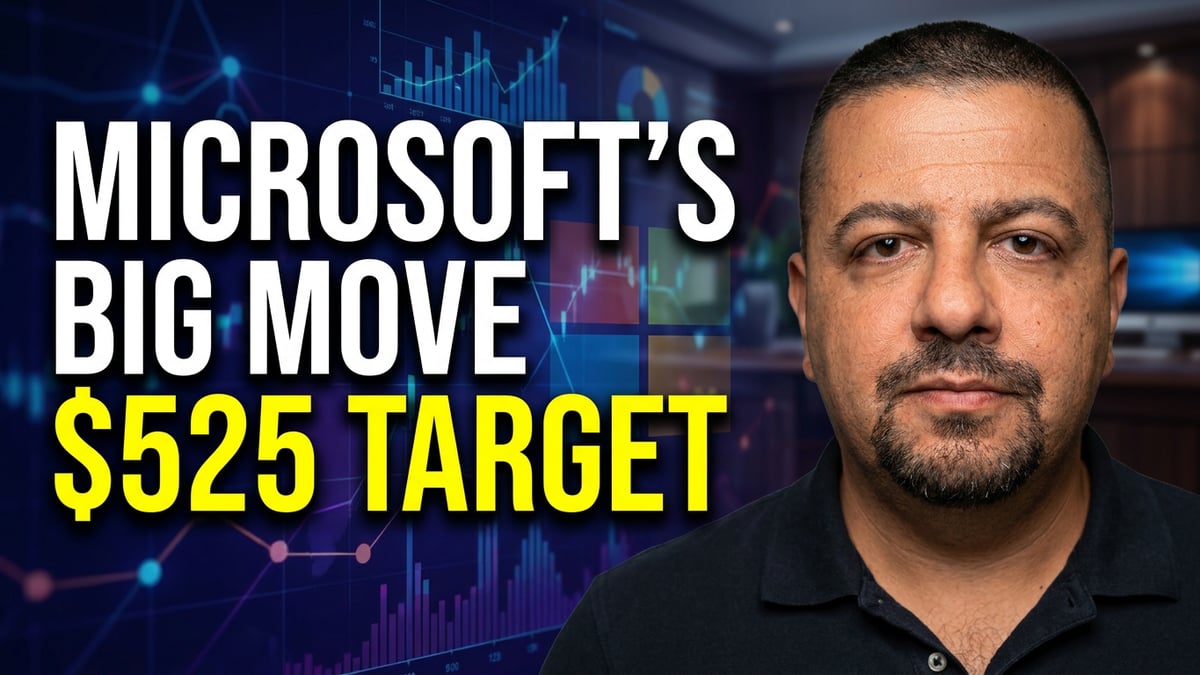
Microsoft Initiates New Cost-Cutting Initiative

- Cost-Cutting Measures: Microsoft is implementing a new cost-cutting initiative aimed at improving operational efficiency and addressing market challenges, which is expected to have a short-term negative impact on the company's financial health.
- Market Reaction: As of the afternoon of July 6, 2026, Microsoft's stock price has shown volatility, reflecting investor concerns about the company's future profitability, which may lead to downward pressure on the stock in the short term.
- Strategic Adjustments: This cost-cutting initiative may involve layoffs and other expenditure reductions, demonstrating Microsoft's flexible response strategy in the face of economic uncertainty, aimed at maintaining competitiveness.
- Long-Term Impact: While there may be short-term effects on stock prices, optimizing resource allocation could enable Microsoft to achieve higher profit margins and market share in the future, strengthening its leadership position in the tech industry.
See More

Market Warning Amid AI Boom

- Market Performance Review: The S&P 500 has surged in recent years due to the AI boom, with investors seeing potential for transformative changes in business and daily life, resulting in triple-digit gains for related stocks over the past three years.
- Investor Caution: Despite ongoing growth in AI stocks, geopolitical tensions and rising inflation have prompted investors to shift towards safer sectors like healthcare, leading to a more cautious sentiment towards AI companies, especially following the new Federal Reserve chair's appointment.
- Valuation Warning Signal: The S&P 500 Shiller CAPE ratio recently surpassed 41, a level only seen once in 155 years, mirroring the dot-com bubble, indicating that current stock valuations are extremely high and may face downward pressure.
- Long-Term Investment Outlook: While a decline may be imminent, history shows that holding quality stocks for the long term typically results in investment success, as the S&P 500 has historically recovered and advanced after downturns, suggesting a bright outlook for long-term investors.
See More

Mixed Close for US Stocks: Nasdaq Recovers Slightly


- Market Volatility: On Wednesday, the S&P 500 Index fell by 0.28%, the Dow Jones Industrial Average dropped by 1.09%, while the Nasdaq 100 Index rose by 0.27%, indicating mixed market performance under pressure from rising oil prices and bond yields.
- Surge in Oil Prices: Following President Trump's declaration that the ceasefire with Iran is over, WTI crude oil prices surged over 4% to a two-week high, boosting inflation expectations and pushing the 10-year Treasury yield to a 1.5-month high of 4.59%.
- Economic Data: US MBA mortgage applications fell by 2.2% for the week ending July 3, with the purchase mortgage sub-index down 0.6% and the refinancing sub-index down 4.1%, reflecting the negative impact of high rates on housing demand.
- Earnings Outlook: Bloomberg Intelligence forecasts a 23% increase in corporate earnings for Q2, close to Q1's 30% growth, with AI infrastructure stocks expected to contribute nearly 60% of S&P 500 earnings growth, highlighting strong potential in technology investments.
See More

AI Stock Surge Faces Market Warning Signs
- Market Surge and Warning: Over the past few years, investor enthusiasm for AI stocks has propelled the S&P 500 significantly higher, but recent market warning signs indicate potential pullback risks, especially as valuations reach a historical high of 41.
- Investor Caution: Geopolitical tensions and rising inflation have prompted investors to rotate into safer sectors like healthcare, leading to a cooling sentiment towards AI companies, despite these firms still reporting solid earnings.
- Giant Spending and Market Reaction: Alphabet, Microsoft, Meta, and Amazon announced nearly $700 billion in AI build-out spending, and while demand continues to grow, investor confidence in AI stocks has weakened, reflecting concerns over future revenue opportunities.
- Historical Trends and Future Outlook: Historical data shows that when the S&P 500 Shiller CAPE ratio peaks, market declines typically follow; however, long-term investors can still achieve returns by holding quality stocks, suggesting a bright long-term outlook despite recent warning signs.
See More
Alphabet's $80 Billion Funding Boosts Nvidia's Prospects

- Accelerated AI Investment: Alphabet's announcement of an $80 billion equity raise aims to significantly enhance its investment in AI infrastructure, which will directly boost demand for Nvidia's GPUs; despite Alphabet's efforts to develop its own AI chips, CEO Sundar Pichai emphasizes that Nvidia's GPUs remain a core component of their strategy.
- Intensified Market Competition: With Alphabet increasing its AI spending, competitors like Microsoft and Amazon are expected to ramp up their investments as well, which will not only elevate the technological standards across the industry but also further solidify Nvidia's leadership position in the AI hardware market.
- Massive Market Opportunity: Nvidia's CFO Colette Kress predicts that AI infrastructure spending could reach between $3 trillion and $4 trillion by the end of the decade, compared to just $318 billion last year, indicating a substantial growth potential for Nvidia, even a conservative estimate of $1 trillion shows a vast market ahead.
- Stock Investment Timing: Although Nvidia's stock has slid about 6% over the past month, its forward P/E ratio stands at 22.2, aligning with the average for tech stocks; considering its leading position in the GPU market and significant growth runway, the current valuation makes investing in Nvidia a smart choice.
See More
Oil Prices Surge Amid Tech Stock Volatility
- Oil Price Surge: Brent crude futures surpassed $80 on Wednesday, primarily driven by U.S. military actions against Iran, with the energy sector being the top performer of the day, up 1.45%, indicating strong market reactions to energy demand.
- Tech Stock Volatility: Nvidia's stock is down 14% from its May high, while AMD, Applied Materials, and Micron Technology have seen declines of 11.5%, 22%, and 24% respectively, reflecting investor caution towards tech stocks that may influence future investment decisions.
- PepsiCo Earnings Preview: PepsiCo is set to report earnings on Thursday, with its stock down about 8% over the past three months and 17% from its 52-week high, which could affect market perceptions of its future growth potential.
- Blue Origin Funding: Jeff Bezos' Blue Origin secured a $4 billion investment from Coatue Management as part of a new $10 billion fundraising round, expected to value the company at $130 billion, showcasing the investment enthusiasm and growth potential in the space industry.
See More
Microsoft Initiates New Cost-Cutting Initiative
- Cost-Cutting Measures: Microsoft is implementing a new cost-cutting initiative aimed at improving operational efficiency and addressing market challenges, which is expected to have a short-term negative impact on the company's financial health.
- Market Reaction: As of the afternoon of July 6, 2026, Microsoft's stock price has shown volatility, reflecting investor concerns about the company's future profitability, which may lead to downward pressure on the stock in the short term.
- Strategic Adjustments: This cost-cutting initiative may involve layoffs and other expenditure reductions, demonstrating Microsoft's flexible response strategy in the face of economic uncertainty, aimed at maintaining competitiveness.
- Long-Term Impact: While there may be short-term effects on stock prices, optimizing resource allocation could enable Microsoft to achieve higher profit margins and market share in the future, strengthening its leadership position in the tech industry.
See More
Market Warning Amid AI Boom
- Market Performance Review: The S&P 500 has surged in recent years due to the AI boom, with investors seeing potential for transformative changes in business and daily life, resulting in triple-digit gains for related stocks over the past three years.
- Investor Caution: Despite ongoing growth in AI stocks, geopolitical tensions and rising inflation have prompted investors to shift towards safer sectors like healthcare, leading to a more cautious sentiment towards AI companies, especially following the new Federal Reserve chair's appointment.
- Valuation Warning Signal: The S&P 500 Shiller CAPE ratio recently surpassed 41, a level only seen once in 155 years, mirroring the dot-com bubble, indicating that current stock valuations are extremely high and may face downward pressure.
- Long-Term Investment Outlook: While a decline may be imminent, history shows that holding quality stocks for the long term typically results in investment success, as the S&P 500 has historically recovered and advanced after downturns, suggesting a bright outlook for long-term investors.
See More
Mixed Close for US Stocks: Nasdaq Recovers Slightly
- Market Volatility: On Wednesday, the S&P 500 Index fell by 0.28%, the Dow Jones Industrial Average dropped by 1.09%, while the Nasdaq 100 Index rose by 0.27%, indicating mixed market performance under pressure from rising oil prices and bond yields.
- Surge in Oil Prices: Following President Trump's declaration that the ceasefire with Iran is over, WTI crude oil prices surged over 4% to a two-week high, boosting inflation expectations and pushing the 10-year Treasury yield to a 1.5-month high of 4.59%.
- Economic Data: US MBA mortgage applications fell by 2.2% for the week ending July 3, with the purchase mortgage sub-index down 0.6% and the refinancing sub-index down 4.1%, reflecting the negative impact of high rates on housing demand.
- Earnings Outlook: Bloomberg Intelligence forecasts a 23% increase in corporate earnings for Q2, close to Q1's 30% growth, with AI infrastructure stocks expected to contribute nearly 60% of S&P 500 earnings growth, highlighting strong potential in technology investments.
See More
AI Stock Surge Faces Market Warning Signs
- Market Surge and Warning: Over the past few years, investor enthusiasm for AI stocks has propelled the S&P 500 significantly higher, but recent market warning signs indicate potential pullback risks, especially as valuations reach a historical high of 41.
- Investor Caution: Geopolitical tensions and rising inflation have prompted investors to rotate into safer sectors like healthcare, leading to a cooling sentiment towards AI companies, despite these firms still reporting solid earnings.
- Giant Spending and Market Reaction: Alphabet, Microsoft, Meta, and Amazon announced nearly $700 billion in AI build-out spending, and while demand continues to grow, investor confidence in AI stocks has weakened, reflecting concerns over future revenue opportunities.
- Historical Trends and Future Outlook: Historical data shows that when the S&P 500 Shiller CAPE ratio peaks, market declines typically follow; however, long-term investors can still achieve returns by holding quality stocks, suggesting a bright long-term outlook despite recent warning signs.
See More
Alphabet's $80 Billion Funding Boosts Nvidia's Prospects
- Accelerated AI Investment: Alphabet's announcement of an $80 billion equity raise aims to significantly enhance its investment in AI infrastructure, which will directly boost demand for Nvidia's GPUs; despite Alphabet's efforts to develop its own AI chips, CEO Sundar Pichai emphasizes that Nvidia's GPUs remain a core component of their strategy.
- Intensified Market Competition: With Alphabet increasing its AI spending, competitors like Microsoft and Amazon are expected to ramp up their investments as well, which will not only elevate the technological standards across the industry but also further solidify Nvidia's leadership position in the AI hardware market.
- Massive Market Opportunity: Nvidia's CFO Colette Kress predicts that AI infrastructure spending could reach between $3 trillion and $4 trillion by the end of the decade, compared to just $318 billion last year, indicating a substantial growth potential for Nvidia, even a conservative estimate of $1 trillion shows a vast market ahead.
- Stock Investment Timing: Although Nvidia's stock has slid about 6% over the past month, its forward P/E ratio stands at 22.2, aligning with the average for tech stocks; considering its leading position in the GPU market and significant growth runway, the current valuation makes investing in Nvidia a smart choice.
See More





