Deere (DE) Q3 Earnings Report: Key Information You Should Be Aware Of
Earnings Report Expectations: Deere is set to report its earnings this Wednesday, with analysts expecting a revenue growth of 25.3% year on year to $11.62 billion, following a previous quarter where it missed revenue expectations by 11.8%.
Analyst Sentiment: Analysts have generally maintained their estimates over the past month, indicating confidence in Deere's performance heading into earnings, with an average price target of $525.78 compared to the current share price of $490.50.
Peer Performance Insights: Comparisons with peers in the agricultural machinery sector show mixed results, with AGCO reporting a 4.7% revenue decrease and Lindsay showing flat revenue, suggesting a challenging environment for the industry.
Market Volatility Factors: Ongoing concerns about potential tariffs and corporate tax changes have contributed to volatility in the agricultural machinery sector, with average share prices down 6.2% over the last month, although Deere has seen a 3.3% increase during the same period.
Trade with 70% Backtested Accuracy
Analyst Views on DE

About DE
About the author


Industrial Stocks Lead Market Growth Amid Electrification Push


- Strong Industry Performance: Industrial stocks are performing robustly in the U.S. market, benefiting from the push for electrification and infrastructure development, showcasing the adaptability of century-old companies and further solidifying their market positions.
- PACCAR's Financial Stability: PACCAR has achieved a cash flow and dividend growth rate of 7-11% over the past decade and has reported 87 consecutive years of profitability, with a target of $3.5 billion in incremental parts sales by 2030, indicating strong market expansion potential.
- Westinghouse Air Brake Technologies Growth: Westinghouse is guiding for adjusted EPS of $10.05-$10.45 in 2026, reflecting a year-over-year growth of approximately 14%, and ended 2025 with a record $27.4 billion in orders, indicating strong demand in the rail equipment market.
- John Deere's Market Challenges: After raising profit expectations, John Deere's stock has fallen from $650 to $595, reflecting market caution regarding its future performance, with investors needing to monitor the support level at the 200-day moving average.

U.S. Farmers Face Repair Strain Despite Deere Settlement

- Rising Repair Costs: U.S. farmers report that despite Deere's $99 million settlement, ongoing increases in repair bills and limited access to independent service options continue to impose significant financial strain, highlighting the challenges farmers face in equipment maintenance.
- Software Access Restrictions: Deere has been accused of monopolizing repairs by restricting access to software tools necessary for modern tractors and combines, leading to estimated excess repair charges of $190 million to $387 million, reflecting a lack of competition in the industry.
- Farmers' Skepticism: Although Deere has promised to expand software access, the National Farmers Union expresses skepticism, suggesting that these changes may not adequately address the high dealer repair costs farmers face, indicating a lack of trust in the company's commitments.
- Ongoing Legal Challenges: The Federal Trade Commission has sued Deere, alleging illegal monopoly over repair services, with Deere stating it will contest the case, indicating the company's ongoing legal and competitive challenges in the market.
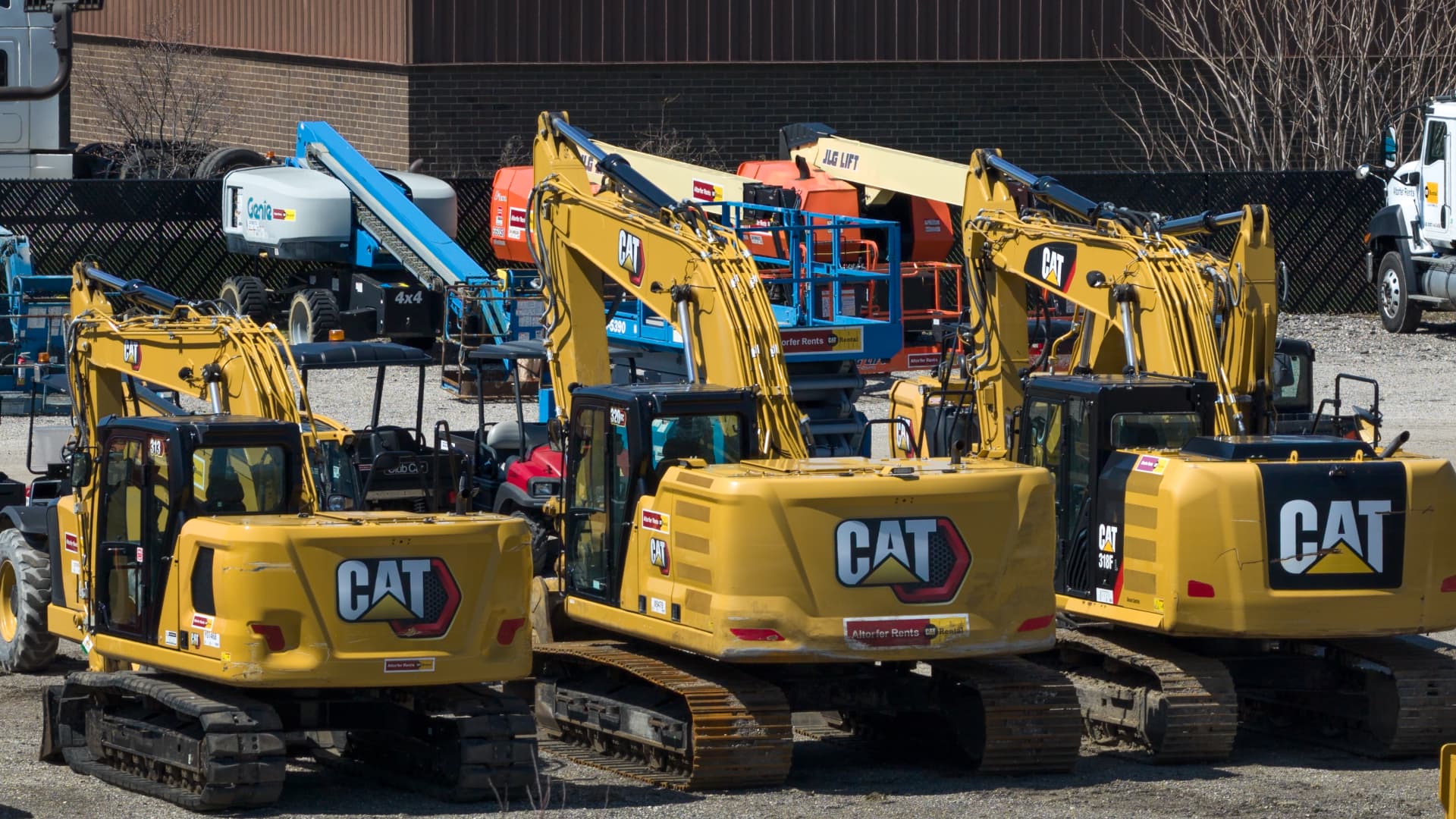
Caterpillar Stock Shows Strong Performance
- Breakout Growth: Caterpillar (CAT) has surged 120% since breaking out of a multi-year consolidation last July, showcasing its strong performance in the AI bull market and becoming a focal point for investors.
- Industry Leadership: Within the machinery sector, Caterpillar leads with a 33% annual return, significantly outperforming the S&P 500's 2%, highlighting its competitive edge and robust market demand in the heavy industrial space.
- Power & Energy Growth: Caterpillar's Power & Energy segment achieved $32.2 billion in sales for 2025, up 12%, with the power generation sub-segment surging 32% to $10.3 billion, primarily driven by data center demand, indicating strong future growth potential.
- Risk Management Strategy: Although Caterpillar's stock is currently well above its 200-day moving average at around $770, investors should wait for the next consolidation period to find a more attractive entry point, avoiding chasing the stock at elevated levels.

U.S. Stocks Edge Up as PepsiCo and TSMC Shine


- PepsiCo's Quarter Performance: PepsiCo achieved its first volume growth in North American food business in two years, with CEO Ramon Laguarta addressing the industry's threat from GLP-1 weight-loss drugs, leading to a 1% rise in shares, demonstrating the company's resilience and adaptability in a competitive consumer goods market.
- TSMC Profit Surge: TSMC reported a 58% year-over-year profit increase, despite facing challenges with shortages of industrial gases; management noted a 'little bit softer' memory pricing, indicating ongoing demand and competitive pressures in advanced chip manufacturing that could impact future profitability.
- J.B. Hunt Transport Services: J.B. Hunt indicated the start of a new cycle with positive demand signals, reporting a first-quarter earnings beat and a 1% premarket share increase, reflecting potential growth opportunities in the transportation sector.
- Analyst Rating Changes: JPMorgan downgraded Corning to hold and cut its price target from $175 to $115, citing the need for greater earnings visibility to support stock upside, indicating a cautious market outlook on the company's future performance.

Trump's Tariff Suspension Could Boost Stock Market
- Potential Impact of Tariff Suspension: If Trump suspends tariffs, many companies, particularly those importing clothing and toys like Nike and Mattel, are expected to see immediate earnings boosts, which could enhance market confidence significantly.
- Fed's Flexibility: The suspension of tariffs would provide the Federal Reserve with greater flexibility to potentially lower interest rates, which would be positive news for many stocks, especially given that inflation has risen due to tariffs.
- Temporary Market Rebound: Although a tariff suspension could trigger an initial market rebound, the momentum may be fleeting due to other factors such as geopolitical risks, necessitating caution among investors.
- Diversified Investment Strategy: In an uncertain market environment, investors should ensure their portfolios are well-diversified to cushion against underperforming sectors, with a long-term mindset being crucial to navigate market volatility.

Trump's Potential Tariff Suspension Could Spark Market Rally
- Market Performance Monitoring: Trump has frequently referenced stock market performance on social media, claiming 53 all-time highs since the election, indicating his view of the market as a key indicator of his administration's performance, which may influence future policy decisions.
- Potential Impact of Tariff Suspension: Should Trump decide to suspend tariffs, many affected companies, such as Nike and Mattel, could see immediate earnings boosts, potentially driving stock prices higher, especially ahead of the upcoming congressional elections.
- Federal Reserve Policy Flexibility: The suspension of tariffs could provide the Federal Reserve with more room to lower interest rates, further stimulating the stock market, particularly as Trump's tariffs have been identified as a contributing factor to inflation.
- Complexity of Market Reactions: While a tariff suspension may lead to a short-term market rebound, geopolitical risks and skepticism about the permanence of such a suspension could limit the sustainability of the rally, prompting investors to maintain diversified portfolios to mitigate potential volatility.
Industrial Stocks Lead Market Growth Amid Electrification Push
- Strong Industry Performance: Industrial stocks are performing robustly in the U.S. market, benefiting from the push for electrification and infrastructure development, showcasing the adaptability of century-old companies and further solidifying their market positions.
- PACCAR's Financial Stability: PACCAR has achieved a cash flow and dividend growth rate of 7-11% over the past decade and has reported 87 consecutive years of profitability, with a target of $3.5 billion in incremental parts sales by 2030, indicating strong market expansion potential.
- Westinghouse Air Brake Technologies Growth: Westinghouse is guiding for adjusted EPS of $10.05-$10.45 in 2026, reflecting a year-over-year growth of approximately 14%, and ended 2025 with a record $27.4 billion in orders, indicating strong demand in the rail equipment market.
- John Deere's Market Challenges: After raising profit expectations, John Deere's stock has fallen from $650 to $595, reflecting market caution regarding its future performance, with investors needing to monitor the support level at the 200-day moving average.
U.S. Farmers Face Repair Strain Despite Deere Settlement
- Rising Repair Costs: U.S. farmers report that despite Deere's $99 million settlement, ongoing increases in repair bills and limited access to independent service options continue to impose significant financial strain, highlighting the challenges farmers face in equipment maintenance.
- Software Access Restrictions: Deere has been accused of monopolizing repairs by restricting access to software tools necessary for modern tractors and combines, leading to estimated excess repair charges of $190 million to $387 million, reflecting a lack of competition in the industry.
- Farmers' Skepticism: Although Deere has promised to expand software access, the National Farmers Union expresses skepticism, suggesting that these changes may not adequately address the high dealer repair costs farmers face, indicating a lack of trust in the company's commitments.
- Ongoing Legal Challenges: The Federal Trade Commission has sued Deere, alleging illegal monopoly over repair services, with Deere stating it will contest the case, indicating the company's ongoing legal and competitive challenges in the market.
Caterpillar Stock Shows Strong Performance
- Breakout Growth: Caterpillar (CAT) has surged 120% since breaking out of a multi-year consolidation last July, showcasing its strong performance in the AI bull market and becoming a focal point for investors.
- Industry Leadership: Within the machinery sector, Caterpillar leads with a 33% annual return, significantly outperforming the S&P 500's 2%, highlighting its competitive edge and robust market demand in the heavy industrial space.
- Power & Energy Growth: Caterpillar's Power & Energy segment achieved $32.2 billion in sales for 2025, up 12%, with the power generation sub-segment surging 32% to $10.3 billion, primarily driven by data center demand, indicating strong future growth potential.
- Risk Management Strategy: Although Caterpillar's stock is currently well above its 200-day moving average at around $770, investors should wait for the next consolidation period to find a more attractive entry point, avoiding chasing the stock at elevated levels.
U.S. Stocks Edge Up as PepsiCo and TSMC Shine
- PepsiCo's Quarter Performance: PepsiCo achieved its first volume growth in North American food business in two years, with CEO Ramon Laguarta addressing the industry's threat from GLP-1 weight-loss drugs, leading to a 1% rise in shares, demonstrating the company's resilience and adaptability in a competitive consumer goods market.
- TSMC Profit Surge: TSMC reported a 58% year-over-year profit increase, despite facing challenges with shortages of industrial gases; management noted a 'little bit softer' memory pricing, indicating ongoing demand and competitive pressures in advanced chip manufacturing that could impact future profitability.
- J.B. Hunt Transport Services: J.B. Hunt indicated the start of a new cycle with positive demand signals, reporting a first-quarter earnings beat and a 1% premarket share increase, reflecting potential growth opportunities in the transportation sector.
- Analyst Rating Changes: JPMorgan downgraded Corning to hold and cut its price target from $175 to $115, citing the need for greater earnings visibility to support stock upside, indicating a cautious market outlook on the company's future performance.
Trump's Tariff Suspension Could Boost Stock Market
- Potential Impact of Tariff Suspension: If Trump suspends tariffs, many companies, particularly those importing clothing and toys like Nike and Mattel, are expected to see immediate earnings boosts, which could enhance market confidence significantly.
- Fed's Flexibility: The suspension of tariffs would provide the Federal Reserve with greater flexibility to potentially lower interest rates, which would be positive news for many stocks, especially given that inflation has risen due to tariffs.
- Temporary Market Rebound: Although a tariff suspension could trigger an initial market rebound, the momentum may be fleeting due to other factors such as geopolitical risks, necessitating caution among investors.
- Diversified Investment Strategy: In an uncertain market environment, investors should ensure their portfolios are well-diversified to cushion against underperforming sectors, with a long-term mindset being crucial to navigate market volatility.
Trump's Potential Tariff Suspension Could Spark Market Rally
- Market Performance Monitoring: Trump has frequently referenced stock market performance on social media, claiming 53 all-time highs since the election, indicating his view of the market as a key indicator of his administration's performance, which may influence future policy decisions.
- Potential Impact of Tariff Suspension: Should Trump decide to suspend tariffs, many affected companies, such as Nike and Mattel, could see immediate earnings boosts, potentially driving stock prices higher, especially ahead of the upcoming congressional elections.
- Federal Reserve Policy Flexibility: The suspension of tariffs could provide the Federal Reserve with more room to lower interest rates, further stimulating the stock market, particularly as Trump's tariffs have been identified as a contributing factor to inflation.
- Complexity of Market Reactions: While a tariff suspension may lead to a short-term market rebound, geopolitical risks and skepticism about the permanence of such a suspension could limit the sustainability of the rally, prompting investors to maintain diversified portfolios to mitigate potential volatility.