Comparison Analysis of iShares Bond ETFs
Written by Emily J. Thompson, Senior Investment Analyst
Updated: Mar 04 2026
0mins

Source: Fool
- Cost and Yield Comparison: The iShares iBoxx Investment Grade Corporate Bond ETF (LQD) has a slightly lower expense ratio of 0.14% compared to the iShares 20-Year Treasury Bond ETF (TLT) at 0.15%, while offering a dividend yield of 4.44%, which is marginally higher than TLT's 4.27%, making LQD more attractive for income-focused investors.
- Risk and Return Analysis: Over the past five years, LQD's maximum drawdown was 24.9%, significantly lower than TLT's 48.3%, indicating that LQD has demonstrated greater resilience during market volatility, appealing to investors seeking lower credit risk.
- Portfolio Composition: LQD holds over 3,071 securities, primarily concentrated in well-known issuers like JPMorgan Chase and Bank of America, ensuring diversity and stability in its portfolio, whereas TLT holds only 46 long-dated Treasury bonds, virtually eliminating credit risk.
- Interest Rate Sensitivity Consideration: Although LQD has outperformed TLT in the past five years, TLT's long-duration bond portfolio may perform better if interest rates decline, prompting investors to weigh LQD's higher yield against TLT's interest rate sensitivity to select the investment strategy that best fits their risk tolerance.
Trade with 70% Backtested Accuracy
Stop guessing "Should I Buy JPM?" and start using high-conviction signals backed by rigorous historical data.
Sign up today to access powerful investing tools and make smarter, data-driven decisions.
Analyst Views on JPM
Wall Street analysts forecast JPM stock price to rise
19 Analyst Rating
11 Buy
7 Hold
1 Sell
Moderate Buy
Current: 313.230

Low
260.00
Averages
341.38
High
400.00
Current: 313.230
Low
260.00
Averages
341.38
High
400.00
About JPM
JPMorgan Chase & Co. is a financial holding company. The Company is engaged in investment banking, financial services for consumers and small businesses, commercial banking, financial transaction processing and asset management. The Company operates through three segments: Consumer & Community Banking (CCB), Commercial & Investment Bank (CIB), and Asset & Wealth Management (AWM). Its CCB segment offers products and services to consumers and small businesses through bank branches, ATMs, digital and telephone banking. Its CIB segment consists of banking and payments and markets and securities services, and offers a suite of investment banking, lending, payments, market-making, financing, custody and securities products and services to a global base of corporate and institutional clients. AWM segment offers investment and wealth management solutions. It offers multi-asset investment management solutions, retirement products and services, brokerage, custody, estate planning, and others.
About the author

Emily J. Thompson
Emily J. Thompson, a Chartered Financial Analyst (CFA) with 12 years in investment research, graduated with honors from the Wharton School. Specializing in industrial and technology stocks, she provides in-depth analysis for Intellectia’s earnings and market brief reports.
JPMorgan Chase Releases Q1 2026 Financial Report

- Report Filing: JPMorgan Chase has filed its Quarterly Report on Form 10-Q for the quarter ended March 31, 2026, with the SEC, ensuring compliance and transparency as the report is accessible on both the SEC and the firm's Investor Relations website.
- Asset Scale: As of March 31, 2026, JPMorgan Chase reported total assets of $4.9 trillion and stockholders' equity of $364 billion, reflecting its robust financial foundation and significant presence in the global financial services sector.
- Business Scope: As a leading financial services firm in the U.S., JPMorgan Chase excels in investment banking, consumer and small business financial services, commercial banking, financial transaction processing, and asset management, serving a diverse range of prominent clients worldwide.
- Global Influence: JPMorgan Chase serves millions of customers across the U.S. and globally, including major corporate, institutional, and government clients, further solidifying its leadership position in the international financial market.
See More
S&P 500 Recovery Amid Economic Uncertainty

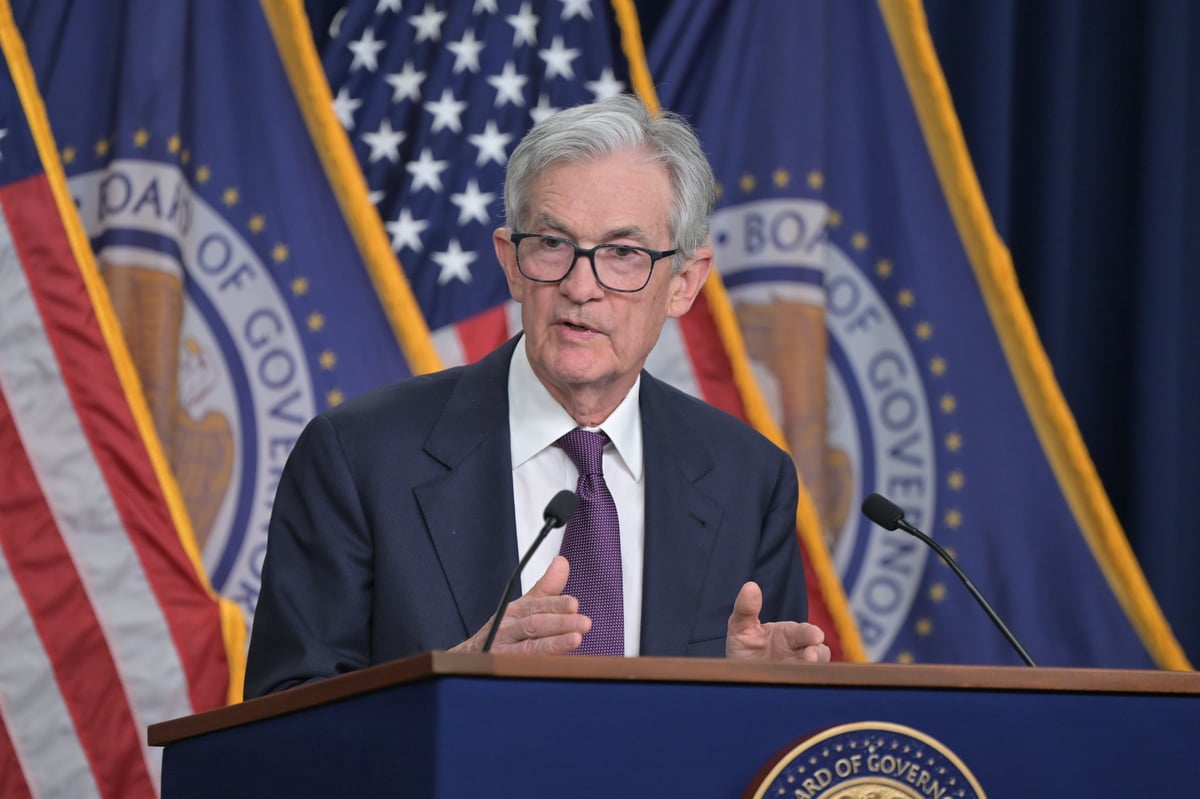
- Economic Outlook Uncertainty: Fed Chair Jerome Powell stated during his final press conference that the economic outlook is 'highly uncertain,' with the Middle East conflict exacerbating this uncertainty, potentially leading to increased inflation in the U.S. and affecting market confidence.
- Rising Inflation Pressure: The Consumer Price Index (CPI) surged by 90 basis points to 3.3% in March, primarily driven by soaring gasoline prices, which are expected to push up transportation and manufacturing costs, thereby impacting prices across other sectors.
- Shifting Rate Expectations: Despite initial investor expectations for at least two rate cuts in 2026, the Federal Reserve has held its benchmark rate steady for three consecutive meetings, with economists predicting rates will remain unchanged through the rest of 2026, potentially pivoting to rate hikes in Q3 2027.
- Increased Market Risks: The S&P 500 currently trades at a forward P/E ratio of 20.9, above the five-year average of 19.9; if the Fed concludes its rate-cutting cycle, investors may shift towards safe-haven assets like Treasury bonds and gold, putting downward pressure on the stock market.
See More

Federal Reserve Outlook Faces Increased Uncertainty Amid Geopolitical Tensions
- Economic Outlook Warning: Federal Reserve Chair Jerome Powell highlighted significant uncertainty in the economic outlook during his final press conference, particularly due to escalating Middle Eastern conflicts, which could lead to rising inflation and impact consumer confidence and market stability.
- Rate Policy Shift: JPMorgan Chase strategists predict that the Federal Reserve will pivot to rate hikes in the third quarter of 2027, ending the current rate-cutting cycle, a shift that could negatively affect the stock market, especially with the S&P 500 currently trading at a price-to-earnings ratio of 20.9 times.
- Inflationary Pressures Intensify: The Consumer Price Index (CPI) surged by 90 basis points to 3.3% in March, marking the worst reading since April 2024, with rising oil prices expected to further increase transportation and manufacturing costs, potentially leading to an economic slowdown.
- Cautious Market Reaction: Although the S&P 500 has recently rebounded to record highs, investor tolerance for high valuations may decrease, particularly with expectations of Fed rate hikes, prompting many investors to shift towards safe-haven assets like Treasury bonds and gold to mitigate risks.
See More

Optimistic Thesis on Digital Assets' Return

- Market Recovery Expectations: An optimistic narrative is circulating among investors that capital will soon rotate back into digital assets, particularly for beaten-down prices of Bitcoin and Ethereum, although analysts indicate that this 'Great Rotation' is not yet evident.
- Capital Inflow Data: JPMorgan estimates that digital asset inflows will total around $11 billion in Q1 2026, with demand primarily driven by corporate treasury purchases and venture deals rather than broad buying, suggesting a lack of trend formation in the market.
- Strong ETF Performance: U.S. spot Bitcoin ETFs absorbed $1.5 billion from April 14 to April 27, boosting total net inflows to $58.6 billion, although a short string of strong inflows does not indicate a long-term trend.
- Portfolio Strategy: Investors are advised to carefully craft their crypto portfolios ahead of time to benefit from any potential capital rotations while also gaining exposure to gradual asset value increases, particularly emphasizing the importance of Bitcoin and Ethereum among institutional buyers.
See More

Investors Optimistic About Crypto Inflows
- Expected Capital Inflows: Analysts at JPMorgan Chase estimate that digital asset inflows will reach approximately $11 billion in Q1 2026, which is only a third of the pace in 2025, indicating that demand is primarily driven by corporate treasury purchases and venture deals rather than broad market buying.
- Bitcoin ETF Performance: From April 14 to April 27, U.S. spot Bitcoin ETFs absorbed $1.5 billion, boosting total net inflows to $58.6 billion; however, the short-term strong inflows have not established a lasting trend, warranting caution among investors.
- Altcoin Outlook Dims: For questionable cryptocurrencies like Dogecoin, there is currently no evidence suggesting a significant capital influx, indicating that the likelihood of a
See More

Closure of Strait of Hormuz Impacts Credit Markets
- Tightened Credit Approval: The closure of the Strait of Hormuz has led banks to tighten their credit approval processes, resulting in many borrowers who previously qualified facing denials, significantly impacting their mortgage and auto loan applications.
- Decreased Risk Appetite: Lending institutions have raised their risk standards amid global instability, making it difficult for borrowers with credit scores above 670 to get approved, reflecting the market's sensitivity to risk and a tightening credit environment.
- Inflation Impact: With inflation rising to 3.2% in March, exceeding the Fed's 2% target, lenders are factoring in higher risks in their pricing, further tightening credit conditions and affecting consumers' borrowing capabilities.
- Insufficient Market Confidence: Although there are expectations for interest rate cuts, the stringent credit approval processes mean consumers still face challenges in securing loans, indicating that the credit market is influenced not only by rates but also by risk perception.
See More
JPMorgan Chase Releases Q1 2026 Financial Report
- Report Filing: JPMorgan Chase has filed its Quarterly Report on Form 10-Q for the quarter ended March 31, 2026, with the SEC, ensuring compliance and transparency as the report is accessible on both the SEC and the firm's Investor Relations website.
- Asset Scale: As of March 31, 2026, JPMorgan Chase reported total assets of $4.9 trillion and stockholders' equity of $364 billion, reflecting its robust financial foundation and significant presence in the global financial services sector.
- Business Scope: As a leading financial services firm in the U.S., JPMorgan Chase excels in investment banking, consumer and small business financial services, commercial banking, financial transaction processing, and asset management, serving a diverse range of prominent clients worldwide.
- Global Influence: JPMorgan Chase serves millions of customers across the U.S. and globally, including major corporate, institutional, and government clients, further solidifying its leadership position in the international financial market.
See More
S&P 500 Recovery Amid Economic Uncertainty
- Economic Outlook Uncertainty: Fed Chair Jerome Powell stated during his final press conference that the economic outlook is 'highly uncertain,' with the Middle East conflict exacerbating this uncertainty, potentially leading to increased inflation in the U.S. and affecting market confidence.
- Rising Inflation Pressure: The Consumer Price Index (CPI) surged by 90 basis points to 3.3% in March, primarily driven by soaring gasoline prices, which are expected to push up transportation and manufacturing costs, thereby impacting prices across other sectors.
- Shifting Rate Expectations: Despite initial investor expectations for at least two rate cuts in 2026, the Federal Reserve has held its benchmark rate steady for three consecutive meetings, with economists predicting rates will remain unchanged through the rest of 2026, potentially pivoting to rate hikes in Q3 2027.
- Increased Market Risks: The S&P 500 currently trades at a forward P/E ratio of 20.9, above the five-year average of 19.9; if the Fed concludes its rate-cutting cycle, investors may shift towards safe-haven assets like Treasury bonds and gold, putting downward pressure on the stock market.
See More
Federal Reserve Outlook Faces Increased Uncertainty Amid Geopolitical Tensions
- Economic Outlook Warning: Federal Reserve Chair Jerome Powell highlighted significant uncertainty in the economic outlook during his final press conference, particularly due to escalating Middle Eastern conflicts, which could lead to rising inflation and impact consumer confidence and market stability.
- Rate Policy Shift: JPMorgan Chase strategists predict that the Federal Reserve will pivot to rate hikes in the third quarter of 2027, ending the current rate-cutting cycle, a shift that could negatively affect the stock market, especially with the S&P 500 currently trading at a price-to-earnings ratio of 20.9 times.
- Inflationary Pressures Intensify: The Consumer Price Index (CPI) surged by 90 basis points to 3.3% in March, marking the worst reading since April 2024, with rising oil prices expected to further increase transportation and manufacturing costs, potentially leading to an economic slowdown.
- Cautious Market Reaction: Although the S&P 500 has recently rebounded to record highs, investor tolerance for high valuations may decrease, particularly with expectations of Fed rate hikes, prompting many investors to shift towards safe-haven assets like Treasury bonds and gold to mitigate risks.
See More
Optimistic Thesis on Digital Assets' Return
- Market Recovery Expectations: An optimistic narrative is circulating among investors that capital will soon rotate back into digital assets, particularly for beaten-down prices of Bitcoin and Ethereum, although analysts indicate that this 'Great Rotation' is not yet evident.
- Capital Inflow Data: JPMorgan estimates that digital asset inflows will total around $11 billion in Q1 2026, with demand primarily driven by corporate treasury purchases and venture deals rather than broad buying, suggesting a lack of trend formation in the market.
- Strong ETF Performance: U.S. spot Bitcoin ETFs absorbed $1.5 billion from April 14 to April 27, boosting total net inflows to $58.6 billion, although a short string of strong inflows does not indicate a long-term trend.
- Portfolio Strategy: Investors are advised to carefully craft their crypto portfolios ahead of time to benefit from any potential capital rotations while also gaining exposure to gradual asset value increases, particularly emphasizing the importance of Bitcoin and Ethereum among institutional buyers.
See More
Investors Optimistic About Crypto Inflows
- Expected Capital Inflows: Analysts at JPMorgan Chase estimate that digital asset inflows will reach approximately $11 billion in Q1 2026, which is only a third of the pace in 2025, indicating that demand is primarily driven by corporate treasury purchases and venture deals rather than broad market buying.
- Bitcoin ETF Performance: From April 14 to April 27, U.S. spot Bitcoin ETFs absorbed $1.5 billion, boosting total net inflows to $58.6 billion; however, the short-term strong inflows have not established a lasting trend, warranting caution among investors.
- Altcoin Outlook Dims: For questionable cryptocurrencies like Dogecoin, there is currently no evidence suggesting a significant capital influx, indicating that the likelihood of a
See More
Closure of Strait of Hormuz Impacts Credit Markets
- Tightened Credit Approval: The closure of the Strait of Hormuz has led banks to tighten their credit approval processes, resulting in many borrowers who previously qualified facing denials, significantly impacting their mortgage and auto loan applications.
- Decreased Risk Appetite: Lending institutions have raised their risk standards amid global instability, making it difficult for borrowers with credit scores above 670 to get approved, reflecting the market's sensitivity to risk and a tightening credit environment.
- Inflation Impact: With inflation rising to 3.2% in March, exceeding the Fed's 2% target, lenders are factoring in higher risks in their pricing, further tightening credit conditions and affecting consumers' borrowing capabilities.
- Insufficient Market Confidence: Although there are expectations for interest rate cuts, the stringent credit approval processes mean consumers still face challenges in securing loans, indicating that the credit market is influenced not only by rates but also by risk perception.
See More