Birkenstock Q1 Sales Slightly Miss Expectations Amid Strong Demand
Written by Emily J. Thompson, Senior Investment Analyst
Updated: Feb 12 2026
0mins
Should l Buy BIRK?
Source: Benzinga
- Sales Performance Overview: Birkenstock reported Q1 sales of $467.9 million, slightly missing the market expectation of $468.5 million, although it showed an 11.1% year-over-year growth, indicating strong holiday demand.
- Regional Growth Analysis: Sales grew across all regions, with APAC leading at 28% growth (37% on a constant currency basis), Americas up 5% (14% constant currency), and EMEA up 16% (17% constant currency), showcasing robust global market performance.
- Profitability Changes: Adjusted EBITDA rose 4% year-over-year to €106 million, but margins narrowed by 170 basis points to 26.5%, primarily due to unfavorable currency translation and U.S. tariffs, which reduced margins by 230 and 130 basis points, respectively.
- Future Outlook: The company raised its fiscal 2026 sales guidance to $2.759 billion to $2.808 billion, reflecting confidence in future growth, while Telsey Advisory Group analyst reiterated an Outperform rating on Birkenstock with a price target of $60.
Trade with 70% Backtested Accuracy
Stop guessing "Should I Buy BIRK?" and start using high-conviction signals backed by rigorous historical data.
Sign up today to access powerful investing tools and make smarter, data-driven decisions.
Analyst Views on BIRK
Wall Street analysts forecast BIRK stock price to rise
19 Analyst Rating
16 Buy
3 Hold
0 Sell
Strong Buy
Current: 39.040

Low
47.00
Averages
58.00
High
77.00
Current: 39.040
Low
47.00
Averages
58.00
High
77.00
About BIRK
Birkenstock Holding plc manufactures and sells footbed-based products, including sandals and closed-toe silhouettes, and other products, such as skincare and accessories, for everyday leisure and work. It operates in three operating segments based on its regional hubs: Americas, Europe, Middle East and Africa (EMEA), and Asia-Pacific. The Company sells its products through two main channels: business-to-business (B2B) comprising sales made to established third-party store networks, and direct-to-consumer (DTC) comprising sales made on globally owned online stores via the Birkenstock.com domain and sales made in Birkenstock retail stores. It utilizes the B2B channel to facilitate brand accessibility while steering consumers to its DTC channel, which offers its complete product range and access. Its DTC channel enables its brand identity, engage directly with fan base, capture real-time data on customer behavior and provides consumers with product access to distinctive styles.
About the author

Emily J. Thompson
Emily J. Thompson, a Chartered Financial Analyst (CFA) with 12 years in investment research, graduated with honors from the Wharton School. Specializing in industrial and technology stocks, she provides in-depth analysis for Intellectia’s earnings and market brief reports.

Latest Rating Changes on Wall Street


- Infleqtion Coverage Initiation: Citigroup initiates coverage of quantum computing firm Infleqtion with a Buy/High Risk rating and a $20 price target, highlighting its uniqueness in the quantum computing sector, which may attract investor interest.
- SAP Downgrade: Piper Sandler downgrades SAP from Overweight to Neutral, citing challenges in the macroeconomic environment and anticipating lower valuation multiples as the software industry transitions from SaaS to AI.
- Positive Catalysts for Alphabet: Citigroup adds a 90-day Catalyst Watch on Alphabet, expecting upcoming product updates during events like Google Cloud Next and YouTube Brandcast to drive stock price appreciation.
- Biogen Upgrade: Piper Sandler upgrades Biogen from Neutral to Overweight, raising the price target from $177 to $214, reflecting confidence in its growth potential moving forward.
See More
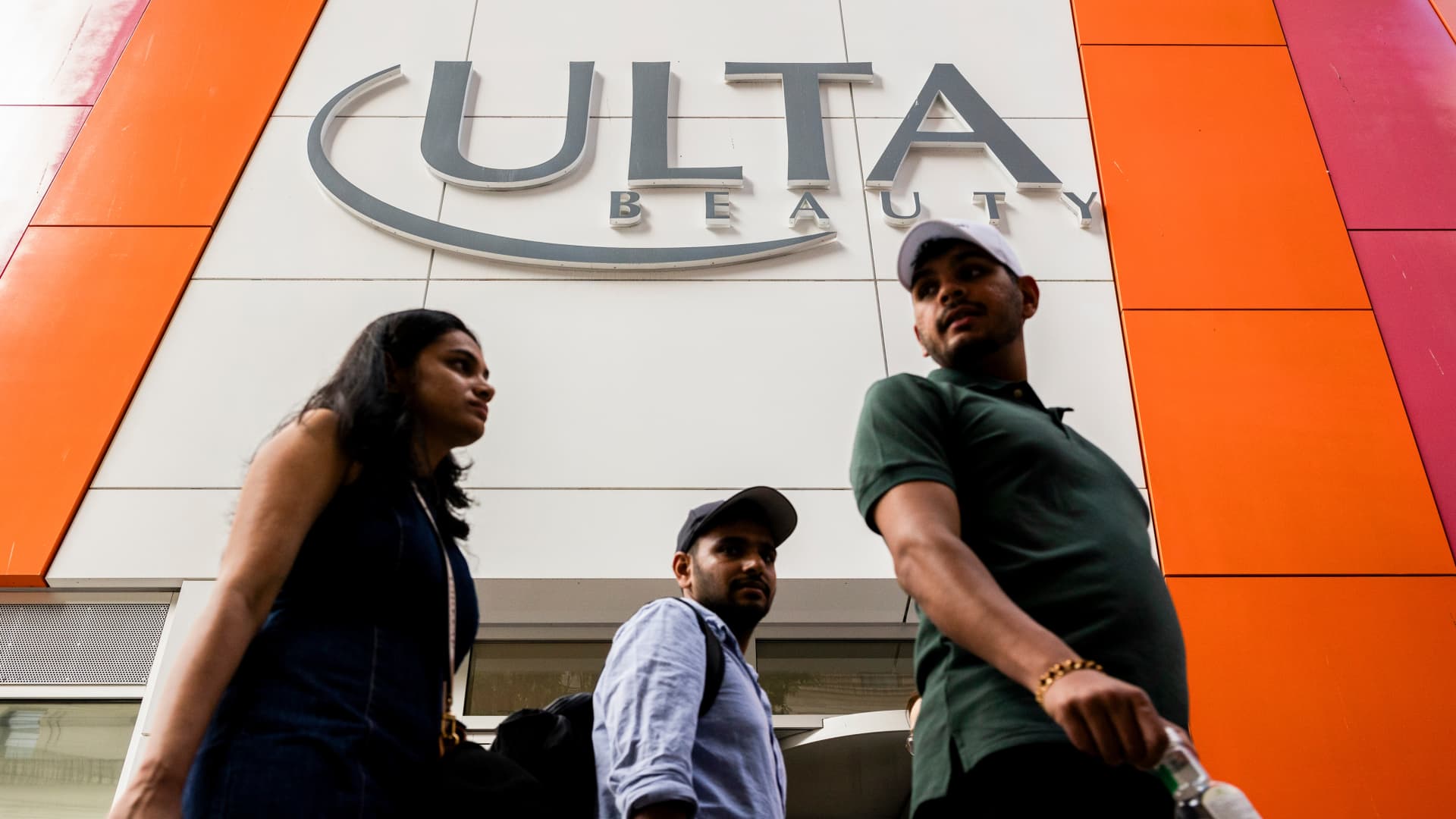
Analysis of Retail Sector Impact from Rising Oil Prices


- Impact of Rising Oil Prices: Brent crude futures have surged above $110 per barrel due to the ongoing Middle East conflict, with diesel prices exceeding $5 per gallon for the first time since 2022, potentially imposing secondary effects on the U.S. retail sector and increasing household budget pressures.
- Advantage of Higher-Income Customers: Deutsche Bank analysts noted that retailers like Ulta Beauty and Costco, which cater to higher-income demographics, have historically shown a positive correlation between sales and rising oil prices, indicating better sales performance in such environments.
- Pressure on Lower-Income Customers: Conversely, retailers like BJ's Wholesale Club and Burlington Stores, which primarily serve lower-income customers, exhibit negative sales correlations with rising gas prices, highlighting a trend where lower-income consumers reduce spending as fuel costs increase.
- Inventory Management Strategy: Despite the risks associated with rising input costs, many global brands, including Amer Sports and Birkenstock, maintain over 200 days of finished goods inventory, which helps mitigate near-term margin pressures and ensures market stability amid supply chain disruptions.
See More

Under the Radar Growth Opportunities


- Ignored Market Companies: Many small and mid-sized companies are experiencing rapid growth while institutional ownership remains relatively low, presenting potential price appreciation opportunities, especially when companies execute well and attract institutional attention.
- FreightCar America's Recovery: FreightCar America has significantly lowered its cost structure by shifting production to Mexico, and as orders rebound, revenue growth has accelerated; however, institutional ownership remains relatively low, indicating market neglect of its recovery.
- Rapid Growth of Inter & Co.: Inter & Co.'s digital banking platform in Latin America is expanding rapidly, reaching tens of millions of users, and while its revenue is growing quickly, institutional ownership in the U.S. remains limited, reflecting global funds' cautious stance towards Brazilian fintech companies.
- K-Way's Infrastructure Services: K-Way is experiencing accelerated revenue growth in the infrastructure services sector, with management guiding for continued double-digit growth, yet institutional investor interest in this area remains low, leaving the company relatively obscure in the market.
See More

Rice Hall James Establishes New Position in Birkenstock
- New Investment Dynamics: According to an SEC filing dated February 13, Rice Hall James & Associates, LLC established a new position in Birkenstock Holding by acquiring 466,577 shares, with an estimated transaction value of $19.8 million, indicating confidence in the company.
- Asset Allocation Insight: This new holding accounts for 1.05% of the fund's $1.82 billion in 13F reportable assets, suggesting that Birkenstock is increasingly significant within its investment portfolio.
- Financial Performance Highlights: In its first quarter report for fiscal 2026, Birkenstock posted an adjusted EPS of €0.27, surpassing analyst expectations of €0.26 with a 50% year-over-year improvement, despite a 290 basis point decline in gross margin to 57.4% due to tariffs and currency impacts.
- Market Outlook: Birkenstock plans to open 40 new retail stores globally, and while its stock has declined about 20% over the past five years, the company excels in full-price selling, with CEO stating that over 90% of sales are at full price, showcasing strong pricing power and market potential.
See More

Rice Hall James Initiates Stake in Birkenstock Worth $19.8 Million
- New Stake Investment: Rice Hall James & Associates, LLC has initiated a new position in Birkenstock Holding (NYSE:BIRK) by acquiring 466,577 shares, with an estimated trade value of approximately $19.8 million, reflecting confidence in the brand.
- Quarterly Financial Performance: In its first quarter of fiscal 2026, Birkenstock reported an adjusted EPS of €0.27, surpassing analyst expectations of €0.26 with a 50% year-over-year improvement, although its gross profit margin fell by 290 basis points due to tariffs and currency impacts.
- Market Positioning and Expansion: Birkenstock plans to open 40 new retail stores globally, continuing to leverage its multi-channel distribution model while emphasizing product quality and comfort to meet growing market demand.
- Investment Attractiveness Analysis: Despite Birkenstock's full-price selling ratio exceeding 90%, its stock has declined about 20% over the past five years, contrasting sharply with the nearly 60% gain of the S&P 500, which may limit its appeal to income-focused investors.
See More

Opportunities and Challenges in the Footwear and Apparel Industry


- Premiumization Trend: The footwear and apparel industry is benefiting from consumers' preference for high-performance, high-quality products, which is driving price increases and enhancing brand loyalty, likely strengthening market competitiveness further.
- Digital Transformation: Brands are increasingly investing in e-commerce platforms and data analytics, improving customer relationships and inventory efficiency, which promotes growth in direct-to-consumer sales and enhances market responsiveness.
- Margin Pressure: Despite the overall optimistic outlook for the industry, frequent promotional activities, excess inventory, and cautious consumer spending are compressing profit margins, posing challenges to profitability.
- Industry Ranking: The Zacks Shoes and Retail Apparel industry ranks 89, placing it in the top 37%, indicating the sector's potential for future earnings growth, even though its overall performance has been poor over the past year.
See More
Latest Rating Changes on Wall Street
- Infleqtion Coverage Initiation: Citigroup initiates coverage of quantum computing firm Infleqtion with a Buy/High Risk rating and a $20 price target, highlighting its uniqueness in the quantum computing sector, which may attract investor interest.
- SAP Downgrade: Piper Sandler downgrades SAP from Overweight to Neutral, citing challenges in the macroeconomic environment and anticipating lower valuation multiples as the software industry transitions from SaaS to AI.
- Positive Catalysts for Alphabet: Citigroup adds a 90-day Catalyst Watch on Alphabet, expecting upcoming product updates during events like Google Cloud Next and YouTube Brandcast to drive stock price appreciation.
- Biogen Upgrade: Piper Sandler upgrades Biogen from Neutral to Overweight, raising the price target from $177 to $214, reflecting confidence in its growth potential moving forward.
See More
Analysis of Retail Sector Impact from Rising Oil Prices
- Impact of Rising Oil Prices: Brent crude futures have surged above $110 per barrel due to the ongoing Middle East conflict, with diesel prices exceeding $5 per gallon for the first time since 2022, potentially imposing secondary effects on the U.S. retail sector and increasing household budget pressures.
- Advantage of Higher-Income Customers: Deutsche Bank analysts noted that retailers like Ulta Beauty and Costco, which cater to higher-income demographics, have historically shown a positive correlation between sales and rising oil prices, indicating better sales performance in such environments.
- Pressure on Lower-Income Customers: Conversely, retailers like BJ's Wholesale Club and Burlington Stores, which primarily serve lower-income customers, exhibit negative sales correlations with rising gas prices, highlighting a trend where lower-income consumers reduce spending as fuel costs increase.
- Inventory Management Strategy: Despite the risks associated with rising input costs, many global brands, including Amer Sports and Birkenstock, maintain over 200 days of finished goods inventory, which helps mitigate near-term margin pressures and ensures market stability amid supply chain disruptions.
See More
Under the Radar Growth Opportunities
- Ignored Market Companies: Many small and mid-sized companies are experiencing rapid growth while institutional ownership remains relatively low, presenting potential price appreciation opportunities, especially when companies execute well and attract institutional attention.
- FreightCar America's Recovery: FreightCar America has significantly lowered its cost structure by shifting production to Mexico, and as orders rebound, revenue growth has accelerated; however, institutional ownership remains relatively low, indicating market neglect of its recovery.
- Rapid Growth of Inter & Co.: Inter & Co.'s digital banking platform in Latin America is expanding rapidly, reaching tens of millions of users, and while its revenue is growing quickly, institutional ownership in the U.S. remains limited, reflecting global funds' cautious stance towards Brazilian fintech companies.
- K-Way's Infrastructure Services: K-Way is experiencing accelerated revenue growth in the infrastructure services sector, with management guiding for continued double-digit growth, yet institutional investor interest in this area remains low, leaving the company relatively obscure in the market.
See More
Rice Hall James Establishes New Position in Birkenstock
- New Investment Dynamics: According to an SEC filing dated February 13, Rice Hall James & Associates, LLC established a new position in Birkenstock Holding by acquiring 466,577 shares, with an estimated transaction value of $19.8 million, indicating confidence in the company.
- Asset Allocation Insight: This new holding accounts for 1.05% of the fund's $1.82 billion in 13F reportable assets, suggesting that Birkenstock is increasingly significant within its investment portfolio.
- Financial Performance Highlights: In its first quarter report for fiscal 2026, Birkenstock posted an adjusted EPS of €0.27, surpassing analyst expectations of €0.26 with a 50% year-over-year improvement, despite a 290 basis point decline in gross margin to 57.4% due to tariffs and currency impacts.
- Market Outlook: Birkenstock plans to open 40 new retail stores globally, and while its stock has declined about 20% over the past five years, the company excels in full-price selling, with CEO stating that over 90% of sales are at full price, showcasing strong pricing power and market potential.
See More
Rice Hall James Initiates Stake in Birkenstock Worth $19.8 Million
- New Stake Investment: Rice Hall James & Associates, LLC has initiated a new position in Birkenstock Holding (NYSE:BIRK) by acquiring 466,577 shares, with an estimated trade value of approximately $19.8 million, reflecting confidence in the brand.
- Quarterly Financial Performance: In its first quarter of fiscal 2026, Birkenstock reported an adjusted EPS of €0.27, surpassing analyst expectations of €0.26 with a 50% year-over-year improvement, although its gross profit margin fell by 290 basis points due to tariffs and currency impacts.
- Market Positioning and Expansion: Birkenstock plans to open 40 new retail stores globally, continuing to leverage its multi-channel distribution model while emphasizing product quality and comfort to meet growing market demand.
- Investment Attractiveness Analysis: Despite Birkenstock's full-price selling ratio exceeding 90%, its stock has declined about 20% over the past five years, contrasting sharply with the nearly 60% gain of the S&P 500, which may limit its appeal to income-focused investors.
See More
Opportunities and Challenges in the Footwear and Apparel Industry
- Premiumization Trend: The footwear and apparel industry is benefiting from consumers' preference for high-performance, high-quality products, which is driving price increases and enhancing brand loyalty, likely strengthening market competitiveness further.
- Digital Transformation: Brands are increasingly investing in e-commerce platforms and data analytics, improving customer relationships and inventory efficiency, which promotes growth in direct-to-consumer sales and enhances market responsiveness.
- Margin Pressure: Despite the overall optimistic outlook for the industry, frequent promotional activities, excess inventory, and cautious consumer spending are compressing profit margins, posing challenges to profitability.
- Industry Ranking: The Zacks Shoes and Retail Apparel industry ranks 89, placing it in the top 37%, indicating the sector's potential for future earnings growth, even though its overall performance has been poor over the past year.
See More