Amidst AI Hype, Investors Might Overlook Genuine ETF Opportunities


Market Opportunities Beyond AI: Analysts at Bank of America emphasize that while AI dominates headlines, there are overlooked investment opportunities in sectors like premium travel, discount retail, and resilient food producers, suggesting a balanced ETF strategy can capture diverse consumer trends.
K-Shaped Economic Recovery: The U.S. economy is exhibiting a K-shaped recovery, where some sectors thrive (like luxury spending) while others lag (like discount retail), creating opportunities for ETFs that reflect both high-end and value-oriented consumer behavior.
Premium Consumer ETFs: Companies like Viking Holdings Ltd are highlighted for their strong performance in the premium travel sector, with ETFs such as the Consumer Discretionary Select Sector SPDR Fund and Invesco Leisure and Entertainment ETF offering exposure to luxury brands.
Discount and Value-Oriented ETFs: As consumers shift towards discount stores like Dollar General amid inflation, ETFs such as the VanEck Retail ETF and Consumer Staples Select Sector SPDR Fund capture steady-demand products, providing a hedge against market volatility.
Trade with 70% Backtested Accuracy
Analyst Views on DG

About DG
About the author

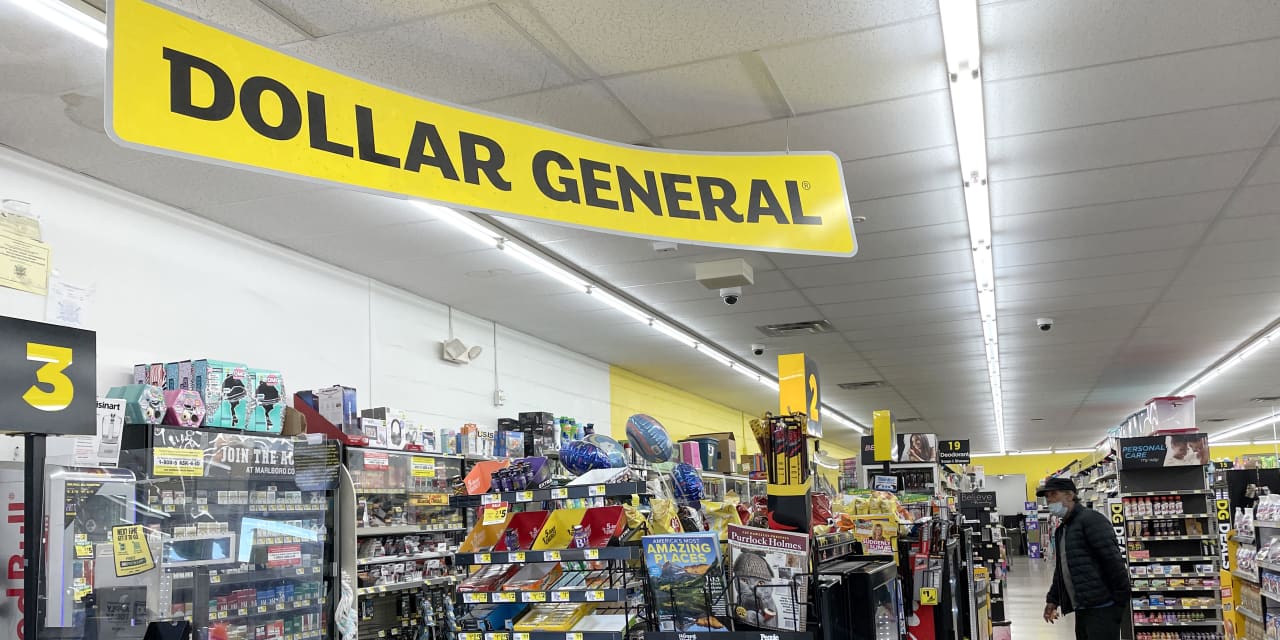
Dollar General Raises Fiscal 2026 Outlook Amid Analyst Ratings Changes
- Fiscal Outlook Raised: Dollar General raised its fiscal 2026 outlook following better-than-expected first-quarter results, indicating ongoing investments in new store openings and operational improvements, despite concerns about spending trends among its core lower-income customers.
- Analyst Rating Changes: Telsey Advisory lowered its price target on Dollar General from $140 to $125 while maintaining a Market Perform rating, reflecting a cautious outlook on the company's future growth, whereas Loop Capital raised its target to $115, recognizing the company's strong performance.
- Same-Store Sales Growth: Despite challenges from severe weather and high gasoline prices, Dollar General achieved solid same-store sales growth and operating margin expansion, demonstrating its ability to perform well in a competitive market.
- Market Competition Pressure: Analysts noted that while the company is performing well, increasing competition and spending trends among lower-income customers pose potential challenges that could impact future performance.

Investors Favor High-Yield Stocks for Passive Income


- REIT Advantages: Realty Income, as a REIT, is required to pay at least 90% of its net income as dividends, currently offering an annual dividend of about $3.25 per share, which has been consistently increased since 1994, ensuring its dividend's safety and attractiveness.
- Stable Returns from Energy Giant: Chevron pays an annual dividend of $7.12, having increased it for 39 consecutive years; despite oil price fluctuations, its $13.8 billion in free cash flow is sufficient to cover its $14 billion dividend payout, demonstrating dividend stability.
- Potential in Alcohol Market: Constellation Brands has maintained dividend growth since 2015, currently offering $4.12 per share annually; despite declining alcohol consumption, its $1.8 billion in free cash flow exceeds its $716 million dividend costs, indicating financial health.
- Attractive Investment Returns: By investing in Realty Income, Chevron, and Constellation Brands, investors can secure stable passive income of $540, $406, and $293 respectively, highlighting the appeal of these stocks in providing income and potential capital appreciation.
Tug-of-War Between Market Passion and Rigor


- Market Sentiment Analysis: Jim Cramer highlights the current stock market's struggle between passion and rigor, where many investors oscillate between emotional and rational decision-making, leading to increased volatility and impacting the effectiveness of investment strategies.
- Federal Reserve Policy Outlook: New Chairman Kevin Warsh is set to hold his first press conference on Wednesday, with widespread speculation on whether interest rates will need to be raised once or twice this year; Cramer believes rates should remain unchanged or prepare for cuts in response to declining oil prices and inflationary pressures.
- Economic Disparity: Cramer emphasizes the growing economic divide in the U.S., where the wealthy continue to accumulate wealth through stock appreciation while ordinary citizens struggle with high oil prices and inflation, exacerbating market uncertainty and complicating investment decisions.
- Investment Strategy Advice: Cramer advises investors to maintain a balance of passion and rigor in their portfolios, suggesting that this approach may yield better returns in a high-volatility market, particularly in the current economic climate where moderate speculation could lead to higher profits.

Oil Price Drop Fuels Stock Market Rally
- Oil Price Impact: The Brent crude price has fallen over 5% due to the Iran peace deal, dropping from a May peak of $126 to $83, which translates into significant cost savings for consumers and boosts retail spending.
- Retailer Cost Relief: The decline in oil prices not only eases the burden at the pump for consumers but also reduces freight and logistics costs for retailers, alleviating margin pressures that had intensified due to the blockade, thus providing a more favorable cost environment for back-to-school and holiday inventory decisions.
- Positive Market Reaction: In response to the oil price drop, Abercrombie & Fitch (ANF) shares rose by 3.1%, Dollar General (DG) by 2.8%, and Monro (MNRO) by 3%, indicating a positive market reaction and highlighting buying opportunities for high-quality stocks.
- Lower Inflation Expectations: The drop in oil prices suggests reduced inflationary pressures, which could influence the Fed's rate hike decisions, especially following the easing tensions in Iran, leading to a diminished market expectation for a December rate increase.

TJX Companies Hits New 52-Week High Amid Strong Performance

- Outstanding Stock Performance: TJX's stock has surged 35.8% over the past year, significantly outperforming the retail discount industry at 15.1% and the S&P 500 at 25.1%, indicating strong market performance and investor confidence.
- Robust Sales Growth: In Q1 of fiscal 2027, TJX reported a 6% increase in comparable sales, driven by higher customer transactions and larger basket sizes, demonstrating the effectiveness of its value-focused business model across all divisions.
- Global Expansion Strategy: With 5,262 stores worldwide and 48 new locations added in Q1, management remains optimistic about expansion opportunities in Europe and Australia, highlighting the company's substantial growth potential.
- Upward Earnings Forecast: The Zacks Consensus Estimate for earnings per share has been revised upward to $5.17 and $5.67 for fiscal years 2027 and 2028, respectively, reflecting market confidence in TJX's future profitability.
SpaceX IPO Set to Break Records with $75 Billion Valuation

- SpaceX IPO Expectations: SpaceX is set to go public on Friday with a valuation of $75 billion, marking the largest IPO in history, which is expected to inject significant capital into the market, thereby boosting investor confidence and driving growth in related sectors.
- IPO Market Dynamics: So far in 2023, 71 companies have gone public, raising nearly $36 billion, indicating strong demand for emerging enterprises, and SpaceX's IPO is likely to intensify this trend, attracting more investor interest in the tech sector.
- ARK Fund Performance: The ARK Venture Fund holds approximately 11% of SpaceX, with a 4% increase over the past month and over 70% year-to-date, reflecting strong market confidence in SpaceX's growth potential, which may attract more institutional investors.
- Related Stock Performance: Several space-related stocks, such as Iridium Communications and Virgin Galactic, have surged over 100% and 96% in the past three months, respectively, demonstrating investor enthusiasm for the space industry, and SpaceX's IPO is expected to further fuel this investment frenzy.
Dollar General Raises Fiscal 2026 Outlook Amid Analyst Ratings Changes
- Fiscal Outlook Raised: Dollar General raised its fiscal 2026 outlook following better-than-expected first-quarter results, indicating ongoing investments in new store openings and operational improvements, despite concerns about spending trends among its core lower-income customers.
- Analyst Rating Changes: Telsey Advisory lowered its price target on Dollar General from $140 to $125 while maintaining a Market Perform rating, reflecting a cautious outlook on the company's future growth, whereas Loop Capital raised its target to $115, recognizing the company's strong performance.
- Same-Store Sales Growth: Despite challenges from severe weather and high gasoline prices, Dollar General achieved solid same-store sales growth and operating margin expansion, demonstrating its ability to perform well in a competitive market.
- Market Competition Pressure: Analysts noted that while the company is performing well, increasing competition and spending trends among lower-income customers pose potential challenges that could impact future performance.
Investors Favor High-Yield Stocks for Passive Income
- REIT Advantages: Realty Income, as a REIT, is required to pay at least 90% of its net income as dividends, currently offering an annual dividend of about $3.25 per share, which has been consistently increased since 1994, ensuring its dividend's safety and attractiveness.
- Stable Returns from Energy Giant: Chevron pays an annual dividend of $7.12, having increased it for 39 consecutive years; despite oil price fluctuations, its $13.8 billion in free cash flow is sufficient to cover its $14 billion dividend payout, demonstrating dividend stability.
- Potential in Alcohol Market: Constellation Brands has maintained dividend growth since 2015, currently offering $4.12 per share annually; despite declining alcohol consumption, its $1.8 billion in free cash flow exceeds its $716 million dividend costs, indicating financial health.
- Attractive Investment Returns: By investing in Realty Income, Chevron, and Constellation Brands, investors can secure stable passive income of $540, $406, and $293 respectively, highlighting the appeal of these stocks in providing income and potential capital appreciation.
Tug-of-War Between Market Passion and Rigor
- Market Sentiment Analysis: Jim Cramer highlights the current stock market's struggle between passion and rigor, where many investors oscillate between emotional and rational decision-making, leading to increased volatility and impacting the effectiveness of investment strategies.
- Federal Reserve Policy Outlook: New Chairman Kevin Warsh is set to hold his first press conference on Wednesday, with widespread speculation on whether interest rates will need to be raised once or twice this year; Cramer believes rates should remain unchanged or prepare for cuts in response to declining oil prices and inflationary pressures.
- Economic Disparity: Cramer emphasizes the growing economic divide in the U.S., where the wealthy continue to accumulate wealth through stock appreciation while ordinary citizens struggle with high oil prices and inflation, exacerbating market uncertainty and complicating investment decisions.
- Investment Strategy Advice: Cramer advises investors to maintain a balance of passion and rigor in their portfolios, suggesting that this approach may yield better returns in a high-volatility market, particularly in the current economic climate where moderate speculation could lead to higher profits.
Oil Price Drop Fuels Stock Market Rally
- Oil Price Impact: The Brent crude price has fallen over 5% due to the Iran peace deal, dropping from a May peak of $126 to $83, which translates into significant cost savings for consumers and boosts retail spending.
- Retailer Cost Relief: The decline in oil prices not only eases the burden at the pump for consumers but also reduces freight and logistics costs for retailers, alleviating margin pressures that had intensified due to the blockade, thus providing a more favorable cost environment for back-to-school and holiday inventory decisions.
- Positive Market Reaction: In response to the oil price drop, Abercrombie & Fitch (ANF) shares rose by 3.1%, Dollar General (DG) by 2.8%, and Monro (MNRO) by 3%, indicating a positive market reaction and highlighting buying opportunities for high-quality stocks.
- Lower Inflation Expectations: The drop in oil prices suggests reduced inflationary pressures, which could influence the Fed's rate hike decisions, especially following the easing tensions in Iran, leading to a diminished market expectation for a December rate increase.
TJX Companies Hits New 52-Week High Amid Strong Performance
- Outstanding Stock Performance: TJX's stock has surged 35.8% over the past year, significantly outperforming the retail discount industry at 15.1% and the S&P 500 at 25.1%, indicating strong market performance and investor confidence.
- Robust Sales Growth: In Q1 of fiscal 2027, TJX reported a 6% increase in comparable sales, driven by higher customer transactions and larger basket sizes, demonstrating the effectiveness of its value-focused business model across all divisions.
- Global Expansion Strategy: With 5,262 stores worldwide and 48 new locations added in Q1, management remains optimistic about expansion opportunities in Europe and Australia, highlighting the company's substantial growth potential.
- Upward Earnings Forecast: The Zacks Consensus Estimate for earnings per share has been revised upward to $5.17 and $5.67 for fiscal years 2027 and 2028, respectively, reflecting market confidence in TJX's future profitability.
SpaceX IPO Set to Break Records with $75 Billion Valuation
- SpaceX IPO Expectations: SpaceX is set to go public on Friday with a valuation of $75 billion, marking the largest IPO in history, which is expected to inject significant capital into the market, thereby boosting investor confidence and driving growth in related sectors.
- IPO Market Dynamics: So far in 2023, 71 companies have gone public, raising nearly $36 billion, indicating strong demand for emerging enterprises, and SpaceX's IPO is likely to intensify this trend, attracting more investor interest in the tech sector.
- ARK Fund Performance: The ARK Venture Fund holds approximately 11% of SpaceX, with a 4% increase over the past month and over 70% year-to-date, reflecting strong market confidence in SpaceX's growth potential, which may attract more institutional investors.
- Related Stock Performance: Several space-related stocks, such as Iridium Communications and Virgin Galactic, have surged over 100% and 96% in the past three months, respectively, demonstrating investor enthusiasm for the space industry, and SpaceX's IPO is expected to further fuel this investment frenzy.