Albertsons Companies, Inc. (ACI) Options Market Implied Volatility Surge Sparks Investor Attention
Written by Emily J. Thompson, Senior Investment Analyst
Updated: Jan 20 2026
0mins
Should l Buy ACI?
Source: NASDAQ.COM
- Options Market Volatility: The January 30, 2026 $25 Put option shows some of the highest implied volatility, indicating significant uncertainty in Albertsons' stock future movements, potentially signaling an upcoming major event.
- Analyst Downgrades: Over the past 60 days, analysts have lowered their earnings estimates for Albertsons from $0.49 to $0.45 per share, reflecting concerns about the company's fundamentals that could impact investor confidence.
- Trading Strategy Implications: High implied volatility often attracts seasoned traders who may employ a selling strategy to capture time decay, thereby reducing risk while enhancing potential returns.
- Low Industry Ranking: Albertsons holds a Zacks Rank of #3 (Hold) in the Consumer Products – Staples sector, placing it in the bottom 23% of the industry rankings, which indicates a cautious market outlook and could lead to increased stock price volatility.
Trade with 70% Backtested Accuracy
Stop guessing "Should I Buy ACI?" and start using high-conviction signals backed by rigorous historical data.
Sign up today to access powerful investing tools and make smarter, data-driven decisions.
Analyst Views on ACI
Wall Street analysts forecast ACI stock price to rise
16 Analyst Rating
10 Buy
5 Hold
1 Sell
Moderate Buy
Current: 17.070

Low
17.00
Averages
22.27
High
29.00
Current: 17.070
Low
17.00
Averages
22.27
High
29.00
About ACI
Albertsons Companies, Inc. is a food and drug retailer in the United States. The Company is engaged in the operation of food and drug retail stores that offer grocery products, general merchandise, health and beauty care products, pharmacy, fuel and other items and services in its stores or through digital channels. It operates approximately 2,257 retail stores with 1,720 in-store pharmacies, 405 associated fuel centers, 22 dedicated distribution centers and 19 manufacturing facilities. The Company operates stores across 35 states and the District of Columbia under 22 banners, including Albertsons, Safeway, Vons, Jewel-Osco, Shaw's, ACME, Tom Thumb, Randalls, United Supermarkets, Pavilions, Star Market, Haggen, Carrs, Kings Food Markets and Balducci's Food Lovers Market. Its own brands include Signature SELECT, Open Nature, Lucerne, Waterfront BISTRO, Signature Reserve and Value Corner, among others.
About the author

Emily J. Thompson
Emily J. Thompson, a Chartered Financial Analyst (CFA) with 12 years in investment research, graduated with honors from the Wharton School. Specializing in industrial and technology stocks, she provides in-depth analysis for Intellectia’s earnings and market brief reports.
Harps Food Stores Acquires 18 Independent Grocery Locations

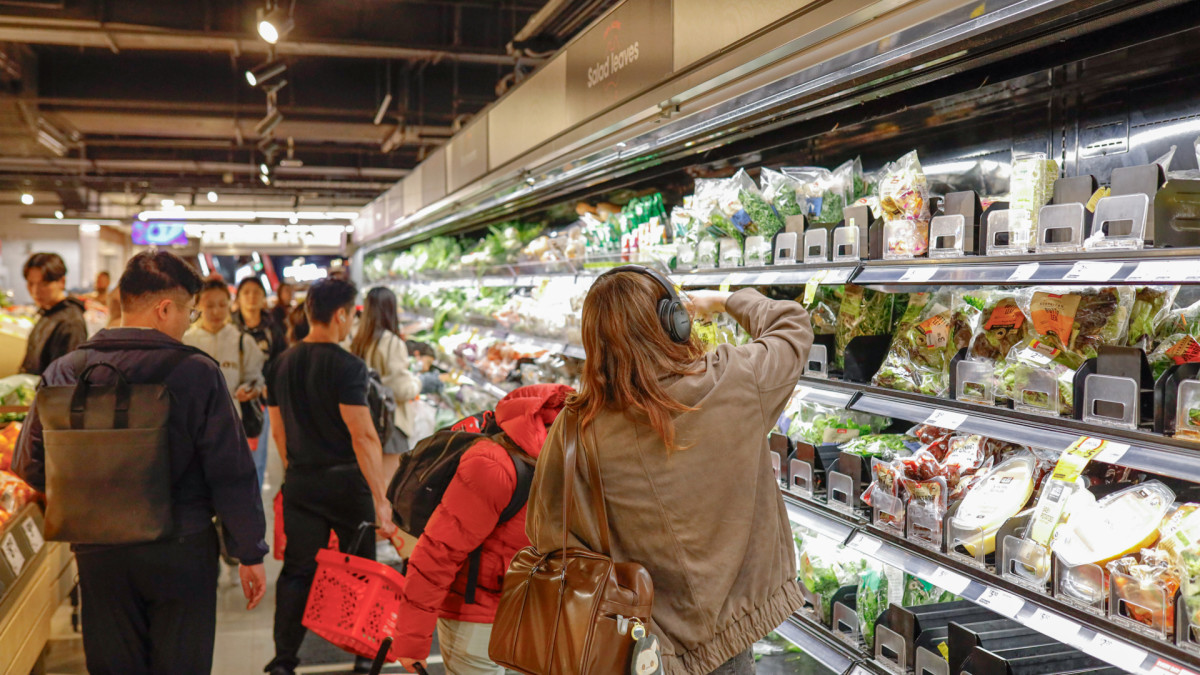
- Intensifying Market Competition: The top four grocery retailers account for 69% of U.S. grocery spending, with Walmart alone contributing nearly 35%, creating immense pressure on independent grocers, forcing many to adapt or exit the market.
- Acquisition Expansion Strategy: Harps Food Stores plans to acquire 18 stores from Dyer Foods, with the transaction expected to close by summer 2026, which will increase its total locations to 178, marking its largest acquisition in nearly six years.
- Maintaining Local Brands: The acquired stores will continue to operate under their existing banners, including Food Rite, Save-A-Lot, and Piggly Wiggly, allowing Harps to preserve local brand identity and enhance customer loyalty through a unified operating model.
- Industry Consolidation Trend: Harps' expansion reflects a broader trend of consolidation in the retail sector, as economic pressures and intensifying competition push independent grocers to adopt acquisition strategies to survive against larger chain competitors.
See More
Parsifal Capital Management Reduces Stake in Albertsons Companies

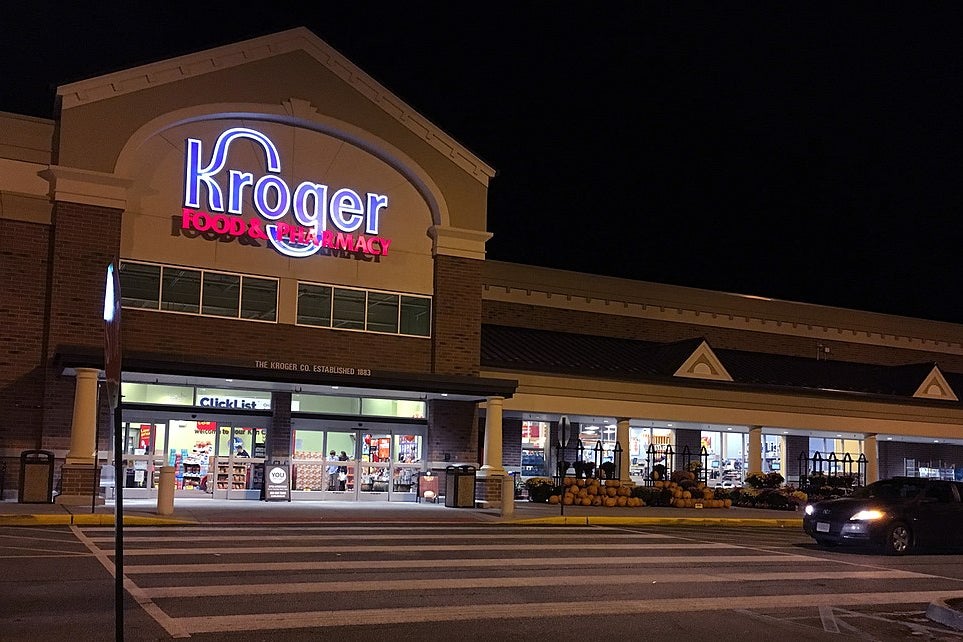
- Share Reduction Details: Parsifal Capital Management sold 4,239,655 shares of Albertsons Companies in Q4 2025, with an estimated transaction value of $75.60 million, resulting in a $75.08 million decrease in position value, highlighting the impact of market fluctuations on the portfolio.
- Holding Proportion Shift: Following the sale, Parsifal's stake in Albertsons dropped to 2,469,593 shares, representing 3.48% of AUM, which means Albertsons is no longer among its top five holdings, indicating a reduced risk appetite for defensive grocery operators.
- Operational Performance: Despite a 7.7% decline in share price over the past year, Albertsons reported a 1.9% increase in net sales to $19.1 billion in Q3, with digital sales surging by 21%, demonstrating resilience in a competitive grocery market.
- Investment Strategy Shift: This reduction allows Parsifal to free up capital for higher-growth investments, signaling a strategic pivot from low-margin food retail towards opportunities in consumer products and healthcare sectors.
See More
Albertsons Tests Personalized Ads in ChatGPT Ahead of Valentine's Day
- Advertising Innovation Test: Albertsons Companies participates in the OpenAI Ad Pilot Program, aiming to provide more relevant and personalized advertising experiences through ChatGPT, which is expected to enhance consumer shopping convenience and brand value.
- Valentine's Day Marketing Strategy: Ahead of Valentine's Day, Albertsons ads will appear in ChatGPT, allowing consumers to see local store ads when searching for related terms, thereby increasing the effectiveness and targeting of holiday shopping.
- Customer Engagement Boost: By testing ads in ChatGPT, Albertsons aims to enhance engagement with new customers while building meaningful connections with existing ones, driving sales growth and customer loyalty.
- AI Technology Integration: Albertsons has embedded AI technology across various enterprise levels, launching the Albertsons AI shopping assistant and AskAI, with early data showing significant increases in customer engagement and basket growth.
See More

Uber Eats Launches AI Shopping Assistant to Compete with Instacart

- AI Shopping Assistant Launch: Uber Eats has introduced the Cart Assistant, an AI tool that can automatically add items from handwritten shopping lists or recipe screenshots to online shopping baskets, displaying prices and promotions, thereby enhancing user shopping experience and customer loyalty.
- Intensified Market Competition: The launch of Cart Assistant intensifies competition between Uber Eats and Instacart, with Instacart's gross transaction value nearing $40 billion annually, while Uber's retail business is projected to reach a $12 billion annual run rate by 2025, highlighting the significant potential in the retail market for both companies.
- Technological Investment Edge: Uber's substantial investment in AI allows it to keep pace with Instacart technologically; while Cart Assistant may not be a game changer, it strengthens Uber's competitive position across its diversified platform, particularly in transportation and food delivery.
- Ongoing AI Applications: Uber is leveraging AI not only in the shopping assistant but also in driver matching, route optimization, and dynamic pricing, and is expected to continue investing in AI to better meet customer needs and drive business growth.
See More
Grocery Sector Faces Challenges and Opportunities
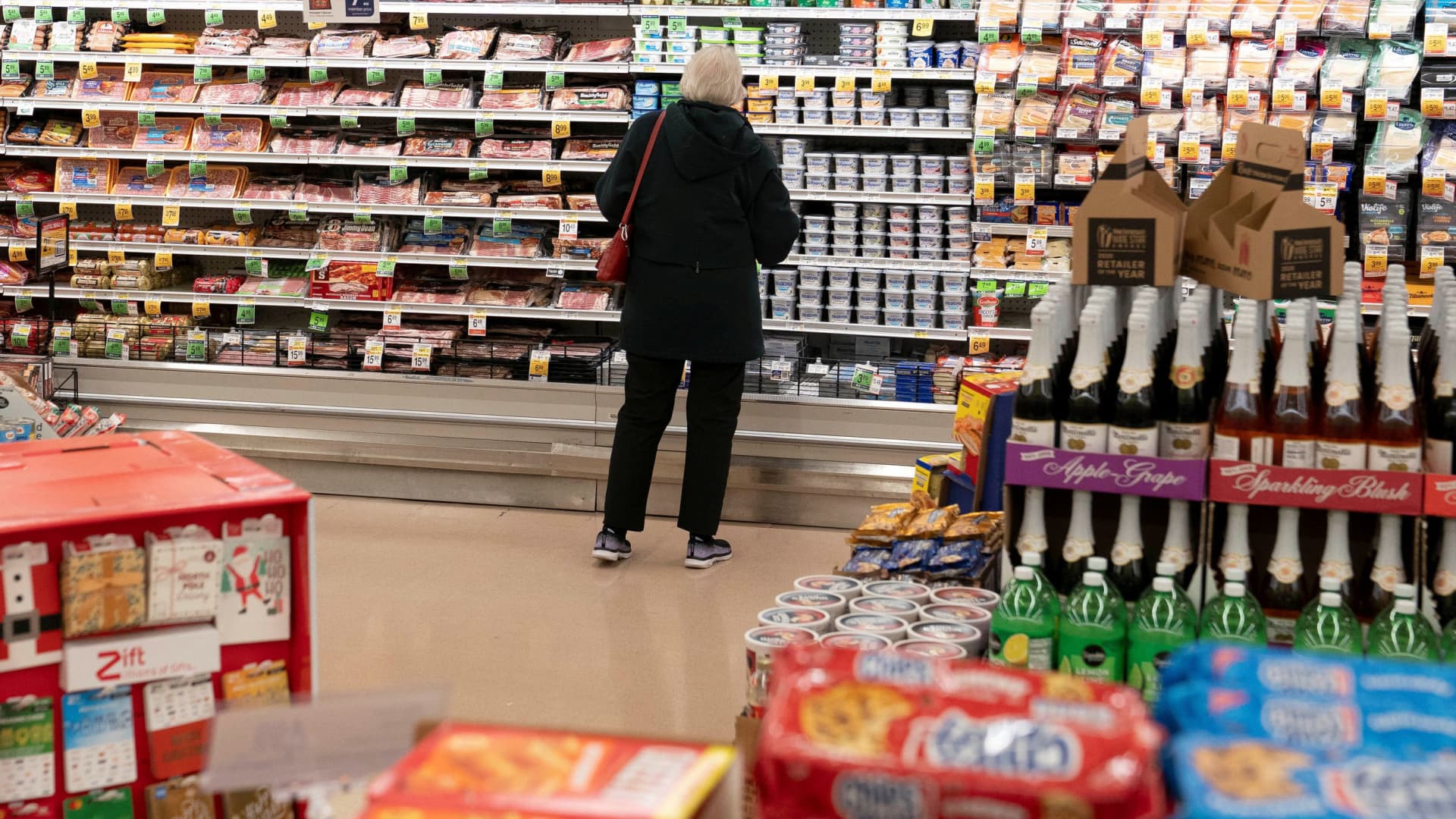
- Low Industry Valuations: Excluding giants like Walmart and Costco, Kroger Company (KR) trades at 12.7x forward earnings estimates, significantly below the S&P 500, indicating a cautious market sentiment reflected in the grocery sector's average valuation of just 11.3x.
- Stagnant Revenue Growth: Over the past five years, revenues at major grocery chains have barely budged, with inflation-adjusted figures showing declines; Kroger's net income margin is projected at only 2.1% for FY 2026, while Albertson's (ACI) is even narrower at 1.4%.
- Emerging Market Opportunities: Sprouts Farmers Market (SFM) is forecasted to achieve approximately 10% revenue growth in FY 2026 with a net income margin of 5.7%, highlighting its competitive edge in the natural and organic food sector against traditional grocers.
- Attractive Options Strategy: Given SFM's recent weak stock performance, investors can sell cash-secured puts to earn about 5% returns; if the stock remains above $65 by expiration, profits are realized, while a drop allows acquisition at a discount, showcasing the appeal of value investing.
See More
Amazon Adjusts Grocery Strategy, Shares Rise Over 1%

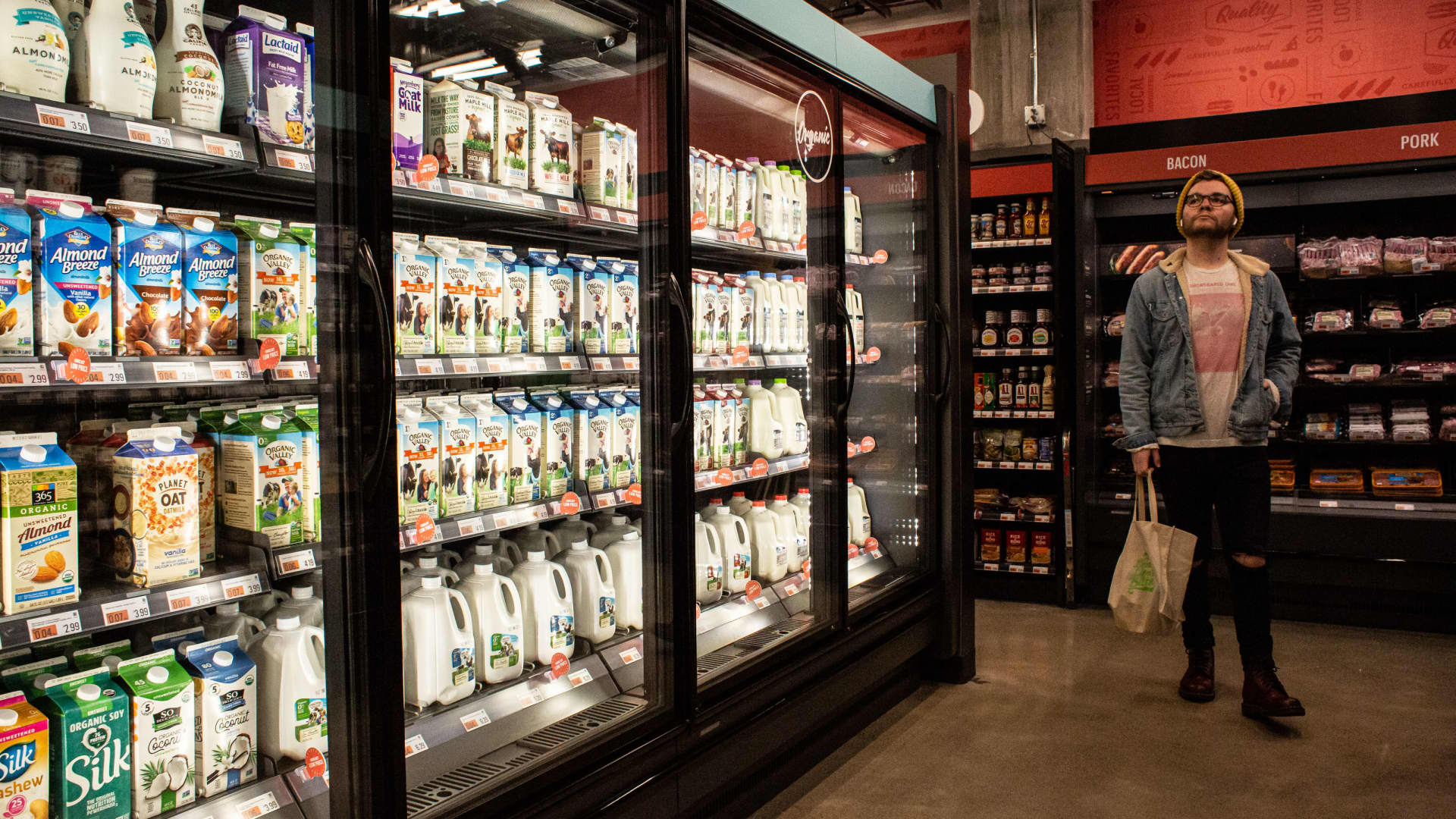
- Amazon's Strategic Shift: Amazon's decision to close its Fresh and Go brick-and-mortar stores marks a significant pivot in its grocery strategy, resulting in a more than 1% rise in its stock during midday trading, while rivals Kroger and Albertsons saw declines of about 3%.
- Micron's Expansion Investment: Micron Technology has commenced construction of an advanced wafer fabrication facility at its existing NAND manufacturing plant in Singapore, with a planned investment of approximately $24 billion over the next decade, leading to a roughly 5% increase in its stock price.
- Sysco's Earnings Beat: Sysco reported earnings that exceeded expectations, with a fiscal second-quarter EPS of $0.99 compared to the $0.98 anticipated by analysts, resulting in a 9% stock price increase and an updated full-year guidance at the higher end of $4.50 to $4.60 per share.
- UnitedHealth Stock Decline: Shares of UnitedHealth and Humana dropped about 20% after the Centers for Medicare & Medicaid Services proposed a mere 0.09% increase in 2027 Medicare Advantage payment rates, significantly lower than the expected 4% to 6% rise.
See More
Harps Food Stores Acquires 18 Independent Grocery Locations
- Intensifying Market Competition: The top four grocery retailers account for 69% of U.S. grocery spending, with Walmart alone contributing nearly 35%, creating immense pressure on independent grocers, forcing many to adapt or exit the market.
- Acquisition Expansion Strategy: Harps Food Stores plans to acquire 18 stores from Dyer Foods, with the transaction expected to close by summer 2026, which will increase its total locations to 178, marking its largest acquisition in nearly six years.
- Maintaining Local Brands: The acquired stores will continue to operate under their existing banners, including Food Rite, Save-A-Lot, and Piggly Wiggly, allowing Harps to preserve local brand identity and enhance customer loyalty through a unified operating model.
- Industry Consolidation Trend: Harps' expansion reflects a broader trend of consolidation in the retail sector, as economic pressures and intensifying competition push independent grocers to adopt acquisition strategies to survive against larger chain competitors.
See More
Parsifal Capital Management Reduces Stake in Albertsons Companies
- Share Reduction Details: Parsifal Capital Management sold 4,239,655 shares of Albertsons Companies in Q4 2025, with an estimated transaction value of $75.60 million, resulting in a $75.08 million decrease in position value, highlighting the impact of market fluctuations on the portfolio.
- Holding Proportion Shift: Following the sale, Parsifal's stake in Albertsons dropped to 2,469,593 shares, representing 3.48% of AUM, which means Albertsons is no longer among its top five holdings, indicating a reduced risk appetite for defensive grocery operators.
- Operational Performance: Despite a 7.7% decline in share price over the past year, Albertsons reported a 1.9% increase in net sales to $19.1 billion in Q3, with digital sales surging by 21%, demonstrating resilience in a competitive grocery market.
- Investment Strategy Shift: This reduction allows Parsifal to free up capital for higher-growth investments, signaling a strategic pivot from low-margin food retail towards opportunities in consumer products and healthcare sectors.
See More
Albertsons Tests Personalized Ads in ChatGPT Ahead of Valentine's Day
- Advertising Innovation Test: Albertsons Companies participates in the OpenAI Ad Pilot Program, aiming to provide more relevant and personalized advertising experiences through ChatGPT, which is expected to enhance consumer shopping convenience and brand value.
- Valentine's Day Marketing Strategy: Ahead of Valentine's Day, Albertsons ads will appear in ChatGPT, allowing consumers to see local store ads when searching for related terms, thereby increasing the effectiveness and targeting of holiday shopping.
- Customer Engagement Boost: By testing ads in ChatGPT, Albertsons aims to enhance engagement with new customers while building meaningful connections with existing ones, driving sales growth and customer loyalty.
- AI Technology Integration: Albertsons has embedded AI technology across various enterprise levels, launching the Albertsons AI shopping assistant and AskAI, with early data showing significant increases in customer engagement and basket growth.
See More
Uber Eats Launches AI Shopping Assistant to Compete with Instacart
- AI Shopping Assistant Launch: Uber Eats has introduced the Cart Assistant, an AI tool that can automatically add items from handwritten shopping lists or recipe screenshots to online shopping baskets, displaying prices and promotions, thereby enhancing user shopping experience and customer loyalty.
- Intensified Market Competition: The launch of Cart Assistant intensifies competition between Uber Eats and Instacart, with Instacart's gross transaction value nearing $40 billion annually, while Uber's retail business is projected to reach a $12 billion annual run rate by 2025, highlighting the significant potential in the retail market for both companies.
- Technological Investment Edge: Uber's substantial investment in AI allows it to keep pace with Instacart technologically; while Cart Assistant may not be a game changer, it strengthens Uber's competitive position across its diversified platform, particularly in transportation and food delivery.
- Ongoing AI Applications: Uber is leveraging AI not only in the shopping assistant but also in driver matching, route optimization, and dynamic pricing, and is expected to continue investing in AI to better meet customer needs and drive business growth.
See More
Grocery Sector Faces Challenges and Opportunities
- Low Industry Valuations: Excluding giants like Walmart and Costco, Kroger Company (KR) trades at 12.7x forward earnings estimates, significantly below the S&P 500, indicating a cautious market sentiment reflected in the grocery sector's average valuation of just 11.3x.
- Stagnant Revenue Growth: Over the past five years, revenues at major grocery chains have barely budged, with inflation-adjusted figures showing declines; Kroger's net income margin is projected at only 2.1% for FY 2026, while Albertson's (ACI) is even narrower at 1.4%.
- Emerging Market Opportunities: Sprouts Farmers Market (SFM) is forecasted to achieve approximately 10% revenue growth in FY 2026 with a net income margin of 5.7%, highlighting its competitive edge in the natural and organic food sector against traditional grocers.
- Attractive Options Strategy: Given SFM's recent weak stock performance, investors can sell cash-secured puts to earn about 5% returns; if the stock remains above $65 by expiration, profits are realized, while a drop allows acquisition at a discount, showcasing the appeal of value investing.
See More
Amazon Adjusts Grocery Strategy, Shares Rise Over 1%
- Amazon's Strategic Shift: Amazon's decision to close its Fresh and Go brick-and-mortar stores marks a significant pivot in its grocery strategy, resulting in a more than 1% rise in its stock during midday trading, while rivals Kroger and Albertsons saw declines of about 3%.
- Micron's Expansion Investment: Micron Technology has commenced construction of an advanced wafer fabrication facility at its existing NAND manufacturing plant in Singapore, with a planned investment of approximately $24 billion over the next decade, leading to a roughly 5% increase in its stock price.
- Sysco's Earnings Beat: Sysco reported earnings that exceeded expectations, with a fiscal second-quarter EPS of $0.99 compared to the $0.98 anticipated by analysts, resulting in a 9% stock price increase and an updated full-year guidance at the higher end of $4.50 to $4.60 per share.
- UnitedHealth Stock Decline: Shares of UnitedHealth and Humana dropped about 20% after the Centers for Medicare & Medicaid Services proposed a mere 0.09% increase in 2027 Medicare Advantage payment rates, significantly lower than the expected 4% to 6% rise.
See More