
Key Takeaways
Defense stocks are positioned for strong growth as the 2026 U.S. defense budget reaches $924.7 billion, with geopolitical tensions and increased global military spending creating sustained demand for defense contractors.
• RTX leads with record $268 billion backlog - Strong commercial and defense momentum positions RTX for 5-6% organic growth in 2026
• Focus on backlog and book-to-bill ratios over traditional metrics - Defense stocks require unique evaluation focusing on contract stability and cash flow
• Defense ETFs offer diversified exposure without stock picking - ITA, PPA, and XAR provide sector access with varying concentration levels and expense ratios
• Geopolitical tensions drive unprecedented demand cycle - Global defense spending expected to hit $2.6 trillion in 2026, up 8.1% from 2025
• Government contract stability provides recession-resistant revenue - Multi-year contracts offer predictable returns during economic uncertainty, making defense stocks valuable portfolio diversifiers
The sector's fundamentals support both long-term investment strategies and tactical allocation opportunities, with companies like General Dynamics showing 30% backlog growth and strong earnings beats across the industry.
Introduction
Have you ever looked at your portfolio during times of global conflict and wondered why the broader market is bleeding while specific sectors are reaching all-time highs? It is a frustrating experience to see your hard-earned capital erode because of geopolitical events entirely out of your control. However, seasoned investors know that while uncertainty creates volatility, it also creates specific, predictable opportunities in the defense sector.
By analyzing market sentiment and the order backlogs of major defense contractors, you can gauge which companies are positioned to thrive when global tensions rise. In the article, there is an analysis of the Q3 2025 earnings data to identify the companies that are not just surviving, but accelerating their growth through government contracts and technological innovation.
Here, you will learn exactly what characterizes a strong defense investment, how to analyze these companies, and discover the top 5 war stocks that are poised for growth in the current economic climate.
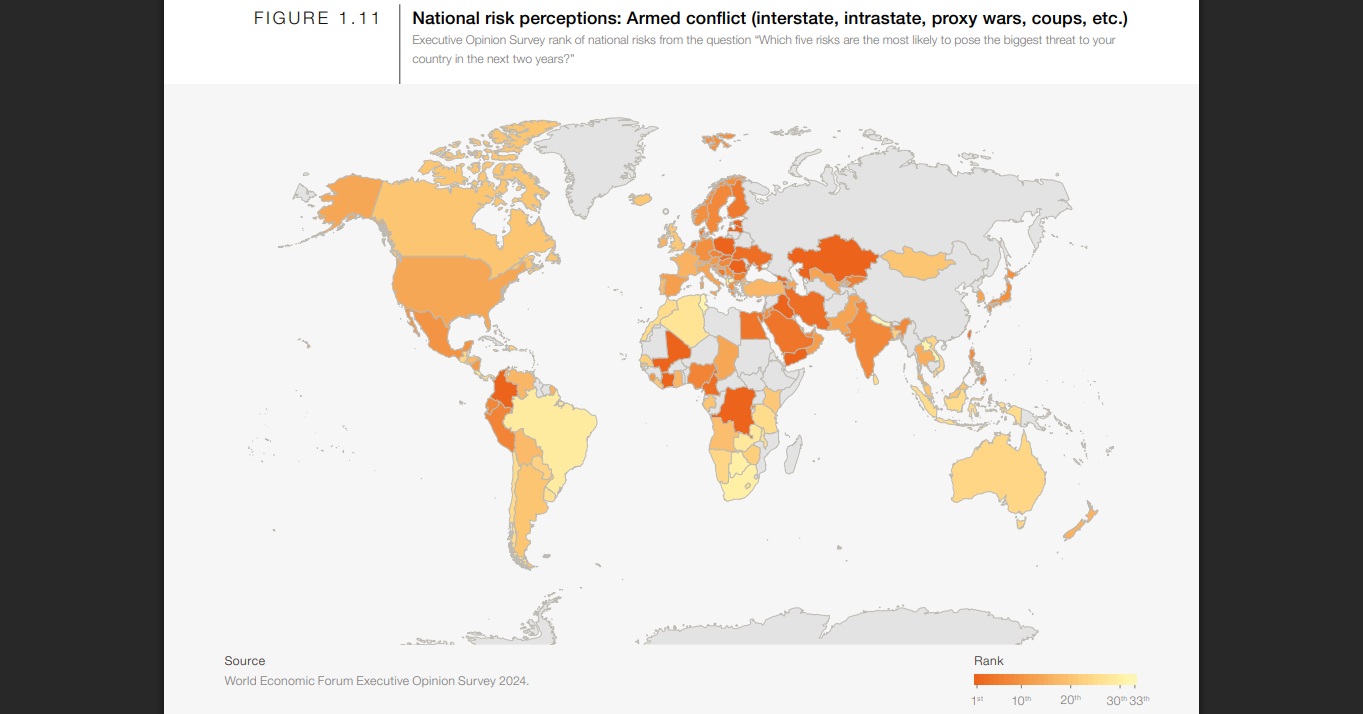
Source: The Global Risks Report 2025
What Are War Stocks?
When investors discuss war stocks or war time stocks, they are generally referring to the Aerospace and Defense (A&D) sector. These are publicly traded companies that develop, manufacture, and service the equipment, software, and logistics required by military forces.
Unlike consumer discretionary stocks, which rely on a healthy economy and confident shoppers, stocks that go up during war are driven by government budgets and geopolitical necessity. When global tensions escalate, governments do not cut defense spending; they increase it. This creates a floor for these stocks, often making them recession-resistant.
The definition of a war stock has evolved. Historically, this category was dominated by manufacturers of tanks, planes, and ammunition. Today, the best war stocks also include cybersecurity firms, satellite communications providers, and data analytics companies. Modern warfare is kinetic, but it is also digital.
Why do these sectors surge? It comes down to the "flywheel effect" of defense spending. A conflict usually triggers immediate replenishment of munitions (short-term revenue). It also highlights technological gaps, leading to massive R&D contracts for next-generation equipment (long-term revenue). For example, recent conflicts have underscored the need for missile defense systems and autonomous drones, driving capital directly into companies like RTX and Northrop Grumman.
Investing in top war stocks is not about capitalizing on conflict; it is about recognizing the reality of the geopolitical landscape and hedging your portfolio against the volatility that usually negatively impacts other sectors.
How to Choose the Best War Stocks
Identifying the best stocks to buy during war requires looking beyond the headlines. You need to analyze the fundamentals that ensure a company can convert government interest into shareholder value. Here is what you should look for.
Government Defense Contracts
The lifeblood of any defense stock is its backlog—the total value of signed contracts that have not yet been fulfilled. A growing backlog indicates future revenue visibility. For instance, in Q3 2025, Lockheed Martin reported a record backlog of $179 billion. When you see a backlog that is 2x or 3x the company's annual revenue, you are looking at a highly stable investment.
Revenue Stability During Conflict
During economic downturns, commercial revenue (like civilian air travel) might drop. The best defense companies often have a mix of commercial and defense revenue. However, during conflict, you want to prioritize companies where the defense segment acts as a buffer. Look for "Program of Record" status, which means the US government has committed to funding a specific weapon system for years or decades.
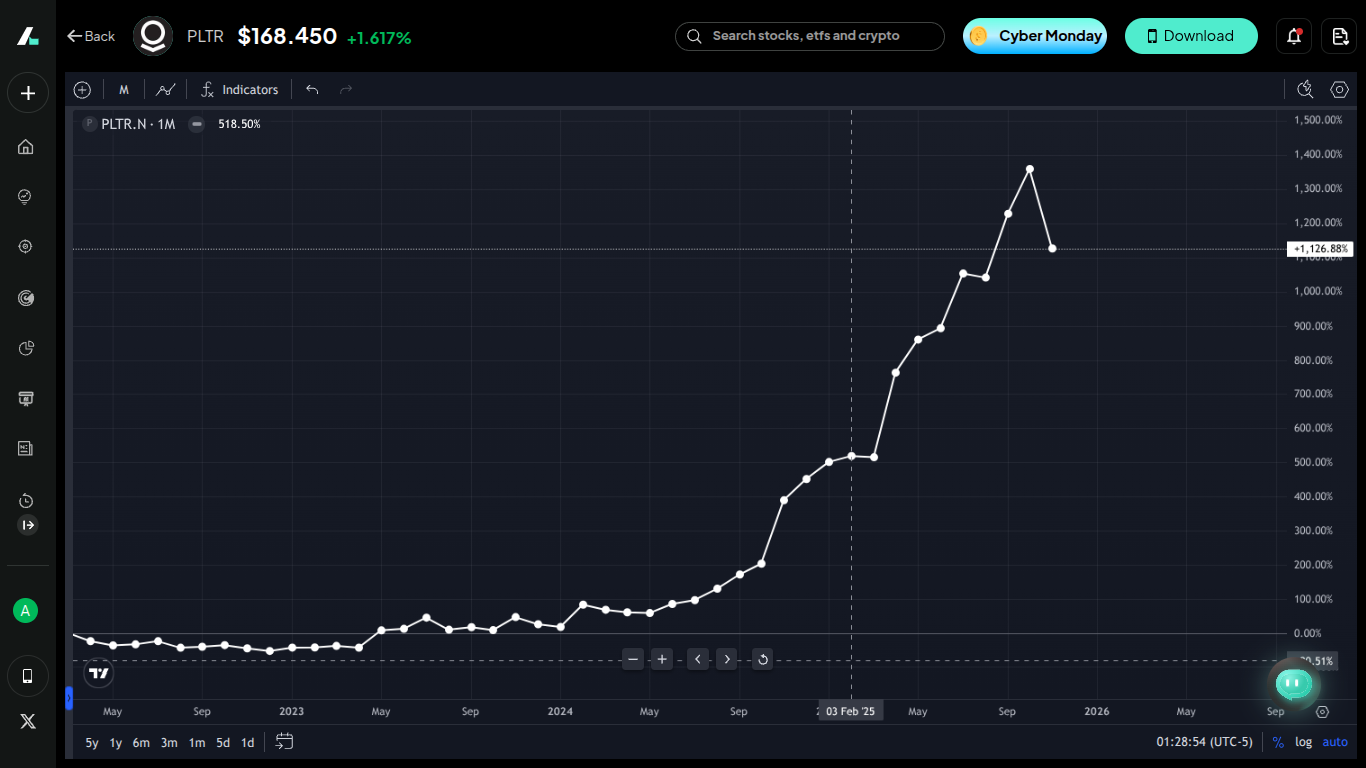
Source: Intellectia.ai
Balance Sheet Strength & Cash Flow
Developing a new fighter jet or missile system requires billions in upfront capital. You must ensure the company has a strong balance sheet to weather development costs. Pay close attention to Free Cash Flow (FCF). Companies like Boeing have struggled recently due to cash flow issues, whereas mature primes like Northrop Grumman utilize their cash flow to pay dividends and buy back shares, rewarding you for holding the stock.
Geopolitical Exposure
Not all conflicts require the same equipment. A naval conflict benefits shipbuilders; a land war benefits artillery manufacturers; a symmetric cyber war benefits software companies. You should diversify your holdings to cover different domains: Air, Land, Sea, Space, and Cyber. Currently, there is a massive demand for "integrated deterrence," which benefits companies that can connect these domains.
Long-Term Demand for Military Tech
The top 10 stocks that rise during war are often those innovating for the next war, not just fighting the last one. Look for companies investing in hypersonics, directed energy (lasers), and autonomous systems. These technologies are high-priority funding areas for the Pentagon.
Using AI Tools Like Intellectia for Analysis
Analyzing government budgets and 10-K filings can be overwhelming. This is where you can leverage technology. Intellectia.AI’s stock analysis features allow you to scan fundamental data, track institutional buying, and get AI-driven summaries of earnings calls. Using an AI tool helps you separate the hype from the actual numbers, ensuring you pick stocks with genuine momentum.
Source: Intellectia.ai
5 Top War Stocks That Rise During War
Based on Q3 2025 performance, backlogs, and strategic positioning, these are the companies you should be watching.
| Company Name | Ticker | Sector | Market Cap | Key Strengths |
| RTX Corporation | RTX | Aerospace/Defense | ~$234.5B | Diverse portfolio (Missiles + Engines), Strong Commercial Aftermarket |
| Palantir | PLTR | Software/AI | ~$401.4B | Dominance in AI-driven warfare & decision making |
| Lockheed Martin | LMT | Aerospace/Defense | ~$105.9B | World’s largest defense contractor, F-35 Program |
| Northrop Grumman | NOC | Aerospace/Defense | ~$81.6B | Space dominance, Nuclear Triad (B-21, Sentinel) |
| Boeing | BA | Aerospace/Defense | ~$143.6B | Turnaround potential, massive production capacity |
1. RTX Corporation (RTX)
RTX Corporation is a powerhouse that offers you the best of both worlds: commercial aviation recovery and defense stability. In Q3 2025, RTX reported a massive backlog of $251 billion, with $23 billion in new defense awards alone.
RTX manufactures the Patriot missile defense system, which is in incredibly high demand globally due to conflicts in Eastern Europe and the Middle East. Furthermore, their Pratt & Whitney division provides engines for the F-35.
Despite some supply chain challenges, their organic sales grew 13% in the last quarter. If you want a stock that covers missile defense and commercial travel simultaneously, RTX is a prime candidate.
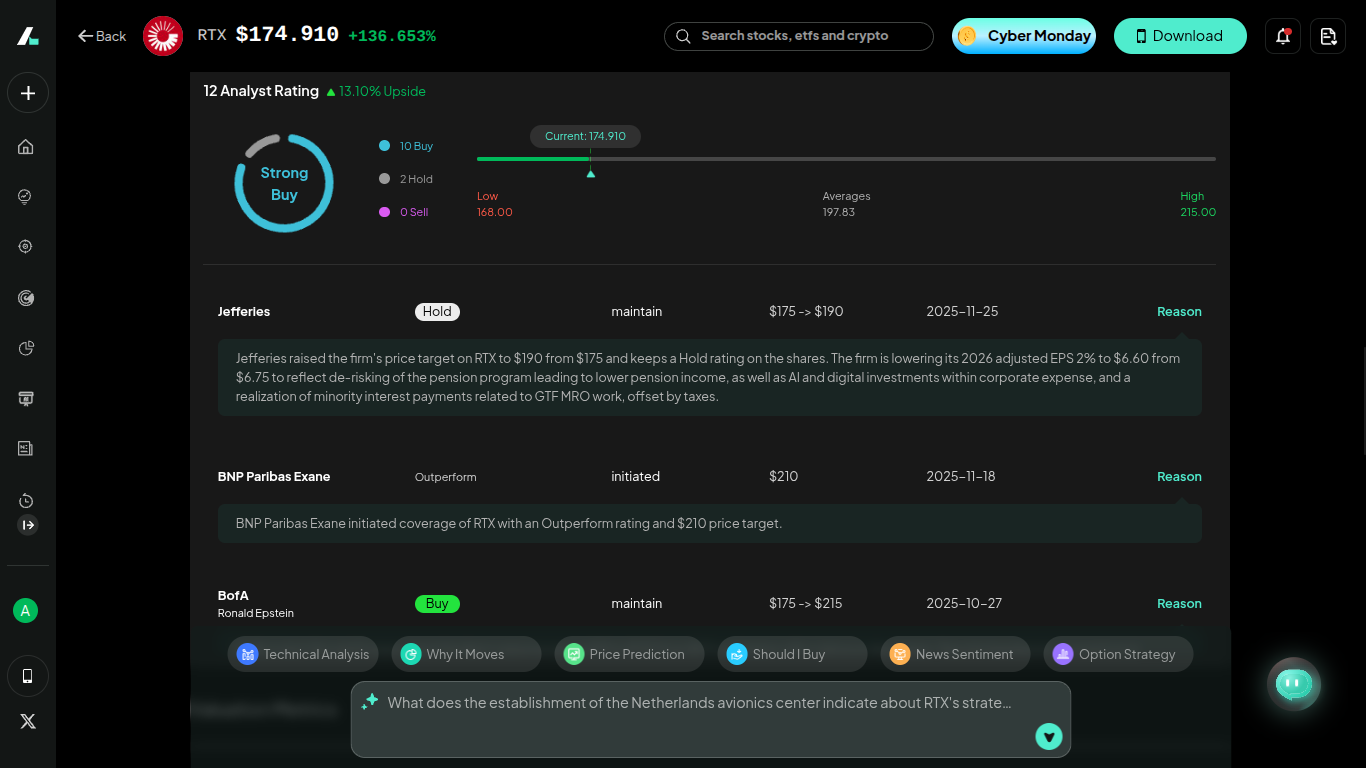
Source: Intellectia.ai
2. Palantir Technologies (PLTR)
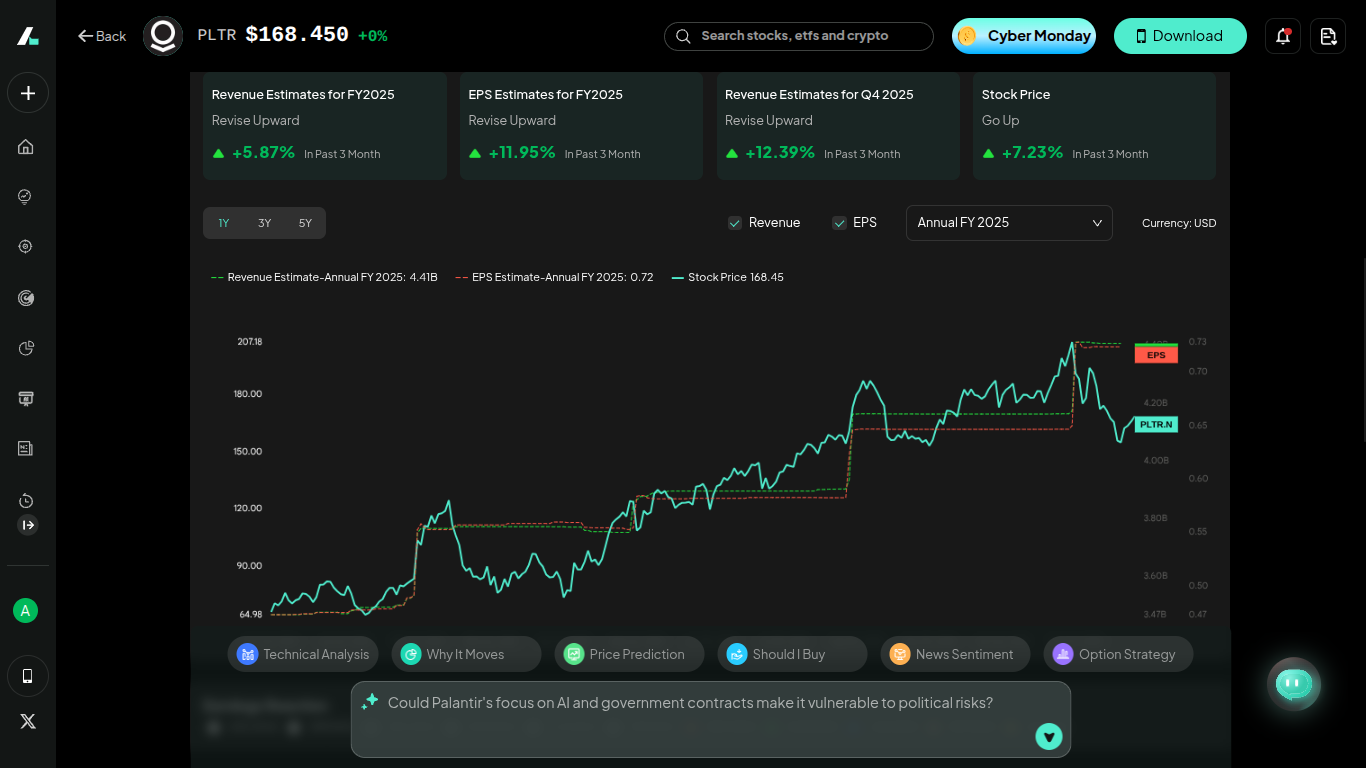
If you are looking for modern war stocks, you cannot ignore software. Palantir has fundamentally changed how military decisions are made. In Q3 2025, they shattered expectations with 63% year-over-year revenue growth.
Palantir is not building tanks; they are building the "operating system" of war. Their AIP (Artificial Intelligence Platform) is being used to integrate data from satellites, drones, and troops to provide real-time battlefield intelligence.
With their US Government revenue growing by 52% and a "Rule of 40" score of 114%, Palantir represents the future of defense. This is your high-growth aggressive play in the sector.
Source: Intellectia.ai
3. Lockheed Martin (LMT)
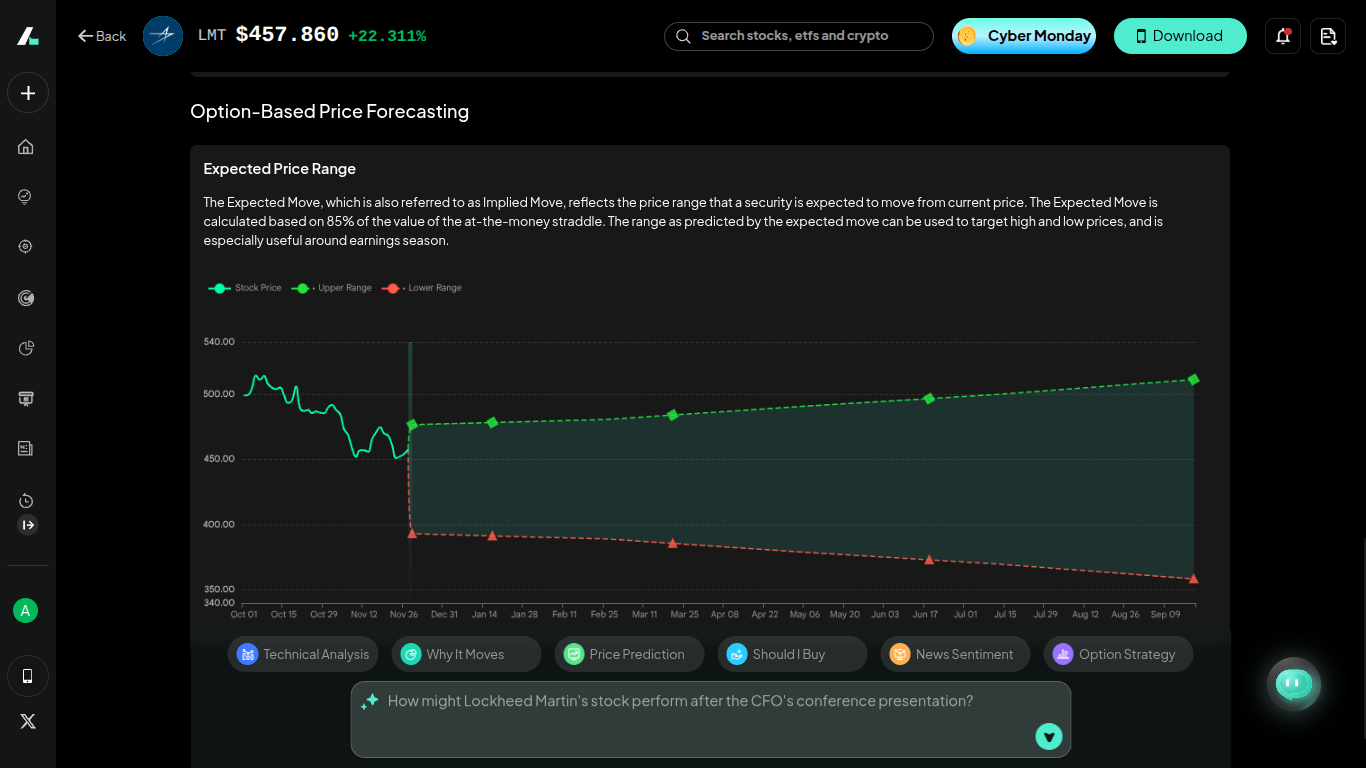
Lockheed Martin remains the gold standard for stocks to buy during war. As the manufacturer of the F-35 fighter jet, they have secured revenue streams for decades. In Q3 2025, they reported a record backlog of $179 billion.
Lockheed is heavily involved in the "Golden Dome" initiative and missile defense (PAC-3). They recently won multi-year awards totaling $30 billion for missiles and helicopters.
Management is confident in mid-single-digit growth through 2026. LMT is a dividend-paying stock, making it an excellent choice if you prefer stability and income along with capital appreciation during uncertain times.
Source: Intellectia.ai
4. Northrop Grumman (NOC)
Northrop Grumman is the leader in strategic deterrence. They are currently building the B-21 Raider (the newest stealth bomber) and the Sentinel ICBM (nuclear modernization).
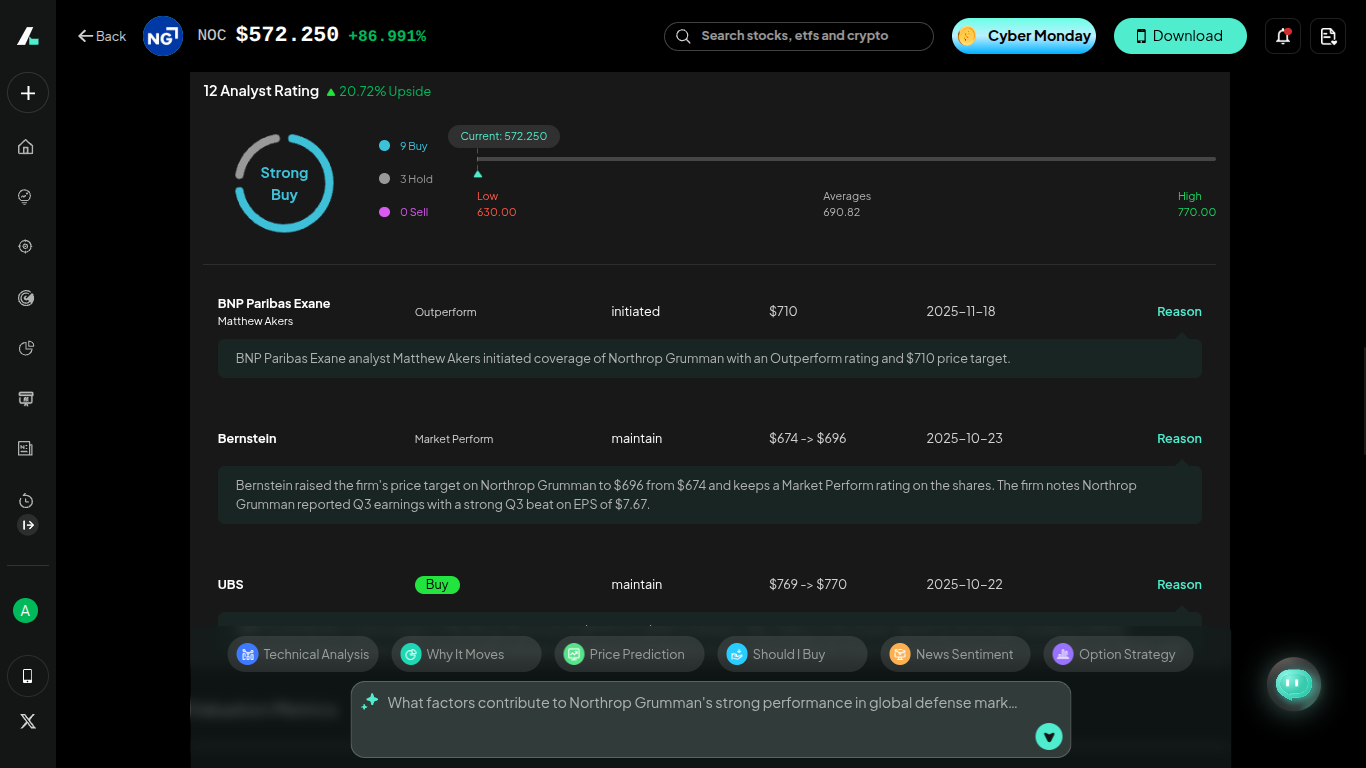
In Q3 2025, NOC beat earnings expectations significantly. They are seeing massive demand for solid rocket motors and space systems. Space is the next frontier of warfare, and Northrop is the best positioned among the primes to capitalize on this.
If you believe the future of conflict involves space dominance and nuclear deterrence, this is the stock for your portfolio.
Source: Intellectia.ai
5. Boeing (BA)
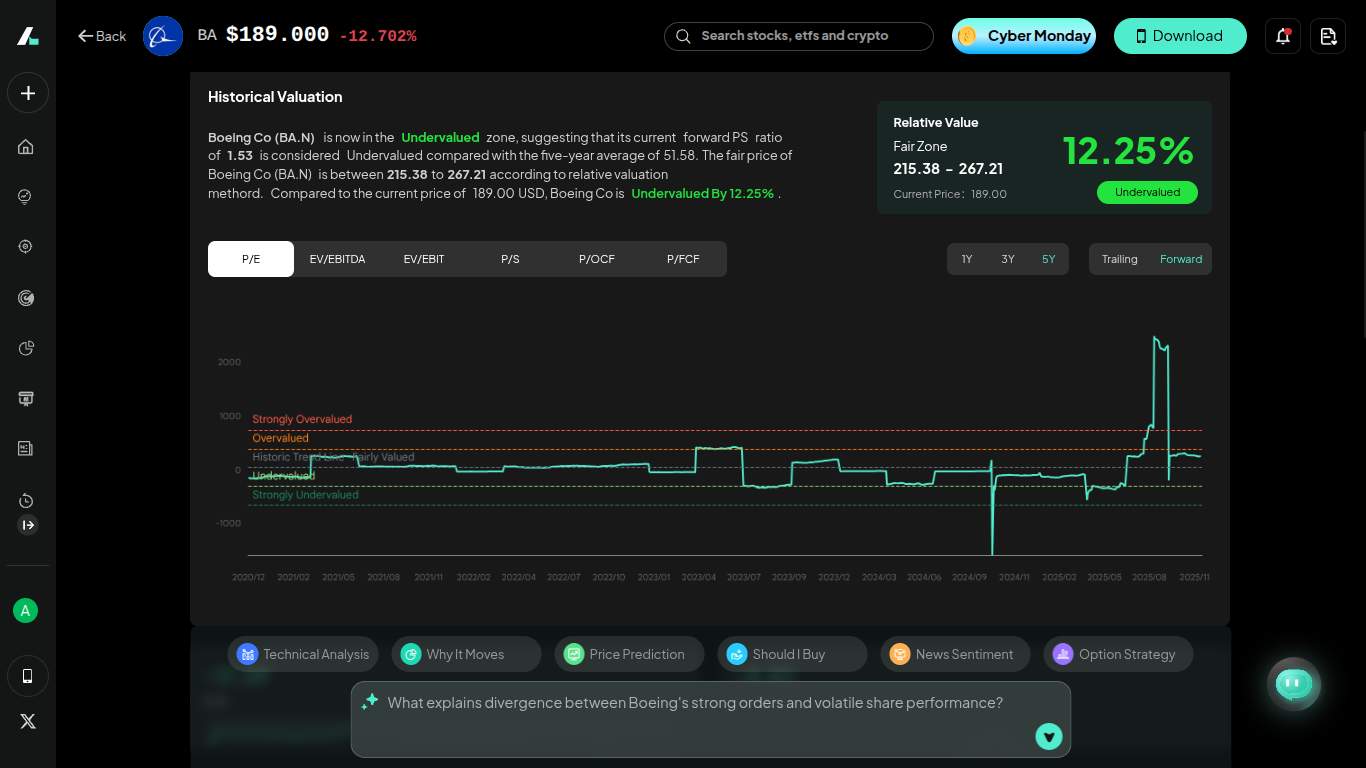
Boeing is a controversial pick due to recent production struggles, but it remains a titan in the industry. Q3 2025 showed a pivotal turning point: operations generated positive free cash flow for the first time since 2023, and they settled major labor strikes.
Boeing is a "turnaround play." Despite the 777X delays, they have a backlog of over $600 billion. Their defense unit produces the F-15EX, the KC-46 tanker, and the Apache helicopter.
As they stabilize production rates (aiming for 42 737s per month), the stock has significant upside potential from its current depressed levels. If you have a higher risk tolerance, Boeing offers a value entry point into the aerospace duopoly.
Source: Intellectia.ai
Investment Strategies for War Stocks
Knowing what stocks go up during war is only half the battle; you need a strategy to manage them.
Understand Market Cycles
Defense stocks often spike at the onset of a conflict due to fear and speculation. However, the real value is generated over the long term as government contracts are awarded and paid out. Do not just buy the spike. Look for sustainable trends in government spending bills (like the NDAA in the US).
Long-Term Growth vs. Short-Term Trading
Are you investing for the next decade or trading the news?
- Long-Term: Focus on "Prime Contractors" like LMT and RTX. Reinvest the dividends and hold through the volatility.
- Short-Term: Use Intellectia.AI’s Trading Signals to identify momentum shifts. When a new conflict breaks out, smaller cap stocks (like drone makers) often experience sharper, faster moves than the giants.
Consider ETFs for Broader Exposure
If picking individual war stocks to buy feels too risky, you can use the Intellectia AI Screener to find ETFs that hold a basket of these companies. ETFs like the iShares U.S. Aerospace & Defense ETF (ITA) or the SPDR S&P Aerospace & Defense ETF (XAR) give you exposure to the whole sector, mitigating the risk of a single company failing execution.

Source: intellectia.ai
Diversify Across Sectors
Do not put 100% of your portfolio into defense. While these stocks are hedges, they can underperform during tech booms or periods of extended peace. Use them to balance out your exposure to tech and consumer goods.
Defense ETFs: An alternative investment option
Not every investor wants to pick individual defense contractor stocks. Defense ETFs provide bundled exposure to the aerospace and defense sector without requiring you to choose between companies or manage multiple positions.
iShares U.S. Aerospace & Defense ETF
The iShares U.S. Aerospace & Defense ETF (ITA) stands as the largest option with USD 15.10 billion in net assets as of February 2026. This fund tracks the Dow Jones U.S. Select Aerospace & Defense Index and charges a 0.38% expense ratio. Performance has been solid. The fund delivered a 17.4% annualized return over the past decade. ITA holds 41 stocks, but concentration runs high. GE Aerospace and RTX together make up about 37% of the entire portfolio, while three-quarters of assets flow into the top 10 holdings. This heavy weighting toward industry leaders means ITA's performance mirrors the success of the largest defense contractors.
Invesco Aerospace & Defense ETF
The Invesco Aerospace & Defense ETF (PPA) takes a broader approach with USD 7.90 billion in assets and 60 total holdings. Its top five positions represent about 40% of the portfolio and provide more balance than ITA. PPA's expense ratio sits at 0.58%, which is higher than its competitor. The fund has generated a 19% annualized return over the past 10 years. Three-year and five-year annualized returns reached 30.3% and 22.8% respectively. This wider diversification reduces dependence on any single firm's performance.
SPDR S&P Aerospace & Defense ETF
The SPDR S&P Aerospace & Defense ETF (XAR) distinguishes itself by focusing on small-cap and mid-cap growth stocks, which comprise about 52% of its USD 5.80 billion in total assets. XAR offers concentrated exposure at a competitive price with only 40 holdings and a 0.35% expense ratio. The fund delivered a 56.5% return over the past 12 months and a 19.8% annualized return over the past decade. Its top five holdings account for about 20% of the portfolio and feature names like Karman Holdings, Woodward, and Lockheed Martin.
When to choose ETFs over individual stocks
Defense ETFs make sense when you want sector exposure without betting on specific contractors. These funds offer one-stop access to a wide range of commercial aerospace and defense businesses. They avoid concentration on just one area like shipbuilding. Sign up Intellectia.AI today to get daily AI stock picks, trading signals and market analysis that guide your experience from beginner to pro. The Intellectia.ai AI Screener is a great starting point. You can use it to filter the entire market for companies that show the clearest signs of benefiting from defense sector trends. Maybe you want to identify suppliers or competitors in the aerospace and defense space. ETFs spread risk across multiple businesses and programs rather than concentrating capital in individual defense stocks. This makes them ideal for investors seeking diversification with minimal research requirements.
Key factors driving defense stocks in 2026
Several powerful forces are reshaping the defense investment world. Understanding these drivers will help you review whether defense stocks fit your portfolio strategy.
U.S. defense budget and spending trends
The Defense Department's fiscal year 2026 budget request reached $961.60 billion. This represents a 13.4% increase over FY 2025. The substantial increase delivers on commitments to rebuild military capabilities and has $68.30 billion for air power and $43.30 billion for missile defense and defeat. Congress provided an additional $151 billion in reconciliation funds for FY26 alongside the base appropriations.
President Trump has proposed pushing the U.S. defense budget to approximately $1.50 trillion by 2027, up from roughly $901 billion approved for fiscal 2026. The Golden Dome missile defense shield alone carries an estimated baseline cost of $175 billion. A mature nationwide network would cost multiple times that figure. The Golden Fleet plan wants to expand the U.S. Navy with a new Trump-class battleship.
Global geopolitical tension and US-Iran war
Global defense spending is expected to hit $2.60 trillion in 2026, an 8.1% increase over 2025, with forecasts reaching $2.90 trillion by the end of the decade. The trajectory accelerated after NATO agreed to more than double defense spending from a prior target of 2% to 5% of GDP by 2035, with 3.5% allocated to pure defense[194].
The United States and Israel launched major strikes on Iran on February 28 with stated aims of eliminating Iran's nuclear and missile programs. Iran retaliated by firing missiles at Israel and U.S. military bases in Bahrain, Kuwait, Jordan, Qatar, and the United Arab Emirates. This conflict adds to persistent instability across the Middle East, where almost every country is either involved in or neighboring a shooting war.
Government contract stability
An Executive Order signed January 7, 2026 established aggressive controls over defense contractors' financial activities. The order prohibits stock buybacks and dividends until contractors produce superior products on time and on budget. Executive compensation ties to on-time delivery and production increases rather than financial metrics, reshaping how defense companies allocate capital.
The Defense Department's Acquisition Transformation Strategy emphasizes speed, flexibility, and commercial-first buying processes while wanting to award bigger, longer deals that incentivize capital investments.
Commercial aerospace recovery
Global commercial aerospace is on track for a 12% revenue increase entering 2026, powered by a projected 25% rise in aircraft deliveries and sustained aftermarket demand. Executives expect MRO spending to increase 14% year-over-year in 2025, with 77% anticipating further increases within 24 months. Boeing's rebound is driving North America toward its strongest revenue growth in two decades, with a forecast 17% climb.
Investment strategies for defense stocks
Your investment horizon determines which defense contractor stocks make sense for your portfolio.
Long-term vs. short-term investment approach
Defense stocks provide predictable returns backed by multi-year government contracts. This makes them reliable for long-term holds. US military expenditures have remained steady at 3.4% of GDP. Companies like Lockheed Martin and BAE Systems continue generating revenue during economic downturns due to contract stability. Short-term traders can capitalize on price movements triggered by geopolitical events and defense budget announcements. They track order flow and liquidity surges to spot institutional accumulation.
Diversification in defense sectors
Large-cap defense stocks provide contract security and dividends but limited growth. Tech-focused mid-caps like companies specializing in AI-driven defense systems offer higher growth potential. An active, selective approach in the full defense ecosystem can create alpha potential.
Timing your defense stock purchases
Watch for policy signals and supply chain developments. Quarterly delivery metrics matter too. The AI Stock Picker provides evidence-based, applicable information to help you time your defense stock purchases. Those looking for concise daily recommendations will find it useful to optimize portfolio allocation.
Portfolio allocation recommendations
Defense exposure improves portfolio diversification during geopolitical uncertainty. Defense stocks show low correlation to broader markets and often outperform during periods of stress. Clarify whether you seek short-term gains or long-term investment before allocating capital.
Conclusion
The geopolitical landscape of 2025 has made the defense sector a critical component of a diversified portfolio. Whether you are looking for the stability of Lockheed Martin, the diversified strength of RTX, or the explosive AI growth of Palantir, top war stocks offer a hedge against global uncertainty.
The key to success is looking beyond the headlines and analyzing the order backlogs, cash flow, and technological advantages of these companies. The market moves fast, and during times of conflict, information is your most valuable weapon.
To stay ahead of the market, Sign up for Intellectia.AI today. Get access to daily AI stock picks, real-time trading signals, and deep market analysis to ensure your portfolio is ready for whatever the world throws at it. Don't just watch the news—profit from the data.