XRP and Ethereum Enhance Privacy Features: A Buying Opportunity?
Written by Emily J. Thompson, Senior Investment Analyst
Updated: 1 hour ago
0mins
Should l Buy INTC?
Source: Yahoo Finance
- XRP Privacy Feature Launch: Ripple plans to introduce a confidential transactions feature for the XRP Ledger in the coming months, aiming to meet the dual demands of privacy and regulatory compliance for financial institutions, thereby enhancing its appeal in the compliant financial market.
- Compliance and Privacy Integration: The privacy feature of XRP integrates with existing identity verification, KYC, and AML tools, allowing it to protect user financial information while satisfying regulatory requirements, which boosts investor confidence in XRP.
- Limitations of Ethereum's Privacy Features: Although Ethereum is also developing privacy-preserving capabilities, these features appear to be more of an add-on rather than a core competitive advantage, which may not serve as a new buying reason for investors.
- Market Reaction and Investment Advice: While XRP's privacy feature may attract more institutional investors, analysts note that XRP is not included in the current list of top investment stocks, prompting investors to carefully assess its market performance.
Trade with 70% Backtested Accuracy
Stop guessing "Should I Buy INTC?" and start using high-conviction signals backed by rigorous historical data.
Sign up today to access powerful investing tools and make smarter, data-driven decisions.
Analyst Views on INTC
Wall Street analysts forecast INTC stock price to fall
29 Analyst Rating
5 Buy
19 Hold
5 Sell
Hold
Current: 45.460

Low
20.00
Averages
39.30
High
52.00
Current: 45.460
Low
20.00
Averages
39.30
High
52.00
About INTC
Intel Corporation is a global designer and manufacturer of semiconductor products. The Company operates through three segments: Intel Products, Intel Foundry, and All Other. Its Intel Products segment includes Client Computing Group (CCG), Data Center and AI (DCAI), Network and Edge (NEX). The CCG is bringing together the operating system, system architecture, hardware, and software application integration to enable PC experiences. DCAI delivers workload-optimized solutions to cloud service providers and enterprises, along with silicon devices for communications service providers, network and edge, and HPC customers. NEX helps networks and edge compute systems from fixed-function hardware to general-purpose compute, acceleration, and networking devices running cloud native software on programmable hardware. The Intel Foundry segment comprises technology development, manufacturing and foundry services. All Other segments include Altera, Mobileye, Other.
About the author

Emily J. Thompson
Emily J. Thompson, a Chartered Financial Analyst (CFA) with 12 years in investment research, graduated with honors from the Wharton School. Specializing in industrial and technology stocks, she provides in-depth analysis for Intellectia’s earnings and market brief reports.
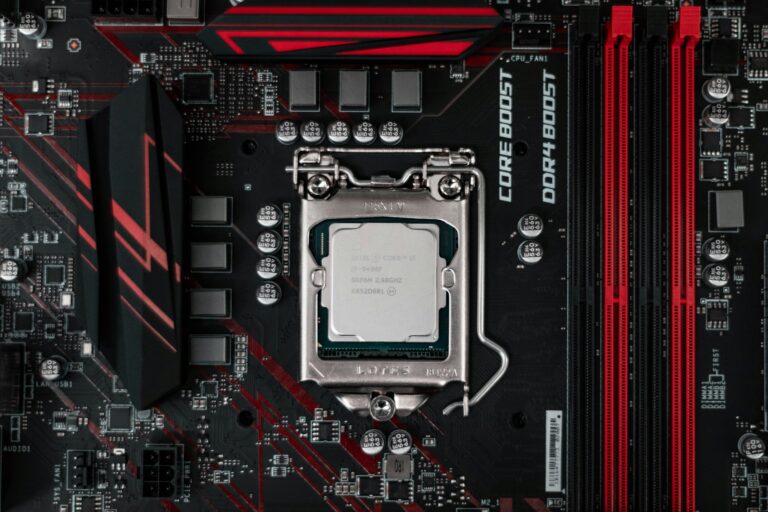
Intel's Strong 2025 Performance Drives 84% Stock Surge

- Stock Performance: Intel's shares surged 84% in 2025, with a 22% increase so far this year; however, the stock experienced a significant drop following the release of its fourth-quarter results, indicating cautious investor sentiment regarding future expectations.
- Supply Challenges: Intel's guidance for the current quarter fell short of expectations, as management highlighted supply constraints that hindered its ability to meet robust demand in the personal computer and data center markets, with the CEO noting these limitations significantly restricted their market capabilities.
- AI Processor Growth: Revenue from Intel's custom AI processors rose by 50% year-over-year in the last quarter, achieving an annualized revenue run rate exceeding $1 billion, with shipments expected to triple by 2025, showcasing strong market potential in this niche.
- Earnings Outlook: Analysts forecast a 15% increase in Intel's earnings to $0.48 per share in 2026, with the company's cost-cutting measures and improving yields likely to accelerate profit growth, although reaching the $100 stock price target may remain challenging in the short term.
See More

Bitcoin's Future Trajectory Analysis

- Bitcoin Price Decline: Bitcoin has plummeted 47% since October, currently trading at $66,000, which poses a significant threat to short-term investors and may lead to a decline in investor confidence.
- Future Price Prediction: Polymarket indicates only a 3% chance of Bitcoin reaching $150,000 by June, reflecting a lack of market confidence in a short-term rebound, which could influence long-term investment decisions.
- Historical Performance Analysis: Bitcoin has averaged a 27% return in Q2 over the past decade, but it also suffered steep declines of 40% in 2021 and 56% in 2022, highlighting its extreme price volatility.
- Investor Caution: The high volatility of Bitcoin means it can fluctuate by 10% in a single day, necessitating careful risk assessment by investors, especially when considering long-term investments, as they must account for its unpredictability and potential for high returns.
See More

XRP and Ethereum Enhance Privacy Features: A Buying Opportunity?
- XRP Privacy Feature Launch: Ripple plans to introduce a confidential transactions feature for the XRP Ledger in the coming months, aiming to meet the dual demands of privacy and regulatory compliance for financial institutions, thereby enhancing its appeal in the compliant financial market.
- Compliance and Privacy Integration: The privacy feature of XRP integrates with existing identity verification, KYC, and AML tools, allowing it to protect user financial information while satisfying regulatory requirements, which boosts investor confidence in XRP.
- Limitations of Ethereum's Privacy Features: Although Ethereum is also developing privacy-preserving capabilities, these features appear to be more of an add-on rather than a core competitive advantage, which may not serve as a new buying reason for investors.
- Market Reaction and Investment Advice: While XRP's privacy feature may attract more institutional investors, analysts note that XRP is not included in the current list of top investment stocks, prompting investors to carefully assess its market performance.
See More

Netflix Exits Warner Bros. Acquisition Bid: Five Strategic Insights


- Acquisition Withdrawal: Netflix has officially exited the competition to acquire Warner Bros., with its initial offer accepted last December, but Paramount Skydance's winning bid of $111 billion led to a 9% stock increase for Netflix, indicating investor approval of this decision.
- Lack of Strategic Rationale: The strategic justification for acquiring Warner Bros. was always questionable, as Netflix's dominance in streaming made Warner's diverse business model seem unnecessary, particularly given the uncertainty surrounding Warner's theatrical operations that conflict with Netflix's preferences.
- M&A Risks in Media: The history of failed media mergers suggests that Netflix's withdrawal avoided potential high acquisition costs and financial strain, especially as Paramount is overpaying for WBD, which was trading below $13 prior to the sale discussions.
- Improved Competitive Landscape: With the merger of Paramount and WBD, Netflix faces fewer competitors for content, potentially providing greater flexibility and opportunities for market expansion, particularly given WBD's significant debt burden.
See More

Amazon's Strong Q4 Report Overshadowed by Capital Expenditure Concerns

- Earnings Highlights: Amazon's Q4 net sales rose 14% year-over-year to $213.4 billion, reflecting strong performance in both e-commerce and cloud computing, although investor concerns about future capital expenditures loom large.
- Cloud Computing Growth: Amazon Web Services (AWS) saw a 24% year-over-year revenue increase in Q4, reaching $35.6 billion, demonstrating the positive impact of AI on its business and reinforcing its leadership in the global cloud market.
- Capital Expenditure Plans: Amazon anticipates investing approximately $200 billion in capital expenditures by 2026, primarily focused on AI and other technologies, a plan that may pressure profitability in the short term.
- Declining Cash Flow: Amazon's free cash flow fell from $38.2 billion a year ago to $11.2 billion, primarily due to a $50.7 billion increase in capital expenditures, prompting investors to monitor how management effectively deploys capital for long-term returns.
See More

Two Reasons Stocks Could Crash Under Trump in 2026
- Tariff Uncertainty: Trump's trade policies have led to an 8% drop in the dollar index last year, eroding U.S. stock market gains relative to other currencies, which analysts believe will hinder companies' future planning and production capacity allocation, potentially slowing economic growth.
- Fiscal Deficit Pressure: The U.S. may need to refund up to $175 billion in tariff revenues, exacerbating an already ballooning deficit projected to reach $1.85 trillion, and while this deficit doesn't directly affect stocks, it could lead to rising government debt rates, making stocks less attractive compared to bonds.
- AI Spending Risks: Although the top four hyperscalers are expected to invest $700 billion in AI data center equipment, such massive expenditures could lead to rapid obsolescence of hardware, increasing long-term depreciation expenses that may drag down corporate earnings.
- Negative Market Reaction: As investor concerns over AI spending grow, share prices of major spenders like Amazon and Oracle have fallen by 7% and 24%, respectively, and if consumer-facing AI companies fail, the market could react extremely negatively to the misallocation of capital.
See More
Intel's Strong 2025 Performance Drives 84% Stock Surge
- Stock Performance: Intel's shares surged 84% in 2025, with a 22% increase so far this year; however, the stock experienced a significant drop following the release of its fourth-quarter results, indicating cautious investor sentiment regarding future expectations.
- Supply Challenges: Intel's guidance for the current quarter fell short of expectations, as management highlighted supply constraints that hindered its ability to meet robust demand in the personal computer and data center markets, with the CEO noting these limitations significantly restricted their market capabilities.
- AI Processor Growth: Revenue from Intel's custom AI processors rose by 50% year-over-year in the last quarter, achieving an annualized revenue run rate exceeding $1 billion, with shipments expected to triple by 2025, showcasing strong market potential in this niche.
- Earnings Outlook: Analysts forecast a 15% increase in Intel's earnings to $0.48 per share in 2026, with the company's cost-cutting measures and improving yields likely to accelerate profit growth, although reaching the $100 stock price target may remain challenging in the short term.
See More
Bitcoin's Future Trajectory Analysis
- Bitcoin Price Decline: Bitcoin has plummeted 47% since October, currently trading at $66,000, which poses a significant threat to short-term investors and may lead to a decline in investor confidence.
- Future Price Prediction: Polymarket indicates only a 3% chance of Bitcoin reaching $150,000 by June, reflecting a lack of market confidence in a short-term rebound, which could influence long-term investment decisions.
- Historical Performance Analysis: Bitcoin has averaged a 27% return in Q2 over the past decade, but it also suffered steep declines of 40% in 2021 and 56% in 2022, highlighting its extreme price volatility.
- Investor Caution: The high volatility of Bitcoin means it can fluctuate by 10% in a single day, necessitating careful risk assessment by investors, especially when considering long-term investments, as they must account for its unpredictability and potential for high returns.
See More
XRP and Ethereum Enhance Privacy Features: A Buying Opportunity?
- XRP Privacy Feature Launch: Ripple plans to introduce a confidential transactions feature for the XRP Ledger in the coming months, aiming to meet the dual demands of privacy and regulatory compliance for financial institutions, thereby enhancing its appeal in the compliant financial market.
- Compliance and Privacy Integration: The privacy feature of XRP integrates with existing identity verification, KYC, and AML tools, allowing it to protect user financial information while satisfying regulatory requirements, which boosts investor confidence in XRP.
- Limitations of Ethereum's Privacy Features: Although Ethereum is also developing privacy-preserving capabilities, these features appear to be more of an add-on rather than a core competitive advantage, which may not serve as a new buying reason for investors.
- Market Reaction and Investment Advice: While XRP's privacy feature may attract more institutional investors, analysts note that XRP is not included in the current list of top investment stocks, prompting investors to carefully assess its market performance.
See More
Netflix Exits Warner Bros. Acquisition Bid: Five Strategic Insights
- Acquisition Withdrawal: Netflix has officially exited the competition to acquire Warner Bros., with its initial offer accepted last December, but Paramount Skydance's winning bid of $111 billion led to a 9% stock increase for Netflix, indicating investor approval of this decision.
- Lack of Strategic Rationale: The strategic justification for acquiring Warner Bros. was always questionable, as Netflix's dominance in streaming made Warner's diverse business model seem unnecessary, particularly given the uncertainty surrounding Warner's theatrical operations that conflict with Netflix's preferences.
- M&A Risks in Media: The history of failed media mergers suggests that Netflix's withdrawal avoided potential high acquisition costs and financial strain, especially as Paramount is overpaying for WBD, which was trading below $13 prior to the sale discussions.
- Improved Competitive Landscape: With the merger of Paramount and WBD, Netflix faces fewer competitors for content, potentially providing greater flexibility and opportunities for market expansion, particularly given WBD's significant debt burden.
See More
Amazon's Strong Q4 Report Overshadowed by Capital Expenditure Concerns
- Earnings Highlights: Amazon's Q4 net sales rose 14% year-over-year to $213.4 billion, reflecting strong performance in both e-commerce and cloud computing, although investor concerns about future capital expenditures loom large.
- Cloud Computing Growth: Amazon Web Services (AWS) saw a 24% year-over-year revenue increase in Q4, reaching $35.6 billion, demonstrating the positive impact of AI on its business and reinforcing its leadership in the global cloud market.
- Capital Expenditure Plans: Amazon anticipates investing approximately $200 billion in capital expenditures by 2026, primarily focused on AI and other technologies, a plan that may pressure profitability in the short term.
- Declining Cash Flow: Amazon's free cash flow fell from $38.2 billion a year ago to $11.2 billion, primarily due to a $50.7 billion increase in capital expenditures, prompting investors to monitor how management effectively deploys capital for long-term returns.
See More
Two Reasons Stocks Could Crash Under Trump in 2026
- Tariff Uncertainty: Trump's trade policies have led to an 8% drop in the dollar index last year, eroding U.S. stock market gains relative to other currencies, which analysts believe will hinder companies' future planning and production capacity allocation, potentially slowing economic growth.
- Fiscal Deficit Pressure: The U.S. may need to refund up to $175 billion in tariff revenues, exacerbating an already ballooning deficit projected to reach $1.85 trillion, and while this deficit doesn't directly affect stocks, it could lead to rising government debt rates, making stocks less attractive compared to bonds.
- AI Spending Risks: Although the top four hyperscalers are expected to invest $700 billion in AI data center equipment, such massive expenditures could lead to rapid obsolescence of hardware, increasing long-term depreciation expenses that may drag down corporate earnings.
- Negative Market Reaction: As investor concerns over AI spending grow, share prices of major spenders like Amazon and Oracle have fallen by 7% and 24%, respectively, and if consumer-facing AI companies fail, the market could react extremely negatively to the misallocation of capital.
See More