Wolverine Worldwide and Kontoor Brands Launch Eight-Piece Collection
Written by Emily J. Thompson, Senior Investment Analyst
Updated: Apr 23 2026
0mins

Wolverine Worldwide's (WWW) Chaco and Kontoor Brands' (KTB) Wrangler have joined forces, creating an eight-piece unisex collection. "By pairing our deep-rooted Western heritage with Chaco's spirit of adventure, we've created a collection that is comfortable in every landscape," says Holly Wheeler, Vice President of Global Brand Marketing at Kontoor Brands. "This collaboration celebrates the shared values of durability and authenticity that both our brands are known for, offering our consumers a cohesive, head-to-toe uniform designed for a life lived fully outdoors."
Trade with 70% Backtested Accuracy
Stop guessing "Should I Buy KTB?" and start using high-conviction signals backed by rigorous historical data.
Sign up today to access powerful investing tools and make smarter, data-driven decisions.
Analyst Views on KTB
Wall Street analysts forecast KTB stock price to rise
6 Analyst Rating
4 Buy
2 Hold
0 Sell
Moderate Buy
Current: 65.230

Low
74.00
Averages
93.40
High
118.00
Current: 65.230
Low
74.00
Averages
93.40
High
118.00
About KTB
Kontoor Brands, Inc. is a global lifestyle apparel company. The Company designs, manufactures, procures, sells and licenses apparel, footwear and accessories. Its lifestyle, outdoor and workwear brands include Wrangler, Lee, and Helly Hansen. The Wrangler brand offers multiple sub-brands, collections and product lines within the Wrangler brand to target specific consumer demographics and consumer end-users, including 20X, Aura from the Women at Wrangler, Cowboy Cut, Premium Patch, Riggs Workwear, Rock 47, Rustler, Wrangler Retro, Wrangler Rugged Wear and Wrangler All Terrain Gear. The Lee segment offers denim, apparel, footwear and accessories for adults and children. The Lee brand offers multiple sub-brands, collections and product lines, including Lee101, Riders, Storm Rider, Lee MVP and Lee X. The Helly Hansen brand is an outdoor and workwear brand. Helly Hansen offers sub-brands, including Helly Hansen Sport and Helly Hansen Workwear.
About the author

Emily J. Thompson
Emily J. Thompson, a Chartered Financial Analyst (CFA) with 12 years in investment research, graduated with honors from the Wharton School. Specializing in industrial and technology stocks, she provides in-depth analysis for Intellectia’s earnings and market brief reports.
US Stocks Rise Slightly, Led by Tech Gains

- Market Performance: The S&P 500 and Nasdaq 100 indices both reached all-time highs, rising 0.19% and 0.29% respectively, reflecting strong corporate earnings and optimism around artificial intelligence, although gains were limited by rising oil prices and bond yields.
- Middle East Impact: The failure of the US and Iran to reach a peace agreement led to an increase in global bond yields, with the 10-year T-note yield rising 5 basis points to 4.41%, raising concerns that sustained high energy prices could force central banks to tighten monetary policy.
- Chinese Trade Data: China's April exports rose 14.1% year-on-year, significantly exceeding expectations of 8.4%, while imports increased by 25.3%, indicating positive signals for global economic recovery that could benefit global markets.
- Earnings Reports: As of Monday, 83% of the 450 S&P 500 companies that reported earnings exceeded expectations, with Q1 earnings projected to grow 12% year-on-year, but only 3% when excluding the technology sector, highlighting disparities in profitability across industries.
See More
Market Watch: Oil Prices, Tech Stocks, and Earnings


- Oil Prices and Refinery Output: U.S. refineries are processing an average of 16.3 million barrels of crude per day, significantly up from 13.5 million, which, while unsustainable, is boosting refinery margins amid ongoing geopolitical tensions, stabilizing the market.
- CoreWeave Price Target Raised: Barclays increased CoreWeave's price target from $106 to $120, noting strong first-quarter earnings that exceeded expectations; however, light guidance for Q2 led to an 11% drop in shares, highlighting the tension between revenue growth and rising operating expenses.
- Strong Performance for Corning: Corning's stock rose 3.4% in premarket trading after Bank of America added it to its
See More

Kontoor Brands Q1 2026 Earnings Call Insights

- Brand Divestiture Decision: Kontoor Brands announced the divestiture of the Lee brand to focus resources on growth-oriented brands, aiming to accelerate long-term growth and profitability while unlocking significant capital allocation flexibility.
- Sustained Market Share Growth: The company achieved its 16th consecutive quarter of market share gains in men's and women's bottoms, demonstrating strong performance in a competitive apparel market and further solidifying its market position.
- Optimistic Financial Outlook: Full-year revenue is expected to range from $3.41 billion to $3.46 billion, with adjusted gross margin projected between 48.3% and 48.5%, reflecting the company's confidence in future performance.
- Capital Return Strategy: The proceeds from the Lee divestiture are anticipated to fund a $750 million stock repurchase program, indicating the company's commitment to enhancing shareholder value and optimizing its capital structure.
See More
Kontoor Brands Q1 Earnings Miss Expectations Amid Revenue Growth
- Earnings Miss: Kontoor Brands reported a Q1 non-GAAP EPS of $1.06, missing expectations by $0.08, indicating pressure on profitability that may affect investor confidence.
- Revenue Growth Below Expectations: The company achieved revenue of $613.32 million, a 45.0% year-over-year increase, yet fell short of market expectations by $171.44 million, reflecting intensified market competition and sales challenges.
- Adjusted Annual Outlook: Kontoor revised its full-year revenue outlook to between $3.41 billion and $3.46 billion, below the $3.44 billion consensus, indicating a cautious stance on future performance, particularly due to the impact of discontinued operations from the Lee brand.
- Strategic Restructuring: The company plans to divest the Lee business to focus on higher-growth brands, while the Board approved a $750 million share repurchase authorization aimed at enhancing capital allocation flexibility and increasing shareholder value.
See More
Kontoor Brands to Announce Q1 Earnings on May 7
- Earnings Announcement: Kontoor Brands (KTB) is set to release its Q1 2023 earnings on May 7 before market open, with the consensus EPS estimate at $1.14, reflecting a 5% year-over-year decline, which may impact investor sentiment.
- Revenue Expectations: The revenue estimate for KTB's first quarter stands at $784.76 million, representing a 26% year-over-year increase, indicating the company's competitive strength and rising product demand in the market.
- Historical Performance: Over the past two years, KTB has exceeded EPS estimates 100% of the time and revenue estimates 75% of the time, showcasing the company's financial stability and reliability in performance.
- Estimate Revisions: Despite no upward revisions in EPS estimates and seven downward adjustments over the last three months, there was one upward revision and five downward adjustments in revenue estimates, suggesting mixed market perceptions regarding KTB's future performance.
See More
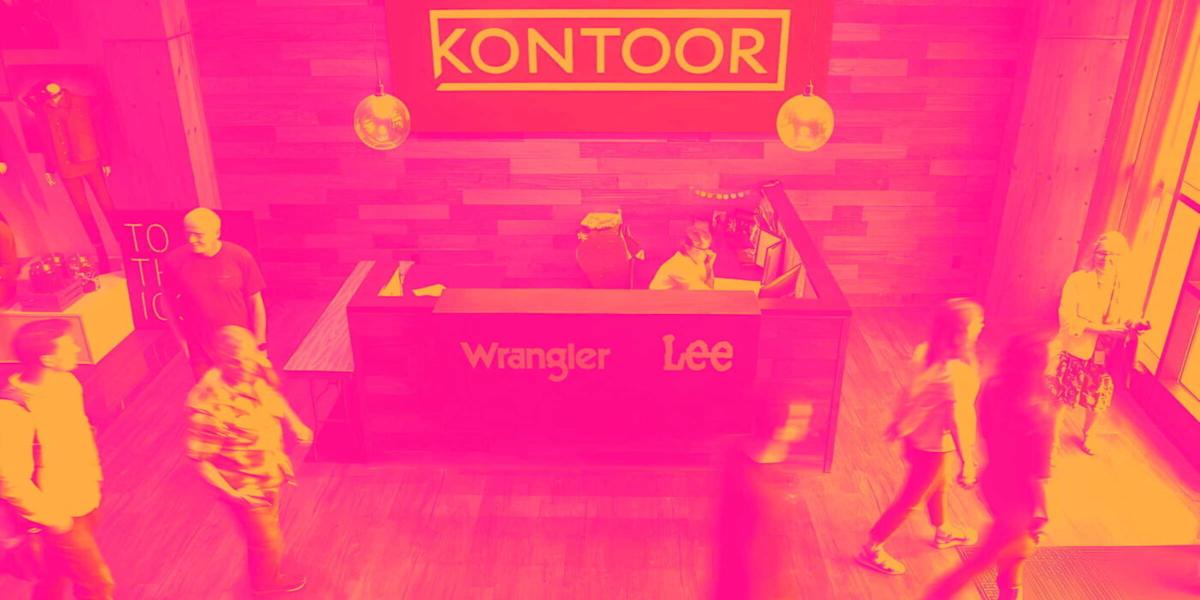
Analysis of Kontoor Brands' Stock Decline
- Poor Stock Performance: Kontoor Brands' shares have fallen to $69.52 over the past six months, resulting in a 16.5% loss, starkly contrasting with the S&P 500's 3.9% gain, indicating a pessimistic market outlook for the company's future performance.
- Weak Revenue Growth: Despite the stock becoming cheaper, Kontoor Brands has only achieved an 11.4% year-on-year growth in constant currency revenue over the past two years, suggesting soft demand that may necessitate price cuts or investments in product improvements, thereby impacting short-term profitability.
- Declining Cash Flow Margin: Analysts predict that Kontoor Brands' free cash flow margin will decrease from 13.8% over the last 12 months to 10.6%, indicating increased pressure on the company regarding operating and capital expenditures, which could affect its financial stability.
- Falling Return on Invested Capital: Kontoor Brands' return on invested capital (ROIC) has declined over the past few years, and combined with its already low returns, this suggests limited profitable growth opportunities, leading to diminished investor confidence in its future prospects.
See More
US Stocks Rise Slightly, Led by Tech Gains
- Market Performance: The S&P 500 and Nasdaq 100 indices both reached all-time highs, rising 0.19% and 0.29% respectively, reflecting strong corporate earnings and optimism around artificial intelligence, although gains were limited by rising oil prices and bond yields.
- Middle East Impact: The failure of the US and Iran to reach a peace agreement led to an increase in global bond yields, with the 10-year T-note yield rising 5 basis points to 4.41%, raising concerns that sustained high energy prices could force central banks to tighten monetary policy.
- Chinese Trade Data: China's April exports rose 14.1% year-on-year, significantly exceeding expectations of 8.4%, while imports increased by 25.3%, indicating positive signals for global economic recovery that could benefit global markets.
- Earnings Reports: As of Monday, 83% of the 450 S&P 500 companies that reported earnings exceeded expectations, with Q1 earnings projected to grow 12% year-on-year, but only 3% when excluding the technology sector, highlighting disparities in profitability across industries.
See More
Market Watch: Oil Prices, Tech Stocks, and Earnings
- Oil Prices and Refinery Output: U.S. refineries are processing an average of 16.3 million barrels of crude per day, significantly up from 13.5 million, which, while unsustainable, is boosting refinery margins amid ongoing geopolitical tensions, stabilizing the market.
- CoreWeave Price Target Raised: Barclays increased CoreWeave's price target from $106 to $120, noting strong first-quarter earnings that exceeded expectations; however, light guidance for Q2 led to an 11% drop in shares, highlighting the tension between revenue growth and rising operating expenses.
- Strong Performance for Corning: Corning's stock rose 3.4% in premarket trading after Bank of America added it to its
See More
Kontoor Brands Q1 2026 Earnings Call Insights
- Brand Divestiture Decision: Kontoor Brands announced the divestiture of the Lee brand to focus resources on growth-oriented brands, aiming to accelerate long-term growth and profitability while unlocking significant capital allocation flexibility.
- Sustained Market Share Growth: The company achieved its 16th consecutive quarter of market share gains in men's and women's bottoms, demonstrating strong performance in a competitive apparel market and further solidifying its market position.
- Optimistic Financial Outlook: Full-year revenue is expected to range from $3.41 billion to $3.46 billion, with adjusted gross margin projected between 48.3% and 48.5%, reflecting the company's confidence in future performance.
- Capital Return Strategy: The proceeds from the Lee divestiture are anticipated to fund a $750 million stock repurchase program, indicating the company's commitment to enhancing shareholder value and optimizing its capital structure.
See More
Kontoor Brands Q1 Earnings Miss Expectations Amid Revenue Growth
- Earnings Miss: Kontoor Brands reported a Q1 non-GAAP EPS of $1.06, missing expectations by $0.08, indicating pressure on profitability that may affect investor confidence.
- Revenue Growth Below Expectations: The company achieved revenue of $613.32 million, a 45.0% year-over-year increase, yet fell short of market expectations by $171.44 million, reflecting intensified market competition and sales challenges.
- Adjusted Annual Outlook: Kontoor revised its full-year revenue outlook to between $3.41 billion and $3.46 billion, below the $3.44 billion consensus, indicating a cautious stance on future performance, particularly due to the impact of discontinued operations from the Lee brand.
- Strategic Restructuring: The company plans to divest the Lee business to focus on higher-growth brands, while the Board approved a $750 million share repurchase authorization aimed at enhancing capital allocation flexibility and increasing shareholder value.
See More
Kontoor Brands to Announce Q1 Earnings on May 7
- Earnings Announcement: Kontoor Brands (KTB) is set to release its Q1 2023 earnings on May 7 before market open, with the consensus EPS estimate at $1.14, reflecting a 5% year-over-year decline, which may impact investor sentiment.
- Revenue Expectations: The revenue estimate for KTB's first quarter stands at $784.76 million, representing a 26% year-over-year increase, indicating the company's competitive strength and rising product demand in the market.
- Historical Performance: Over the past two years, KTB has exceeded EPS estimates 100% of the time and revenue estimates 75% of the time, showcasing the company's financial stability and reliability in performance.
- Estimate Revisions: Despite no upward revisions in EPS estimates and seven downward adjustments over the last three months, there was one upward revision and five downward adjustments in revenue estimates, suggesting mixed market perceptions regarding KTB's future performance.
See More
Analysis of Kontoor Brands' Stock Decline
- Poor Stock Performance: Kontoor Brands' shares have fallen to $69.52 over the past six months, resulting in a 16.5% loss, starkly contrasting with the S&P 500's 3.9% gain, indicating a pessimistic market outlook for the company's future performance.
- Weak Revenue Growth: Despite the stock becoming cheaper, Kontoor Brands has only achieved an 11.4% year-on-year growth in constant currency revenue over the past two years, suggesting soft demand that may necessitate price cuts or investments in product improvements, thereby impacting short-term profitability.
- Declining Cash Flow Margin: Analysts predict that Kontoor Brands' free cash flow margin will decrease from 13.8% over the last 12 months to 10.6%, indicating increased pressure on the company regarding operating and capital expenditures, which could affect its financial stability.
- Falling Return on Invested Capital: Kontoor Brands' return on invested capital (ROIC) has declined over the past few years, and combined with its already low returns, this suggests limited profitable growth opportunities, leading to diminished investor confidence in its future prospects.
See More