Why I Can't Stop Buying These High-Yielding Dividend Stocks
Written by Emily J. Thompson, Senior Investment Analyst
Updated: Feb 01 2026
0mins



Should l Buy PEP?
Source: Yahoo Finance
- PepsiCo's Dividend Growth: PepsiCo boasts a dividend yield of 3.8%, three times higher than the S&P 500's 1.1%, and has increased its dividend for 53 consecutive years, reflecting strong cash flow and stability, which is expected to continue attracting investors.
- Dual Income from Main Street Capital: As a business development company, Main Street Capital offers a 6.7% dividend yield with a unique monthly dividend policy that ensures stable cash flow, having raised its dividend by 4% over the past year and 136% since its 2007 IPO, providing reliable passive income for investors.
- Verizon's Strong Cash Flow: Verizon generates approximately $20 billion in free cash flow annually, supporting its 6.9% dividend payment, and has increased its dividend for 19 consecutive years; the recent $20 billion acquisition of Frontier Communications will further enhance its market competitiveness.
- Portfolio Diversification: By increasing investments in PepsiCo, Main Street Capital, and Verizon, investors can enjoy high-yield dividends while leveraging these companies' stable growth records to accelerate their journey towards financial independence.
Trade with 70% Backtested Accuracy
Stop guessing "Should I Buy PEP?" and start using high-conviction signals backed by rigorous historical data.
Sign up today to access powerful investing tools and make smarter, data-driven decisions.
Analyst Views on PEP
Wall Street analysts forecast PEP stock price to rise
12 Analyst Rating
6 Buy
6 Hold
0 Sell
Moderate Buy
Current: 154.650

Low
144.00
Averages
161.90
High
172.00
Current: 154.650
Low
144.00
Averages
161.90
High
172.00
About PEP
PepsiCo, Inc. is a global beverage and convenient food company. The Company’s segments include PepsiCo Foods North America (PFNA), PepsiCo Beverages North America (PBNA), International Beverages Franchise (IB Franchise), Europe, Middle East and Africa (EMEA), Latin America Foods (LatAm Foods), and Asia Pacific Foods. PFNA segment includes all of its convenient food businesses in the United States and Canada. PBNA segment includes all of its beverage businesses in the United States and Canada. IB Franchise segment includes its international franchise beverage businesses, as well as its SodaStream business. EMEA segment includes its convenient food businesses and beverage businesses with Company-owned bottlers in Europe, the Middle East and Africa. LatAm Foods segment includes all of its convenient food businesses in Latin America. Asia Pacific Foods segment consists of its convenient food businesses in Asia Pacific, including China, Australia and New Zealand, as well as India.
About the author

Emily J. Thompson
Emily J. Thompson, a Chartered Financial Analyst (CFA) with 12 years in investment research, graduated with honors from the Wharton School. Specializing in industrial and technology stocks, she provides in-depth analysis for Intellectia’s earnings and market brief reports.

Investment Opportunities Amid Market Decline


- Apple's Stock Decline: Apple's shares have dropped 8% this year, yet it remains one of the world's dominant tech companies, presenting a fantastic buying opportunity for investors, especially amid a broader market downturn.
- Coca-Cola's Dividend Appeal: Coca-Cola's stock fell 7.3% this month, raising its dividend yield to 2.7%, making it an attractive option for blue-chip investors, particularly during market declines where lower prices lead to higher yields.
- Overall Market Performance: The S&P 500 has declined over 6% this year, providing investors with opportunities to increase their positions in blue-chip stocks, as many stocks are down not due to fundamental issues but rather market sentiment.
- Apple's AI Collaboration: Apple is accelerating its AI development by partnering with Google's Gemini program, which is expected to introduce competitive AI features into its products, thereby enhancing its competitiveness in the tech market.
See More

Investment Opportunities in Blue Chips Amid Market Decline
- Apple Stock Opportunity: Despite an 8% decline in its stock this year, Apple (NASDAQ: AAPL) maintains a 20% share of the global smartphone market and a dominant 69% in the U.S., reflecting its strong market position and growth potential, with Q1 revenue reaching $142.8 billion, up 16% year-over-year.
- Coca-Cola's Dividend Appeal: Coca-Cola (NYSE: KO) has seen a 7.3% drop in stock price over the past month, currently yielding 2.7% in dividends, and has raised its dividend for 64 consecutive years, showcasing its stable profitability and strong brand influence, with a net margin of 27.4%.
- Market Environment Impact: The S&P 500 has dropped over 6% this year due to factors like the Middle East conflict, providing investors with an opportunity to buy blue-chip stocks at a discount, particularly companies like Apple and Coca-Cola, which remain fundamentally strong despite market pressures.
- Investment Strategy Recommendation: In the current market environment, consider increasing holdings in Apple and Coca-Cola to capitalize on low-price opportunities created by market volatility, especially given Apple's net profit margin of 27% and Coca-Cola's free cash flow of $7.4 billion, indicating resilience amid economic uncertainty.
See More
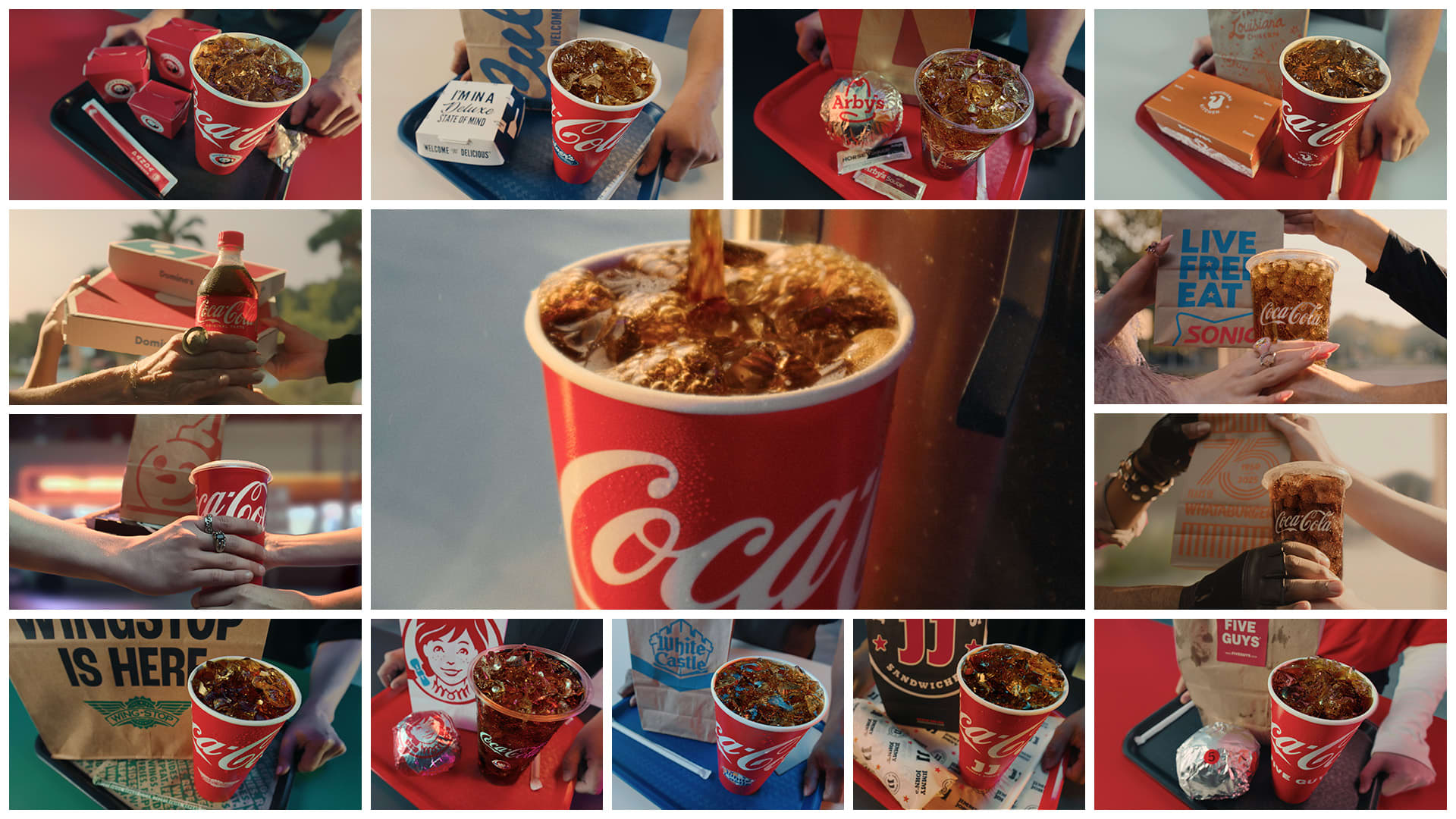
Coca-Cola Launches New Marketing Campaign to Boost Restaurant Sales

- Campaign Launch: Coca-Cola unveiled a new marketing campaign on Thursday aimed at boosting beverage sales in restaurants to tackle challenges posed by declining traffic and sluggish sales growth, marking the first time it has partnered with multiple restaurant chains for ads.
- Wide Advertising Reach: The campaign features commercials showcasing 13 different chains, including Arby's, Domino's, and Wendy's, emphasizing the importance of drinks as high-margin menu items, particularly as consumers cut back on dining out.
- Deepening Partnerships: Coca-Cola collaborates with restaurants to market combo meals, providing marketing funds to attract customers, especially amid intensified value competition in the fast-food sector, highlighting its role as a “business partner.”
- Sales Outlook: Despite a 4% organic sales growth in North America in 2025, Coca-Cola's domestic unit case volume fell by 1%, indicating weak demand, with modest sales growth projected for 2026, reflecting a challenging market environment.
See More
Analysis of Market Impact from Iran War


- Surging Oil Prices: The ongoing Iran war has led to a significant increase in global oil prices, with approximately 20% of the world's oil passing through the Strait of Hormuz, resulting in an overall market decline and expected long-term economic impacts.
- Extended Rebuilding Timeline: The reconstruction of LNG assets is projected to take 3-5 years, and if the conflict persists, this timeline may extend further, posing greater challenges to the global economy.
- Supply Chain Complexity: The current issues are more complex than mere supply shortages, particularly with Qatar's LNG facilities damaged, leading to uncertain recovery times that could affect production across multiple industries.
- Investor Sentiment Deterioration: The S&P 500 has dropped about 4% year-to-date, with the fear and greed index falling to 17, indicating a heightened fear among investors regarding future market conditions, which may lead to increased market volatility.
See More

Schwab U.S. Dividend ETF Annual Reconstitution

- Annual Reconstitution Overview: The Schwab U.S. Dividend ETF removed 22 stocks and added 25 during its annual reconstitution, reducing its energy stock allocation from 23.5% to 16.3%, while increasing consumer staples' weighting to 19.4%, indicating a strategic shift towards this sector for income generation.
- New Consumer Staples Additions: Procter & Gamble and Marzetti were added with allocations of 3.8% and 0.08%, respectively; Procter & Gamble boasts a 135-year dividend payment history and a 69-year streak of increases, qualifying it as a Dividend King, thus providing a reliable income source for the fund.
- Stability of Consumer Staples: Consumer staples stocks maintain strong demand during recessions due to their essential nature, allowing the Schwab ETF to offer stable and steadily rising dividend income throughout economic cycles, which enhances investor confidence.
- Dividend Yield Comparison: Procter & Gamble's current dividend yield of 3% is nearly triple that of the S&P 500's 1.2%, showcasing its competitiveness among high-yield stocks and adding appeal to the Schwab ETF's investment portfolio.
See More

Schwab U.S. Dividend ETF Reconstitution Alters Sector Focus
- Energy Stock Reduction: The Schwab U.S. Dividend ETF reduced its energy stock allocation from 23.5% to 16.3% during its annual reconstitution, resulting in consumer staples becoming the fund's top sector with a 19.4% weighting, indicating a shift in market confidence away from energy stocks.
- New Additions: The fund added Procter & Gamble and Marzetti, with Procter & Gamble receiving a 3.8% allocation, placing it in the top ten, while Marzetti has a 0.08% weighting, reflecting a strategic shift towards stable dividend income sources.
- Dividend King Status: Procter & Gamble has paid dividends for 135 consecutive years and increased them for 69 years, qualifying as a Dividend King, while Marzetti has a 63-year history of dividend increases, showcasing stability and appeal in the consumer staples sector.
- Resilience of Consumer Staples: Consumer staples stocks maintain strong demand during economic downturns as their products are essential for daily life, enhancing the Schwab U.S. Dividend ETF's portfolio resilience and providing stable, rising dividend income throughout economic cycles.
See More
Investment Opportunities Amid Market Decline
- Apple's Stock Decline: Apple's shares have dropped 8% this year, yet it remains one of the world's dominant tech companies, presenting a fantastic buying opportunity for investors, especially amid a broader market downturn.
- Coca-Cola's Dividend Appeal: Coca-Cola's stock fell 7.3% this month, raising its dividend yield to 2.7%, making it an attractive option for blue-chip investors, particularly during market declines where lower prices lead to higher yields.
- Overall Market Performance: The S&P 500 has declined over 6% this year, providing investors with opportunities to increase their positions in blue-chip stocks, as many stocks are down not due to fundamental issues but rather market sentiment.
- Apple's AI Collaboration: Apple is accelerating its AI development by partnering with Google's Gemini program, which is expected to introduce competitive AI features into its products, thereby enhancing its competitiveness in the tech market.
See More
Investment Opportunities in Blue Chips Amid Market Decline
- Apple Stock Opportunity: Despite an 8% decline in its stock this year, Apple (NASDAQ: AAPL) maintains a 20% share of the global smartphone market and a dominant 69% in the U.S., reflecting its strong market position and growth potential, with Q1 revenue reaching $142.8 billion, up 16% year-over-year.
- Coca-Cola's Dividend Appeal: Coca-Cola (NYSE: KO) has seen a 7.3% drop in stock price over the past month, currently yielding 2.7% in dividends, and has raised its dividend for 64 consecutive years, showcasing its stable profitability and strong brand influence, with a net margin of 27.4%.
- Market Environment Impact: The S&P 500 has dropped over 6% this year due to factors like the Middle East conflict, providing investors with an opportunity to buy blue-chip stocks at a discount, particularly companies like Apple and Coca-Cola, which remain fundamentally strong despite market pressures.
- Investment Strategy Recommendation: In the current market environment, consider increasing holdings in Apple and Coca-Cola to capitalize on low-price opportunities created by market volatility, especially given Apple's net profit margin of 27% and Coca-Cola's free cash flow of $7.4 billion, indicating resilience amid economic uncertainty.
See More
Coca-Cola Launches New Marketing Campaign to Boost Restaurant Sales
- Campaign Launch: Coca-Cola unveiled a new marketing campaign on Thursday aimed at boosting beverage sales in restaurants to tackle challenges posed by declining traffic and sluggish sales growth, marking the first time it has partnered with multiple restaurant chains for ads.
- Wide Advertising Reach: The campaign features commercials showcasing 13 different chains, including Arby's, Domino's, and Wendy's, emphasizing the importance of drinks as high-margin menu items, particularly as consumers cut back on dining out.
- Deepening Partnerships: Coca-Cola collaborates with restaurants to market combo meals, providing marketing funds to attract customers, especially amid intensified value competition in the fast-food sector, highlighting its role as a “business partner.”
- Sales Outlook: Despite a 4% organic sales growth in North America in 2025, Coca-Cola's domestic unit case volume fell by 1%, indicating weak demand, with modest sales growth projected for 2026, reflecting a challenging market environment.
See More
Analysis of Market Impact from Iran War
- Surging Oil Prices: The ongoing Iran war has led to a significant increase in global oil prices, with approximately 20% of the world's oil passing through the Strait of Hormuz, resulting in an overall market decline and expected long-term economic impacts.
- Extended Rebuilding Timeline: The reconstruction of LNG assets is projected to take 3-5 years, and if the conflict persists, this timeline may extend further, posing greater challenges to the global economy.
- Supply Chain Complexity: The current issues are more complex than mere supply shortages, particularly with Qatar's LNG facilities damaged, leading to uncertain recovery times that could affect production across multiple industries.
- Investor Sentiment Deterioration: The S&P 500 has dropped about 4% year-to-date, with the fear and greed index falling to 17, indicating a heightened fear among investors regarding future market conditions, which may lead to increased market volatility.
See More
Schwab U.S. Dividend ETF Annual Reconstitution
- Annual Reconstitution Overview: The Schwab U.S. Dividend ETF removed 22 stocks and added 25 during its annual reconstitution, reducing its energy stock allocation from 23.5% to 16.3%, while increasing consumer staples' weighting to 19.4%, indicating a strategic shift towards this sector for income generation.
- New Consumer Staples Additions: Procter & Gamble and Marzetti were added with allocations of 3.8% and 0.08%, respectively; Procter & Gamble boasts a 135-year dividend payment history and a 69-year streak of increases, qualifying it as a Dividend King, thus providing a reliable income source for the fund.
- Stability of Consumer Staples: Consumer staples stocks maintain strong demand during recessions due to their essential nature, allowing the Schwab ETF to offer stable and steadily rising dividend income throughout economic cycles, which enhances investor confidence.
- Dividend Yield Comparison: Procter & Gamble's current dividend yield of 3% is nearly triple that of the S&P 500's 1.2%, showcasing its competitiveness among high-yield stocks and adding appeal to the Schwab ETF's investment portfolio.
See More
Schwab U.S. Dividend ETF Reconstitution Alters Sector Focus
- Energy Stock Reduction: The Schwab U.S. Dividend ETF reduced its energy stock allocation from 23.5% to 16.3% during its annual reconstitution, resulting in consumer staples becoming the fund's top sector with a 19.4% weighting, indicating a shift in market confidence away from energy stocks.
- New Additions: The fund added Procter & Gamble and Marzetti, with Procter & Gamble receiving a 3.8% allocation, placing it in the top ten, while Marzetti has a 0.08% weighting, reflecting a strategic shift towards stable dividend income sources.
- Dividend King Status: Procter & Gamble has paid dividends for 135 consecutive years and increased them for 69 years, qualifying as a Dividend King, while Marzetti has a 63-year history of dividend increases, showcasing stability and appeal in the consumer staples sector.
- Resilience of Consumer Staples: Consumer staples stocks maintain strong demand during economic downturns as their products are essential for daily life, enhancing the Schwab U.S. Dividend ETF's portfolio resilience and providing stable, rising dividend income throughout economic cycles.
See More