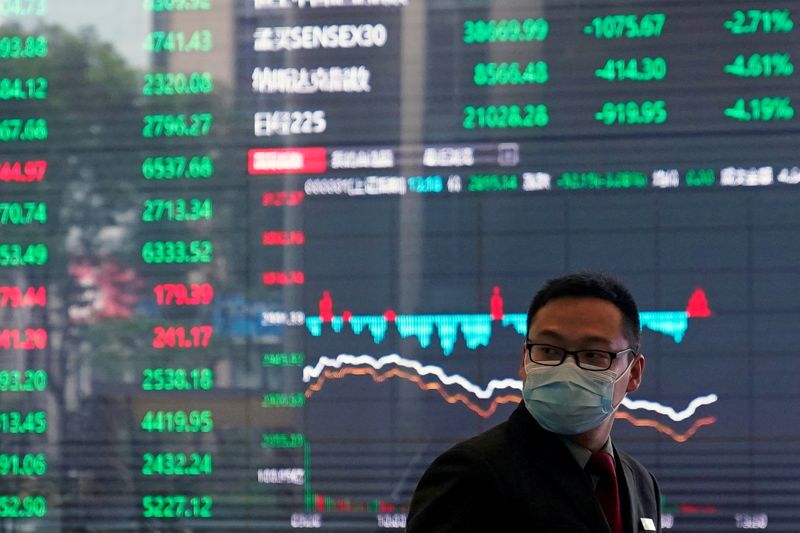
Why CommScope Shares Are Trading Higher By Around 40%; Here Are 20 Stocks Moving Premarket
Written by Emily J. Thompson, Senior Investment Analyst
Updated: Aug 04 2025
0mins


Source: Benzinga
CommScope Stock Surge: Shares of CommScope Holding Company rose 40.1% in pre-market trading after reports that Amphenol is close to acquiring its Broadband arm.
Market Movements: Several other stocks experienced significant changes, with Psyence Biomedical gaining 116.4%, while Replimune Group saw a decline of 38% in pre-market trading.
Trade with 70% Backtested Accuracy
Stop guessing "Should I Buy OPEN?" and start using high-conviction signals backed by rigorous historical data.
Sign up today to access powerful investing tools and make smarter, data-driven decisions.
Analyst Views on OPEN
Wall Street analysts forecast OPEN stock price to fall
5 Analyst Rating
1 Buy
2 Hold
2 Sell
Hold
Current: 4.450

Low
1.40
Averages
4.35
High
8.00
Current: 4.450
Low
1.40
Averages
4.35
High
8.00
About OPEN
Opendoor Technologies Inc. is an e-commerce platform for residential real estate transactions. By leveraging artificial intelligence, data science and purpose-built software, it enables consumers to transact directly with the Company. The Company's product offerings include Cash Offer and Cash Plus Offer. Cash Offer enables homeowners to sell their home directly to the Company for cash. By selling to the Company, homeowners can avoid the stress of open houses, preparing the home for market, overlapping mortgages, and the uncertainty that can come with listing a home on the open market. Using its Website or mobile application, sellers can receive an estimated offer online. Cash Plus is a variant of its cash offer for homeowners who want to sell directly to the Company while retaining the potential to participate in resale upside. In addition to these products, it also offers customers integrated title insurance and escrow services through its subsidiaries.
About the author

Emily J. Thompson
Emily J. Thompson, a Chartered Financial Analyst (CFA) with 12 years in investment research, graduated with honors from the Wharton School. Specializing in industrial and technology stocks, she provides in-depth analysis for Intellectia’s earnings and market brief reports.

SpaceX IPO Sparks Investor Frenzy Despite Valuation Concerns


- IPO Pricing and Valuation: SpaceX sets a fixed price of $135 per share for its upcoming IPO, achieving a valuation of $1.77 trillion, making it the seventh-largest company in the U.S., surpassing Tesla, despite market concerns over its high valuation.
- Retail Investor Participation: The retail allocation for this IPO is around 20%, lower than the expected 30%, yet significantly higher than the typical 5%-10% for most IPOs, indicating a strong focus on retail investors that could drive a robust first-day trading surge.
- Future Revenue Expectations: Recent key compute deals with Anthropic and Google suggest SpaceX could reach $200 billion in revenue by 2030, significantly enhancing market optimism about its growth potential, although concerns about overvaluation persist.
- Investor Sentiment and Market Reaction: Investors like Marvin Jung and Mikey Moran express strong interest in SpaceX's IPO despite valuation concerns, anticipating a powerful price rally in the short term, reflecting trust in Musk and excitement about the space economy.
See More

SpaceX IPO Sparks Surge in Retail Investor Interest

- Retail Investor Enthusiasm: Despite valuation concerns, a significant number of retail investors are requesting allocations for SpaceX's stock, particularly at a $135 IPO price and a $1.77 trillion initial valuation, indicating strong interest in this highly anticipated offering.
- High Retail Allocation: The retail allocation for SpaceX's IPO is around 20%, lower than the expected 30%, yet still significantly higher than the typical 5%-10% seen in most IPOs, suggesting the company aims to attract more retail participation.
- Future Revenue Expectations: Recent key compute deals with Anthropic and Google are expected to double SpaceX's revenue projections for 2026, with Monaghan estimating potential revenues of $200 billion by 2030, highlighting robust growth prospects.
- Long-Term Investment Opportunity: Investors like Markham see long-term growth potential in SpaceX, particularly in emerging space-related industries, viewing it as a legacy investment opportunity, even though she only requested two shares but hopes to gradually increase her holdings.
See More
Opendoor Shuts Down India Operations, Lays Off 250 Employees

- Business Closure: Opendoor has announced the shutdown of its India operations, laying off 250 employees, reflecting a strategic shift towards greater AI utilization aimed at enhancing operational efficiency and reducing labor costs.
- Layoff Justification: CEO Kaz Nejatian highlighted that advancements in artificial intelligence pose a risk of displacing entry-level and back-office jobs, aligning this decision with U.S. policymakers' push for more localized work.
- Market Expansion Review: Founded in 2014, Opendoor expanded into India two years ago by opening offices in Hyderabad and Bengaluru; however, this closure signifies a strategic retreat from the Indian market, potentially impacting its market share in the Asia-Pacific region.
- Operational Model Adjustment: The company stated that with the unification of systems and the hiring of small AI-native customer-facing teams in the U.S., future operational work needs to be conducted close to customers, which will enhance customer experience and service quality.
See More
US Stocks Decline Amid Inflation and Geopolitical Tensions


- Market Decline: The S&P 500 fell 1.6%, the Nasdaq 100 dropped 2%, and the Dow Jones Industrial Average decreased by 1.9%, reflecting investor concerns over inflation and geopolitical tensions that pressured mega-cap tech stocks.
- Rising Inflation Pressures: The U.S. Consumer Price Index rose 4.2% year-over-year in May, marking the fastest pace in three years, indicating that surging energy prices due to the ongoing Middle East conflict are directly impacting household finances, particularly for middle-class and lower-income families.
- Super Micro Stock Plunge: Super Micro Computer (SMCI) announced plans to raise $7 billion through equity offerings, resulting in a 29% drop in its stock price, demonstrating the market's strong reaction to its financing strategy, which could affect its ability to fulfill future AI infrastructure orders.
- Investor Sentiment Shift: As retail investors begin to sell off semiconductor and tech shares to raise funds for upcoming IPOs from SpaceX and OpenAI, market sentiment has turned cautious, reflecting concerns over potential future market volatility.
See More

Opendoor Reduces India Operations, Focuses on U.S. Market
- Headcount Reduction: Opendoor's total employee count has steadily decreased since 2022, dropping from 2,570 to 1,042 by the end of 2025, indicating the company's commitment to optimizing operations and controlling costs.
- Winding Down India Operations: The CEO announced the company is ending its operations in India, emphasizing a shift in focus to the U.S. market to better serve customers, a strategic move expected to enhance customer satisfaction and operational efficiency.
- Divergent Analyst Ratings: According to Koyfin data, among nine analysts, five rated Opendoor stock as 'hold', two as 'buy', and two as 'sell', reflecting mixed market sentiment regarding the company's future prospects.
- Bearish Market Sentiment: Despite an 8% increase in Opendoor's stock price on Wednesday, overall retail sentiment on Stocktwits remains 'bearish', with the stock down 21% year-to-date, indicating investor concerns about the company's outlook.
See More
Opendoor's Stock Could Reach $500 in Five Years, Analyst Says
- Capital Pool Development: Analyst Eric Jackson emphasizes the importance of building deep pools of capital in every city where Opendoor operates, which will enhance pricing flexibility and support more transactions, thereby improving market competitiveness.
- Digital Infrastructure Creation: Jackson highlights that establishing a digital infrastructure linking property ownership records to blockchain systems is crucial, as it will not only accelerate ownership transfers but also enhance transaction efficiency, facilitating the company's transition to a technology-driven platform.
- Tokenization Business Models: The third layer of Opendoor's strategy focuses on developing tokenization-enabled business models, which will provide new ways to buy, sell, finance, and invest in homes, significantly lowering transaction costs and expanding market access.
- Market Potential Assessment: Despite Opendoor's stock declining over 26% in the past year, Jackson believes its long-term potential is underestimated by Wall Street, projecting a potential stock price increase of 25 to 35 times in the next five to seven years, akin to the success stories of companies like Carvana.
See More
SpaceX IPO Sparks Investor Frenzy Despite Valuation Concerns
- IPO Pricing and Valuation: SpaceX sets a fixed price of $135 per share for its upcoming IPO, achieving a valuation of $1.77 trillion, making it the seventh-largest company in the U.S., surpassing Tesla, despite market concerns over its high valuation.
- Retail Investor Participation: The retail allocation for this IPO is around 20%, lower than the expected 30%, yet significantly higher than the typical 5%-10% for most IPOs, indicating a strong focus on retail investors that could drive a robust first-day trading surge.
- Future Revenue Expectations: Recent key compute deals with Anthropic and Google suggest SpaceX could reach $200 billion in revenue by 2030, significantly enhancing market optimism about its growth potential, although concerns about overvaluation persist.
- Investor Sentiment and Market Reaction: Investors like Marvin Jung and Mikey Moran express strong interest in SpaceX's IPO despite valuation concerns, anticipating a powerful price rally in the short term, reflecting trust in Musk and excitement about the space economy.
See More
SpaceX IPO Sparks Surge in Retail Investor Interest
- Retail Investor Enthusiasm: Despite valuation concerns, a significant number of retail investors are requesting allocations for SpaceX's stock, particularly at a $135 IPO price and a $1.77 trillion initial valuation, indicating strong interest in this highly anticipated offering.
- High Retail Allocation: The retail allocation for SpaceX's IPO is around 20%, lower than the expected 30%, yet still significantly higher than the typical 5%-10% seen in most IPOs, suggesting the company aims to attract more retail participation.
- Future Revenue Expectations: Recent key compute deals with Anthropic and Google are expected to double SpaceX's revenue projections for 2026, with Monaghan estimating potential revenues of $200 billion by 2030, highlighting robust growth prospects.
- Long-Term Investment Opportunity: Investors like Markham see long-term growth potential in SpaceX, particularly in emerging space-related industries, viewing it as a legacy investment opportunity, even though she only requested two shares but hopes to gradually increase her holdings.
See More
Opendoor Shuts Down India Operations, Lays Off 250 Employees
- Business Closure: Opendoor has announced the shutdown of its India operations, laying off 250 employees, reflecting a strategic shift towards greater AI utilization aimed at enhancing operational efficiency and reducing labor costs.
- Layoff Justification: CEO Kaz Nejatian highlighted that advancements in artificial intelligence pose a risk of displacing entry-level and back-office jobs, aligning this decision with U.S. policymakers' push for more localized work.
- Market Expansion Review: Founded in 2014, Opendoor expanded into India two years ago by opening offices in Hyderabad and Bengaluru; however, this closure signifies a strategic retreat from the Indian market, potentially impacting its market share in the Asia-Pacific region.
- Operational Model Adjustment: The company stated that with the unification of systems and the hiring of small AI-native customer-facing teams in the U.S., future operational work needs to be conducted close to customers, which will enhance customer experience and service quality.
See More
US Stocks Decline Amid Inflation and Geopolitical Tensions
- Market Decline: The S&P 500 fell 1.6%, the Nasdaq 100 dropped 2%, and the Dow Jones Industrial Average decreased by 1.9%, reflecting investor concerns over inflation and geopolitical tensions that pressured mega-cap tech stocks.
- Rising Inflation Pressures: The U.S. Consumer Price Index rose 4.2% year-over-year in May, marking the fastest pace in three years, indicating that surging energy prices due to the ongoing Middle East conflict are directly impacting household finances, particularly for middle-class and lower-income families.
- Super Micro Stock Plunge: Super Micro Computer (SMCI) announced plans to raise $7 billion through equity offerings, resulting in a 29% drop in its stock price, demonstrating the market's strong reaction to its financing strategy, which could affect its ability to fulfill future AI infrastructure orders.
- Investor Sentiment Shift: As retail investors begin to sell off semiconductor and tech shares to raise funds for upcoming IPOs from SpaceX and OpenAI, market sentiment has turned cautious, reflecting concerns over potential future market volatility.
See More
Opendoor Reduces India Operations, Focuses on U.S. Market
- Headcount Reduction: Opendoor's total employee count has steadily decreased since 2022, dropping from 2,570 to 1,042 by the end of 2025, indicating the company's commitment to optimizing operations and controlling costs.
- Winding Down India Operations: The CEO announced the company is ending its operations in India, emphasizing a shift in focus to the U.S. market to better serve customers, a strategic move expected to enhance customer satisfaction and operational efficiency.
- Divergent Analyst Ratings: According to Koyfin data, among nine analysts, five rated Opendoor stock as 'hold', two as 'buy', and two as 'sell', reflecting mixed market sentiment regarding the company's future prospects.
- Bearish Market Sentiment: Despite an 8% increase in Opendoor's stock price on Wednesday, overall retail sentiment on Stocktwits remains 'bearish', with the stock down 21% year-to-date, indicating investor concerns about the company's outlook.
See More
Opendoor's Stock Could Reach $500 in Five Years, Analyst Says
- Capital Pool Development: Analyst Eric Jackson emphasizes the importance of building deep pools of capital in every city where Opendoor operates, which will enhance pricing flexibility and support more transactions, thereby improving market competitiveness.
- Digital Infrastructure Creation: Jackson highlights that establishing a digital infrastructure linking property ownership records to blockchain systems is crucial, as it will not only accelerate ownership transfers but also enhance transaction efficiency, facilitating the company's transition to a technology-driven platform.
- Tokenization Business Models: The third layer of Opendoor's strategy focuses on developing tokenization-enabled business models, which will provide new ways to buy, sell, finance, and invest in homes, significantly lowering transaction costs and expanding market access.
- Market Potential Assessment: Despite Opendoor's stock declining over 26% in the past year, Jackson believes its long-term potential is underestimated by Wall Street, projecting a potential stock price increase of 25 to 35 times in the next five to seven years, akin to the success stories of companies like Carvana.
See More