Whirlpool Shares Plunge Over 40% Amid Market Challenges
Written by Emily J. Thompson, Senior Investment Analyst
Updated: 3 days ago
0mins
Should l Buy WHR?
Source: Fool
- Revenue Decline: Whirlpool's revenue has plummeted from $21.99 billion in 2021 to $15.52 billion in 2025, reflecting a significant loss of competitiveness in global markets with no growth in five years.
- Market Dependency: The company's sales are heavily reliant on the U.S. housing market, and with rising interest rates in 2022 and 2023 cooling the market, sales of high-priced appliances have been severely impacted, exacerbating the revenue decline.
- Dividend Suspension: For the first time in 70 years, Whirlpool has suspended its dividend, projecting a 3% revenue decline for the year and an adjusted EPS drop of 44%-52%, which has severely undermined investor confidence.
- Intensifying Competition: Facing fierce competition from Asian brands like Samsung, LG, and Haier, Whirlpool's market share is threatened, especially after divesting its minority stake in the once-promising Indian market, leaving its future growth prospects increasingly uncertain.
Trade with 70% Backtested Accuracy
Stop guessing "Should I Buy WHR?" and start using high-conviction signals backed by rigorous historical data.
Sign up today to access powerful investing tools and make smarter, data-driven decisions.
Analyst Views on WHR
Wall Street analysts forecast WHR stock price to rise
4 Analyst Rating
0 Buy
2 Hold
2 Sell
Moderate Sell
Current: 42.530

Low
51.00
Averages
64.50
High
78.00
Current: 42.530
Low
51.00
Averages
64.50
High
78.00
About WHR
Whirlpool Corporation is a home appliance company. The Company is a manufacturer of kitchen and laundry appliances. Its segments include Major Domestic Appliances (MDA) North America; MDA Latin America; MDA Asia, and Small Domestic Appliances (SDA) Global. The Company in the United States and Canada, market and distributes home appliances and other consumer products under the Whirlpool, KitchenAid, Maytag, Amana, InSinkErator, JennAir, affresh, Swash, everydrop, and Gladiator brand names to retailers, distributors, and builders, and directly to consumers. In Latin America, the Company produces, market and distributes primarily Consul, Brastemp, Whirlpool, KitchenAid, Acros, Maytag, and Eslabon de Lujo brand names. In Asia, the Company market primarily under the Whirlpool, Elica, Maytag, KitchenAid, and Indesit brand names. In SDA Global, the Company markets the appliances under the KitchenAid brand name to retailers, distributors, and to consumers.
About the author

Emily J. Thompson
Emily J. Thompson, a Chartered Financial Analyst (CFA) with 12 years in investment research, graduated with honors from the Wharton School. Specializing in industrial and technology stocks, she provides in-depth analysis for Intellectia’s earnings and market brief reports.

Whirlpool Under Investigation for Securities Fraud Claims

- Declining Financial Performance: Whirlpool reported Q1 2026 net sales of $3.273 billion, a 9.6% decrease year-over-year, indicating weakened market competitiveness that could undermine investor confidence moving forward.
- Deteriorating Profitability: The company disclosed a GAAP net loss of $85 million compared to a profit of $71 million in the prior year, highlighting increased financial pressure that may erode shareholder trust in management.
- Challenges in North America: Whirlpool's North American net sales fell 7.5% year-over-year, with EBIT dropping to $6 million and EBIT margin declining from 6.2% to 0.3%, reflecting adverse impacts from overall industry weakness and unfavorable price/mix, which may affect future market strategies.
- Significant Stock Price Drop: Following the earnings report, Whirlpool's stock price fell by $6.52, or 11.91%, closing at $48.21, indicating market pessimism regarding the company's outlook and prompting investors to reassess its value.
See More

Latest Wall Street Rating Updates


- Nvidia Price Target Raised: UBS raised Nvidia's price target from $245 to $275, anticipating first-quarter revenue around $81 billion, suggesting a $3 billion beat against market expectations, highlighting the company's robust growth potential in the AI sector.
- Amazon Alexa Shopping Advantage: Bank of America reiterated its buy rating on Amazon, stating that the new Alexa for Shopping will replace Rufus, leveraging personalized recommendations to enhance user experience and further solidify Amazon's leadership in the e-commerce market.
- Apple Stock Price Target Increase: Evercore raised Apple's price target from $330 to $365, projecting that even with modest iPhone unit growth, the company can achieve low to mid-teens EPS and free cash flow growth due to durable services growth and ASP tailwinds from premium models.
- Starbucks Price Target Upgraded: TD Cowen raised Starbucks' price target from $106 to $120, citing multiple tangible drivers for positive sales revisions in a strong market backdrop, and forecasting margin recovery as labor investments are prioritized.
See More

US Consumer Confidence Remains Low Amid Economic Disruptions

- Low Consumer Confidence: The University of Michigan's survey indicates that the consumer confidence index fell to an all-time low in May, reflecting persistent pessimism among American consumers who have faced multiple economic shocks, highlighting the fragility of economic recovery.
- Inflation's Lasting Impact: Although the annual inflation rate has cooled, consumers still feel the pressure from cumulative price increases over the past decade, leading to a decrease in their willingness to spend, which negatively affects overall economic activity.
- Frequent Economic Shocks: Economists note that consumers lack the time to recover from one economic jolt before another arises, with future economic stability being crucial for restoring confidence in the coming months.
- Strong Consumer Spending: Despite low confidence, consumers continue to spend, with companies like Uber and Disney reporting robust customer spending, indicating a weakening traditional correlation between consumer sentiment and spending behavior.
See More

U.S. Consumer Sentiment Index Hits All-Time Low

- Consumer Confidence Collapse: The University of Michigan's consumer sentiment index hit an all-time low in May, indicating that American consumers have not regained confidence in the economy since the COVID-19 pandemic, highlighting the fragility of economic recovery.
- Inflation's Lasting Impact: Although the annual inflation rate has cooled, consumers remain scarred by years of rapid price increases, leading to a pessimistic outlook on future economic conditions, which in turn affects their spending behavior.
- Frequent Economic Shocks: Economists note that consumers lack the time to recover from a series of economic shocks, preventing confidence from rebounding, especially amid rising geopolitical conflicts and increasing trade tariffs.
- Strong Consumer Spending: Despite low confidence, consumer spending remains robust, with companies like Uber and Disney reporting strong customer spending, indicating a shift in the traditional relationship between sentiment and consumption.
See More
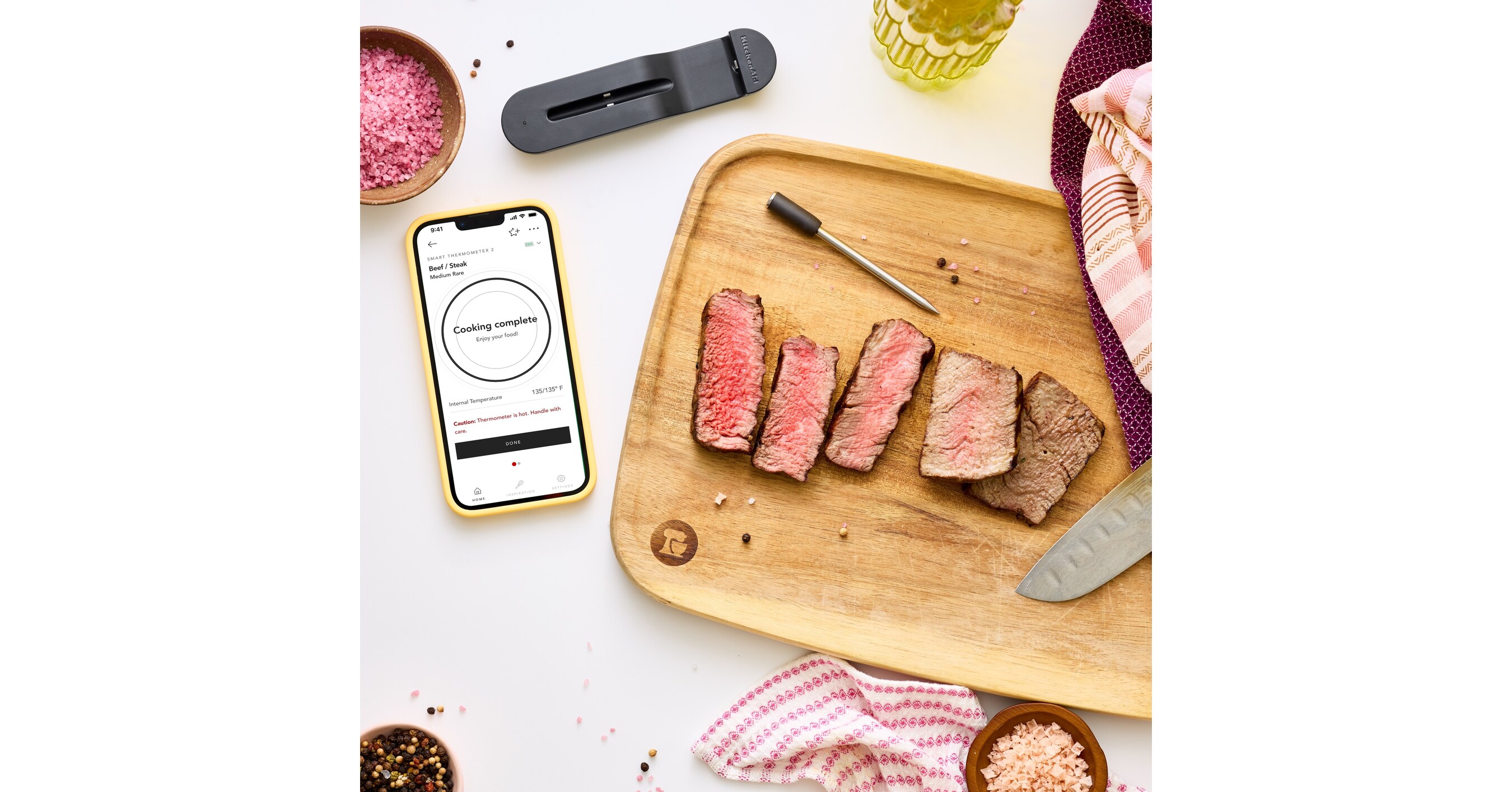
KitchenAid Launches Smart Thermometer for Confident Home Cooking
- Smart Cooking Tool: KitchenAid's newly launched Smart Thermometer connects with a free app to provide real-time temperature monitoring and step-by-step guidance, helping home cooks eliminate uncertainty and enhance their cooking confidence and efficiency.
- Long-Range Bluetooth Connectivity: With a Bluetooth range of up to 285 feet, users can move freely while cooking, making it ideal for busy family meals or longer slow-roasting recipes, ensuring food reaches the desired doneness.
- Durable Design: The thermometer is waterproof and dishwasher-safe, with a battery life of up to 24 hours on a full charge, and a quick-charge feature that provides five hours of use after just five minutes of charging, greatly facilitating everyday cooking.
- Multi-Functional App Support: Through the KitchenAid app, users can save up to 20 favorite recipes, utilize built-in timers and alerts, ensuring they stay on track even while multitasking, thus enhancing the overall cooking experience.
See More

Whirlpool Under Investigation for Securities Fraud Claims
- Declining Financial Performance: Whirlpool reported Q1 2026 net sales of $3.273 billion, a 9.6% decrease year-over-year, indicating weakened competitiveness in the market that may affect future market share.
- Deteriorating Profitability: The company disclosed a GAAP net loss of $85 million compared to a profit of $71 million in the prior year, reflecting significant challenges in cost control and market demand that could undermine investor confidence.
- Pressure in North American Market: Whirlpool's North America net sales fell 7.5% year-over-year, with EBIT dropping to $6 million and EBIT margin declining from 6.2% to 0.3%, highlighting the adverse effects of overall industry weakness and unfavorable price/mix, potentially prompting strategic adjustments.
- Dividend Suspension and Debt Priority: Whirlpool announced a suspension of common dividends to prioritize debt repayment, expecting approximately $15 billion in net sales for 2026, indicating urgent financial management that may impact shareholder returns.
See More
Whirlpool Under Investigation for Securities Fraud Claims
- Declining Financial Performance: Whirlpool reported Q1 2026 net sales of $3.273 billion, a 9.6% decrease year-over-year, indicating weakened market competitiveness that could undermine investor confidence moving forward.
- Deteriorating Profitability: The company disclosed a GAAP net loss of $85 million compared to a profit of $71 million in the prior year, highlighting increased financial pressure that may erode shareholder trust in management.
- Challenges in North America: Whirlpool's North American net sales fell 7.5% year-over-year, with EBIT dropping to $6 million and EBIT margin declining from 6.2% to 0.3%, reflecting adverse impacts from overall industry weakness and unfavorable price/mix, which may affect future market strategies.
- Significant Stock Price Drop: Following the earnings report, Whirlpool's stock price fell by $6.52, or 11.91%, closing at $48.21, indicating market pessimism regarding the company's outlook and prompting investors to reassess its value.
See More
Latest Wall Street Rating Updates
- Nvidia Price Target Raised: UBS raised Nvidia's price target from $245 to $275, anticipating first-quarter revenue around $81 billion, suggesting a $3 billion beat against market expectations, highlighting the company's robust growth potential in the AI sector.
- Amazon Alexa Shopping Advantage: Bank of America reiterated its buy rating on Amazon, stating that the new Alexa for Shopping will replace Rufus, leveraging personalized recommendations to enhance user experience and further solidify Amazon's leadership in the e-commerce market.
- Apple Stock Price Target Increase: Evercore raised Apple's price target from $330 to $365, projecting that even with modest iPhone unit growth, the company can achieve low to mid-teens EPS and free cash flow growth due to durable services growth and ASP tailwinds from premium models.
- Starbucks Price Target Upgraded: TD Cowen raised Starbucks' price target from $106 to $120, citing multiple tangible drivers for positive sales revisions in a strong market backdrop, and forecasting margin recovery as labor investments are prioritized.
See More
US Consumer Confidence Remains Low Amid Economic Disruptions
- Low Consumer Confidence: The University of Michigan's survey indicates that the consumer confidence index fell to an all-time low in May, reflecting persistent pessimism among American consumers who have faced multiple economic shocks, highlighting the fragility of economic recovery.
- Inflation's Lasting Impact: Although the annual inflation rate has cooled, consumers still feel the pressure from cumulative price increases over the past decade, leading to a decrease in their willingness to spend, which negatively affects overall economic activity.
- Frequent Economic Shocks: Economists note that consumers lack the time to recover from one economic jolt before another arises, with future economic stability being crucial for restoring confidence in the coming months.
- Strong Consumer Spending: Despite low confidence, consumers continue to spend, with companies like Uber and Disney reporting robust customer spending, indicating a weakening traditional correlation between consumer sentiment and spending behavior.
See More
U.S. Consumer Sentiment Index Hits All-Time Low
- Consumer Confidence Collapse: The University of Michigan's consumer sentiment index hit an all-time low in May, indicating that American consumers have not regained confidence in the economy since the COVID-19 pandemic, highlighting the fragility of economic recovery.
- Inflation's Lasting Impact: Although the annual inflation rate has cooled, consumers remain scarred by years of rapid price increases, leading to a pessimistic outlook on future economic conditions, which in turn affects their spending behavior.
- Frequent Economic Shocks: Economists note that consumers lack the time to recover from a series of economic shocks, preventing confidence from rebounding, especially amid rising geopolitical conflicts and increasing trade tariffs.
- Strong Consumer Spending: Despite low confidence, consumer spending remains robust, with companies like Uber and Disney reporting strong customer spending, indicating a shift in the traditional relationship between sentiment and consumption.
See More
KitchenAid Launches Smart Thermometer for Confident Home Cooking
- Smart Cooking Tool: KitchenAid's newly launched Smart Thermometer connects with a free app to provide real-time temperature monitoring and step-by-step guidance, helping home cooks eliminate uncertainty and enhance their cooking confidence and efficiency.
- Long-Range Bluetooth Connectivity: With a Bluetooth range of up to 285 feet, users can move freely while cooking, making it ideal for busy family meals or longer slow-roasting recipes, ensuring food reaches the desired doneness.
- Durable Design: The thermometer is waterproof and dishwasher-safe, with a battery life of up to 24 hours on a full charge, and a quick-charge feature that provides five hours of use after just five minutes of charging, greatly facilitating everyday cooking.
- Multi-Functional App Support: Through the KitchenAid app, users can save up to 20 favorite recipes, utilize built-in timers and alerts, ensuring they stay on track even while multitasking, thus enhancing the overall cooking experience.
See More
Whirlpool Under Investigation for Securities Fraud Claims
- Declining Financial Performance: Whirlpool reported Q1 2026 net sales of $3.273 billion, a 9.6% decrease year-over-year, indicating weakened competitiveness in the market that may affect future market share.
- Deteriorating Profitability: The company disclosed a GAAP net loss of $85 million compared to a profit of $71 million in the prior year, reflecting significant challenges in cost control and market demand that could undermine investor confidence.
- Pressure in North American Market: Whirlpool's North America net sales fell 7.5% year-over-year, with EBIT dropping to $6 million and EBIT margin declining from 6.2% to 0.3%, highlighting the adverse effects of overall industry weakness and unfavorable price/mix, potentially prompting strategic adjustments.
- Dividend Suspension and Debt Priority: Whirlpool announced a suspension of common dividends to prioritize debt repayment, expecting approximately $15 billion in net sales for 2026, indicating urgent financial management that may impact shareholder returns.
See More