Wall Street Declines Sharply Amid Middle East Tensions and Rising Oil Prices
Written by Emily J. Thompson, Senior Investment Analyst
Updated: 1 hour ago
0mins
Source: seekingalpha
- Market Decline: Wall Street experienced a sharp decline this week, with the S&P 500 dropping 1.9% and both the Nasdaq and Dow falling 2.1%, primarily due to ongoing tensions in the Middle East that kept oil prices around $100 per barrel, indicating heightened investor sensitivity to geopolitical risks.
- Federal Reserve Stability: The Federal Reserve's decision to keep interest rates steady aligned with expectations, yet U.S. Treasury yields rose significantly, reflecting investor concerns about the future path of monetary policy, which could impact corporate financing costs and economic growth prospects.
- Alibaba's Earnings Miss: Alibaba reported a significant miss in its Q4 results, with a 67% drop in net income and only 284.84 billion RMB ($41.3 billion) in revenue, raising doubts about the effectiveness of its heavy AI investments and potentially undermining market confidence in its growth strategy.
- Strong FedEx Performance: FedEx reported an 8.1% year-over-year revenue increase to $24 billion in its fiscal Q3, with adjusted EPS of $5.25 exceeding market expectations, and projected FY26 revenue growth of 6.0% to 6.5%, showcasing the company's robust performance in the logistics sector and a rebound in market demand.
Trade with 70% Backtested Accuracy
Stop guessing "Should I Buy M?" and start using high-conviction signals backed by rigorous historical data.
Sign up today to access powerful investing tools and make smarter, data-driven decisions.
Analyst Views on M
Wall Street analysts forecast M stock price to rise
12 Analyst Rating
2 Buy
9 Hold
1 Sell
Hold
Current: 18.050

Low
8.00
Averages
21.33
High
27.00
Current: 18.050
Low
8.00
Averages
21.33
High
27.00
About M
Macy's, Inc. is an omni-channel retail company. The Company operates stores, websites and mobile applications under three brands, Macy's, Bloomingdale's and Bluemercury, which sell a range of merchandise, including apparel and accessories (men's, women's and kids'), cosmetics, home furnishings and other consumer goods. The Company has stores in 43 states, the District of Columbia, Puerto Rico and Guam. Its operations are conducted through Macy's, Macy's Backstage, Macy's small format, Bloomingdale's, Bloomingdale's The Outlet, Bloomie's, and Bluemercury. In addition, Bloomingdale's in Dubai, United Arab Emirates and Al Zahra, Kuwait are operated under a license agreement with Al Tayer Insignia. The principal private label brands offered by the Company include Alfani, And Now This, Aqua, Bar III, Cerulean 6, Charter Club, Club Room, Epic Threads, first impressions, Giani Bernini, Holiday Lane, Home Design, Hotel Collection, Hudson Park, Ideology, I-N-C, jenni, JM Collection, and others.
About the author

Emily J. Thompson
Emily J. Thompson, a Chartered Financial Analyst (CFA) with 12 years in investment research, graduated with honors from the Wharton School. Specializing in industrial and technology stocks, she provides in-depth analysis for Intellectia’s earnings and market brief reports.
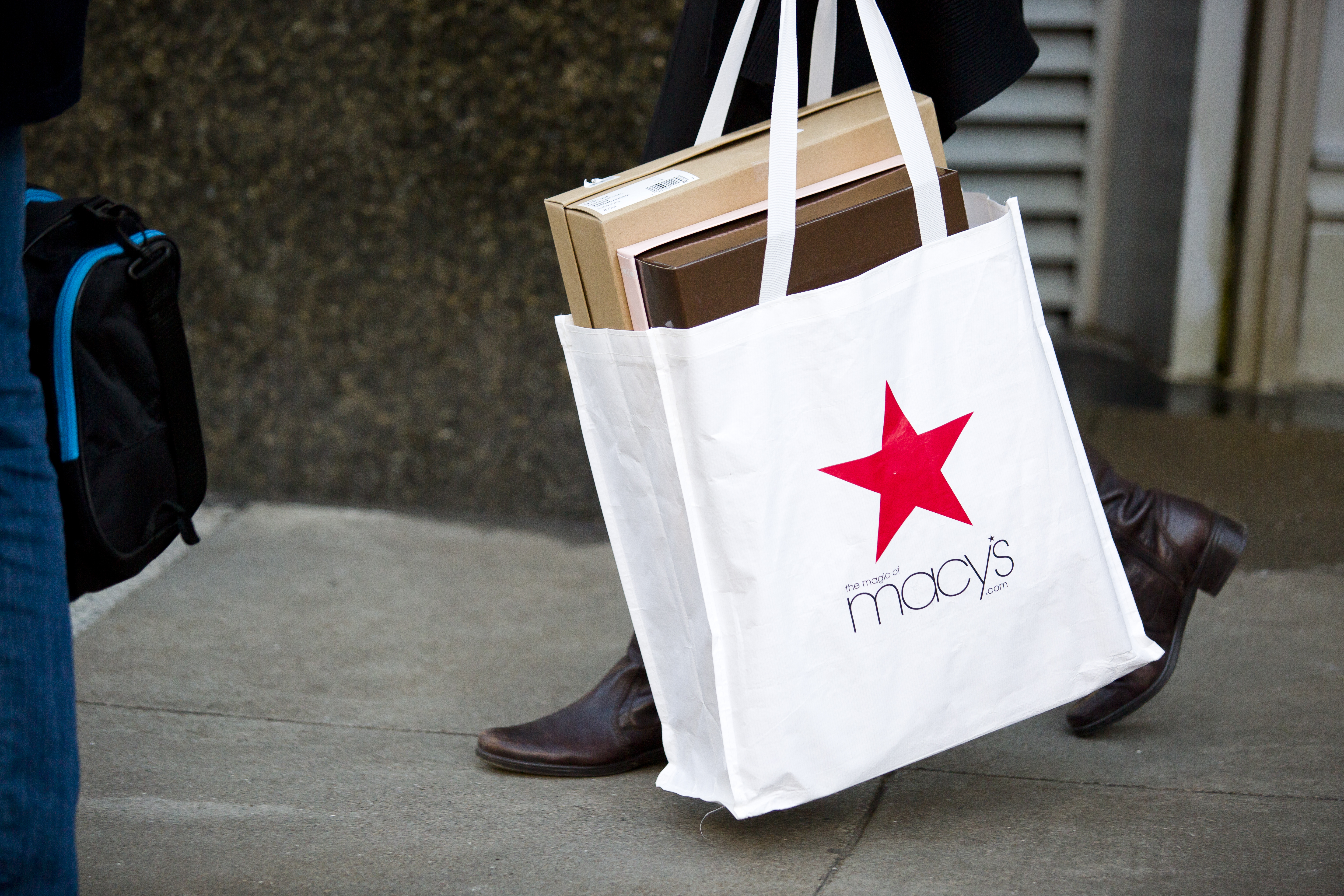
Macy's Q4 Earnings Exceed Expectations, Positive Outlook for FY26

- Earnings Beat: Macy's (M) fourth-quarter profits surpassed Wall Street expectations, resulting in a stock price increase of approximately 3.8%, reflecting strong performance and investor confidence in the retail market.
- Sales Growth: During the holiday season, Macy's comparable same-store sales rose by 1.8%, with Bloomingdale's achieving a notable 10% increase, exceeding company expectations and indicating robust consumer demand.
- Valuation Advantage: According to Seeking Alpha's valuation grade, Macy's is currently the only large-cap broadline retailer with a strong 'A' rating, indicating that its shares are inexpensive relative to fundamentals such as earnings, cash flow, and book value, making it an attractive investment.
- Industry Comparison: Within the large-cap broadline retail sector, Macy's valuation performance stands out against competitors, with only Chinese online discounter Vipshop and B&M European Value Retail in Europe receiving similarly strong valuation grades, highlighting Macy's competitive edge in the global retail market.
See More

Wall Street Declines Sharply Amid Middle East Tensions and Rising Oil Prices

- Market Decline: Wall Street experienced a sharp decline this week, with the S&P 500 dropping 1.9% and both the Nasdaq and Dow falling 2.1%, primarily due to ongoing tensions in the Middle East that kept oil prices around $100 per barrel, indicating heightened investor sensitivity to geopolitical risks.
- Federal Reserve Stability: The Federal Reserve's decision to keep interest rates steady aligned with expectations, yet U.S. Treasury yields rose significantly, reflecting investor concerns about the future path of monetary policy, which could impact corporate financing costs and economic growth prospects.
- Alibaba's Earnings Miss: Alibaba reported a significant miss in its Q4 results, with a 67% drop in net income and only 284.84 billion RMB ($41.3 billion) in revenue, raising doubts about the effectiveness of its heavy AI investments and potentially undermining market confidence in its growth strategy.
- Strong FedEx Performance: FedEx reported an 8.1% year-over-year revenue increase to $24 billion in its fiscal Q3, with adjusted EPS of $5.25 exceeding market expectations, and projected FY26 revenue growth of 6.0% to 6.5%, showcasing the company's robust performance in the logistics sector and a rebound in market demand.
See More

Macy's Faces Uncertainty with Cautious 2026 Outlook

- Sales Forecast Adjustment: Jefferies raised Macy's fourth-quarter 'owned' comparable sales estimate from -2.2% to -0.5%, indicating improved execution despite a sequential slowdown, reflecting ongoing weak consumer sentiment that impacts future performance.
- Earnings Expectations: Analysts project Macy's earnings per share (EPS) at $1.55, slightly above the consensus of $1.53, demonstrating resilience in a challenging environment, yet management's forward guidance is likely to be conservative due to macro uncertainties.
- Macro Environment Impact: Jefferies anticipates Macy's will provide a wide guidance range for fiscal year 2026 to account for the diminishing 'revenge spending' cycle, indicating low visibility for future performance, which may affect investor confidence.
- Internal Leverage Dependence: Macy's increasingly relies on its high-margin Bloomingdale’s brand to offset potential weaknesses in its core business, and while store remodels may offer underappreciated upside, prevailing negative sentiment in the retail sector continues to pressure the stock.
See More

Macy's Reports Strong Earnings Beat Amid Uncertainty
- Earnings Beat: Macy's latest earnings report indicates a strong performance that exceeded market expectations, although specific figures were not disclosed, showcasing the company's robust profitability in an uncertain economic environment, which boosts investor confidence.
- Flexible Outlook: Despite facing market uncertainties, Macy's maintains a flexible business outlook, demonstrating its ability to adapt to changing market conditions, potentially laying the groundwork for future growth.
- Analyst Target Cut: Analyst Dana Telsey has lowered the price target for Macy's, reflecting a cautious market sentiment regarding future performance, which may impact investor sentiment in the short term.
- Market Reaction Analysis: While the earnings beat is positive, the target cut could lead to short-term stock price volatility, prompting investors to monitor how the company navigates market challenges to sustain long-term growth.
See More

Quantum Computing and Investment Opportunities

- Investment Outlook: The convergence of artificial intelligence and quantum computing is reshaping the investment landscape, expected to create unprecedented wealth-building opportunities, particularly for early investors.
- Technological Revolution: Zacks Investment Research's special report, 'Beyond AI: The Quantum Leap in Computing Power,' reveals potential winning stocks, indicating these companies may lead the quantum computing race.
- Recommended Stocks: Stocks mentioned in the report include Macy's, Inc. (M), General Mills, Inc. (GIS), Williams-Sonoma, Inc. (WSM), and Weibo Corporation (WB), all identified as having significant investment potential in the next 30 days.
- Information Access: Investors can download the report for free to access the latest investment recommendations, enabling them to seize opportunities in a rapidly changing market.
See More

US Stocks Plunge Amid Rising Inflation Pressures


- Market Decline: The S&P 500 Index fell by 1.36%, and the Dow Jones Industrial Average hit a 3.75-month low, indicating a decline in investor confidence due to rising inflation concerns that could impact future market performance.
- Inflation Data Surpasses Expectations: The US February Producer Price Index (PPI) rose by 0.7% month-over-month and 3.4% year-over-year, exceeding forecasts, which suggests persistent price pressures that may influence the Federal Reserve's monetary policy decisions.
- Energy Price Volatility: Crude oil prices have become more volatile due to Iran's attacks on neighboring countries, with the IEA warning that the conflict could disrupt global oil supply by 8 million barrels per day, further heightening inflation expectations.
- Mortgage Applications Decline: US MBA mortgage applications fell by 10.9%, reflecting weakened home-buying demand, while the average 30-year fixed mortgage rate increased to 6.30%, potentially hindering the recovery of the housing market.
See More
Macy's Q4 Earnings Exceed Expectations, Positive Outlook for FY26
- Earnings Beat: Macy's (M) fourth-quarter profits surpassed Wall Street expectations, resulting in a stock price increase of approximately 3.8%, reflecting strong performance and investor confidence in the retail market.
- Sales Growth: During the holiday season, Macy's comparable same-store sales rose by 1.8%, with Bloomingdale's achieving a notable 10% increase, exceeding company expectations and indicating robust consumer demand.
- Valuation Advantage: According to Seeking Alpha's valuation grade, Macy's is currently the only large-cap broadline retailer with a strong 'A' rating, indicating that its shares are inexpensive relative to fundamentals such as earnings, cash flow, and book value, making it an attractive investment.
- Industry Comparison: Within the large-cap broadline retail sector, Macy's valuation performance stands out against competitors, with only Chinese online discounter Vipshop and B&M European Value Retail in Europe receiving similarly strong valuation grades, highlighting Macy's competitive edge in the global retail market.
See More
Wall Street Declines Sharply Amid Middle East Tensions and Rising Oil Prices
- Market Decline: Wall Street experienced a sharp decline this week, with the S&P 500 dropping 1.9% and both the Nasdaq and Dow falling 2.1%, primarily due to ongoing tensions in the Middle East that kept oil prices around $100 per barrel, indicating heightened investor sensitivity to geopolitical risks.
- Federal Reserve Stability: The Federal Reserve's decision to keep interest rates steady aligned with expectations, yet U.S. Treasury yields rose significantly, reflecting investor concerns about the future path of monetary policy, which could impact corporate financing costs and economic growth prospects.
- Alibaba's Earnings Miss: Alibaba reported a significant miss in its Q4 results, with a 67% drop in net income and only 284.84 billion RMB ($41.3 billion) in revenue, raising doubts about the effectiveness of its heavy AI investments and potentially undermining market confidence in its growth strategy.
- Strong FedEx Performance: FedEx reported an 8.1% year-over-year revenue increase to $24 billion in its fiscal Q3, with adjusted EPS of $5.25 exceeding market expectations, and projected FY26 revenue growth of 6.0% to 6.5%, showcasing the company's robust performance in the logistics sector and a rebound in market demand.
See More
Macy's Faces Uncertainty with Cautious 2026 Outlook
- Sales Forecast Adjustment: Jefferies raised Macy's fourth-quarter 'owned' comparable sales estimate from -2.2% to -0.5%, indicating improved execution despite a sequential slowdown, reflecting ongoing weak consumer sentiment that impacts future performance.
- Earnings Expectations: Analysts project Macy's earnings per share (EPS) at $1.55, slightly above the consensus of $1.53, demonstrating resilience in a challenging environment, yet management's forward guidance is likely to be conservative due to macro uncertainties.
- Macro Environment Impact: Jefferies anticipates Macy's will provide a wide guidance range for fiscal year 2026 to account for the diminishing 'revenge spending' cycle, indicating low visibility for future performance, which may affect investor confidence.
- Internal Leverage Dependence: Macy's increasingly relies on its high-margin Bloomingdale’s brand to offset potential weaknesses in its core business, and while store remodels may offer underappreciated upside, prevailing negative sentiment in the retail sector continues to pressure the stock.
See More
Macy's Reports Strong Earnings Beat Amid Uncertainty
- Earnings Beat: Macy's latest earnings report indicates a strong performance that exceeded market expectations, although specific figures were not disclosed, showcasing the company's robust profitability in an uncertain economic environment, which boosts investor confidence.
- Flexible Outlook: Despite facing market uncertainties, Macy's maintains a flexible business outlook, demonstrating its ability to adapt to changing market conditions, potentially laying the groundwork for future growth.
- Analyst Target Cut: Analyst Dana Telsey has lowered the price target for Macy's, reflecting a cautious market sentiment regarding future performance, which may impact investor sentiment in the short term.
- Market Reaction Analysis: While the earnings beat is positive, the target cut could lead to short-term stock price volatility, prompting investors to monitor how the company navigates market challenges to sustain long-term growth.
See More
Quantum Computing and Investment Opportunities
- Investment Outlook: The convergence of artificial intelligence and quantum computing is reshaping the investment landscape, expected to create unprecedented wealth-building opportunities, particularly for early investors.
- Technological Revolution: Zacks Investment Research's special report, 'Beyond AI: The Quantum Leap in Computing Power,' reveals potential winning stocks, indicating these companies may lead the quantum computing race.
- Recommended Stocks: Stocks mentioned in the report include Macy's, Inc. (M), General Mills, Inc. (GIS), Williams-Sonoma, Inc. (WSM), and Weibo Corporation (WB), all identified as having significant investment potential in the next 30 days.
- Information Access: Investors can download the report for free to access the latest investment recommendations, enabling them to seize opportunities in a rapidly changing market.
See More
US Stocks Plunge Amid Rising Inflation Pressures
- Market Decline: The S&P 500 Index fell by 1.36%, and the Dow Jones Industrial Average hit a 3.75-month low, indicating a decline in investor confidence due to rising inflation concerns that could impact future market performance.
- Inflation Data Surpasses Expectations: The US February Producer Price Index (PPI) rose by 0.7% month-over-month and 3.4% year-over-year, exceeding forecasts, which suggests persistent price pressures that may influence the Federal Reserve's monetary policy decisions.
- Energy Price Volatility: Crude oil prices have become more volatile due to Iran's attacks on neighboring countries, with the IEA warning that the conflict could disrupt global oil supply by 8 million barrels per day, further heightening inflation expectations.
- Mortgage Applications Decline: US MBA mortgage applications fell by 10.9%, reflecting weakened home-buying demand, while the average 30-year fixed mortgage rate increased to 6.30%, potentially hindering the recovery of the housing market.
See More