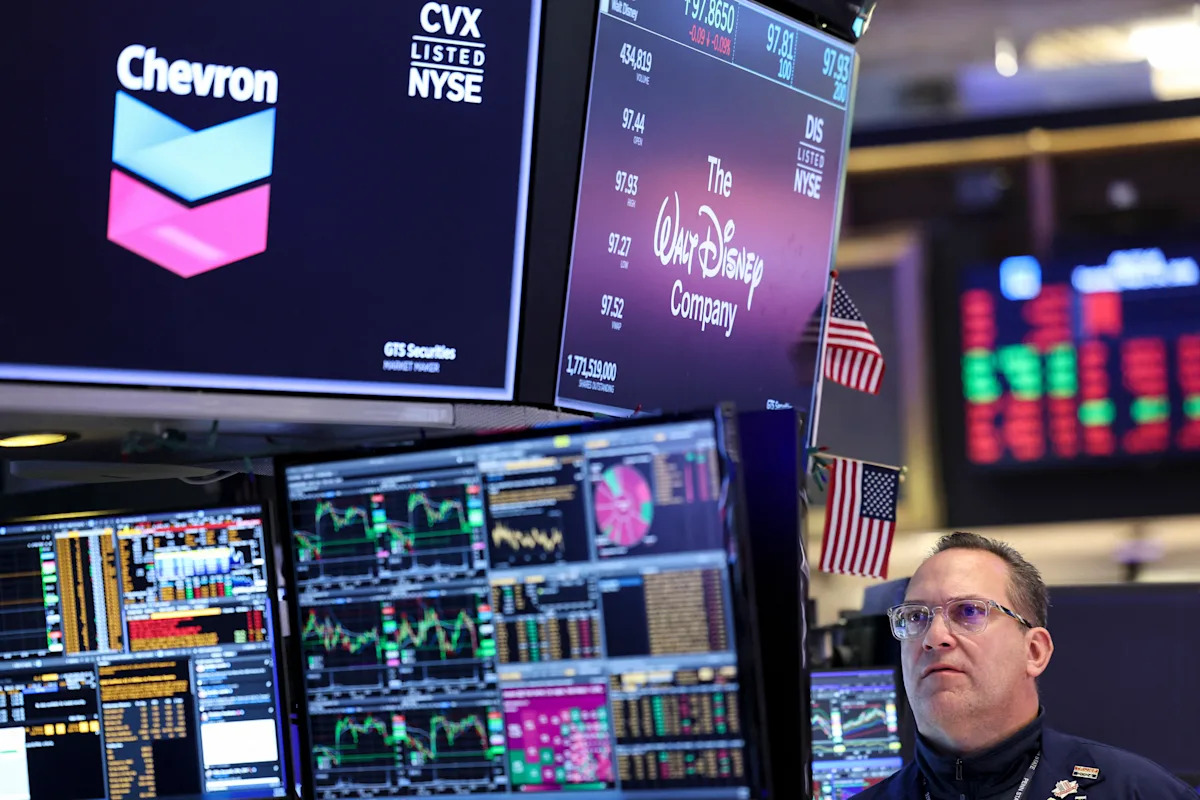
Vanguard S&P 500 ETF Analysis Highlights Tech Concentration Risks
Written by Emily J. Thompson, Senior Investment Analyst
Updated: 1 hour ago
0mins


Should l Buy NVDA?
Source: Yahoo Finance
- Tech Concentration Risk: The Vanguard S&P 500 ETF (VOO) allocates 32.2% to Information Technology, with top three holdings (Nvidia, Apple, Microsoft) representing over 19%, which significantly ties fund performance to mega-cap tech volatility, reducing overall diversification.
- Cost Structure Advantage: VOO charges a low expense ratio of 0.03%, meaning an investor pays only $30 annually on a $100,000 investment, creating a substantial cost advantage over time, while its portfolio turnover is just 2%, minimizing tax drag.
- Long-Term Performance: Over the past decade, VOO has returned 281%, with five-year and one-year returns at 80% and 15%, respectively; however, this performance is largely driven by a narrow group of large-cap tech companies, indicating a high correlation with the broader market.
- Increased Short-Term Volatility: VOO is down about 4% year-to-date, with the VIX at 26.15, reflecting heightened market uncertainty; while long-term holders may view short-term fluctuations as noise, new investors should carefully assess the market context.
Trade with 70% Backtested Accuracy
Stop guessing "Should I Buy NVDA?" and start using high-conviction signals backed by rigorous historical data.
Sign up today to access powerful investing tools and make smarter, data-driven decisions.
Analyst Views on NVDA
Wall Street analysts forecast NVDA stock price to rise
41 Analyst Rating
39 Buy
1 Hold
1 Sell
Strong Buy
Current: 178.680

Low
200.00
Averages
264.97
High
352.00
Current: 178.680
Low
200.00
Averages
264.97
High
352.00
About NVDA
NVIDIA Corporation is a full-stack computing infrastructure company. The Company is engaged in accelerated computing to help solve the challenging computational problems. The Company’s segments include Compute & Networking and Graphics. The Compute & Networking segment includes its Data Center accelerated computing platforms and artificial intelligence (AI) solutions and software; networking; automotive platforms and autonomous and electric vehicle solutions; Jetson for robotics and other embedded platforms, and DGX Cloud computing services. The Graphics segment includes GeForce GPUs for gaming and PCs, the GeForce NOW game streaming service and related infrastructure, and solutions for gaming platforms; Quadro/NVIDIA RTX GPUs for enterprise workstation graphics; virtual GPU software for cloud-based visual and virtual computing; automotive platforms for infotainment systems, and Omniverse Enterprise software for building and operating industrial AI and digital twin applications.
About the author

Emily J. Thompson
Emily J. Thompson, a Chartered Financial Analyst (CFA) with 12 years in investment research, graduated with honors from the Wharton School. Specializing in industrial and technology stocks, she provides in-depth analysis for Intellectia’s earnings and market brief reports.

Nvidia Projects Over $1 Trillion in Chip Sales by 2027

- Strong Sales Outlook: CEO Jensen Huang expects Nvidia to achieve at least $1 trillion in sales from Blackwell and Vera Rubin chips by 2027, indicating the company's ongoing growth potential in the AI sector.
- Massive Order Backlog: Huang noted that Nvidia had a backlog of $500 billion in orders for 2026, with an additional $500 billion projected for 2027, providing robust support for future revenue.
- Significant Revenue Growth: Nvidia generated $215.9 billion in revenue for the fiscal year 2026, reflecting a 65% year-over-year increase, demonstrating strong demand in the AI market and ample room for future growth.
- Reasonable Valuation: Despite its large market cap, Nvidia's forward P/E ratio stands at 21 times, which is an increase from last April's lows, suggesting that Nvidia's stock remains attractive amid ongoing earnings growth.
See More
Reflection Negotiating to Secure $2.5 Billion Funding - WSJ
- Reflection on Talks: Ongoing discussions are taking place regarding a significant financial matter.
- Financial Implications: The talks are centered around a potential $2.5 billion deal.
See More

NVIDIA-Supported Startup Reflection Aims for $25 Billion Valuation - WSJ
NVIDIA's Investment: NVIDIA has backed a startup named Reflection, which is focused on innovative technologies in the AI sector.
Valuation Milestone: The startup Reflection has achieved a significant valuation of $25 billion, highlighting its potential in the market.
See More

Nvidia Projects $1 Trillion in Chip Sales
- Sales Forecast Surge: Nvidia anticipates lifetime sales of its Blackwell and Rubin graphics processing units to reach $1 trillion, doubling last year's estimate of $500 billion, indicating robust demand that could drive stock price increases.
- Data Center Spending Growth: Global data center capital expenditures are projected to rise to $3 trillion to $4 trillion annually by the end of 2030, and with ongoing AI spending trends, this forecast may not be far-fetched, presenting significant market opportunities for Nvidia.
- AI Spending Trends: Despite investor skepticism regarding the ROI of AI spending, major tech companies like Meta, Microsoft, Amazon, and Alphabet are expected to spend around $650 billion this year on data center construction and chip costs, positioning Nvidia as a primary beneficiary.
- Market Rebound Expectations: Analysts believe Nvidia's stock is poised to hit new highs in the coming years, especially if major AI hyperscalers continue to ramp up spending in 2027, signaling to investors that Nvidia's growth potential remains strong.
See More
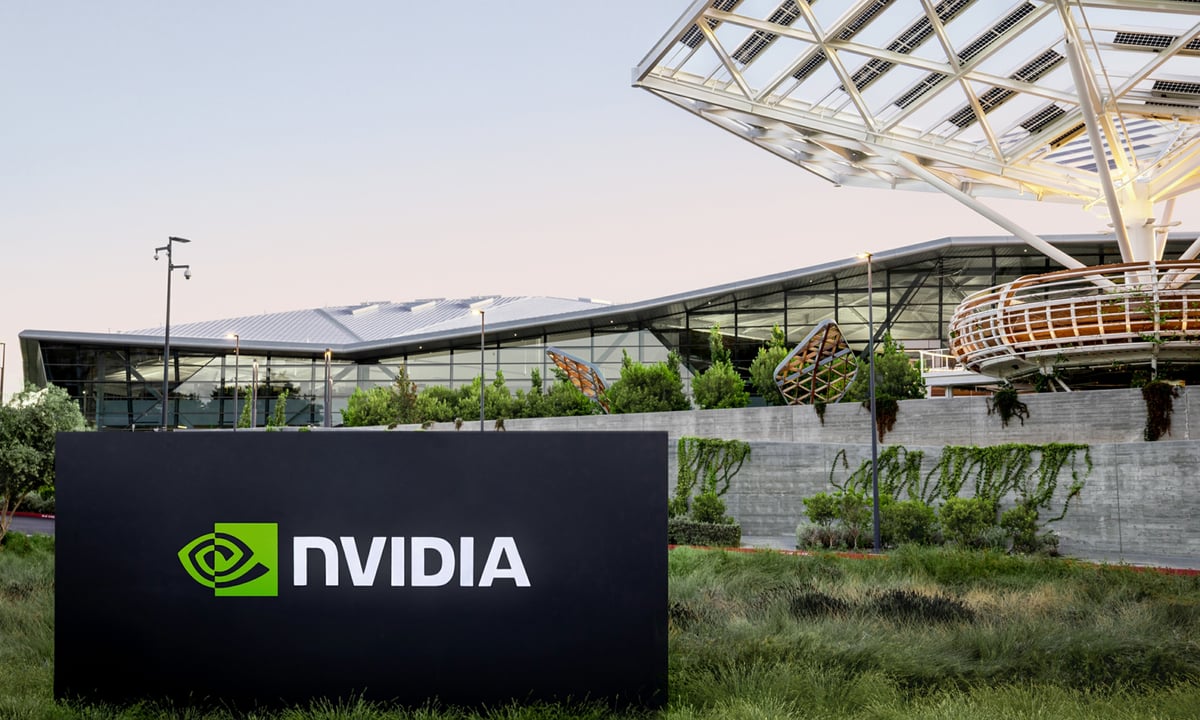
Nvidia Unveils $1 Trillion Order Pipeline Amid AI Boom
- Surging Order Pipeline: At the GTC event, Nvidia announced a $1 trillion order pipeline for its Blackwell and Vera Rubin chip architectures through 2027, doubling last year's forecast, highlighting robust demand for AI infrastructure, even as stock price reactions remain muted.
- High Market Expectations: While the $1 trillion order visibility validates analysts' expectations for sustained growth, the muted investor response suggests that Nvidia's high valuation has led to a perception of 'perfect pricing' in the market.
- Concerns Over Competition and ROI: Market skepticism surrounding Nvidia primarily stems from rising competition and delayed returns on investment, as cloud giants develop custom AI accelerators that could erode Nvidia's market share, compounded by trade tensions affecting its operations in China.
- Opportunities in AI Inference: Nvidia's Blackwell and Rubin architectures are not just faster GPU designs but are central to next-generation AI factories; as AI infrastructure expands, the company's data center business is expected to continue its explosive growth, indicating significant future potential despite current stock stagnation.
See More

Humanoid Robots Poised for Growth in Automation Market


- Market Drivers: Jefferies identifies three key drivers for the humanoid robot market's rapid growth over the next decade, including an aging population increasing demand for supplemental labor, declining interest in manufacturing jobs among younger generations, and breakthroughs in semiconductor and AI technology.
- Tesla's Potential: Analyst Philippe Houchois assigns a hold rating to Tesla with a $300 price target, noting that while the company has provided few specifics on its humanoid robot initiatives, its early applications in manufacturing and ability to self-fund developments may provide a competitive edge.
- Metal Demand Growth: Analyst Chris LaFemina highlights that 70% of humanoid robots' weight comes from metals, suggesting that companies like Freeport McMoRan, Alcoa, and Nucor could benefit from rising demand for copper, aluminum, and steel, indicating potential prosperity in the raw materials market.
- Analog Devices' Advantage: Analog Devices is recognized for its expertise in sensors and analog control, with analyst Blayne Curtis giving it a buy rating and a $410 price target, as the scaling of humanoid robots presents opportunities for its signal-chain and power technologies through each joint and sensor integration.
See More
Nvidia Projects Over $1 Trillion in Chip Sales by 2027
- Strong Sales Outlook: CEO Jensen Huang expects Nvidia to achieve at least $1 trillion in sales from Blackwell and Vera Rubin chips by 2027, indicating the company's ongoing growth potential in the AI sector.
- Massive Order Backlog: Huang noted that Nvidia had a backlog of $500 billion in orders for 2026, with an additional $500 billion projected for 2027, providing robust support for future revenue.
- Significant Revenue Growth: Nvidia generated $215.9 billion in revenue for the fiscal year 2026, reflecting a 65% year-over-year increase, demonstrating strong demand in the AI market and ample room for future growth.
- Reasonable Valuation: Despite its large market cap, Nvidia's forward P/E ratio stands at 21 times, which is an increase from last April's lows, suggesting that Nvidia's stock remains attractive amid ongoing earnings growth.
See More
Reflection Negotiating to Secure $2.5 Billion Funding - WSJ
- Reflection on Talks: Ongoing discussions are taking place regarding a significant financial matter.
- Financial Implications: The talks are centered around a potential $2.5 billion deal.
See More
NVIDIA-Supported Startup Reflection Aims for $25 Billion Valuation - WSJ
NVIDIA's Investment: NVIDIA has backed a startup named Reflection, which is focused on innovative technologies in the AI sector.
Valuation Milestone: The startup Reflection has achieved a significant valuation of $25 billion, highlighting its potential in the market.
See More
Nvidia Projects $1 Trillion in Chip Sales
- Sales Forecast Surge: Nvidia anticipates lifetime sales of its Blackwell and Rubin graphics processing units to reach $1 trillion, doubling last year's estimate of $500 billion, indicating robust demand that could drive stock price increases.
- Data Center Spending Growth: Global data center capital expenditures are projected to rise to $3 trillion to $4 trillion annually by the end of 2030, and with ongoing AI spending trends, this forecast may not be far-fetched, presenting significant market opportunities for Nvidia.
- AI Spending Trends: Despite investor skepticism regarding the ROI of AI spending, major tech companies like Meta, Microsoft, Amazon, and Alphabet are expected to spend around $650 billion this year on data center construction and chip costs, positioning Nvidia as a primary beneficiary.
- Market Rebound Expectations: Analysts believe Nvidia's stock is poised to hit new highs in the coming years, especially if major AI hyperscalers continue to ramp up spending in 2027, signaling to investors that Nvidia's growth potential remains strong.
See More
Nvidia Unveils $1 Trillion Order Pipeline Amid AI Boom
- Surging Order Pipeline: At the GTC event, Nvidia announced a $1 trillion order pipeline for its Blackwell and Vera Rubin chip architectures through 2027, doubling last year's forecast, highlighting robust demand for AI infrastructure, even as stock price reactions remain muted.
- High Market Expectations: While the $1 trillion order visibility validates analysts' expectations for sustained growth, the muted investor response suggests that Nvidia's high valuation has led to a perception of 'perfect pricing' in the market.
- Concerns Over Competition and ROI: Market skepticism surrounding Nvidia primarily stems from rising competition and delayed returns on investment, as cloud giants develop custom AI accelerators that could erode Nvidia's market share, compounded by trade tensions affecting its operations in China.
- Opportunities in AI Inference: Nvidia's Blackwell and Rubin architectures are not just faster GPU designs but are central to next-generation AI factories; as AI infrastructure expands, the company's data center business is expected to continue its explosive growth, indicating significant future potential despite current stock stagnation.
See More
Humanoid Robots Poised for Growth in Automation Market
- Market Drivers: Jefferies identifies three key drivers for the humanoid robot market's rapid growth over the next decade, including an aging population increasing demand for supplemental labor, declining interest in manufacturing jobs among younger generations, and breakthroughs in semiconductor and AI technology.
- Tesla's Potential: Analyst Philippe Houchois assigns a hold rating to Tesla with a $300 price target, noting that while the company has provided few specifics on its humanoid robot initiatives, its early applications in manufacturing and ability to self-fund developments may provide a competitive edge.
- Metal Demand Growth: Analyst Chris LaFemina highlights that 70% of humanoid robots' weight comes from metals, suggesting that companies like Freeport McMoRan, Alcoa, and Nucor could benefit from rising demand for copper, aluminum, and steel, indicating potential prosperity in the raw materials market.
- Analog Devices' Advantage: Analog Devices is recognized for its expertise in sensors and analog control, with analyst Blayne Curtis giving it a buy rating and a $410 price target, as the scaling of humanoid robots presents opportunities for its signal-chain and power technologies through each joint and sensor integration.
See More