Utility Companies Adapt Strategies Amid Rising Electricity Prices
Written by Emily J. Thompson, Senior Investment Analyst
Updated: 1 hour ago
0mins

Source: Fool
- NextEra's Proactive Strategy: NextEra Energy plans to build 15 gigawatts of new electricity production capacity for data centers by 2035, responding to Deloitte's prediction of a 30-fold increase in U.S. data center power demand from 2024 to 2035, thereby positioning itself advantageously in a strained power market.
- Exelon's Innovative Long-Term Agreements: Exelon secures long-term transmission security agreements (TSAs) with large customers, ensuring effective management of production capacity during demand surges while minimizing cost shifts to families and small businesses, showcasing its strategic flexibility in the power market.
- Vistra's Growth Potential: Vistra has signed 20-year power purchase agreements with Amazon and Meta Platforms, committing to deliver up to 3.8 gigawatts of power at peak times, enabling larger-scale investments that will drive future profit growth.
- Competitive Edge in Power Market: Amid rising electricity prices and an overburdened grid, companies like NextEra, Exelon, and Vistra demonstrate competitive advantages through innovative business models and strategic partnerships, attracting investor interest.
Trade with 70% Backtested Accuracy
Stop guessing "Should I Buy NEE?" and start using high-conviction signals backed by rigorous historical data.
Sign up today to access powerful investing tools and make smarter, data-driven decisions.
Analyst Views on NEE
Wall Street analysts forecast NEE stock price to fall
16 Analyst Rating
12 Buy
4 Hold
0 Sell
Strong Buy
Current: 97.880

Low
84.00
Averages
92.50
High
100.00
Current: 97.880
Low
84.00
Averages
92.50
High
100.00
About NEE
NextEra Energy, Inc. is an electric power and energy infrastructure company. It operates through its wholly owned subsidiaries, NextEra Energy Resources, LLC and NextEra Energy Transmission, LLC (collectively, NEER) and Florida Power & Light Company (FPL). Its segments include NEER and FPL. FPL segment is a rate-regulated electric utility engaged in the generation, transmission, distribution and sale of electric energy in Florida. FPL has approximately 35,052 megawatts of net generating capacity, over 91,000 circuit miles of transmission and distribution lines and 921 substations. The NEER segment owns, develops, constructs, manages and operates electric generation facilities in wholesale energy markets in the United States and Canada and includes assets and investments in other businesses with a clean energy focus, such as battery storage, natural gas pipelines, and renewable fuels. It owns, develops, constructs and operates rate-regulated transmission facilities in North America.
About the author

Emily J. Thompson
Emily J. Thompson, a Chartered Financial Analyst (CFA) with 12 years in investment research, graduated with honors from the Wharton School. Specializing in industrial and technology stocks, she provides in-depth analysis for Intellectia’s earnings and market brief reports.

Utility Companies Adapt Strategies Amid Rising Electricity Prices

- NextEra's Proactive Strategy: NextEra Energy plans to build 15 gigawatts of new electricity production capacity for data centers by 2035, responding to Deloitte's prediction of a 30-fold increase in U.S. data center power demand from 2024 to 2035, thereby positioning itself advantageously in a strained power market.
- Exelon's Innovative Long-Term Agreements: Exelon secures long-term transmission security agreements (TSAs) with large customers, ensuring effective management of production capacity during demand surges while minimizing cost shifts to families and small businesses, showcasing its strategic flexibility in the power market.
- Vistra's Growth Potential: Vistra has signed 20-year power purchase agreements with Amazon and Meta Platforms, committing to deliver up to 3.8 gigawatts of power at peak times, enabling larger-scale investments that will drive future profit growth.
- Competitive Edge in Power Market: Amid rising electricity prices and an overburdened grid, companies like NextEra, Exelon, and Vistra demonstrate competitive advantages through innovative business models and strategic partnerships, attracting investor interest.
See More

Investment Trends in the Utility Sector

- Rising Electricity Demand: The expected increase in electricity demand is set to drive faster growth in the utility sector, traditionally viewed as stable, thus attracting more investor interest.
- NextEra Energy's Growth Potential: NextEra Energy owns one of the largest utilities in the U.S., with its clean energy division being a global leader in solar and wind production, boasting a historical dividend growth of around 10% over the past decade, though projected to slow to 6%, which remains attractive.
- Stability of Black Hills: As a 'Dividend King', Black Hills offers a 3.7% dividend yield, significantly above the industry average of 2.6%, making it suitable for conservative investors, despite its ongoing merger with NorthWestern Energy pending regulatory approval.
- Divergent Investor Preferences: NextEra Energy is likely a better fit for those seeking dividend growth, while Black Hills is ideal for conservative investors looking for reliable dividend payments, highlighting the varying demands of investment strategies.
See More

Investment Choices in the Utility Sector
- Dividend Growth Potential: NextEra Energy has achieved an impressive annual dividend growth rate of around 10% over the past decade, with expectations of a slowdown to approximately 6% in the coming years, which remains attractive compared to the market average yield of 2.6%, making it appealing for conservative dividend growth investors.
- Black Hills Advantage: As one of only six utilities to achieve Dividend King status, Black Hills offers a relatively attractive 3.7% dividend yield, significantly higher than the industry average, making it suitable for conservative investors seeking stable income.
- Merger Risks: Black Hills is in the process of merging with NorthWestern Energy, with shareholder approval already secured, but it still requires regulatory approval; this merger is expected to enhance the scale and diversification of the combined entity without altering the fundamental nature of their regulated utility businesses.
- Investor Choice Differences: NextEra Energy is likely a better fit for those seeking dividend growth, while Black Hills is the ideal choice for investors looking for reliable dividend-paying utilities, highlighting the significant differences in investment strategies between the two companies.
See More

Analysis of Green Energy Investment Opportunities

- Bloom Energy Growth Potential: Bloom Energy's hydrogen fuel cells are in high demand, with a product backlog of $6 billion expected by 2025, and an additional $14 billion backlog from long-term service contracts, highlighting its strong competitive position in the rapidly growing AI data center market.
- Brookfield Renewable Advantage: Brookfield Renewable Partners boasts a globally diversified portfolio of clean energy assets, including hydro, solar, and wind, with a consistent annual dividend growth rate of 5% over the past decade, providing investors with stable returns and long-term growth potential.
- NextEra Energy's Steady Growth: As one of the largest utility companies in the U.S., NextEra Energy combines traditional and green energy operations, projecting a 10% dividend increase in 2026 and maintaining a 6% growth rate in the following years, showcasing a robust earnings growth outlook.
- Diverse Investment Options: There is no single
See More
Long-Term Potential of Clean Energy Stocks
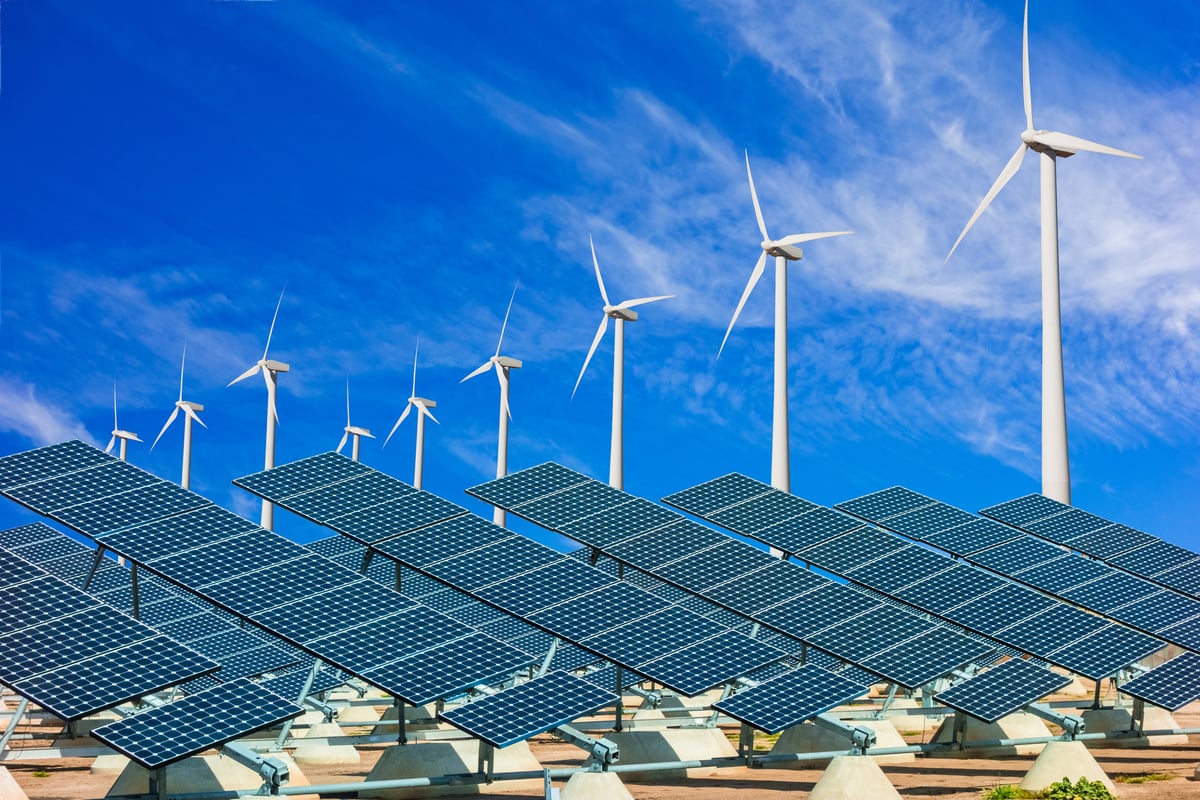
- NextEra Energy Advantage: NextEra Energy, one of the world's largest solar and wind producers, boasts a market cap of $202 billion and a 33 gigawatt project backlog, with a projected 6% dividend growth by 2028, making it attractive for conservative investors seeking stable cash flows and growth potential.
- Brookfield Renewable Diversification: Brookfield Renewable owns a global portfolio of clean energy assets, offering a 4.7% yield, and collaborates with tech giants like Microsoft and Google to enhance AI infrastructure, highlighting its significance in current market trends.
- Bloom Energy's Growth Potential: As a startup focused on fuel cell production, Bloom Energy ended 2025 with a $20 billion backlog, of which only $6 billion is product-related, indicating strong future growth potential driven by its substantial service contract backlog.
- Energy Transition Trend: While oil will remain a crucial energy source, the ongoing growth in the clean energy sector suggests that investors should consider companies like NextEra Energy, Brookfield Renewable, and Bloom Energy to capitalize on future growth opportunities.
See More

Analysis of Clean Energy Investment Prospects
- NextEra Energy Overview: As one of the world's largest producers of solar and wind power, NextEra Energy's 33 gigawatt backlog indicates strong growth potential in renewable energy, with a projected 6% dividend growth by 2028, making it attractive for conservative investors.
- Brookfield Renewable Investment: Brookfield boasts a diversified clean energy asset portfolio with a 4.7% yield, and its collaboration with Microsoft and Google's AI infrastructure development enhances its market competitiveness, with an expected annual dividend growth of 5% to 9%.
- Bloom Energy's Growth Potential: Bloom Energy's service backlog has reached $20 billion, with $6 billion tied to its products, showcasing strong growth potential in the high-risk, high-reward sector, although its stock price has surged, it still attracts aggressive investors.
- Long-Term Clean Energy Trends: While oil price fluctuations will continue to impact the market, the ongoing growth trend in clean energy cannot be overlooked, positioning companies like NextEra, Brookfield, and Bloom Energy as key choices for investors in this sector.
See More
Utility Companies Adapt Strategies Amid Rising Electricity Prices
- NextEra's Proactive Strategy: NextEra Energy plans to build 15 gigawatts of new electricity production capacity for data centers by 2035, responding to Deloitte's prediction of a 30-fold increase in U.S. data center power demand from 2024 to 2035, thereby positioning itself advantageously in a strained power market.
- Exelon's Innovative Long-Term Agreements: Exelon secures long-term transmission security agreements (TSAs) with large customers, ensuring effective management of production capacity during demand surges while minimizing cost shifts to families and small businesses, showcasing its strategic flexibility in the power market.
- Vistra's Growth Potential: Vistra has signed 20-year power purchase agreements with Amazon and Meta Platforms, committing to deliver up to 3.8 gigawatts of power at peak times, enabling larger-scale investments that will drive future profit growth.
- Competitive Edge in Power Market: Amid rising electricity prices and an overburdened grid, companies like NextEra, Exelon, and Vistra demonstrate competitive advantages through innovative business models and strategic partnerships, attracting investor interest.
See More
Investment Trends in the Utility Sector
- Rising Electricity Demand: The expected increase in electricity demand is set to drive faster growth in the utility sector, traditionally viewed as stable, thus attracting more investor interest.
- NextEra Energy's Growth Potential: NextEra Energy owns one of the largest utilities in the U.S., with its clean energy division being a global leader in solar and wind production, boasting a historical dividend growth of around 10% over the past decade, though projected to slow to 6%, which remains attractive.
- Stability of Black Hills: As a 'Dividend King', Black Hills offers a 3.7% dividend yield, significantly above the industry average of 2.6%, making it suitable for conservative investors, despite its ongoing merger with NorthWestern Energy pending regulatory approval.
- Divergent Investor Preferences: NextEra Energy is likely a better fit for those seeking dividend growth, while Black Hills is ideal for conservative investors looking for reliable dividend payments, highlighting the varying demands of investment strategies.
See More
Investment Choices in the Utility Sector
- Dividend Growth Potential: NextEra Energy has achieved an impressive annual dividend growth rate of around 10% over the past decade, with expectations of a slowdown to approximately 6% in the coming years, which remains attractive compared to the market average yield of 2.6%, making it appealing for conservative dividend growth investors.
- Black Hills Advantage: As one of only six utilities to achieve Dividend King status, Black Hills offers a relatively attractive 3.7% dividend yield, significantly higher than the industry average, making it suitable for conservative investors seeking stable income.
- Merger Risks: Black Hills is in the process of merging with NorthWestern Energy, with shareholder approval already secured, but it still requires regulatory approval; this merger is expected to enhance the scale and diversification of the combined entity without altering the fundamental nature of their regulated utility businesses.
- Investor Choice Differences: NextEra Energy is likely a better fit for those seeking dividend growth, while Black Hills is the ideal choice for investors looking for reliable dividend-paying utilities, highlighting the significant differences in investment strategies between the two companies.
See More
Analysis of Green Energy Investment Opportunities
- Bloom Energy Growth Potential: Bloom Energy's hydrogen fuel cells are in high demand, with a product backlog of $6 billion expected by 2025, and an additional $14 billion backlog from long-term service contracts, highlighting its strong competitive position in the rapidly growing AI data center market.
- Brookfield Renewable Advantage: Brookfield Renewable Partners boasts a globally diversified portfolio of clean energy assets, including hydro, solar, and wind, with a consistent annual dividend growth rate of 5% over the past decade, providing investors with stable returns and long-term growth potential.
- NextEra Energy's Steady Growth: As one of the largest utility companies in the U.S., NextEra Energy combines traditional and green energy operations, projecting a 10% dividend increase in 2026 and maintaining a 6% growth rate in the following years, showcasing a robust earnings growth outlook.
- Diverse Investment Options: There is no single
See More
Long-Term Potential of Clean Energy Stocks
- NextEra Energy Advantage: NextEra Energy, one of the world's largest solar and wind producers, boasts a market cap of $202 billion and a 33 gigawatt project backlog, with a projected 6% dividend growth by 2028, making it attractive for conservative investors seeking stable cash flows and growth potential.
- Brookfield Renewable Diversification: Brookfield Renewable owns a global portfolio of clean energy assets, offering a 4.7% yield, and collaborates with tech giants like Microsoft and Google to enhance AI infrastructure, highlighting its significance in current market trends.
- Bloom Energy's Growth Potential: As a startup focused on fuel cell production, Bloom Energy ended 2025 with a $20 billion backlog, of which only $6 billion is product-related, indicating strong future growth potential driven by its substantial service contract backlog.
- Energy Transition Trend: While oil will remain a crucial energy source, the ongoing growth in the clean energy sector suggests that investors should consider companies like NextEra Energy, Brookfield Renewable, and Bloom Energy to capitalize on future growth opportunities.
See More
Analysis of Clean Energy Investment Prospects
- NextEra Energy Overview: As one of the world's largest producers of solar and wind power, NextEra Energy's 33 gigawatt backlog indicates strong growth potential in renewable energy, with a projected 6% dividend growth by 2028, making it attractive for conservative investors.
- Brookfield Renewable Investment: Brookfield boasts a diversified clean energy asset portfolio with a 4.7% yield, and its collaboration with Microsoft and Google's AI infrastructure development enhances its market competitiveness, with an expected annual dividend growth of 5% to 9%.
- Bloom Energy's Growth Potential: Bloom Energy's service backlog has reached $20 billion, with $6 billion tied to its products, showcasing strong growth potential in the high-risk, high-reward sector, although its stock price has surged, it still attracts aggressive investors.
- Long-Term Clean Energy Trends: While oil price fluctuations will continue to impact the market, the ongoing growth trend in clean energy cannot be overlooked, positioning companies like NextEra, Brookfield, and Bloom Energy as key choices for investors in this sector.
See More