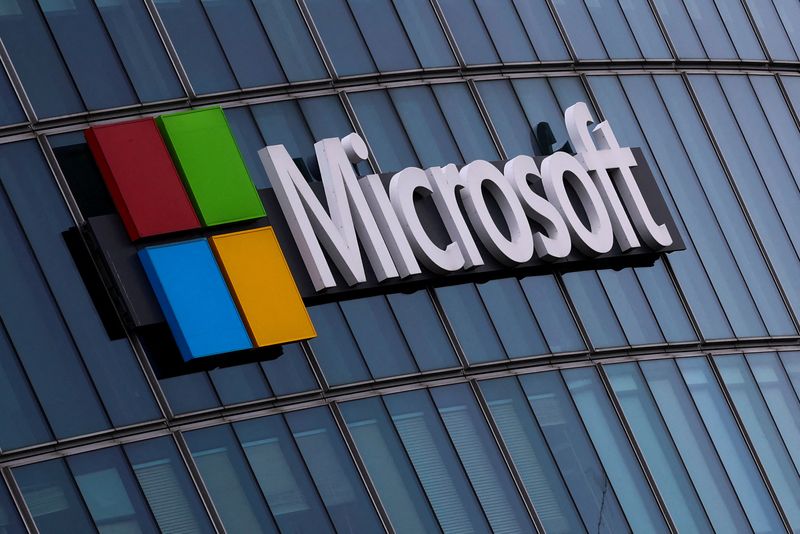
U.S. Hyperscalers Project $720 Billion Capex in 2026 for AI Infrastructure
Written by Emily J. Thompson, Senior Investment Analyst
Updated: 1 hour ago
0mins


Should l Buy MSFT?
Source: Yahoo Finance
- Capex Scale: By 2026, the top five U.S. hyperscalers, including Microsoft, Alphabet, Meta, Oracle, and Amazon, are projected to collectively invest $720 billion in capital expenditures, reflecting a strong demand for AI infrastructure and marking a shift from experimental technology to a backbone of the global economy.
- Investment Drivers: As the appetite for AI computing power surges, companies are no longer debating whether to adopt AI but rather how quickly they can integrate new workflows into their core operations, creating a feedback loop that compels hyperscalers to invest heavily in data centers to avoid becoming mere utilities in a competitive landscape.
- Spending Allocation: The $720 billion will primarily fund the construction of factories and data centers specifically designed for AI workloads, expected to surpass traditional cloud campuses in power density and cooling sophistication, while also addressing power infrastructure and designing custom silicon chips to mitigate GPU supply bottlenecks.
- Market Competition Dynamics: Microsoft and Alphabet stand out due to their AI infrastructure spending being closely aligned with high-margin application layers, while other competitors focus more on maintaining existing market shares, lacking the impetus for short-term growth, which may leave them at a disadvantage in the AI economy.
Trade with 70% Backtested Accuracy
Stop guessing "Should I Buy MSFT?" and start using high-conviction signals backed by rigorous historical data.
Sign up today to access powerful investing tools and make smarter, data-driven decisions.
Analyst Views on MSFT
Wall Street analysts forecast MSFT stock price to rise
34 Analyst Rating
32 Buy
2 Hold
0 Sell
Strong Buy
Current: 415.750

Low
500.00
Averages
631.36
High
678.00
Current: 415.750
Low
500.00
Averages
631.36
High
678.00
About MSFT
Microsoft Corporation is a technology company. The Company develops and supports software, services, devices, and solutions. The Company’s segments include Productivity and Business Processes, Intelligent Cloud, and More Personal Computing. The Productivity and Business Processes segment consists of products and services in its portfolio of productivity, communication, and information services. This segment primarily comprises: Office Commercial, Office Consumer, LinkedIn, and Dynamics business solutions. The Intelligent Cloud segment consists of server products and cloud services, including Azure and other cloud services, SQL Server, Windows Server, Visual Studio, System Center, and related Client Access Licenses (CALs), and Nuance and GitHub; and Enterprise Services, including enterprise support services, industry solutions and Nuance professional services. The More Personal Computing segment primarily comprises Windows, Devices, Gaming, and search and news advertising.
About the author

Emily J. Thompson
Emily J. Thompson, a Chartered Financial Analyst (CFA) with 12 years in investment research, graduated with honors from the Wharton School. Specializing in industrial and technology stocks, she provides in-depth analysis for Intellectia’s earnings and market brief reports.

Microsoft Stock Rally Potential Remains High

- Significant Revenue Growth: Microsoft reported a 17% year-over-year revenue increase in the last quarter, with non-GAAP EPS rising 24%, highlighting strong performance in AI investments and cloud computing, particularly with Azure's 39% growth, indicating accelerated client spending on AI.
- Low Valuation Levels: Despite a recent rally, Microsoft's stock remains over 20% below its all-time high, with current operating P/E ratios at their lowest in a decade, presenting an attractive buying opportunity for investors, especially amid rapid AI advancements.
- Optimistic Market Response: Analysts expect Microsoft to continue demonstrating strong performance in its earnings report on April 29, and if it exceeds market expectations, the stock price could surge rapidly, drawing more investor attention.
- AI Development Boost: As a major beneficiary in the AI sector, Microsoft's stock is anticipated to rise further with increasing market demand for AI, making the current low valuation an opportune moment for investors to capitalize on potential long-term gains.
See More

Microsoft's $10 Billion Investment in Japan to Boost AI Development
- Major Investment Initiative: Microsoft has announced a $10 billion investment in Japan from 2026 to 2029, amounting to approximately ¥1.6 trillion, marking its largest investment in Japan, which reflects the company's commitment and confidence in the market.
- Three-Pillar Strategy: The investment plan is structured around three key pillars: technology, trust, and talent, aiming to enhance the local AI ecosystem through collaborations with Sakura Internet and SoftBank, while establishing stronger cybersecurity partnerships with Japan's National Cybersecurity Office and National Police Agency.
- Talent Development Goals: Microsoft aims to train 1 million engineers and developers by 2030 to address the projected shortage of 3.26 million AI and robotics workers by 2040, further promoting AI adoption in Japan.
- Market Influence Enhancement: Currently, nearly one in five adults in Japan uses generative AI, and 94% of Nikkei 225 companies have adopted Microsoft 365 Copilot, demonstrating Microsoft's strong influence and growth potential in the Japanese market.
See More

Hyperscalers Accelerate AI Infrastructure Investments


- Surge in Capital Expenditure: By 2026, the top five U.S. hyperscalers, including Microsoft, Alphabet, Meta, Oracle, and Amazon, are projected to collectively invest $720 billion in AI infrastructure, marking a significant shift of AI technology from experimental phases to becoming a backbone of the global economy, reflecting strong confidence in future markets.
- Intensifying Market Competition: As demand for AI computing power skyrockets, hyperscalers must significantly invest in new data centers to avoid becoming mere utilities, ensuring they can deliver advanced services and maintain market share amidst fierce competition.
- Investment Strategy Divergence: Microsoft and Alphabet's AI infrastructure spending is closely aligned with their high-margin application layers, effectively attracting users and accelerating revenue growth, while their competitors' expenditures are more about maintaining existing market shares, lacking immediate growth drivers.
- Focus on Infrastructure Development: A substantial portion of the funding will be allocated to constructing data centers specifically designed for AI workloads, which will surpass traditional cloud campuses in power and cooling capabilities, ensuring they can meet the rapidly increasing demands of AI in the future.
See More

Top 5 U.S. Hyperscalers Project $720 Billion in 2026 Capital Expenditures
- Surge in Capital Expenditures: In 2026, Microsoft, Alphabet, Meta, Oracle, and Amazon are projected to collectively invest $720 billion in AI infrastructure, reflecting a strong demand for AI computing power and indicating a shift from experimental phases to becoming a backbone of the global economy.
- Infrastructure Investment Trends: The majority of this funding will be allocated to constructing data centers specifically designed for AI workloads, which will surpass traditional cloud campuses in power density and cooling sophistication, ensuring a competitive edge in the market.
- Microsoft and Alphabet's Advantages: The investments by Microsoft and Alphabet are closely aligned with high-margin application layers that can quickly convert into revenue, while their competitors' spending is more about maintaining existing market share, lacking immediate growth potential and facing greater risks.
- Intensifying Market Competition: As AI models rapidly evolve, any breakthrough by one hyperscaler forces others to follow suit to prevent customer migration, driving accelerated infrastructure investments across the entire industry.
See More

Nuclear Renaissance: Investment and Growth Prospects
- Nuclear Output Goals: The U.S. Department of Energy aims to triple nuclear output by 2050, indicating a renewed focus on nuclear energy that could drive investment and growth in the sector.
- Leading Uranium Production: Cameco accounted for 15% of global uranium production in 2025, with a high net profit margin of 16.9% and a low debt-to-equity ratio of 0.14, showcasing its stability in a capital-intensive industry and attracting investor interest.
- Nuclear and Green Energy Synergy: Constellation Energy, as the largest producer of both nuclear and green energy in the U.S., plans to partner with Microsoft to recommission the Three Mile Island nuclear plant, expected to provide long-term power for data centers and enhance its market competitiveness.
- Small Modular Reactor Innovation: BWX Technologies' BWXT Advanced Nuclear Reactor (BANR) is designed to provide 75 megawatts of power for AI data centers, with 2025 revenue rising 18% to $3.19 billion, demonstrating its leadership in the future of nuclear technology.
See More

Nuclear Industry Renaissance and Investment Opportunities
- Uranium Production Leader: Cameco is projected to account for 15% of global uranium production in 2025, second only to Kazakhstan's state-owned company, highlighting its critical role in the nuclear fuel cycle and enhancing its market competitiveness.
- Green Energy and Nuclear Synergy: Constellation Energy, as America's largest producer of both green and nuclear energy, operates 21 nuclear reactors and plans to partner with Microsoft to recommission the Three Mile Island plant, which is expected to provide stable power for data centers, further solidifying its market leadership.
- Innovative Small Modular Reactors: BWX Technologies' Advanced Nuclear Reactor (BANR) is designed for factory assembly and on-site construction, capable of generating 75 megawatts of power, addressing the energy needs of AI data centers and showcasing the future potential of nuclear technology.
- Strong Financial Performance: BWX reported revenues of $3.19 billion in 2025, an 18% increase year-over-year, with earnings per share growing by 20%, indicating robust performance and profitability in the nuclear sector, suggesting significant growth potential ahead.
See More
Microsoft Stock Rally Potential Remains High
- Significant Revenue Growth: Microsoft reported a 17% year-over-year revenue increase in the last quarter, with non-GAAP EPS rising 24%, highlighting strong performance in AI investments and cloud computing, particularly with Azure's 39% growth, indicating accelerated client spending on AI.
- Low Valuation Levels: Despite a recent rally, Microsoft's stock remains over 20% below its all-time high, with current operating P/E ratios at their lowest in a decade, presenting an attractive buying opportunity for investors, especially amid rapid AI advancements.
- Optimistic Market Response: Analysts expect Microsoft to continue demonstrating strong performance in its earnings report on April 29, and if it exceeds market expectations, the stock price could surge rapidly, drawing more investor attention.
- AI Development Boost: As a major beneficiary in the AI sector, Microsoft's stock is anticipated to rise further with increasing market demand for AI, making the current low valuation an opportune moment for investors to capitalize on potential long-term gains.
See More
Microsoft's $10 Billion Investment in Japan to Boost AI Development
- Major Investment Initiative: Microsoft has announced a $10 billion investment in Japan from 2026 to 2029, amounting to approximately ¥1.6 trillion, marking its largest investment in Japan, which reflects the company's commitment and confidence in the market.
- Three-Pillar Strategy: The investment plan is structured around three key pillars: technology, trust, and talent, aiming to enhance the local AI ecosystem through collaborations with Sakura Internet and SoftBank, while establishing stronger cybersecurity partnerships with Japan's National Cybersecurity Office and National Police Agency.
- Talent Development Goals: Microsoft aims to train 1 million engineers and developers by 2030 to address the projected shortage of 3.26 million AI and robotics workers by 2040, further promoting AI adoption in Japan.
- Market Influence Enhancement: Currently, nearly one in five adults in Japan uses generative AI, and 94% of Nikkei 225 companies have adopted Microsoft 365 Copilot, demonstrating Microsoft's strong influence and growth potential in the Japanese market.
See More
Hyperscalers Accelerate AI Infrastructure Investments
- Surge in Capital Expenditure: By 2026, the top five U.S. hyperscalers, including Microsoft, Alphabet, Meta, Oracle, and Amazon, are projected to collectively invest $720 billion in AI infrastructure, marking a significant shift of AI technology from experimental phases to becoming a backbone of the global economy, reflecting strong confidence in future markets.
- Intensifying Market Competition: As demand for AI computing power skyrockets, hyperscalers must significantly invest in new data centers to avoid becoming mere utilities, ensuring they can deliver advanced services and maintain market share amidst fierce competition.
- Investment Strategy Divergence: Microsoft and Alphabet's AI infrastructure spending is closely aligned with their high-margin application layers, effectively attracting users and accelerating revenue growth, while their competitors' expenditures are more about maintaining existing market shares, lacking immediate growth drivers.
- Focus on Infrastructure Development: A substantial portion of the funding will be allocated to constructing data centers specifically designed for AI workloads, which will surpass traditional cloud campuses in power and cooling capabilities, ensuring they can meet the rapidly increasing demands of AI in the future.
See More
Top 5 U.S. Hyperscalers Project $720 Billion in 2026 Capital Expenditures
- Surge in Capital Expenditures: In 2026, Microsoft, Alphabet, Meta, Oracle, and Amazon are projected to collectively invest $720 billion in AI infrastructure, reflecting a strong demand for AI computing power and indicating a shift from experimental phases to becoming a backbone of the global economy.
- Infrastructure Investment Trends: The majority of this funding will be allocated to constructing data centers specifically designed for AI workloads, which will surpass traditional cloud campuses in power density and cooling sophistication, ensuring a competitive edge in the market.
- Microsoft and Alphabet's Advantages: The investments by Microsoft and Alphabet are closely aligned with high-margin application layers that can quickly convert into revenue, while their competitors' spending is more about maintaining existing market share, lacking immediate growth potential and facing greater risks.
- Intensifying Market Competition: As AI models rapidly evolve, any breakthrough by one hyperscaler forces others to follow suit to prevent customer migration, driving accelerated infrastructure investments across the entire industry.
See More
Nuclear Renaissance: Investment and Growth Prospects
- Nuclear Output Goals: The U.S. Department of Energy aims to triple nuclear output by 2050, indicating a renewed focus on nuclear energy that could drive investment and growth in the sector.
- Leading Uranium Production: Cameco accounted for 15% of global uranium production in 2025, with a high net profit margin of 16.9% and a low debt-to-equity ratio of 0.14, showcasing its stability in a capital-intensive industry and attracting investor interest.
- Nuclear and Green Energy Synergy: Constellation Energy, as the largest producer of both nuclear and green energy in the U.S., plans to partner with Microsoft to recommission the Three Mile Island nuclear plant, expected to provide long-term power for data centers and enhance its market competitiveness.
- Small Modular Reactor Innovation: BWX Technologies' BWXT Advanced Nuclear Reactor (BANR) is designed to provide 75 megawatts of power for AI data centers, with 2025 revenue rising 18% to $3.19 billion, demonstrating its leadership in the future of nuclear technology.
See More
Nuclear Industry Renaissance and Investment Opportunities
- Uranium Production Leader: Cameco is projected to account for 15% of global uranium production in 2025, second only to Kazakhstan's state-owned company, highlighting its critical role in the nuclear fuel cycle and enhancing its market competitiveness.
- Green Energy and Nuclear Synergy: Constellation Energy, as America's largest producer of both green and nuclear energy, operates 21 nuclear reactors and plans to partner with Microsoft to recommission the Three Mile Island plant, which is expected to provide stable power for data centers, further solidifying its market leadership.
- Innovative Small Modular Reactors: BWX Technologies' Advanced Nuclear Reactor (BANR) is designed for factory assembly and on-site construction, capable of generating 75 megawatts of power, addressing the energy needs of AI data centers and showcasing the future potential of nuclear technology.
- Strong Financial Performance: BWX reported revenues of $3.19 billion in 2025, an 18% increase year-over-year, with earnings per share growing by 20%, indicating robust performance and profitability in the nuclear sector, suggesting significant growth potential ahead.
See More