U.S. Government Requests Backup Power from Data Centers Amid Record Winter Storm
Written by Emily J. Thompson, Senior Investment Analyst
Updated: Jan 23 2026
0mins


Source: stocktwits
- Market Sentiment Watch: Despite supportive macroeconomic signals, Wall Street remains on pause ahead of Friday's open, with S&P 500, Dow, and Russell 2000 futures flat, while Nasdaq 100 futures dipped 0.1%, indicating cautious investor sentiment.
- Urgent Power Demand: The U.S. government has requested backup power from data centers due to a record-breaking winter storm threatening grid stability, highlighting the significance of power and grid-related companies, which may impact their stock performance.
- Tech Stock Developments: Tesla announced the launch of Robotaxi services in Austin without safety monitors and plans to raise the price of its $99 Full Self-Driving subscription, demonstrating the company's ongoing advancements in autonomous driving and market confidence.
- Economic Data Focus: Investors will closely monitor the release of U.S. Services and Manufacturing PMI data, along with Consumer Sentiment at 10:00 a.m., as these metrics are expected to significantly influence market sentiment.
Trade with 70% Backtested Accuracy
Stop guessing "Should I Buy INTC?" and start using high-conviction signals backed by rigorous historical data.
Sign up today to access powerful investing tools and make smarter, data-driven decisions.
Analyst Views on INTC
Wall Street analysts forecast INTC stock price to fall
29 Analyst Rating
5 Buy
19 Hold
5 Sell
Hold
Current: 122.200

Low
20.00
Averages
39.30
High
52.00
Current: 122.200
Low
20.00
Averages
39.30
High
52.00
About INTC
Intel Corporation is a global designer and manufacturer of semiconductor products. The Company's segments include Intel Products, Intel Foundry, and All Other. Its Intel Products comprise Client Computing Group (CCG) and Data Center and AI (DCAI). CCG delivers platforms and processors that power PCs and edge devices, enabling enhanced performance, connectivity and user experience for consumer and commercial markets with capabilities that also support retail, industrial robotics and AI ecosystems at the edge. DCAI delivers workload-optimized solutions based upon its x86 architecture for data centers, including CPUs, AI accelerators, NICs, IPUs and custom ASICs, enabling performance and scalability for cloud, enterprise, telecommunication and HPC environments. The Intel Foundry segment comprises technology development, manufacturing and foundry services, developing new semiconductor process technologies and advanced packaging technologies. All Other segments include Mobileye and Other.
About the author

Emily J. Thompson
Emily J. Thompson, a Chartered Financial Analyst (CFA) with 12 years in investment research, graduated with honors from the Wharton School. Specializing in industrial and technology stocks, she provides in-depth analysis for Intellectia’s earnings and market brief reports.

Syntiant Corp Files for IPO Amid Semiconductor Boom

- IPO Filing: California-based Syntiant Corp has filed for an initial public offering to capitalize on the growing enthusiasm for semiconductors and AI technologies, although the offering size remains undisclosed.
- Listing Plans: The company intends to list its shares under the symbol “SYTN” on the Nasdaq Global Market, reflecting its confidence in the capital markets and expectations for future growth.
- Financial Performance: In Q1 2026, Syntiant reported a net loss of $20.9 million on revenues of $64.5 million, indicating a slight decline from $66.6 million in revenue a year earlier, yet showcasing its market potential.
- Investor Backing: Syntiant has garnered support from notable investors such as Intel Capital, Microsoft Global Finance, and Knowles Corp, highlighting its recognition in the industry and potential for future development.
See More

SambaNova Raises $1B at $11B Valuation Amid AI Hardware Demand
- Funding and Valuation: SambaNova Systems has successfully raised $1 billion, achieving an $11 billion valuation, which reflects strong investor confidence in the growing demand for artificial intelligence hardware and solidifies its market position.
- Investor Backing: The funding round was led by General Atlantic, with support from Intel's venture arm, indicating significant trust and interest from major tech companies in SambaNova's future development.
- Use of Proceeds: SambaNova plans to use the funds to expand capacity, accelerate product innovation, and scale deployments for enterprises, neo-clouds, and sovereign AI customers globally, aiming to enhance its competitive edge in the market.
- Partnerships: JPMorgan Chase has selected SambaNova as its inference infrastructure partner, deploying its SN40 and SN50 systems to enable secure on-premises AI inference, further validating SambaNova's significance in the industry.
See More

SambaNova Raises $1 Billion, Valued at $11 Billion

- Successful Financing: SambaNova has successfully raised $1 billion, bringing its valuation to $11 billion, with this funding round led by General Atlantic and participation from Seligman Ventures, T. Rowe Price, and Capital Group, indicating strong investor confidence in AI chip startups.
- Market Positioning: Focused on inference chips and on-premise AI deployments, SambaNova's latest SN50 chip can be deployed in data centers, contrasting sharply with Nvidia's GPU architecture, aiming to meet enterprise demands for fast and cost-effective AI model execution.
- Corporate Collaboration: JPMorgan Chase announced it will deploy SambaNova's systems for on-prem inference to meet its enterprise AI workload needs, a move that not only enhances AI security but also accelerates response times, thereby boosting corporate competitiveness.
- Industry Outlook: The successful financing of SambaNova reflects the strong demand for AI infrastructure in the booming semiconductor industry, particularly in the inference chip sector, which is expected to drive further investment and innovation among startups.
See More

SambaNova Raises $1 Billion, Valuation Reaches $11 Billion
- Massive Funding Round: SambaNova Systems has raised $1 billion in its latest funding round, bringing its valuation to $11 billion, with General Atlantic leading the investment, indicating strong investor confidence in the AI chip market.
- Strategic Partnerships: Earlier this year, SambaNova secured over $350 million in funding and announced a partnership with Intel, further solidifying its position in the AI inference chip sector.
- Clear Market Positioning: The SN50 chip from SambaNova is designed for data centers to efficiently run large AI models, focusing on on-premise deployments that offer faster and more secure AI solutions, addressing enterprises' data security needs.
- Optimistic Industry Outlook: The successful funding round reflects the growing demand for AI chips in the booming semiconductor industry, particularly as enterprise AI workloads continue to increase.
See More
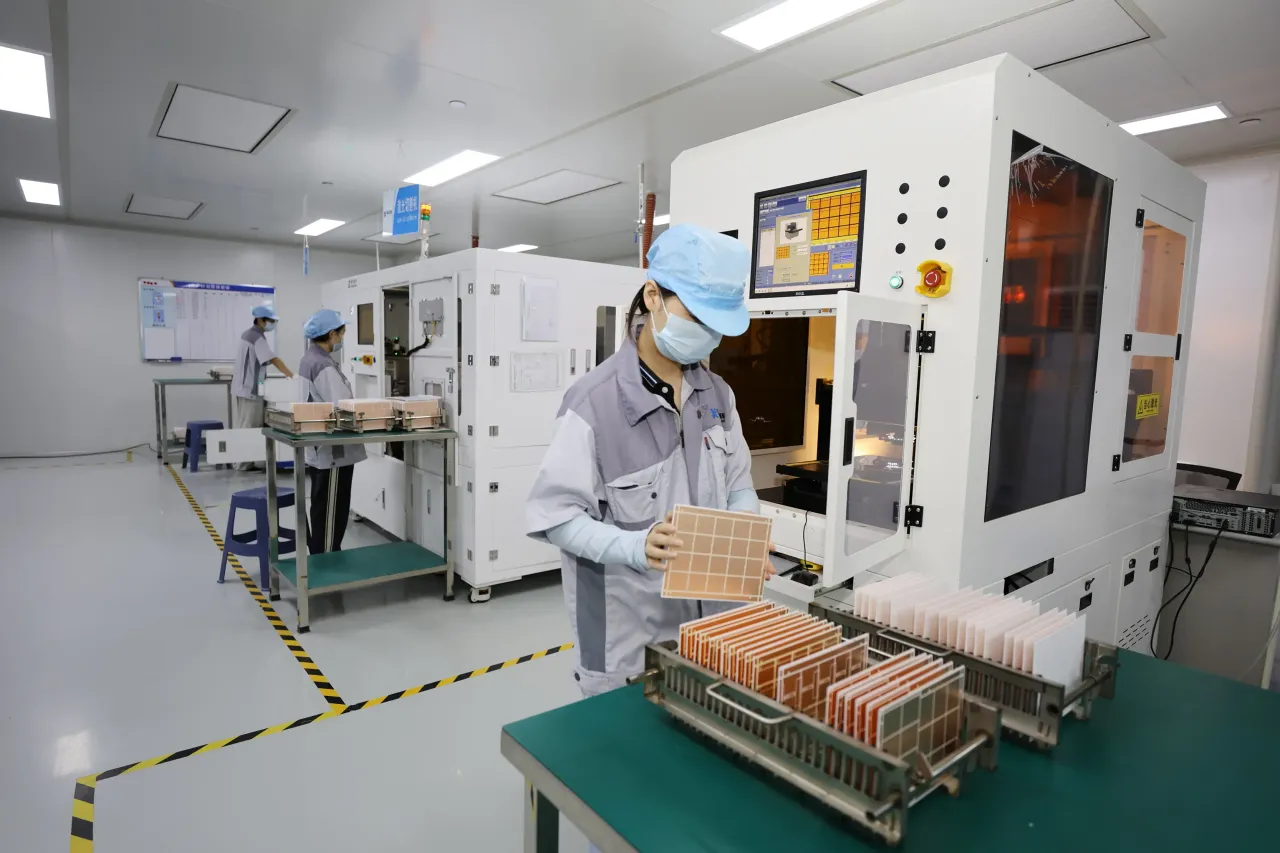
Semiconductor Stocks Retreat as Investors Book Profits

- Market Pullback: Following a red-hot rally in the semiconductor sector, investors are booking profits, with Intel's stock dropping 9.7% on Tuesday, marking the largest decline in the S&P 500 index, indicating a shift in market sentiment.
- Strong Samsung Results but Stock Decline: Despite Samsung Electronics reporting a staggering 19-fold increase in expected second-quarter operating profit to 89.4 trillion won ($58.44 billion) and a 129% revenue increase to 171 trillion won, its shares fell nearly 7% in Seoul, impacting SK Hynix and the broader Kospi index.
- Broad Chip Stock Decline: In the U.S., Intel and AMD saw their stocks drop 9.7% and 6.5%, respectively, while Western Digital and SanDisk each fell over 7%, reflecting investor concerns over the AI trade losing momentum and potential broader downturns in the market.
- Analyst Insights: Despite the pullback, Daniel Newman, CEO of Futurum Group, asserts that the AI trade remains intact with demand significantly outpacing supply, suggesting that profit-taking after parabolic moves is a healthy market behavior.
See More
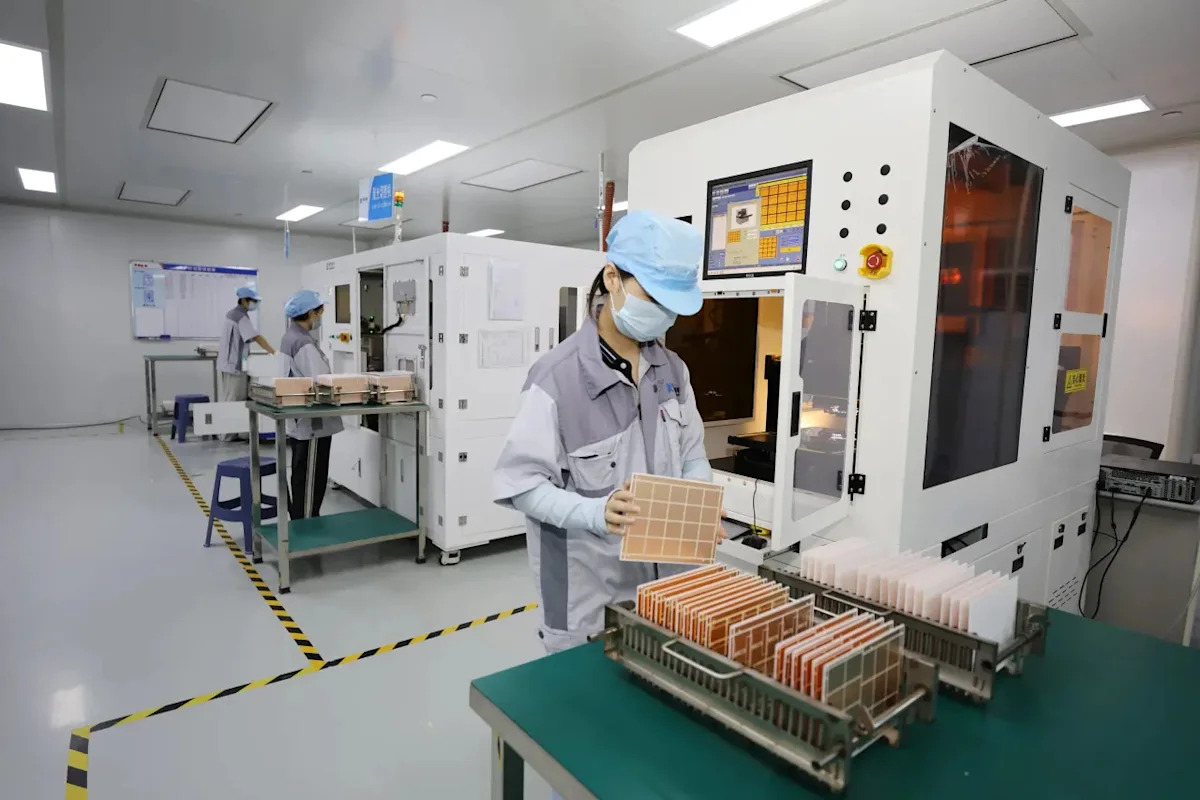
Semiconductor Stocks Retreat as Investors Take Profits
- Intel Stock Plunge: Intel's stock dropped 9.7% on Tuesday, marking its steepest decline in a month and making it the biggest loser in the S&P 500, indicating that investors are booking profits after a strong rally in the semiconductor sector, which may impact the company's short-term stock performance.
- Samsung's Strong Earnings but Stock Decline: Despite Samsung Electronics reporting a staggering 19-fold increase in expected second-quarter operating profit to 89.4 trillion won ($58.44 billion) and a 129% revenue increase to 171 trillion won, its shares fell nearly 7%, reflecting market concerns over elevated valuations.
- Broad Chip Stock Retreat: In the U.S. market, AMD shares fell 6.5%, while Western Digital and SanDisk dropped over 7% each, and Micron declined 4.7%, suggesting that investor confidence in the AI trade is waning, potentially signaling a broader market pullback.
- Divergent Market Sentiment: While retail investors remain bullish on the iShares Semiconductor ETF (SOXX), sentiment towards Intel and SanDisk is neutral, and bearish for AMD and Western Digital, highlighting differing views on future semiconductor demand.
See More
Syntiant Corp Files for IPO Amid Semiconductor Boom
- IPO Filing: California-based Syntiant Corp has filed for an initial public offering to capitalize on the growing enthusiasm for semiconductors and AI technologies, although the offering size remains undisclosed.
- Listing Plans: The company intends to list its shares under the symbol “SYTN” on the Nasdaq Global Market, reflecting its confidence in the capital markets and expectations for future growth.
- Financial Performance: In Q1 2026, Syntiant reported a net loss of $20.9 million on revenues of $64.5 million, indicating a slight decline from $66.6 million in revenue a year earlier, yet showcasing its market potential.
- Investor Backing: Syntiant has garnered support from notable investors such as Intel Capital, Microsoft Global Finance, and Knowles Corp, highlighting its recognition in the industry and potential for future development.
See More
SambaNova Raises $1B at $11B Valuation Amid AI Hardware Demand
- Funding and Valuation: SambaNova Systems has successfully raised $1 billion, achieving an $11 billion valuation, which reflects strong investor confidence in the growing demand for artificial intelligence hardware and solidifies its market position.
- Investor Backing: The funding round was led by General Atlantic, with support from Intel's venture arm, indicating significant trust and interest from major tech companies in SambaNova's future development.
- Use of Proceeds: SambaNova plans to use the funds to expand capacity, accelerate product innovation, and scale deployments for enterprises, neo-clouds, and sovereign AI customers globally, aiming to enhance its competitive edge in the market.
- Partnerships: JPMorgan Chase has selected SambaNova as its inference infrastructure partner, deploying its SN40 and SN50 systems to enable secure on-premises AI inference, further validating SambaNova's significance in the industry.
See More
SambaNova Raises $1 Billion, Valued at $11 Billion
- Successful Financing: SambaNova has successfully raised $1 billion, bringing its valuation to $11 billion, with this funding round led by General Atlantic and participation from Seligman Ventures, T. Rowe Price, and Capital Group, indicating strong investor confidence in AI chip startups.
- Market Positioning: Focused on inference chips and on-premise AI deployments, SambaNova's latest SN50 chip can be deployed in data centers, contrasting sharply with Nvidia's GPU architecture, aiming to meet enterprise demands for fast and cost-effective AI model execution.
- Corporate Collaboration: JPMorgan Chase announced it will deploy SambaNova's systems for on-prem inference to meet its enterprise AI workload needs, a move that not only enhances AI security but also accelerates response times, thereby boosting corporate competitiveness.
- Industry Outlook: The successful financing of SambaNova reflects the strong demand for AI infrastructure in the booming semiconductor industry, particularly in the inference chip sector, which is expected to drive further investment and innovation among startups.
See More
SambaNova Raises $1 Billion, Valuation Reaches $11 Billion
- Massive Funding Round: SambaNova Systems has raised $1 billion in its latest funding round, bringing its valuation to $11 billion, with General Atlantic leading the investment, indicating strong investor confidence in the AI chip market.
- Strategic Partnerships: Earlier this year, SambaNova secured over $350 million in funding and announced a partnership with Intel, further solidifying its position in the AI inference chip sector.
- Clear Market Positioning: The SN50 chip from SambaNova is designed for data centers to efficiently run large AI models, focusing on on-premise deployments that offer faster and more secure AI solutions, addressing enterprises' data security needs.
- Optimistic Industry Outlook: The successful funding round reflects the growing demand for AI chips in the booming semiconductor industry, particularly as enterprise AI workloads continue to increase.
See More
Semiconductor Stocks Retreat as Investors Book Profits
- Market Pullback: Following a red-hot rally in the semiconductor sector, investors are booking profits, with Intel's stock dropping 9.7% on Tuesday, marking the largest decline in the S&P 500 index, indicating a shift in market sentiment.
- Strong Samsung Results but Stock Decline: Despite Samsung Electronics reporting a staggering 19-fold increase in expected second-quarter operating profit to 89.4 trillion won ($58.44 billion) and a 129% revenue increase to 171 trillion won, its shares fell nearly 7% in Seoul, impacting SK Hynix and the broader Kospi index.
- Broad Chip Stock Decline: In the U.S., Intel and AMD saw their stocks drop 9.7% and 6.5%, respectively, while Western Digital and SanDisk each fell over 7%, reflecting investor concerns over the AI trade losing momentum and potential broader downturns in the market.
- Analyst Insights: Despite the pullback, Daniel Newman, CEO of Futurum Group, asserts that the AI trade remains intact with demand significantly outpacing supply, suggesting that profit-taking after parabolic moves is a healthy market behavior.
See More
Semiconductor Stocks Retreat as Investors Take Profits
- Intel Stock Plunge: Intel's stock dropped 9.7% on Tuesday, marking its steepest decline in a month and making it the biggest loser in the S&P 500, indicating that investors are booking profits after a strong rally in the semiconductor sector, which may impact the company's short-term stock performance.
- Samsung's Strong Earnings but Stock Decline: Despite Samsung Electronics reporting a staggering 19-fold increase in expected second-quarter operating profit to 89.4 trillion won ($58.44 billion) and a 129% revenue increase to 171 trillion won, its shares fell nearly 7%, reflecting market concerns over elevated valuations.
- Broad Chip Stock Retreat: In the U.S. market, AMD shares fell 6.5%, while Western Digital and SanDisk dropped over 7% each, and Micron declined 4.7%, suggesting that investor confidence in the AI trade is waning, potentially signaling a broader market pullback.
- Divergent Market Sentiment: While retail investors remain bullish on the iShares Semiconductor ETF (SOXX), sentiment towards Intel and SanDisk is neutral, and bearish for AMD and Western Digital, highlighting differing views on future semiconductor demand.
See More