UPS's Transition Presents Investment Opportunities
Written by Emily J. Thompson, Senior Investment Analyst
Updated: 43 minutes ago
0mins
Should l Buy UPS?
Source: Fool
- Transition Challenges and Opportunities: UPS plans to cut Amazon delivery volume by 50% in 2024, which, despite Amazon being its largest customer at 11.8% of total sales, will help reduce low-margin delivery costs and enhance overall profitability.
- Market's Tepid Response: Although UPS faced issues like trade tensions and a weakening macro backdrop in 2025, leading to a decline in shipping demand and reduced investor confidence, the company is still pivoting towards higher-margin customers, indicating long-term potential.
- Growth in SMBs: In Q1 2026, UPS's daily volumes among small and medium-sized businesses rose by 1.6%, with overall revenue per package increasing by 6.5% and healthcare product delivery revenue hitting $3 billion, demonstrating initial success in its transition.
- Optimistic Future Outlook: Management reiterated its 2026 guidance, with analysts forecasting a 12.2% increase in EPS to $8 in 2027; while the current stock trades at a 14x forward P/E, it has historically traded between 15 and 20 times, suggesting potential for future price appreciation.
Trade with 70% Backtested Accuracy
Stop guessing "Should I Buy UPS?" and start using high-conviction signals backed by rigorous historical data.
Sign up today to access powerful investing tools and make smarter, data-driven decisions.
Analyst Views on UPS
Wall Street analysts forecast UPS stock price to rise
19 Analyst Rating
9 Buy
9 Hold
1 Sell
Moderate Buy
Current: 98.930

Low
80.00
Averages
107.06
High
126.00
Current: 98.930
Low
80.00
Averages
107.06
High
126.00
About UPS
United Parcel Service, Inc. is a global package delivery and logistics provider. Its U.S. Domestic Package segment offers a full spectrum of air and ground package transportation services. Its air portfolio offers time-definite, same-day, next-day, two-day and three-day delivery alternatives as well as air cargo services. Its ground network enables customers to ship using its day-definite ground service. Ground Saver provides residential ground service for customers with non-urgent, lightweight residential shipments. Its International Package segment consists of small package operations in Europe, Middle East and Africa, Canada and Latin America and Asia. It offers a selection of guaranteed day and time-definite international transportation services supported by its brokerage capabilities that facilitate cross-border clearance for international shipments. Its supply chain solutions consist of customized third-party logistics and specialized cold chain transportation solutions.
About the author

Emily J. Thompson
Emily J. Thompson, a Chartered Financial Analyst (CFA) with 12 years in investment research, graduated with honors from the Wharton School. Specializing in industrial and technology stocks, she provides in-depth analysis for Intellectia’s earnings and market brief reports.

UPS Faces Transition Challenges and Opportunities

- Amazon Delivery Reduction: UPS plans to cut its Amazon delivery volume by 50% before 2024, despite Amazon being its largest customer at 11.8% of total sales, as this move aims to reduce labor costs and enhance capacity for higher-margin clients.
- Growth in SMBs: In Q1 2026, daily volumes among small and medium-sized businesses rose by 1.6%, indicating a gradual recovery in market activity during UPS's transition, even though overall revenue and earnings declined year-over-year.
- Record Healthcare Revenue: UPS achieved a record $3 billion in revenue from healthcare product deliveries, demonstrating that the company's strategic pivot towards high-margin sectors is yielding positive results and could enhance overall profitability in the future.
- Dividend Appeal: Despite mixed market sentiment, UPS offers a forward dividend yield of 6.6%, making it attractive to investors seeking stable income while waiting for performance improvements, potentially drawing in income-focused investors.
See More

UPS's Transition Presents Investment Opportunities

- Transition Challenges and Opportunities: UPS plans to cut Amazon delivery volume by 50% in 2024, which, despite Amazon being its largest customer at 11.8% of total sales, will help reduce low-margin delivery costs and enhance overall profitability.
- Market's Tepid Response: Although UPS faced issues like trade tensions and a weakening macro backdrop in 2025, leading to a decline in shipping demand and reduced investor confidence, the company is still pivoting towards higher-margin customers, indicating long-term potential.
- Growth in SMBs: In Q1 2026, UPS's daily volumes among small and medium-sized businesses rose by 1.6%, with overall revenue per package increasing by 6.5% and healthcare product delivery revenue hitting $3 billion, demonstrating initial success in its transition.
- Optimistic Future Outlook: Management reiterated its 2026 guidance, with analysts forecasting a 12.2% increase in EPS to $8 in 2027; while the current stock trades at a 14x forward P/E, it has historically traded between 15 and 20 times, suggesting potential for future price appreciation.
See More

U.S.-China Summit Sparks Market Optimism


- Strong Market Performance: U.S. stocks surged on the first day of the Trump-Xi summit, with the S&P 500 closing above 7,500 for the first time and the Dow Jones Industrial Average jumping 370 points back to 50,000, reflecting investor optimism about improved bilateral relations.
- Strategic Stability Agreement: Trump and Xi agreed to foster a 'constructive China-U.S. relationship of strategic stability', laying the groundwork for future trade and tech cooperation, which could enhance economic integration between the two nations.
- Major Commercial Deal: Trump announced that China will order 200 Boeing jets, seen as a significant win for the U.S. planemaker, which is expected to positively impact Boeing's performance and potentially boost the related supply chain.
- Tech Stocks Shine: AI chipmaker Cerebras saw its shares skyrocket 68% in its Nasdaq debut, reaching a market cap of $95 billion, highlighting the strong demand for high-growth AI companies and further driving up tech stock valuations.
See More

Trump's Visit to China Sparks Market Attention
- High-Level Meeting Context: President Trump arrived in Beijing on May 13, 2026, accompanied by top executives including Tesla's Elon Musk and Nvidia's Jensen Huang, aiming to engage in crucial discussions with President Xi Jinping on trade, technology, and regional security issues.
- Market Reaction: Asian markets showed mixed performance ahead of Trump's visit, while U.S. futures remained relatively unchanged; notably, the S&P 500 reached an all-time high on Wall Street, reflecting traders' enthusiasm for technology stocks despite pressures from the latest inflation report.
- Inflation Data Impact: U.S. wholesale inflation surged to 6% year-over-year in April, marking the highest increase since 2022, which intensifies pressure on Federal Reserve policy and complicates the economic backdrop for Trump's high-level diplomacy.
- Global Oil Flow Constraints: The closure of the Strait of Hormuz due to the Iran war has severely impacted global oil flows, with OPEC reporting a 30% reduction in supply since the conflict began, posing significant risks to demand growth this year.
See More
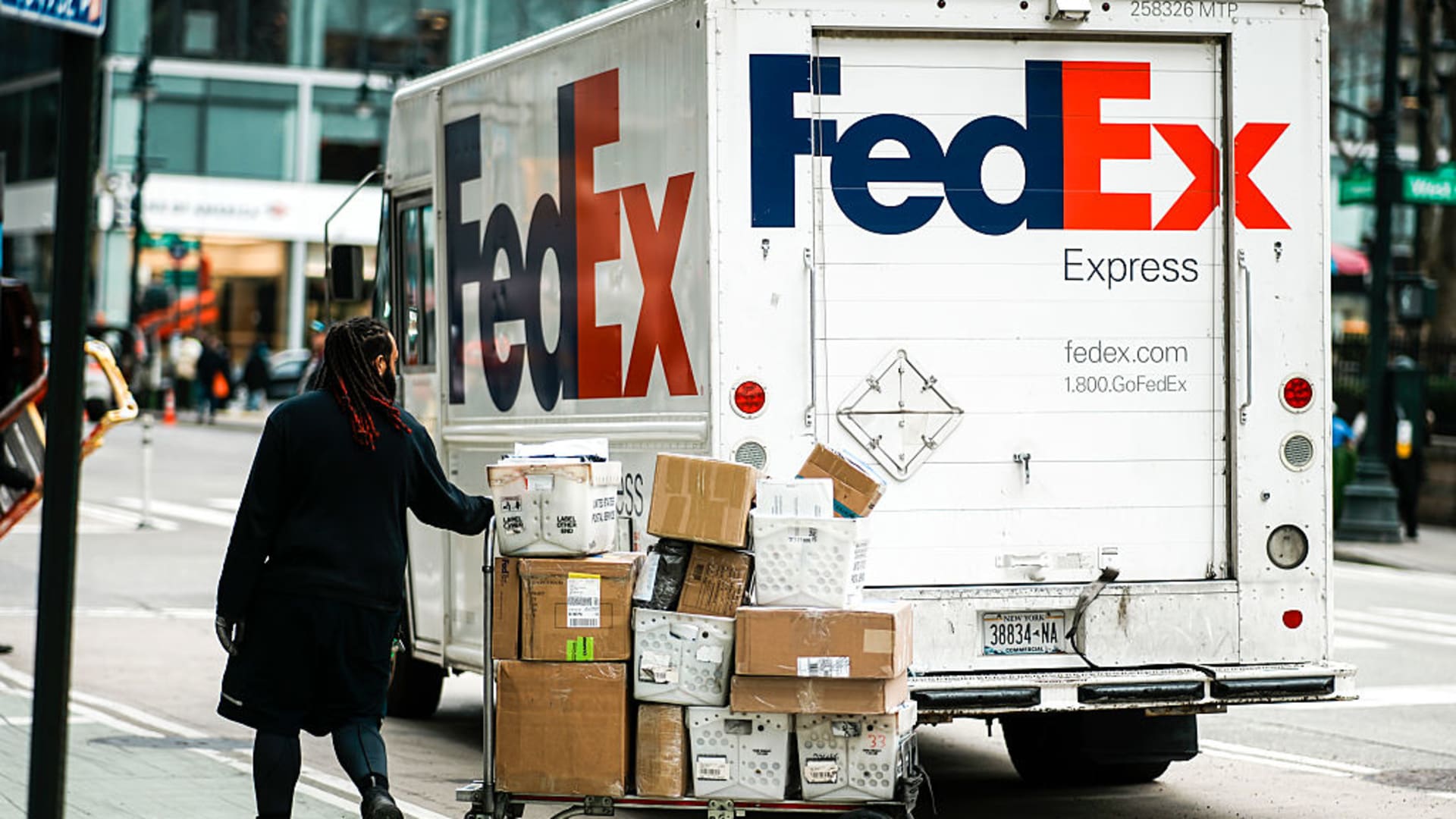
FedEx CEO Downplays Amazon Supply Chain Services Threat

- Competitive Threat Assessment: FedEx CEO Raj Subramaniam stated on CNBC that Amazon's recent supply chain services announcement is fundamentally different from FedEx's global network, emphasizing that FedEx's true advantage lies in its ability to transport goods quickly worldwide, despite market concerns about competitive threats.
- Stock Price Volatility: Following Amazon's announcement, FedEx shares fell by 9%, but have since recovered roughly half of those losses, while rival UPS saw a 10.5% drop on the same day, with only a modest 2% recovery afterward.
- Business Scale Comparison: Subramaniam noted that FedEx's third-party logistics segment is about a $2 billion business, and while Amazon's service may impact this area, it represents only a small fraction of FedEx's overall operations, which are projected to generate over $93 billion in revenue for the fiscal year ending in May.
- Customer Relationship Maintenance: Despite the competitive landscape, Subramaniam emphasized that Amazon remains a valuable FedEx customer, with both companies having renewed their partnership in recent years, creating a win-win business model that highlights FedEx's commitment to maintaining strong relationships with key clients.
See More

FedEx CEO Downplays Amazon Supply Chain Threat
- Competitive Threat Assessment: FedEx CEO Raj Subramaniam stated that Amazon's new supply chain service is completely different from FedEx's global logistics network, emphasizing that FedEx's true global network can deliver goods from anywhere in the world within days, showcasing its unique market position.
- Customer Relationship Importance: Despite concerns raised by Amazon's supply chain service, Subramaniam highlighted that Amazon remains a valuable customer for FedEx, with their relationship viewed as a win-win, indicating FedEx's ability to maintain customer loyalty in the face of competition.
- Market Reaction Analysis: Following Amazon's announcement, FedEx shares fell by 9%, but have since recovered about half of those losses, indicating an initial negative market reaction to the news, although investor confidence appears to be gradually returning.
- Business Scale Comparison: Subramaniam noted that FedEx's third-party logistics segment is approximately a $2 billion business, and while Amazon's service may impact this area, it does not represent a major part of FedEx's overall operations, reflecting the company's solid position in the broader market.
See More
UPS Faces Transition Challenges and Opportunities
- Amazon Delivery Reduction: UPS plans to cut its Amazon delivery volume by 50% before 2024, despite Amazon being its largest customer at 11.8% of total sales, as this move aims to reduce labor costs and enhance capacity for higher-margin clients.
- Growth in SMBs: In Q1 2026, daily volumes among small and medium-sized businesses rose by 1.6%, indicating a gradual recovery in market activity during UPS's transition, even though overall revenue and earnings declined year-over-year.
- Record Healthcare Revenue: UPS achieved a record $3 billion in revenue from healthcare product deliveries, demonstrating that the company's strategic pivot towards high-margin sectors is yielding positive results and could enhance overall profitability in the future.
- Dividend Appeal: Despite mixed market sentiment, UPS offers a forward dividend yield of 6.6%, making it attractive to investors seeking stable income while waiting for performance improvements, potentially drawing in income-focused investors.
See More
UPS's Transition Presents Investment Opportunities
- Transition Challenges and Opportunities: UPS plans to cut Amazon delivery volume by 50% in 2024, which, despite Amazon being its largest customer at 11.8% of total sales, will help reduce low-margin delivery costs and enhance overall profitability.
- Market's Tepid Response: Although UPS faced issues like trade tensions and a weakening macro backdrop in 2025, leading to a decline in shipping demand and reduced investor confidence, the company is still pivoting towards higher-margin customers, indicating long-term potential.
- Growth in SMBs: In Q1 2026, UPS's daily volumes among small and medium-sized businesses rose by 1.6%, with overall revenue per package increasing by 6.5% and healthcare product delivery revenue hitting $3 billion, demonstrating initial success in its transition.
- Optimistic Future Outlook: Management reiterated its 2026 guidance, with analysts forecasting a 12.2% increase in EPS to $8 in 2027; while the current stock trades at a 14x forward P/E, it has historically traded between 15 and 20 times, suggesting potential for future price appreciation.
See More
U.S.-China Summit Sparks Market Optimism
- Strong Market Performance: U.S. stocks surged on the first day of the Trump-Xi summit, with the S&P 500 closing above 7,500 for the first time and the Dow Jones Industrial Average jumping 370 points back to 50,000, reflecting investor optimism about improved bilateral relations.
- Strategic Stability Agreement: Trump and Xi agreed to foster a 'constructive China-U.S. relationship of strategic stability', laying the groundwork for future trade and tech cooperation, which could enhance economic integration between the two nations.
- Major Commercial Deal: Trump announced that China will order 200 Boeing jets, seen as a significant win for the U.S. planemaker, which is expected to positively impact Boeing's performance and potentially boost the related supply chain.
- Tech Stocks Shine: AI chipmaker Cerebras saw its shares skyrocket 68% in its Nasdaq debut, reaching a market cap of $95 billion, highlighting the strong demand for high-growth AI companies and further driving up tech stock valuations.
See More
Trump's Visit to China Sparks Market Attention
- High-Level Meeting Context: President Trump arrived in Beijing on May 13, 2026, accompanied by top executives including Tesla's Elon Musk and Nvidia's Jensen Huang, aiming to engage in crucial discussions with President Xi Jinping on trade, technology, and regional security issues.
- Market Reaction: Asian markets showed mixed performance ahead of Trump's visit, while U.S. futures remained relatively unchanged; notably, the S&P 500 reached an all-time high on Wall Street, reflecting traders' enthusiasm for technology stocks despite pressures from the latest inflation report.
- Inflation Data Impact: U.S. wholesale inflation surged to 6% year-over-year in April, marking the highest increase since 2022, which intensifies pressure on Federal Reserve policy and complicates the economic backdrop for Trump's high-level diplomacy.
- Global Oil Flow Constraints: The closure of the Strait of Hormuz due to the Iran war has severely impacted global oil flows, with OPEC reporting a 30% reduction in supply since the conflict began, posing significant risks to demand growth this year.
See More
FedEx CEO Downplays Amazon Supply Chain Services Threat
- Competitive Threat Assessment: FedEx CEO Raj Subramaniam stated on CNBC that Amazon's recent supply chain services announcement is fundamentally different from FedEx's global network, emphasizing that FedEx's true advantage lies in its ability to transport goods quickly worldwide, despite market concerns about competitive threats.
- Stock Price Volatility: Following Amazon's announcement, FedEx shares fell by 9%, but have since recovered roughly half of those losses, while rival UPS saw a 10.5% drop on the same day, with only a modest 2% recovery afterward.
- Business Scale Comparison: Subramaniam noted that FedEx's third-party logistics segment is about a $2 billion business, and while Amazon's service may impact this area, it represents only a small fraction of FedEx's overall operations, which are projected to generate over $93 billion in revenue for the fiscal year ending in May.
- Customer Relationship Maintenance: Despite the competitive landscape, Subramaniam emphasized that Amazon remains a valuable FedEx customer, with both companies having renewed their partnership in recent years, creating a win-win business model that highlights FedEx's commitment to maintaining strong relationships with key clients.
See More
FedEx CEO Downplays Amazon Supply Chain Threat
- Competitive Threat Assessment: FedEx CEO Raj Subramaniam stated that Amazon's new supply chain service is completely different from FedEx's global logistics network, emphasizing that FedEx's true global network can deliver goods from anywhere in the world within days, showcasing its unique market position.
- Customer Relationship Importance: Despite concerns raised by Amazon's supply chain service, Subramaniam highlighted that Amazon remains a valuable customer for FedEx, with their relationship viewed as a win-win, indicating FedEx's ability to maintain customer loyalty in the face of competition.
- Market Reaction Analysis: Following Amazon's announcement, FedEx shares fell by 9%, but have since recovered about half of those losses, indicating an initial negative market reaction to the news, although investor confidence appears to be gradually returning.
- Business Scale Comparison: Subramaniam noted that FedEx's third-party logistics segment is approximately a $2 billion business, and while Amazon's service may impact this area, it does not represent a major part of FedEx's overall operations, reflecting the company's solid position in the broader market.
See More