United Airlines CEO Rules Out Future Consolidation Plans
Written by Emily J. Thompson, Senior Investment Analyst
Updated: 47 minutes ago
0mins
Source: Newsfilter
- Consolidation Plans Shelved: United Airlines CEO Scott Kirby stated at a Bernstein investor conference that the airline does not plan to pursue consolidation in the foreseeable future, as American Airlines rebuffed his merger proposal, highlighting the challenges and uncertainties in industry consolidation.
- Lack of Economic Logic: Kirby noted that the 'big transaction' United attempted was the only economically sensible option, but the absence of a willing partner has rendered this plan unfeasible, reflecting the complexities of consolidation in the airline sector.
- No Small Deals Expected: In response to investor speculation about pursuing smaller deals, Kirby dismissed the idea as 'idiotic,' clearly stating that this is not the company's plan, indicating a focus on internal growth rather than external acquisitions.
- Optimistic Profit Outlook: Kirby expressed increasing confidence that United can achieve double-digit pre-tax margins next year, as easing oil prices and strong demand will help the airline recover from the impacts of high fuel costs, demonstrating the company's resilience and potential in the market.
Trade with 70% Backtested Accuracy
Stop guessing "Should I Buy UAL?" and start using high-conviction signals backed by rigorous historical data.
Sign up today to access powerful investing tools and make smarter, data-driven decisions.
Analyst Views on UAL
Wall Street analysts forecast UAL stock price to rise
16 Analyst Rating
15 Buy
1 Hold
0 Sell
Strong Buy
Current: 105.920

Low
115.00
Averages
139.07
High
156.00
Current: 105.920
Low
115.00
Averages
139.07
High
156.00
About UAL
United Airlines Holdings, Inc. is a holding company. The Company transports people and cargo throughout North America and to destinations in Asia, Europe, Africa, the Pacific, the Middle East and Latin America. The Company, through United Airlines, Inc., and its regional carriers, operates across over six continents, with hubs at Chicago O'Hare International Airport (ORD), Denver International Airport (DEN), George Bush Intercontinental Airport (IAH), Los Angeles International Airport (LAX), Newark Liberty International Airport (EWR), San Francisco International Airport (SFO), Washington Dulles International Airport (IAD) and A.B. Won Pat International Airport (GUM). Its hub and spoke system allow it to transport passengers between a large number of destinations with frequent services. The Company has contractual relationships with various regional carriers to provide regional aircraft service branded as United Express. It provides freight and mail transportation services (Air Cargo).
About the author

Emily J. Thompson
Emily J. Thompson, a Chartered Financial Analyst (CFA) with 12 years in investment research, graduated with honors from the Wharton School. Specializing in industrial and technology stocks, she provides in-depth analysis for Intellectia’s earnings and market brief reports.
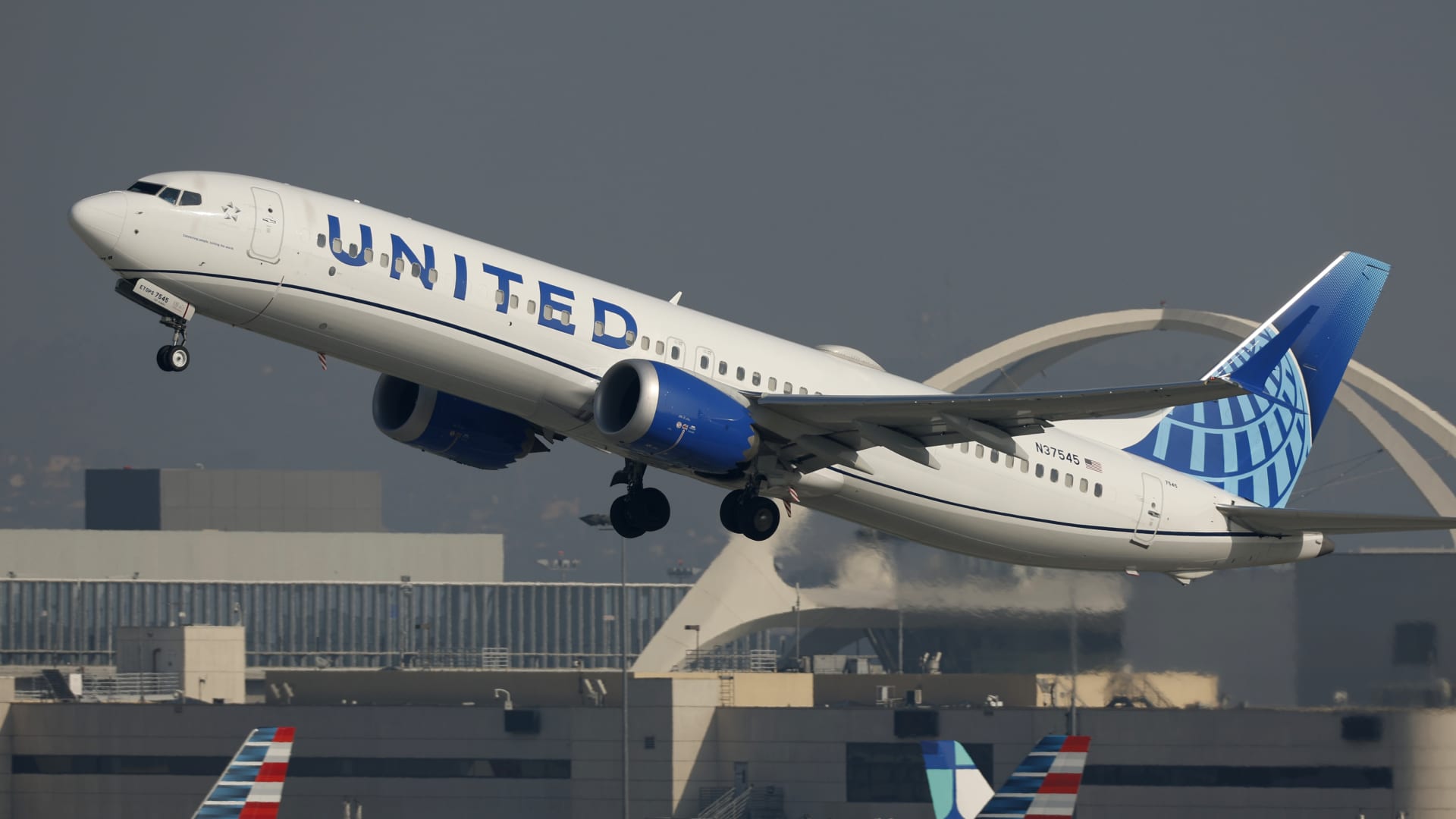
United Airlines Transitions from Vulnerability to Recovery

- Strong Recovery Performance: United Airlines' Q1 results indicate resilience in core business despite high fuel costs, with premium revenue up 14%, loyalty revenue rising 13%, and business revenue increasing 14%, demonstrating the effectiveness of its 'United Next' strategy in enhancing revenue quality.
- Improved Technical Indicators: The stock has crossed above its 200-day moving average, trading above $101 recently, with both 1-month and 6-month trends turning bullish, confirming a shift from repair to accumulation, while the $100-$105 zone now serves as a key support area.
- Strong Management Response: Despite a $340 million year-over-year increase in fuel expenses in Q1, United still delivered profits and expanded pre-tax margins, with management adjusting capacity plans for the remainder of 2026 to account for higher fuel prices by reducing planned capacity by five points.
- Attractive Valuation: Trading at approximately 11x forward earnings, United Airlines is significantly undervalued compared to transportation peers, even as it shows above-industry growth expectations, indicating that the market is still pricing in a large fuel and macro discount that could narrow quickly.
See More

United Airlines CEO Rules Out Future Consolidation Plans
- Consolidation Plans Shelved: United Airlines CEO Scott Kirby stated at a Bernstein investor conference that the airline does not plan to pursue consolidation in the foreseeable future, as American Airlines rebuffed his merger proposal, highlighting the challenges and uncertainties in industry consolidation.
- Lack of Economic Logic: Kirby noted that the 'big transaction' United attempted was the only economically sensible option, but the absence of a willing partner has rendered this plan unfeasible, reflecting the complexities of consolidation in the airline sector.
- No Small Deals Expected: In response to investor speculation about pursuing smaller deals, Kirby dismissed the idea as 'idiotic,' clearly stating that this is not the company's plan, indicating a focus on internal growth rather than external acquisitions.
- Optimistic Profit Outlook: Kirby expressed increasing confidence that United can achieve double-digit pre-tax margins next year, as easing oil prices and strong demand will help the airline recover from the impacts of high fuel costs, demonstrating the company's resilience and potential in the market.
See More

Global X Cybersecurity ETF Underperforms

- ETF Decline: The Global X Cybersecurity ETF is down approximately 5% in Wednesday afternoon trading, indicating overall weakness in the sector that may affect investor confidence and lead to capital outflows.
- Stock Underperformance: Within the ETF, Zscaler shares fell about 31.2%, raising concerns about its future growth prospects, which could impact its financing capabilities and market position.
- Competitive Pressure: Netskope shares dropped approximately 8.9%, reflecting intensified competition in the cybersecurity industry that may lead to declining profit margins and further loss of market share.
- Market Sentiment Impact: The poor performance of the ETF may prompt investors to reassess the cybersecurity sector, potentially affecting stock prices and future investment decisions for related companies.
See More

Mixed US Stock Market with Energy Stocks Under Pressure

- Divergent Market Performance: The S&P 500 index fell by 0.07% while the Dow Jones Industrial Average rose by 0.54%, indicating a divergence in market trends, particularly with the Dow reaching a new high, reflecting increased investor confidence in certain sectors.
- Impact of Falling Oil Prices: Crude oil prices dropped over 3% amid optimism for a normalization of oil flows from the Middle East, which not only eased inflation expectations but also pushed the 10-year Treasury yield down to a 1.5-week low of 4.45%, positively affecting the bond market.
- Decline in Mortgage Applications: US MBA mortgage applications fell by 8.5% for the week ending May 22, with the purchase mortgage sub-index down 0.4% and the refinancing sub-index plunging 18.1%, indicating the suppressive effect of high interest rates on the housing market.
- Corporate Earnings Overview: As of now, 83% of the 475 S&P 500 companies that reported Q1 earnings have exceeded expectations, with overall earnings projected to rise by 12% year-on-year, but excluding the tech sector, the growth is only 3%, highlighting disparities across industries.
See More

Travel Stocks Surge as Oil Prices Retreat


- Airline Stocks Rise: Shares of airlines surged as oil prices fell nearly 4%, with United Airlines gaining 7% and Delta Air Lines up 4%, indicating potential profitability improvements for airlines amid reduced cost pressures.
- Telecom Infrastructure Surge: Dycom Industries saw a stock increase of about 30% after raising its full-year outlook, projecting contract revenue between $7.38 billion and $7.65 billion, and enhancing its data center capabilities through the acquisition of National Technology Integrators.
- Cloud Security Decline: Zscaler's shares tumbled over 30% after guiding for current-quarter revenue below analyst expectations, despite beating third-quarter adjusted earnings forecasts, reflecting market concerns about its future growth trajectory.
- Retail Stock Gains: Bath & Body Works shares rose 12% after forecasting second-quarter earnings per share between 20 to 25 cents, exceeding analyst expectations, which indicates strong consumer demand and improved profitability for the company.
See More

Mixed US Stock Market with Energy Stocks Under Pressure
- Market Divergence: The S&P 500 index fell by 0.05%, while the Dow Jones Industrial Average rose by 0.23%, and the Nasdaq 100 index decreased by 0.15%, indicating a divergence in market performance, particularly under the pressure of weak energy and cybersecurity stocks.
- Crude Oil Price Decline: Crude oil prices dropped over 4% to a five-week low amid optimism surrounding a US-Iran peace deal, which has lowered inflation expectations and pushed bond yields lower, with the 10-year T-note yield falling to a 1.5-week low of 4.45%.
- Mortgage Application Decrease: For the week ending May 22, US MBA mortgage applications fell by 8.5%, with the purchase mortgage sub-index down 0.4% and the refinancing mortgage sub-index down 18.1%, indicating the suppressive effect of high rates on the housing market.
- Earnings Performance: As of now, 83% of the 475 S&P 500 companies that reported Q1 earnings have exceeded expectations, with Q1 earnings projected to rise by 12% year-over-year, but excluding the technology sector, earnings growth is only about 3%, marking the lowest in two years, reflecting disparities across industries.
See More
United Airlines Transitions from Vulnerability to Recovery
- Strong Recovery Performance: United Airlines' Q1 results indicate resilience in core business despite high fuel costs, with premium revenue up 14%, loyalty revenue rising 13%, and business revenue increasing 14%, demonstrating the effectiveness of its 'United Next' strategy in enhancing revenue quality.
- Improved Technical Indicators: The stock has crossed above its 200-day moving average, trading above $101 recently, with both 1-month and 6-month trends turning bullish, confirming a shift from repair to accumulation, while the $100-$105 zone now serves as a key support area.
- Strong Management Response: Despite a $340 million year-over-year increase in fuel expenses in Q1, United still delivered profits and expanded pre-tax margins, with management adjusting capacity plans for the remainder of 2026 to account for higher fuel prices by reducing planned capacity by five points.
- Attractive Valuation: Trading at approximately 11x forward earnings, United Airlines is significantly undervalued compared to transportation peers, even as it shows above-industry growth expectations, indicating that the market is still pricing in a large fuel and macro discount that could narrow quickly.
See More
United Airlines CEO Rules Out Future Consolidation Plans
- Consolidation Plans Shelved: United Airlines CEO Scott Kirby stated at a Bernstein investor conference that the airline does not plan to pursue consolidation in the foreseeable future, as American Airlines rebuffed his merger proposal, highlighting the challenges and uncertainties in industry consolidation.
- Lack of Economic Logic: Kirby noted that the 'big transaction' United attempted was the only economically sensible option, but the absence of a willing partner has rendered this plan unfeasible, reflecting the complexities of consolidation in the airline sector.
- No Small Deals Expected: In response to investor speculation about pursuing smaller deals, Kirby dismissed the idea as 'idiotic,' clearly stating that this is not the company's plan, indicating a focus on internal growth rather than external acquisitions.
- Optimistic Profit Outlook: Kirby expressed increasing confidence that United can achieve double-digit pre-tax margins next year, as easing oil prices and strong demand will help the airline recover from the impacts of high fuel costs, demonstrating the company's resilience and potential in the market.
See More
Global X Cybersecurity ETF Underperforms
- ETF Decline: The Global X Cybersecurity ETF is down approximately 5% in Wednesday afternoon trading, indicating overall weakness in the sector that may affect investor confidence and lead to capital outflows.
- Stock Underperformance: Within the ETF, Zscaler shares fell about 31.2%, raising concerns about its future growth prospects, which could impact its financing capabilities and market position.
- Competitive Pressure: Netskope shares dropped approximately 8.9%, reflecting intensified competition in the cybersecurity industry that may lead to declining profit margins and further loss of market share.
- Market Sentiment Impact: The poor performance of the ETF may prompt investors to reassess the cybersecurity sector, potentially affecting stock prices and future investment decisions for related companies.
See More
Mixed US Stock Market with Energy Stocks Under Pressure
- Divergent Market Performance: The S&P 500 index fell by 0.07% while the Dow Jones Industrial Average rose by 0.54%, indicating a divergence in market trends, particularly with the Dow reaching a new high, reflecting increased investor confidence in certain sectors.
- Impact of Falling Oil Prices: Crude oil prices dropped over 3% amid optimism for a normalization of oil flows from the Middle East, which not only eased inflation expectations but also pushed the 10-year Treasury yield down to a 1.5-week low of 4.45%, positively affecting the bond market.
- Decline in Mortgage Applications: US MBA mortgage applications fell by 8.5% for the week ending May 22, with the purchase mortgage sub-index down 0.4% and the refinancing sub-index plunging 18.1%, indicating the suppressive effect of high interest rates on the housing market.
- Corporate Earnings Overview: As of now, 83% of the 475 S&P 500 companies that reported Q1 earnings have exceeded expectations, with overall earnings projected to rise by 12% year-on-year, but excluding the tech sector, the growth is only 3%, highlighting disparities across industries.
See More
Travel Stocks Surge as Oil Prices Retreat
- Airline Stocks Rise: Shares of airlines surged as oil prices fell nearly 4%, with United Airlines gaining 7% and Delta Air Lines up 4%, indicating potential profitability improvements for airlines amid reduced cost pressures.
- Telecom Infrastructure Surge: Dycom Industries saw a stock increase of about 30% after raising its full-year outlook, projecting contract revenue between $7.38 billion and $7.65 billion, and enhancing its data center capabilities through the acquisition of National Technology Integrators.
- Cloud Security Decline: Zscaler's shares tumbled over 30% after guiding for current-quarter revenue below analyst expectations, despite beating third-quarter adjusted earnings forecasts, reflecting market concerns about its future growth trajectory.
- Retail Stock Gains: Bath & Body Works shares rose 12% after forecasting second-quarter earnings per share between 20 to 25 cents, exceeding analyst expectations, which indicates strong consumer demand and improved profitability for the company.
See More
Mixed US Stock Market with Energy Stocks Under Pressure
- Market Divergence: The S&P 500 index fell by 0.05%, while the Dow Jones Industrial Average rose by 0.23%, and the Nasdaq 100 index decreased by 0.15%, indicating a divergence in market performance, particularly under the pressure of weak energy and cybersecurity stocks.
- Crude Oil Price Decline: Crude oil prices dropped over 4% to a five-week low amid optimism surrounding a US-Iran peace deal, which has lowered inflation expectations and pushed bond yields lower, with the 10-year T-note yield falling to a 1.5-week low of 4.45%.
- Mortgage Application Decrease: For the week ending May 22, US MBA mortgage applications fell by 8.5%, with the purchase mortgage sub-index down 0.4% and the refinancing mortgage sub-index down 18.1%, indicating the suppressive effect of high rates on the housing market.
- Earnings Performance: As of now, 83% of the 475 S&P 500 companies that reported Q1 earnings have exceeded expectations, with Q1 earnings projected to rise by 12% year-over-year, but excluding the technology sector, earnings growth is only about 3%, marking the lowest in two years, reflecting disparities across industries.
See More