Understanding the Impact of Required Minimum Distributions
Written by Emily J. Thompson, Senior Investment Analyst
Updated: Mar 02 2026
0mins

Should l Buy NVDA?
Source: Yahoo Finance
- Required Minimum Distribution Rules: Upon reaching age 73 (or 75 for younger workers), holders of traditional retirement accounts must begin taking Required Minimum Distributions (RMDs), with the first RMD potentially delayed until April 1 of the year after turning 73, while subsequent RMDs must be taken by December 31 each year to ensure compliance and avoid penalties.
- Penalty Risks: Failing to take RMDs on time can incur a penalty of up to 25%, for instance, not withdrawing a $12,000 RMD could result in a $3,000 loss, significantly impacting retirement savings and highlighting the importance of compliance for investors.
- Strategies to Avoid Penalties: To prevent RMD penalties, investors should understand when RMDs start and their deadlines, and consider setting up automatic distributions to ensure timely withdrawals, thereby reducing the risk of losses due to forgetfulness.
- Opportunities for Enhanced Retirement Income: Many Americans overlook Social Security benefits, and by learning some “Social Security secrets,” such as a potential additional income of $23,760 per year, retirees can enhance their financial security and ensure a stable retirement lifestyle.
Trade with 70% Backtested Accuracy
Stop guessing "Should I Buy NVDA?" and start using high-conviction signals backed by rigorous historical data.
Sign up today to access powerful investing tools and make smarter, data-driven decisions.
Analyst Views on NVDA
Wall Street analysts forecast NVDA stock price to rise
41 Analyst Rating
39 Buy
1 Hold
1 Sell
Strong Buy
Current: 175.750

Low
200.00
Averages
264.97
High
352.00
Current: 175.750
Low
200.00
Averages
264.97
High
352.00
About NVDA
NVIDIA Corporation is an artificial intelligence (AI) infrastructure company. The Company is engaged in accelerated computing to help solve the challenging computational problems. Its segments include Compute & Networking and Graphics. The Compute & Networking segment includes its Data Center accelerated computing and networking platforms and AI solutions and software, and automotive platforms and autonomous and electric vehicle solutions, including software. The Graphics segment includes GeForce GPUs for gaming and personal computers (PCs), and Quadro/NVIDIA RTX GPUs for enterprise workstation graphics. Its technology stack includes the foundational NVIDIA CUDA development platform that runs on all NVIDIA GPUs, as well as hundreds of domain-specific software libraries, frameworks, algorithms, software development kits (SDKs), and application programming interfaces (APIs). Its platforms address four markets, which include Data Center, Gaming, Professional Visualization, and Automotive.
About the author

Emily J. Thompson
Emily J. Thompson, a Chartered Financial Analyst (CFA) with 12 years in investment research, graduated with honors from the Wharton School. Specializing in industrial and technology stocks, she provides in-depth analysis for Intellectia’s earnings and market brief reports.

Nvidia's Future Outlook Remains Bullish

- Strong Earnings Report: Nvidia reported total revenue of $215.9 billion for fiscal year 2026, marking a 65% year-over-year increase, which underscores the company's robust growth potential in the AI chip market and solidifies its market leadership.
- Surging Order Forecast: CEO Jensen Huang indicated that Nvidia expects approximately $1 trillion in purchase orders for its Blackwell and Vera Rubin chips by 2027, doubling last year's forecast of $500 billion, signaling sustained strong demand for AI chips.
- Future Revenue Expectations: Nvidia anticipates first-quarter revenue of $78 billion for fiscal year 2027, representing an almost 77% increase compared to the same period last year, reflecting strong growth potential in the Agentic AI applications sector, which will further drive demand for AI chips.
- High Market Valuation: Despite Nvidia's forward P/E ratio of 30, significantly above the average of 20.9 for the tech sector, investors believe the premium is justified given the company's outstanding financial results and its position in a rapidly growing market.
See More

Analysis of Vanguard S&P 500 ETF Investment Value
- Low Expense Ratio Advantage: The Vanguard S&P 500 ETF charges an ultra-low expense ratio of just 0.03%, allowing investors to gain exposure to 500 of America's largest companies at minimal cost, thereby achieving higher net returns over the long term.
- Long-Term Performance: Over the past decade, this ETF has generated a total return of 274%, translating to an annualized gain of 14%, demonstrating strong performance in volatile markets and attracting investors optimistic about the American economy.
- Tech Sector Dominance: The information technology sector accounts for 32.4% of the ETF's portfolio, with Nvidia, Apple, and Microsoft making up 19% combined, reflecting investor confidence in the future of artificial intelligence and its significance in the market.
- Market Volatility Strategy: Despite heightened market volatility, the Vanguard S&P 500 ETF is still viewed as an ideal long-term investment choice, as it is expected to provide stable returns for investors over the next five years and beyond.
See More
Sandisk Stock Surges 194%, AI Stocks Recommended

- NAND Market Shortage: Sandisk emerged as the best-performing stock in the Russell 1000 Index in Q1, with a remarkable 194% surge in share price, primarily driven by a shortage in the NAND memory market that boosted prices and led to substantial revenue and earnings growth.
- AI Infrastructure Boom: The demand for NAND memory continues to rise due to the booming AI infrastructure, and while the industry has historically been cyclical, the current strong performance provides significant financial returns for the company in the near term.
- Nvidia's Competitive Edge: Nvidia stands out as a leading AI chipmaker with its complex GPUs and robust CUDA software platform, currently trading at a forward P/E ratio of 21 times, indicating substantial future growth potential that attracts investor interest.
- Broadcom's Market Leadership: Broadcom leads in the AI infrastructure market, particularly in networking and custom AI chips, with a current P/E ratio of 27.5 times, which is expected to drop to 17.5 times as explosive growth materializes, showcasing strong investment value.
See More
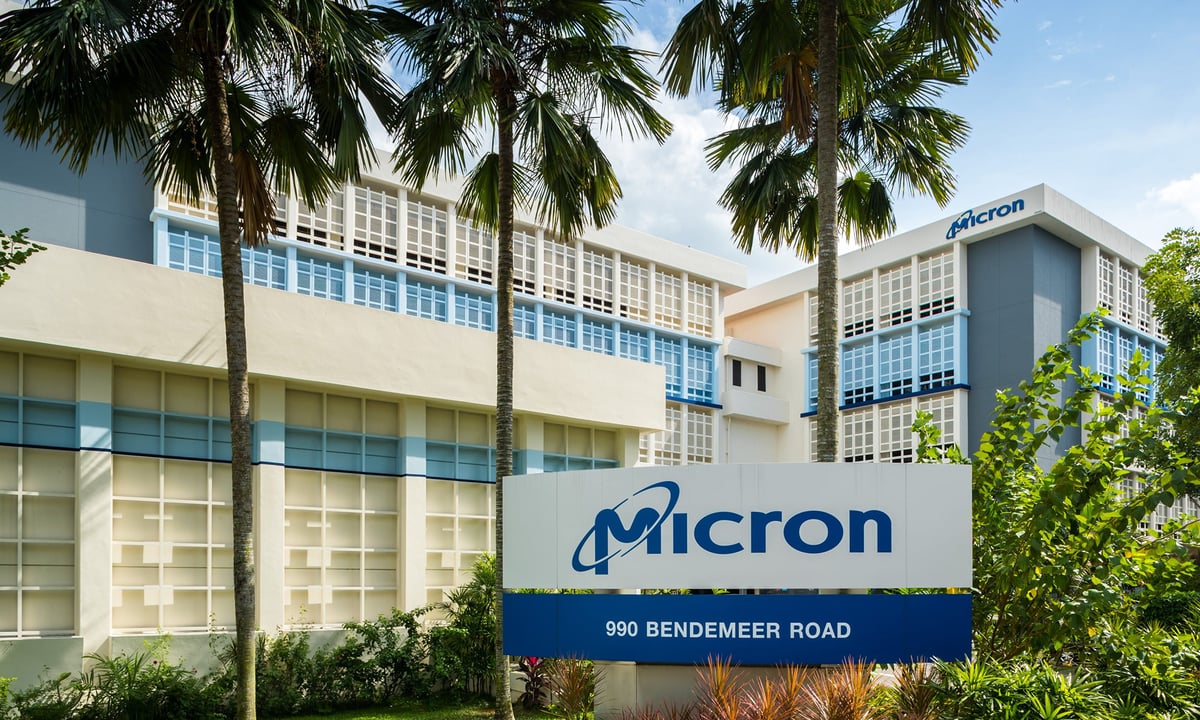
Micron Technology: Potential New Nvidia?

- AI Chip Market Dynamics: From 2023 to 2025, Nvidia's chipsets became the backbone of generative AI, propelling its market value to the highest globally, although growth investors have shown less interest in big tech in 2026, with Nvidia's stock down 5.2% year-to-date.
- Micron Stock Surge: Micron Technology's shares have risen 27% this year and nearly 309% over the past 12 months, reflecting its strong performance in the AI chip sector, particularly amid surging demand for memory and storage from big tech companies.
- Key Role of Memory and Storage: Micron's dynamic random access memory (DRAM) and NAND flash memory are becoming central to AI infrastructure, with big tech expected to spend $700 billion on AI infrastructure, leading to a sustained increase in demand for Micron's storage chips.
- Future Outlook and Investment Strategy: While Micron's application in AI is more specialized compared to Nvidia's, its growing importance in AI building projects is evident, prompting investors to carefully evaluate opportunities between Micron and the more diversified Nvidia.
See More

Oracle's Dubai Office Damaged Amid Rising Tensions in the Middle East


- Incident Overview: Oracle's office in Dubai was damaged by debris from an aerial interception, although no injuries were reported, highlighting the escalating tensions in the Middle East.
- Escalating Security Threats: Iran's Revolutionary Guard has designated 18 tech companies, including Oracle, as 'legitimate targets' in retaliation for U.S. and Israeli strikes, indicating the increasing significance of tech assets in conflicts.
- Industry Impact: James Henderson, CEO of risk management firm Healix, noted that the threats against tech companies are part of a sustained pattern, suggesting that future crises may target data centers and cloud platforms as much as traditional strategic sites.
- Historical Context: In March, Iran attacked Amazon Web Services data centers, causing outages in several apps and digital services in the UAE, underscoring the serious cybersecurity landscape in the region.
See More
Iran Threatens Attacks on U.S. Tech Firms Including Oracle
- Incident Overview: Oracle's building in Dubai sustained minor damage from debris due to an aerial interception, with no injuries reported; however, this incident highlights escalating tensions in the Middle East that could impact Oracle's operational safety in the region.
- Threats to Tech Companies: Iran's Revolutionary Guard has designated 18 U.S. tech firms, including Oracle, as 'legitimate targets' in retaliation for U.S. and Israeli strikes, which raises the operational risks for these companies in the Middle East.
- Rising Cybersecurity Risks: As threats against tech companies escalate, risk management expert James Henderson notes that tech assets are now viewed as integral to the conflict, suggesting future attacks may target data centers and cloud platforms, increasing security vulnerabilities in the industry.
- Historical Context: Iran previously attacked Amazon Web Services data centers in early March, causing outages in various apps and digital services in the UAE, and a repeat of such incidents could severely impact Oracle and other tech firms' operations.
See More
Nvidia's Future Outlook Remains Bullish
- Strong Earnings Report: Nvidia reported total revenue of $215.9 billion for fiscal year 2026, marking a 65% year-over-year increase, which underscores the company's robust growth potential in the AI chip market and solidifies its market leadership.
- Surging Order Forecast: CEO Jensen Huang indicated that Nvidia expects approximately $1 trillion in purchase orders for its Blackwell and Vera Rubin chips by 2027, doubling last year's forecast of $500 billion, signaling sustained strong demand for AI chips.
- Future Revenue Expectations: Nvidia anticipates first-quarter revenue of $78 billion for fiscal year 2027, representing an almost 77% increase compared to the same period last year, reflecting strong growth potential in the Agentic AI applications sector, which will further drive demand for AI chips.
- High Market Valuation: Despite Nvidia's forward P/E ratio of 30, significantly above the average of 20.9 for the tech sector, investors believe the premium is justified given the company's outstanding financial results and its position in a rapidly growing market.
See More
Analysis of Vanguard S&P 500 ETF Investment Value
- Low Expense Ratio Advantage: The Vanguard S&P 500 ETF charges an ultra-low expense ratio of just 0.03%, allowing investors to gain exposure to 500 of America's largest companies at minimal cost, thereby achieving higher net returns over the long term.
- Long-Term Performance: Over the past decade, this ETF has generated a total return of 274%, translating to an annualized gain of 14%, demonstrating strong performance in volatile markets and attracting investors optimistic about the American economy.
- Tech Sector Dominance: The information technology sector accounts for 32.4% of the ETF's portfolio, with Nvidia, Apple, and Microsoft making up 19% combined, reflecting investor confidence in the future of artificial intelligence and its significance in the market.
- Market Volatility Strategy: Despite heightened market volatility, the Vanguard S&P 500 ETF is still viewed as an ideal long-term investment choice, as it is expected to provide stable returns for investors over the next five years and beyond.
See More
Sandisk Stock Surges 194%, AI Stocks Recommended
- NAND Market Shortage: Sandisk emerged as the best-performing stock in the Russell 1000 Index in Q1, with a remarkable 194% surge in share price, primarily driven by a shortage in the NAND memory market that boosted prices and led to substantial revenue and earnings growth.
- AI Infrastructure Boom: The demand for NAND memory continues to rise due to the booming AI infrastructure, and while the industry has historically been cyclical, the current strong performance provides significant financial returns for the company in the near term.
- Nvidia's Competitive Edge: Nvidia stands out as a leading AI chipmaker with its complex GPUs and robust CUDA software platform, currently trading at a forward P/E ratio of 21 times, indicating substantial future growth potential that attracts investor interest.
- Broadcom's Market Leadership: Broadcom leads in the AI infrastructure market, particularly in networking and custom AI chips, with a current P/E ratio of 27.5 times, which is expected to drop to 17.5 times as explosive growth materializes, showcasing strong investment value.
See More
Micron Technology: Potential New Nvidia?
- AI Chip Market Dynamics: From 2023 to 2025, Nvidia's chipsets became the backbone of generative AI, propelling its market value to the highest globally, although growth investors have shown less interest in big tech in 2026, with Nvidia's stock down 5.2% year-to-date.
- Micron Stock Surge: Micron Technology's shares have risen 27% this year and nearly 309% over the past 12 months, reflecting its strong performance in the AI chip sector, particularly amid surging demand for memory and storage from big tech companies.
- Key Role of Memory and Storage: Micron's dynamic random access memory (DRAM) and NAND flash memory are becoming central to AI infrastructure, with big tech expected to spend $700 billion on AI infrastructure, leading to a sustained increase in demand for Micron's storage chips.
- Future Outlook and Investment Strategy: While Micron's application in AI is more specialized compared to Nvidia's, its growing importance in AI building projects is evident, prompting investors to carefully evaluate opportunities between Micron and the more diversified Nvidia.
See More
Oracle's Dubai Office Damaged Amid Rising Tensions in the Middle East
- Incident Overview: Oracle's office in Dubai was damaged by debris from an aerial interception, although no injuries were reported, highlighting the escalating tensions in the Middle East.
- Escalating Security Threats: Iran's Revolutionary Guard has designated 18 tech companies, including Oracle, as 'legitimate targets' in retaliation for U.S. and Israeli strikes, indicating the increasing significance of tech assets in conflicts.
- Industry Impact: James Henderson, CEO of risk management firm Healix, noted that the threats against tech companies are part of a sustained pattern, suggesting that future crises may target data centers and cloud platforms as much as traditional strategic sites.
- Historical Context: In March, Iran attacked Amazon Web Services data centers, causing outages in several apps and digital services in the UAE, underscoring the serious cybersecurity landscape in the region.
See More
Iran Threatens Attacks on U.S. Tech Firms Including Oracle
- Incident Overview: Oracle's building in Dubai sustained minor damage from debris due to an aerial interception, with no injuries reported; however, this incident highlights escalating tensions in the Middle East that could impact Oracle's operational safety in the region.
- Threats to Tech Companies: Iran's Revolutionary Guard has designated 18 U.S. tech firms, including Oracle, as 'legitimate targets' in retaliation for U.S. and Israeli strikes, which raises the operational risks for these companies in the Middle East.
- Rising Cybersecurity Risks: As threats against tech companies escalate, risk management expert James Henderson notes that tech assets are now viewed as integral to the conflict, suggesting future attacks may target data centers and cloud platforms, increasing security vulnerabilities in the industry.
- Historical Context: Iran previously attacked Amazon Web Services data centers in early March, causing outages in various apps and digital services in the UAE, and a repeat of such incidents could severely impact Oracle and other tech firms' operations.
See More