Trump Family Shifts Focus to Cryptocurrency Amid Banking Criticism
Written by Emily J. Thompson, Senior Investment Analyst
Updated: Feb 18 2026
0mins


Source: CNBC
- Necessity of Cryptocurrency: The Trump family was compelled to enter the cryptocurrency space after traditional banks closed hundreds of their accounts, with Donald Trump Jr. stating this was out of 'necessity' rather than innovation, highlighting their dissatisfaction with the traditional financial system.
- Goal of Financial Modernization: Eric Trump mentioned their aim to 'modernize finance' to prevent similar 'debanking' incidents from occurring again, reflecting their urgent need for reform in the financial system.
- Criticism and Controversy: The family's crypto venture has faced criticism, particularly from Senator Warren, who questioned their dealings with the Abu Dhabi royal family, labeling it as corruption and suggesting potential conflicts of interest, illustrating the complex relationship between politics and business.
- Democratization of Stablecoins: Donald Trump Jr. emphasized that stablecoins from World Liberty Financial can 'democratize' financial transactions, enabling those without traditional banking connections to secure loans, indicating their desire to improve financial accessibility through new technologies.
Trade with 70% Backtested Accuracy
Stop guessing "Should I Buy GS?" and start using high-conviction signals backed by rigorous historical data.
Sign up today to access powerful investing tools and make smarter, data-driven decisions.
Analyst Views on GS
Wall Street analysts forecast GS stock price to fall
12 Analyst Rating
5 Buy
7 Hold
0 Sell
Moderate Buy
Current: 1035.640

Low
604.00
Averages
951.45
High
1100
Current: 1035.640
Low
604.00
Averages
951.45
High
1100
About GS
The Goldman Sachs Group, Inc. is a global financial institution that delivers a range of financial services to a large and diversified client base that includes corporations, financial institutions, governments and individuals. Its segments include Global Banking & Markets, Asset & Wealth Management and Platform Solutions. The Global Banking & Markets segment offers a range of services, including financing, advisory services, risk distribution, and hedging for its institutional and corporate clients. It facilitates client transactions and makes markets in fixed income, equity, currency and commodity products. The Asset & Wealth Management segment manages assets and offers investment products across all asset classes to a diverse set of clients. It also provides investing and wealth advisory solutions. The Platform Solutions segment includes consumer platforms, such as partnerships offering credit cards and point-of-sale financing, and transaction banking and other platform businesses.
About the author

Emily J. Thompson
Emily J. Thompson, a Chartered Financial Analyst (CFA) with 12 years in investment research, graduated with honors from the Wharton School. Specializing in industrial and technology stocks, she provides in-depth analysis for Intellectia’s earnings and market brief reports.
Analysis of Current Best CD Rates

- Rate Trends: Currently, Certificate of Deposit (CD) rates are relatively high compared to historical averages, with the highest rate reaching 4% APY, particularly from online banks, indicating a sustained demand for secure savings instruments in the market.
- Fed Policy Impact: Since 2024, the Federal Reserve has cut its target rate three times by a total of one percentage point, and while rates remain unchanged for now, expectations for a potential increase are rising, which could influence future CD rates.
- Simplified Account Opening: The process for opening a CD account generally involves researching rates, selecting a suitable account, preparing necessary documents, and completing the application, with many financial institutions allowing online applications, enhancing customer convenience and efficiency.
- Increased Market Competition: With several financial institutions offering CD rates as high as 4% APY, consumers should focus on interest rates, term lengths, and minimum deposit requirements when selecting a CD to ensure they choose the best account that aligns with their financial goals.
See More

Salesforce Shares Drop 38.6% Year-to-Date


- Poor Stock Performance: Salesforce's shares fell 2.3% today, marking a year-to-date decline of 38.6%, indicating market concerns over its future growth prospects, which may lead to decreased investor confidence.
- Industry Comparison: As the worst-performing component in the Dow, Salesforce's struggles highlight its relative weakness in the highly competitive cloud computing market, potentially impacting its market share and profitability.
- Other Component Movements: IBM's stock decreased by 2.2%, while Goldman Sachs Group rose by 1.7%, reflecting varied market reactions to different companies, which could influence investors' asset allocation decisions.
- Market Sentiment Analysis: The ongoing decline of Salesforce may raise concerns about the entire tech sector, especially amid increasing economic uncertainty, potentially prompting more investors to reassess their investment strategies.
See More

SpaceX IPO: Investor Screening and Risks


- Investor Screening Process: SpaceX implemented a stringent screening process for potential investors prior to its IPO, requiring them to visit headquarters for interviews and financial scrutiny, reflecting Musk's control and limited transparency, yet early investors have seen their investments soar from $30 billion in 2018 to a projected $1.75 trillion.
- Unique IPO Process: Unlike traditional IPOs, SpaceX directed banks to specific investor pools and geographies while setting a fixed offering price, ensuring accountability among underwriters and potentially impacting market competition and investor choices through this 'lane' structure.
- Retail Investor Participation: In this IPO, 30% of the $75 billion offering is allocated to retail investors, despite risks such as Musk's absolute control and loss-making operations, indicating SpaceX's intention to reward long-time supporters and emphasize the importance of ordinary investors.
- Strong Market Demand: Analysts anticipate that demand for SpaceX shares will exceed typical hot offerings, with investor inquiries reaching up to 20 calls per day, reflecting strong interest in the company's growth potential despite governance and financial risks.
See More

SpaceX IPO: Market Potential and Risks Ahead
- Market Potential Assessment: SpaceX claims in its IPO prospectus that its total addressable market is valued at $28.5 trillion, with $26.5 trillion stemming from its artificial intelligence segment, highlighting significant future tech potential.
- IPO Valuation Analysis: With an initial valuation target of $1.77 trillion, investors must carefully evaluate the reasonableness of this figure, especially since only $370 billion is linked to rockets and space transport solutions.
- Capital Expenditure Expectations: SpaceX's capital spending is projected to reach $360 billion by 2030 and rise to $732 billion by 2031, which will exert substantial pressure on the company's cash flow, likely forcing it to rely on capital markets for financing in the coming years.
- AI Business Risks: Acknowledging that its AI business is still in its early stages, SpaceX faces high competition and capital-intensive challenges, making its future success critical to how IPO proceeds will be utilized and the overall financial health of the company.
See More
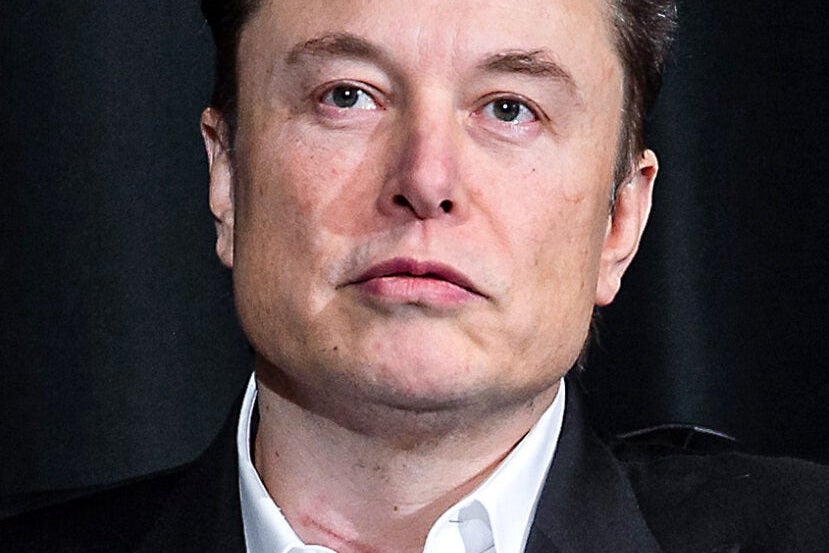
SpaceX IPO Analysis: Massive AI Market Potential
- Market Size Estimate: SpaceX claims in its IPO prospectus that its quantifiable total addressable market is $28.5 trillion, with $26.5 trillion stemming from its AI business, indicating a massive market opportunity but also highlighting risks associated with its IPO valuation.
- Valuation and Risks: With an initial valuation target of $1.77 trillion, only $370 billion is linked to rockets and space transport, suggesting that the valuation's reasonableness hinges on a single growth catalyst, which, if not executed successfully, could call the valuation into question.
- Capital Expenditure Plans: SpaceX's capital spending is projected to reach $360 billion by 2030 and $732 billion by 2031, primarily aimed at scaling its AI business, which may lead to negative cash flow for the company in the coming years.
- Investor Focus: The AI business is still in its early stages and faces challenges in a highly competitive and capital-intensive environment, making it crucial for investors to monitor SpaceX's ability to sustain its fundraising efforts to evaluate its investment potential.
See More
SpaceX Raises $75 Billion in Record IPO
- Record IPO Size: SpaceX is selling 555.6 million shares at $135 each, raising $75 billion, marking the largest IPO in history, with a valuation of $1.77 trillion, surpassing Tesla and making it the seventh most valuable company in the U.S.
- Significant Revenue Growth: The latest financial report reveals a 15% year-over-year increase in Q1 revenue to $4.69 billion, while total revenue for 2022 jumped 33% to $18.67 billion, despite a net loss of $4.28 billion in the latest quarter, highlighting challenges in achieving profitability.
- Surge in Capital Expenditures: Capital expenditures reached $10.1 billion in Q1, more than doubling from the previous year, with $7.7 billion allocated to AI, indicating substantial investment in technological innovation, even as cumulative losses have reached $41.3 billion, raising concerns about future profitability.
- Optimistic Market Expectations: Oppenheimer and New Street Research initiated coverage with outperform ratings and price targets of $190 and $165, respectively, suggesting that SpaceX's diversified business portfolio and advantages in AI will attract investors, despite competitive pressures from other AI companies.
See More
Analysis of Current Best CD Rates
- Rate Trends: Currently, Certificate of Deposit (CD) rates are relatively high compared to historical averages, with the highest rate reaching 4% APY, particularly from online banks, indicating a sustained demand for secure savings instruments in the market.
- Fed Policy Impact: Since 2024, the Federal Reserve has cut its target rate three times by a total of one percentage point, and while rates remain unchanged for now, expectations for a potential increase are rising, which could influence future CD rates.
- Simplified Account Opening: The process for opening a CD account generally involves researching rates, selecting a suitable account, preparing necessary documents, and completing the application, with many financial institutions allowing online applications, enhancing customer convenience and efficiency.
- Increased Market Competition: With several financial institutions offering CD rates as high as 4% APY, consumers should focus on interest rates, term lengths, and minimum deposit requirements when selecting a CD to ensure they choose the best account that aligns with their financial goals.
See More
Salesforce Shares Drop 38.6% Year-to-Date
- Poor Stock Performance: Salesforce's shares fell 2.3% today, marking a year-to-date decline of 38.6%, indicating market concerns over its future growth prospects, which may lead to decreased investor confidence.
- Industry Comparison: As the worst-performing component in the Dow, Salesforce's struggles highlight its relative weakness in the highly competitive cloud computing market, potentially impacting its market share and profitability.
- Other Component Movements: IBM's stock decreased by 2.2%, while Goldman Sachs Group rose by 1.7%, reflecting varied market reactions to different companies, which could influence investors' asset allocation decisions.
- Market Sentiment Analysis: The ongoing decline of Salesforce may raise concerns about the entire tech sector, especially amid increasing economic uncertainty, potentially prompting more investors to reassess their investment strategies.
See More
SpaceX IPO: Investor Screening and Risks
- Investor Screening Process: SpaceX implemented a stringent screening process for potential investors prior to its IPO, requiring them to visit headquarters for interviews and financial scrutiny, reflecting Musk's control and limited transparency, yet early investors have seen their investments soar from $30 billion in 2018 to a projected $1.75 trillion.
- Unique IPO Process: Unlike traditional IPOs, SpaceX directed banks to specific investor pools and geographies while setting a fixed offering price, ensuring accountability among underwriters and potentially impacting market competition and investor choices through this 'lane' structure.
- Retail Investor Participation: In this IPO, 30% of the $75 billion offering is allocated to retail investors, despite risks such as Musk's absolute control and loss-making operations, indicating SpaceX's intention to reward long-time supporters and emphasize the importance of ordinary investors.
- Strong Market Demand: Analysts anticipate that demand for SpaceX shares will exceed typical hot offerings, with investor inquiries reaching up to 20 calls per day, reflecting strong interest in the company's growth potential despite governance and financial risks.
See More
SpaceX IPO: Market Potential and Risks Ahead
- Market Potential Assessment: SpaceX claims in its IPO prospectus that its total addressable market is valued at $28.5 trillion, with $26.5 trillion stemming from its artificial intelligence segment, highlighting significant future tech potential.
- IPO Valuation Analysis: With an initial valuation target of $1.77 trillion, investors must carefully evaluate the reasonableness of this figure, especially since only $370 billion is linked to rockets and space transport solutions.
- Capital Expenditure Expectations: SpaceX's capital spending is projected to reach $360 billion by 2030 and rise to $732 billion by 2031, which will exert substantial pressure on the company's cash flow, likely forcing it to rely on capital markets for financing in the coming years.
- AI Business Risks: Acknowledging that its AI business is still in its early stages, SpaceX faces high competition and capital-intensive challenges, making its future success critical to how IPO proceeds will be utilized and the overall financial health of the company.
See More
SpaceX IPO Analysis: Massive AI Market Potential
- Market Size Estimate: SpaceX claims in its IPO prospectus that its quantifiable total addressable market is $28.5 trillion, with $26.5 trillion stemming from its AI business, indicating a massive market opportunity but also highlighting risks associated with its IPO valuation.
- Valuation and Risks: With an initial valuation target of $1.77 trillion, only $370 billion is linked to rockets and space transport, suggesting that the valuation's reasonableness hinges on a single growth catalyst, which, if not executed successfully, could call the valuation into question.
- Capital Expenditure Plans: SpaceX's capital spending is projected to reach $360 billion by 2030 and $732 billion by 2031, primarily aimed at scaling its AI business, which may lead to negative cash flow for the company in the coming years.
- Investor Focus: The AI business is still in its early stages and faces challenges in a highly competitive and capital-intensive environment, making it crucial for investors to monitor SpaceX's ability to sustain its fundraising efforts to evaluate its investment potential.
See More
SpaceX Raises $75 Billion in Record IPO
- Record IPO Size: SpaceX is selling 555.6 million shares at $135 each, raising $75 billion, marking the largest IPO in history, with a valuation of $1.77 trillion, surpassing Tesla and making it the seventh most valuable company in the U.S.
- Significant Revenue Growth: The latest financial report reveals a 15% year-over-year increase in Q1 revenue to $4.69 billion, while total revenue for 2022 jumped 33% to $18.67 billion, despite a net loss of $4.28 billion in the latest quarter, highlighting challenges in achieving profitability.
- Surge in Capital Expenditures: Capital expenditures reached $10.1 billion in Q1, more than doubling from the previous year, with $7.7 billion allocated to AI, indicating substantial investment in technological innovation, even as cumulative losses have reached $41.3 billion, raising concerns about future profitability.
- Optimistic Market Expectations: Oppenheimer and New Street Research initiated coverage with outperform ratings and price targets of $190 and $165, respectively, suggesting that SpaceX's diversified business portfolio and advantages in AI will attract investors, despite competitive pressures from other AI companies.
See More