Tempus Partners with Bristol Myers Squibb to Optimize Clinical Trials
Written by Emily J. Thompson, Senior Investment Analyst
Updated: 2 days ago
0mins
Source: Newsfilter
- Collaboration Goals: Tempus AI's partnership with Bristol Myers Squibb aims to leverage AI and multimodal real-world data to optimize clinical trial designs and enhance the Probability of Technical & Regulatory Success (PTRS) across five initial clinical trial programs, which is expected to significantly improve drug development efficiency.
- Data-Driven Decisions: Utilizing Tempus' Lens platform, the collaboration will analyze a vast library of de-identified multimodal records to delve deeper into patient biology, helping to identify patient segments most likely to benefit from investigational therapies, thereby increasing the success rate of clinical research.
- Oncology and Neuroscience Focus: This initiative not only targets solid tumors such as lung, colon, and prostate cancers but also extends into Alzheimer's disease drug development, showcasing the versatility of Tempus' multimodal database across multiple therapeutic areas.
- Ongoing Innovation: The initiative builds upon existing collaboration between Tempus and BMS, further advancing the Next Pathways program across 13 community health systems to address care gaps for patients with advanced non-small cell lung cancer (aNSCLC).
Trade with 70% Backtested Accuracy
Stop guessing "Should I Buy BMY?" and start using high-conviction signals backed by rigorous historical data.
Sign up today to access powerful investing tools and make smarter, data-driven decisions.
Analyst Views on BMY
Wall Street analysts forecast BMY stock price to fall
20 Analyst Rating
8 Buy
11 Hold
1 Sell
Moderate Buy
Current: 56.770

Low
37.00
Averages
55.86
High
68.00
Current: 56.770
Low
37.00
Averages
55.86
High
68.00
About BMY
Bristol-Myers Squibb Company is a global biopharmaceutical company. It is engaged in the discovery, development, and delivery of transformational medicines for patients facing serious diseases in areas: oncology, hematology, immunology, cardiovascular, neuroscience and other areas. Its growth portfolio includes Opdivo (nivolumab), Opdivo Qvantig (nivolumab and hyaluronidase-nvhy), Orencia (abatacept), Yervoy (ipilimumab), Reblozyl (luspatercept-aamt), Breyanzi (lisocabtagene maraleucel), Opdualag (nivolumab and relatlimab-rmbw), Camzyos (mavacamten), Zeposia (ozanimod), Abecma (idecabtagene vicleucel), Sotyktu (deucravacitinib), Krazati (adagrasib), and Cobenfy (xanomeline and trospium chloride). Its other growth products include Augtyro, Onureg, Inrebic, Nulojix, and Empliciti. Its legacy portfolio includes Eliquis (apixaban), Revlimid (lenalidomide), Pomalyst/Imnovid (pomalidomide), Sprycel (dasatinib), and Abraxane (paclitaxel albumin-bound particles for injectable suspension).
About the author

Emily J. Thompson
Emily J. Thompson, a Chartered Financial Analyst (CFA) with 12 years in investment research, graduated with honors from the Wharton School. Specializing in industrial and technology stocks, she provides in-depth analysis for Intellectia’s earnings and market brief reports.
Johnson & Johnson's Icotyde Shows Strong Potential as a Cash Cow


- New Drug Launch: Johnson & Johnson's newly launched oral medication Icotyde received FDA approval in mid-March for moderate to severe plaque psoriasis, becoming the first oral treatment targeting the IL-23 receptor, and is expected to become a new cash cow for the company.
- Sales Expectations: Icotyde is projected to reach $10.5 billion in sales by 2032, significantly exceeding Wall Street's consensus of $7.4 billion, indicating strong market potential, especially after securing approvals for conditions like Crohn's disease and ulcerative colitis.
- Market Competition: Despite the convenience of Icotyde, analysts express skepticism about its ability to surpass existing biologics like Tremfya and AbbVie's Skyrizi, suggesting that patients may prefer quarterly injections over daily pills.
- Strategic Positioning: J&J's CEO stated that Icotyde, alongside Tremfya, forms a crucial part of the company's immunology portfolio aimed at replacing declining sales from Stelara, which peaked at nearly $11 billion in 2023 but is expected to see significant declines in the future.
See More
Regeneron's Fianlimab Trial Fails to Meet Key Goals


- Trial Results: Regeneron's pivotal late-stage melanoma trial for its experimental drug fianlimab, combined with Libtayo, failed to meet its primary endpoint, as the fianlimab arm showed numerical improvement in progression-free survival but lacked statistical significance, leading to a slight decline in stock price during after-hours trading.
- Survival Data: In the high-dose arm, patients had a median progression-free survival of 11.5 months compared to 6.4 months for those on Keytruda alone, indicating a potential benefit but failing to meet clinical trial statistical requirements, highlighting challenges in market competition.
- Market Reaction: Despite 22 out of 29 analysts rating Regeneron stock as 'Buy' or higher, retail sentiment on Stocktwits remained bearish, reflecting concerns about the company's future performance, especially with the investigational status of the drug.
- Future Outlook: Regeneron is continuing a separate late-stage trial comparing the same combination against Bristol Myers Squibb’s Opdualag; although this trial's results are disappointing, the company is striving to establish a foothold in the rapidly growing melanoma immunotherapy market, with full results to be presented at an upcoming medical meeting.
See More
Bristol Myers Squibb Partners with Hengrui Pharma for Drug Development

- Significant Partnership: Bristol Myers Squibb has announced a potential multi-billion dollar partnership with Hengrui Pharma, aiming to co-develop around a dozen drugs, including four that Bristol will send to China for early-stage clinical trials, marking a new phase of international collaboration in drug development.
- Shift in R&D Model: This collaboration represents a departure from traditional licensing agreements, as both companies will contribute resources to drug development, positioning China as a vital part of the global pharmaceutical R&D ecosystem and highlighting U.S. drugmakers' increasing focus on the Chinese market.
- Market Trend Shift: According to DealForma, over half of large pharmaceutical licensing deals this year have originated from China, up from 39% last year, indicating a growing trend among U.S. and European biopharmaceutical companies to shift early drug development to China to expedite market entry.
- Future Industry Outlook: Experts predict that early-stage drug discovery will increasingly move to China due to its ability to conduct studies at lower costs and faster timelines, potentially reshaping the U.S. pharmaceutical landscape and encouraging more companies to initiate early clinical trials in China.
See More
Bristol Myers Squibb Partners with Hengrui Pharma for Drug Development

- New Drug Collaboration: Bristol Myers Squibb has announced a potential multi-billion dollar partnership with China's Hengrui Pharma to jointly develop about a dozen drugs, including four experimental drugs that will be sent to China for early clinical trials, marking a new phase in cross-continental drug development.
- Significance of the Chinese Market: According to DealForma, over half of large pharmaceutical companies' licensing deals have originated from China this year, a significant increase from 39% last year, indicating a growing focus of American and European biopharmaceutical companies on the Chinese market, which could accelerate the introduction of new drugs.
- Shift in R&D Model: This partnership not only involves sending experimental drugs to China for development but also positions China as a crucial part of the global R&D ecosystem, reflecting the pharmaceutical industry's recognition of China's innovative capabilities and potentially altering the future landscape of drug development.
- Signal of Industry Transformation: As more companies conduct early drug development in China, industry experts believe this will enhance drug development efficiency and reduce costs, potentially challenging the traditional U.S. early drug discovery model and prompting global pharmaceutical companies to reassess their R&D strategies.
See More
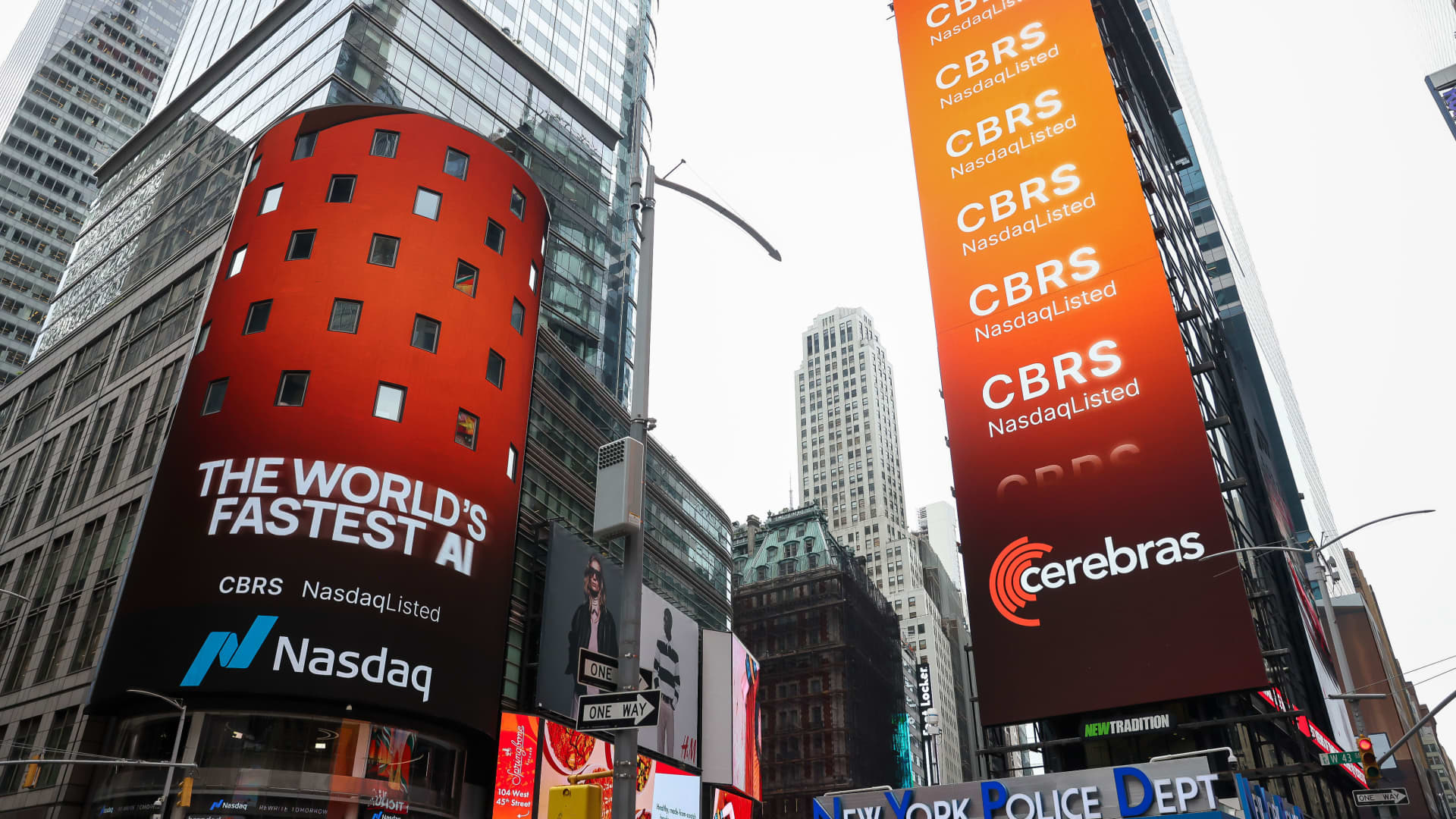
Cerebras IPO Shows Strong Performance

- Cerebras IPO Performance: Cerebras Systems' IPO was priced at $185, reaching a high of $386.34 at opening, and settling at $311.07, indicating strong market interest in its AI chips and likely attracting more investor attention.
- Stock Price Fluctuation: After hours, Cerebras' stock rose by 5% to nearly $330, reflecting investor optimism about its growth potential and confidence in the company's valuation amidst a competitive landscape.
- Market Reaction: CNBC's Jim Cramer noted that the timing of this IPO was impeccable, with investors' decisions at current valuations showcasing confidence in the company's future, potentially paving the way for more similar IPOs.
- SpaceX Governance Risks: Concerns about SpaceX's IPO governance structure, including super voting shares and mandatory arbitration for shareholder claims, may deter long-term investors, impacting its market performance and raising questions about transparency and accountability.
See More
Tempus Partners with Bristol Myers Squibb to Optimize Clinical Trials

- Collaboration Goals: Tempus AI's partnership with Bristol Myers Squibb aims to leverage AI and multimodal real-world data to optimize clinical trial designs and enhance the Probability of Technical & Regulatory Success (PTRS) across five initial clinical trial programs, which is expected to significantly improve drug development efficiency.
- Data-Driven Decisions: Utilizing Tempus' Lens platform, the collaboration will analyze a vast library of de-identified multimodal records to delve deeper into patient biology, helping to identify patient segments most likely to benefit from investigational therapies, thereby increasing the success rate of clinical research.
- Oncology and Neuroscience Focus: This initiative not only targets solid tumors such as lung, colon, and prostate cancers but also extends into Alzheimer's disease drug development, showcasing the versatility of Tempus' multimodal database across multiple therapeutic areas.
- Ongoing Innovation: The initiative builds upon existing collaboration between Tempus and BMS, further advancing the Next Pathways program across 13 community health systems to address care gaps for patients with advanced non-small cell lung cancer (aNSCLC).
See More
Johnson & Johnson's Icotyde Shows Strong Potential as a Cash Cow
- New Drug Launch: Johnson & Johnson's newly launched oral medication Icotyde received FDA approval in mid-March for moderate to severe plaque psoriasis, becoming the first oral treatment targeting the IL-23 receptor, and is expected to become a new cash cow for the company.
- Sales Expectations: Icotyde is projected to reach $10.5 billion in sales by 2032, significantly exceeding Wall Street's consensus of $7.4 billion, indicating strong market potential, especially after securing approvals for conditions like Crohn's disease and ulcerative colitis.
- Market Competition: Despite the convenience of Icotyde, analysts express skepticism about its ability to surpass existing biologics like Tremfya and AbbVie's Skyrizi, suggesting that patients may prefer quarterly injections over daily pills.
- Strategic Positioning: J&J's CEO stated that Icotyde, alongside Tremfya, forms a crucial part of the company's immunology portfolio aimed at replacing declining sales from Stelara, which peaked at nearly $11 billion in 2023 but is expected to see significant declines in the future.
See More
Regeneron's Fianlimab Trial Fails to Meet Key Goals
- Trial Results: Regeneron's pivotal late-stage melanoma trial for its experimental drug fianlimab, combined with Libtayo, failed to meet its primary endpoint, as the fianlimab arm showed numerical improvement in progression-free survival but lacked statistical significance, leading to a slight decline in stock price during after-hours trading.
- Survival Data: In the high-dose arm, patients had a median progression-free survival of 11.5 months compared to 6.4 months for those on Keytruda alone, indicating a potential benefit but failing to meet clinical trial statistical requirements, highlighting challenges in market competition.
- Market Reaction: Despite 22 out of 29 analysts rating Regeneron stock as 'Buy' or higher, retail sentiment on Stocktwits remained bearish, reflecting concerns about the company's future performance, especially with the investigational status of the drug.
- Future Outlook: Regeneron is continuing a separate late-stage trial comparing the same combination against Bristol Myers Squibb’s Opdualag; although this trial's results are disappointing, the company is striving to establish a foothold in the rapidly growing melanoma immunotherapy market, with full results to be presented at an upcoming medical meeting.
See More
Bristol Myers Squibb Partners with Hengrui Pharma for Drug Development
- Significant Partnership: Bristol Myers Squibb has announced a potential multi-billion dollar partnership with Hengrui Pharma, aiming to co-develop around a dozen drugs, including four that Bristol will send to China for early-stage clinical trials, marking a new phase of international collaboration in drug development.
- Shift in R&D Model: This collaboration represents a departure from traditional licensing agreements, as both companies will contribute resources to drug development, positioning China as a vital part of the global pharmaceutical R&D ecosystem and highlighting U.S. drugmakers' increasing focus on the Chinese market.
- Market Trend Shift: According to DealForma, over half of large pharmaceutical licensing deals this year have originated from China, up from 39% last year, indicating a growing trend among U.S. and European biopharmaceutical companies to shift early drug development to China to expedite market entry.
- Future Industry Outlook: Experts predict that early-stage drug discovery will increasingly move to China due to its ability to conduct studies at lower costs and faster timelines, potentially reshaping the U.S. pharmaceutical landscape and encouraging more companies to initiate early clinical trials in China.
See More
Bristol Myers Squibb Partners with Hengrui Pharma for Drug Development
- New Drug Collaboration: Bristol Myers Squibb has announced a potential multi-billion dollar partnership with China's Hengrui Pharma to jointly develop about a dozen drugs, including four experimental drugs that will be sent to China for early clinical trials, marking a new phase in cross-continental drug development.
- Significance of the Chinese Market: According to DealForma, over half of large pharmaceutical companies' licensing deals have originated from China this year, a significant increase from 39% last year, indicating a growing focus of American and European biopharmaceutical companies on the Chinese market, which could accelerate the introduction of new drugs.
- Shift in R&D Model: This partnership not only involves sending experimental drugs to China for development but also positions China as a crucial part of the global R&D ecosystem, reflecting the pharmaceutical industry's recognition of China's innovative capabilities and potentially altering the future landscape of drug development.
- Signal of Industry Transformation: As more companies conduct early drug development in China, industry experts believe this will enhance drug development efficiency and reduce costs, potentially challenging the traditional U.S. early drug discovery model and prompting global pharmaceutical companies to reassess their R&D strategies.
See More
Cerebras IPO Shows Strong Performance
- Cerebras IPO Performance: Cerebras Systems' IPO was priced at $185, reaching a high of $386.34 at opening, and settling at $311.07, indicating strong market interest in its AI chips and likely attracting more investor attention.
- Stock Price Fluctuation: After hours, Cerebras' stock rose by 5% to nearly $330, reflecting investor optimism about its growth potential and confidence in the company's valuation amidst a competitive landscape.
- Market Reaction: CNBC's Jim Cramer noted that the timing of this IPO was impeccable, with investors' decisions at current valuations showcasing confidence in the company's future, potentially paving the way for more similar IPOs.
- SpaceX Governance Risks: Concerns about SpaceX's IPO governance structure, including super voting shares and mandatory arbitration for shareholder claims, may deter long-term investors, impacting its market performance and raising questions about transparency and accountability.
See More
Tempus Partners with Bristol Myers Squibb to Optimize Clinical Trials
- Collaboration Goals: Tempus AI's partnership with Bristol Myers Squibb aims to leverage AI and multimodal real-world data to optimize clinical trial designs and enhance the Probability of Technical & Regulatory Success (PTRS) across five initial clinical trial programs, which is expected to significantly improve drug development efficiency.
- Data-Driven Decisions: Utilizing Tempus' Lens platform, the collaboration will analyze a vast library of de-identified multimodal records to delve deeper into patient biology, helping to identify patient segments most likely to benefit from investigational therapies, thereby increasing the success rate of clinical research.
- Oncology and Neuroscience Focus: This initiative not only targets solid tumors such as lung, colon, and prostate cancers but also extends into Alzheimer's disease drug development, showcasing the versatility of Tempus' multimodal database across multiple therapeutic areas.
- Ongoing Innovation: The initiative builds upon existing collaboration between Tempus and BMS, further advancing the Next Pathways program across 13 community health systems to address care gaps for patients with advanced non-small cell lung cancer (aNSCLC).
See More