

SpaceX Approaches $3 Trillion Market Cap, But Concerns Loom
Written by Emily J. Thompson, Senior Investment Analyst
Updated: 2 hours ago
0mins


Source: Fool
- Weak Revenue Growth: SpaceX generated under $19 billion in revenue last year, with only a 15% increase in the first quarter, starkly contrasting its nearly $3 trillion market cap and raising doubts about its business model sustainability.
- Unrealistic Optimism: Elon Musk's prediction of reaching $1 trillion in revenue by 2030 seems highly unlikely given the technical hurdles and heavy capital expenditures involved, reflecting market concerns about the company's future.
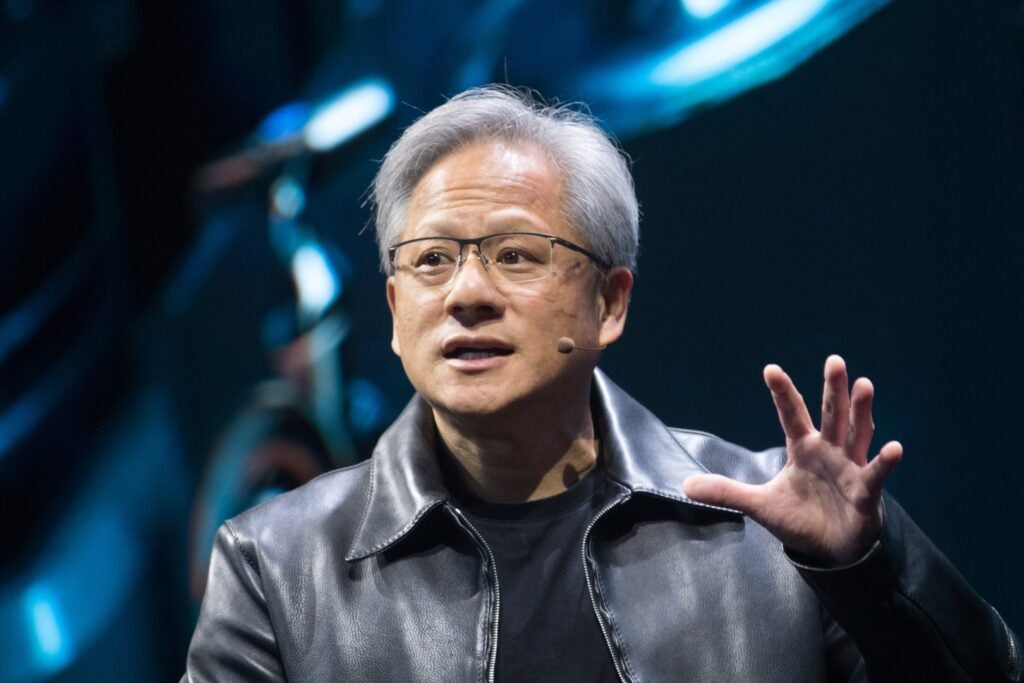
- Strong Competitors: In contrast to SpaceX, Nvidia dominates the AI infrastructure sector, reporting $81.6 billion in revenue with an 85% growth in the first quarter, showcasing a mature and stable business model.
- Amazon's Market Leadership: Amazon generated $717 billion in revenue last year and is projected to reach $1 trillion by 2028, demonstrating its strong competitive position in e-commerce and cloud computing, far exceeding SpaceX's projections.
Trade with 70% Backtested Accuracy
Stop guessing "Should I Buy SPCX?" and start using high-conviction signals backed by rigorous historical data.
Sign up today to access powerful investing tools and make smarter, data-driven decisions.
Analyst Views on SPCX
Wall Street analysts forecast SPCX stock price to rise
0 Analyst Rating
0 Buy
0 Hold
0 Sell
Current: 191.820

Low
Averages
High
Current: 191.820
Low
Averages
High
About SPCX
Space Exploration Technologies Corp. designs, manufactures, launches, and operates products and services built on technologies, including rockets and spacecraft. The Company's segments include Space, Connectivity, and artificial intelligence (AI). Its Space segment designs, manufactures, and launches reusable rockets to provide access to space. Its Connectivity segment operates broadband data and communications network powered by approximately 9,600 Starlink broadband and mobile satellites in Low-Earth orbit, delivering connectivity to consumer, enterprises, and government customers over 164 countries, territories, and other markets. In its AI segment, it operates a vertically integrated AI platform spanning its truth-seeking frontier model Grok, AI solutions for consumer and enterprise customers, X-its real-time information, entertainment, and free speech platform and AI computational infrastructure.
About the author

Emily J. Thompson
Emily J. Thompson, a Chartered Financial Analyst (CFA) with 12 years in investment research, graduated with honors from the Wharton School. Specializing in industrial and technology stocks, she provides in-depth analysis for Intellectia’s earnings and market brief reports.

SpaceX Secures Investment-Grade Credit Ratings

- Credit Rating Upgrade: Fitch, S&P Global, and Moody's assigned SpaceX investment-grade ratings of BBB+ and BBB, reflecting the company's strong leadership in commercial launches and solid access to capital markets.
- Market Reaction: Despite SpaceX's stock surging to $225 just six days post-IPO, valuing the company near $3 trillion, shares fell 4% on Thursday due to profit-taking, indicating market concerns over high valuations.
- Financial Outlook: Fitch expects SpaceX's EBITDA growth to remain within the management's leverage target of 2x-3x, supported by over $90 billion in liquidity and stable revenue from more than 12 million Starlink subscribers.
- Risk Factors: All agencies highlighted concentrated governance under Elon Musk, execution risks tied to Starship development, and the unprecedented scale of AI infrastructure buildout as potential pressures on the company's credit profile, although deeply negative free cash flow is viewed as elective growth investment rather than a structural weakness.
See More

SpaceX's Acquisition of Cursor Enhances AI Strategy
- Acquisition Overview: SpaceX's planned $60 billion all-stock acquisition of AI coding platform Cursor is described by Oppenheimer analyst Timothy Horan as highly beneficial for both parties, completing a key component of SpaceX's AI strategy.
- Market Potential: Cursor's AI coding platform boasts over 1 million daily users and is projected to reach $6 billion in annual recurring revenue by year-end, reflecting its significance in the rapidly growing AI market.
- Technological Integration Advantage: The acquisition combines Cursor's fast-growing software business with SpaceX's computing resources and xAI platform, enhancing the company's vertical integration and allowing for greater value capture across the technology stack.
- Future Outlook: Analysts emphasize the need to monitor how Cursor integrates with xAI's infrastructure and whether it can train competitive new AI models, as these factors will be crucial in validating SpaceX's broader AI investment thesis.
See More

SpaceX Achieves Record IPO, Valuation Reaches $2.8 Trillion

- Record IPO Performance: SpaceX completed the largest IPO in history last Friday, opening at around $150 per share, which implied a market cap of $2.1 trillion; following a 44% surge in share price, the company is now valued at $2.8 trillion, making it the fifth most valuable company globally.
- Significant Revenue Potential: The AI infrastructure agreements with Anthropic and Alphabet are projected to generate up to $26 billion in recurring revenue annually, with total deal values nearing $45 billion, significantly enhancing the company's revenue outlook and market valuation.
- Profitability Shift: Collaborations with Anthropic and Google allow SpaceX to leverage existing GPU clusters, reducing operational costs and positioning the company for a transition to consistent profitability while decreasing future capital needs and improving financial health.
- Valuation Rationalization: Despite SpaceX's $2.8 trillion market cap, the forward price-to-sales ratio could drop to 62 when accounting for the long-term benefits of new contracts, indicating that the market is beginning to recognize the company's evolution from a pure-play space operator to a diversified technology infrastructure leader.
See More

Dow Jones Futures Dip Ahead of Juneteenth Holiday

- Holiday Market Impact: U.S. stock markets, including Dow Jones, S&P 500, and Nasdaq futures, edged lower on Friday ahead of the Juneteenth holiday, reflecting cautious investor sentiment as markets prepare for a long weekend.
- Weekly Market Rebound: Despite the overall market rebound this week, gains were primarily concentrated in the semiconductor, AI-related stocks, and biotech sectors, indicating a divergence between specific industries and the broader market trend.
- Investor Sentiment Shift: As the holiday approaches, expectations regarding upcoming economic data and policy changes may lead to short-term volatility, prompting investors to closely monitor forthcoming economic indicators.
- Sector Performance Disparity: The strong performance of semiconductor and AI-related stocks may attract more capital into these areas, further driving up tech stocks, while the active biotech sector could present new opportunities for investors.
See More
SpaceX Surpasses $2.73 Trillion Market Cap Post-IPO
- Rapid Market Cap Growth: Since its IPO on June 12, SpaceX has reached a market cap of $2.73 trillion, becoming the fifth most valuable company globally, surpassing Amazon and TSMC, indicating strong market demand and investor confidence.
- IPO Performance Comparison: SpaceX has risen nearly 35% since its IPO, mirroring the performance of Nvidia, Microsoft, Apple, and Alphabet on their first trading days, highlighting its popularity and potential growth in the market.
- Future Growth Challenges: While SpaceX may surpass Microsoft, analysts believe its ability to maintain a high market cap in the long term is questionable, especially with insiders potentially selling shares in the future, which could lead to a stock price pullback.
- Investment Recommendations: Investors are advised to consider dollar-cost averaging to mitigate potential high volatility in the coming weeks, avoiding impulsive investments driven by FOMO, particularly as current market hype begins to fade.
See More
SpaceX Achieves Historic IPO Raising $75 Billion

- Record IPO: SpaceX successfully executed a historic initial public offering this month, raising $75 billion, making it the largest IPO ever, with a valuation of $2.66 trillion, reflecting strong market confidence in its growth prospects.
- Revenue Growth Expectations: Last year, SpaceX generated $18.7 billion in revenue, a 33% increase, with Musk predicting annual revenue could reach $1 trillion by 2030, while Wall Street's conservative estimates are only $330 billion, indicating differing views on its growth potential.
- Growth Challenges: To meet Musk's revenue target, SpaceX must achieve a compound annual growth rate of 122% over the next five years, necessitating significant increases in rocket launches, competitiveness in the AI sector, and expansion of its Starlink satellite network.
- Market Competition: Despite SpaceX's ambitious goals, analysts suggest that Nvidia is more likely to reach $1 trillion in annual revenue by 2030, highlighting the strong demand in the AI chip market and Nvidia's dominant market position.
See More
SpaceX Secures Investment-Grade Credit Ratings
- Credit Rating Upgrade: Fitch, S&P Global, and Moody's assigned SpaceX investment-grade ratings of BBB+ and BBB, reflecting the company's strong leadership in commercial launches and solid access to capital markets.
- Market Reaction: Despite SpaceX's stock surging to $225 just six days post-IPO, valuing the company near $3 trillion, shares fell 4% on Thursday due to profit-taking, indicating market concerns over high valuations.
- Financial Outlook: Fitch expects SpaceX's EBITDA growth to remain within the management's leverage target of 2x-3x, supported by over $90 billion in liquidity and stable revenue from more than 12 million Starlink subscribers.
- Risk Factors: All agencies highlighted concentrated governance under Elon Musk, execution risks tied to Starship development, and the unprecedented scale of AI infrastructure buildout as potential pressures on the company's credit profile, although deeply negative free cash flow is viewed as elective growth investment rather than a structural weakness.
See More
SpaceX's Acquisition of Cursor Enhances AI Strategy
- Acquisition Overview: SpaceX's planned $60 billion all-stock acquisition of AI coding platform Cursor is described by Oppenheimer analyst Timothy Horan as highly beneficial for both parties, completing a key component of SpaceX's AI strategy.
- Market Potential: Cursor's AI coding platform boasts over 1 million daily users and is projected to reach $6 billion in annual recurring revenue by year-end, reflecting its significance in the rapidly growing AI market.
- Technological Integration Advantage: The acquisition combines Cursor's fast-growing software business with SpaceX's computing resources and xAI platform, enhancing the company's vertical integration and allowing for greater value capture across the technology stack.
- Future Outlook: Analysts emphasize the need to monitor how Cursor integrates with xAI's infrastructure and whether it can train competitive new AI models, as these factors will be crucial in validating SpaceX's broader AI investment thesis.
See More
SpaceX Achieves Record IPO, Valuation Reaches $2.8 Trillion
- Record IPO Performance: SpaceX completed the largest IPO in history last Friday, opening at around $150 per share, which implied a market cap of $2.1 trillion; following a 44% surge in share price, the company is now valued at $2.8 trillion, making it the fifth most valuable company globally.
- Significant Revenue Potential: The AI infrastructure agreements with Anthropic and Alphabet are projected to generate up to $26 billion in recurring revenue annually, with total deal values nearing $45 billion, significantly enhancing the company's revenue outlook and market valuation.
- Profitability Shift: Collaborations with Anthropic and Google allow SpaceX to leverage existing GPU clusters, reducing operational costs and positioning the company for a transition to consistent profitability while decreasing future capital needs and improving financial health.
- Valuation Rationalization: Despite SpaceX's $2.8 trillion market cap, the forward price-to-sales ratio could drop to 62 when accounting for the long-term benefits of new contracts, indicating that the market is beginning to recognize the company's evolution from a pure-play space operator to a diversified technology infrastructure leader.
See More
Dow Jones Futures Dip Ahead of Juneteenth Holiday
- Holiday Market Impact: U.S. stock markets, including Dow Jones, S&P 500, and Nasdaq futures, edged lower on Friday ahead of the Juneteenth holiday, reflecting cautious investor sentiment as markets prepare for a long weekend.
- Weekly Market Rebound: Despite the overall market rebound this week, gains were primarily concentrated in the semiconductor, AI-related stocks, and biotech sectors, indicating a divergence between specific industries and the broader market trend.
- Investor Sentiment Shift: As the holiday approaches, expectations regarding upcoming economic data and policy changes may lead to short-term volatility, prompting investors to closely monitor forthcoming economic indicators.
- Sector Performance Disparity: The strong performance of semiconductor and AI-related stocks may attract more capital into these areas, further driving up tech stocks, while the active biotech sector could present new opportunities for investors.
See More
SpaceX Surpasses $2.73 Trillion Market Cap Post-IPO
- Rapid Market Cap Growth: Since its IPO on June 12, SpaceX has reached a market cap of $2.73 trillion, becoming the fifth most valuable company globally, surpassing Amazon and TSMC, indicating strong market demand and investor confidence.
- IPO Performance Comparison: SpaceX has risen nearly 35% since its IPO, mirroring the performance of Nvidia, Microsoft, Apple, and Alphabet on their first trading days, highlighting its popularity and potential growth in the market.
- Future Growth Challenges: While SpaceX may surpass Microsoft, analysts believe its ability to maintain a high market cap in the long term is questionable, especially with insiders potentially selling shares in the future, which could lead to a stock price pullback.
- Investment Recommendations: Investors are advised to consider dollar-cost averaging to mitigate potential high volatility in the coming weeks, avoiding impulsive investments driven by FOMO, particularly as current market hype begins to fade.
See More
SpaceX Achieves Historic IPO Raising $75 Billion
- Record IPO: SpaceX successfully executed a historic initial public offering this month, raising $75 billion, making it the largest IPO ever, with a valuation of $2.66 trillion, reflecting strong market confidence in its growth prospects.
- Revenue Growth Expectations: Last year, SpaceX generated $18.7 billion in revenue, a 33% increase, with Musk predicting annual revenue could reach $1 trillion by 2030, while Wall Street's conservative estimates are only $330 billion, indicating differing views on its growth potential.
- Growth Challenges: To meet Musk's revenue target, SpaceX must achieve a compound annual growth rate of 122% over the next five years, necessitating significant increases in rocket launches, competitiveness in the AI sector, and expansion of its Starlink satellite network.
- Market Competition: Despite SpaceX's ambitious goals, analysts suggest that Nvidia is more likely to reach $1 trillion in annual revenue by 2030, highlighting the strong demand in the AI chip market and Nvidia's dominant market position.
See More




