

Space Economy Set for Strong Growth Cycle
Written by Emily J. Thompson, Senior Investment Analyst
Updated: Feb 06 2026
0mins
Source: Fool
- Optimistic Market Outlook: According to McKinsey, the global space economy is projected to reach $1.8 trillion by 2035, indicating strong growth potential that attracts investor interest.
- Rocket Lab's Competitiveness: Rocket Lab has achieved 81 launches in the U.S., making it the second-largest launch company after SpaceX, and its upcoming Neutron rocket aims to carry payloads 40 times larger than its current Electron rocket, enhancing profit margins and market competitiveness.
- AST SpaceMobile's Strategic Partnerships: AST SpaceMobile has secured significant agreements with telecom giants like AT&T and Verizon to provide broadband coverage through its satellite network, with revenue expected to grow from $57 million in 2025 to $1.94 billion by 2028, showcasing its market potential.
- Divergent Profitability Expectations: While both companies are currently unprofitable, analysts project Rocket Lab will achieve profitability by 2027, whereas AST SpaceMobile is expected to reach it by 2028, reflecting differing market perceptions of their future developments.
Trade with 70% Backtested Accuracy
Stop guessing "Should I Buy RKLB?" and start using high-conviction signals backed by rigorous historical data.
Sign up today to access powerful investing tools and make smarter, data-driven decisions.
Analyst Views on RKLB
Wall Street analysts forecast RKLB stock price to fall
11 Analyst Rating
7 Buy
4 Hold
0 Sell
Moderate Buy
Current: 114.780

Low
63.00
Averages
86.89
High
120.00
Current: 114.780
Low
63.00
Averages
86.89
High
120.00
About RKLB
Rocket Lab Corporation is an end-to-end space company. The Company designs and manufactures small and medium-class rockets, spacecraft and spacecraft components, and related software and services to support the space economy. The Company delivers reliable launch services, satellite manufacture, spacecraft design services, spacecraft components, spacecraft manufacturing, and other spacecraft and on-orbit management solutions that make it easier to access space. Its Launch Services segment provides launch and launch-related services to customers on a dedicated mission or ride-share basis. Its Space Systems segment comprises the design and manufacture of spacecraft components and spacecraft program management services, space data applications, and mission operations. Its space systems solutions are the building blocks for spacecraft, which include composite structures, reaction wheels, star trackers, solar solutions, radios, separation systems, and command and control spacecraft software.
About the author

Emily J. Thompson
Emily J. Thompson, a Chartered Financial Analyst (CFA) with 12 years in investment research, graduated with honors from the Wharton School. Specializing in industrial and technology stocks, she provides in-depth analysis for Intellectia’s earnings and market brief reports.
Rocket Lab Joins Nasdaq-100 Index, Marking a Major Milestone
- Inclusion in Nasdaq-100: Rocket Lab announced its inclusion in the Nasdaq-100 Index effective June 22, 2026, marking a significant milestone that reflects its evolution from a small company to a global space leader and underscores its importance in the space economy.
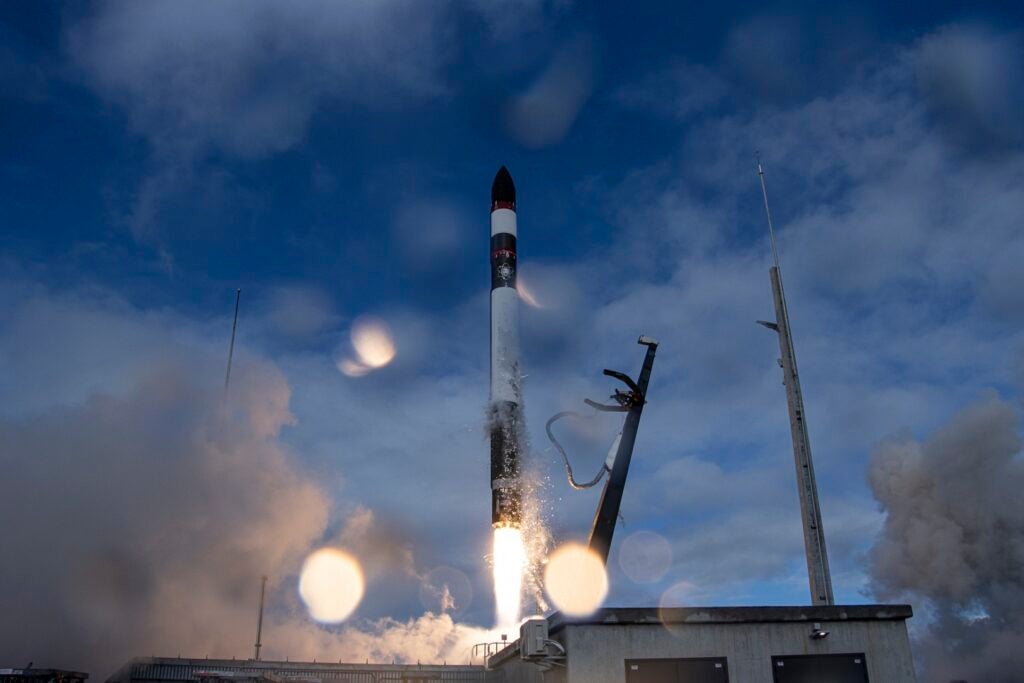
- Successful Launch Record: Since going public in 2021, Rocket Lab has completed over 80 successful launches, deploying more than 250 satellites, demonstrating its robust capabilities and the growing demand in the commercial space sector.
- Development of New Rocket: The company is developing a medium-class rocket named Neutron, tailored for constellation deployment, which is expected to enhance its competitiveness in both national security and commercial markets.
- Increased Industry Influence: Rocket Lab's inclusion in the Nasdaq-100 not only boosts its brand recognition but may also attract more investor interest, further advancing its strategic positioning in the rapidly growing space market.
See More

SpaceX IPO Triggers Significant Drop in Satellite Stocks

- Market Reaction: Following SpaceX's (SPCX) IPO, satellite stocks experienced a significant downturn, with analyst Jack Bowman suggesting that investors may face continued pressure in the coming weeks, particularly until SPCX is included in the Russell 1000 and Nasdaq 100 indexes, which could affect capital flows to other space firms.
- Investor Sentiment: Julia Ostian believes that while the enthusiasm for SpaceX has led to a selloff in other space stocks, this presents a discount opportunity, especially for companies like Intuitive Machines (LUNR) that do not directly compete with SpaceX and could benefit from increased interest in lunar exploration.
- Industry Outlook: Daniel Jones warns that despite the attention drawn by SpaceX's IPO, its stock price may decline under fundamental pressures, putting other space companies like Rocket Lab (RKLB) at higher valuation risks, necessitating caution from investors.
- Investment Strategy: Analysts recommend focusing on companies with strong economic moats and stable cash flows, such as Iridium Communications (IRDM), while avoiding high-risk space firms to mitigate potential losses.
See More
Space Stocks Diverge as Rocket Lab Gains Amid Broader Decline

- Rocket Lab's Resilience: Despite a drop of over 10%, Rocket Lab announced its upcoming inclusion in the Nasdaq-100 index, which is expected to attract more investment from index funds, highlighting its business stability and market recognition.
- AST SpaceMobile's Hard Hit: AST SpaceMobile's stock fell more than 15%, generating only $14.7 million in revenue in Q1 while holding a market value in the tens of billions, indicating the speculative nature of its business model and investor concerns about its future development.
- Intuitive Machines' Revenue Surge: Intuitive Machines saw a drop of about 13%, yet its Q1 sales reached $187 million, nearly tripling year-over-year, with a backlog of $1.1 billion, showcasing its visibility into future revenue.
- Market Sentiment Fluctuations: Investor enthusiasm for SpaceX led to a rotation of funds; while the short-term drop in these stocks may be noise, high-flying space stocks often face larger corrections when market sentiment shifts.
See More
SpaceX Debut Triggers Volatility in Space Stocks
- Market Reaction Analysis: SpaceX surged approximately 19% on its debut, while space stocks like Rocket Lab, AST SpaceMobile, and Intuitive Machines saw significant declines of over 10%, 15%, and 13% respectively, highlighting a stark contrast between investor enthusiasm for new shares and indifference towards existing space stocks.
- Capital Rotation Phenomenon: Analysts suggest that investors may have sold existing space stocks to free up cash for SpaceX shares, indicating that while this capital movement impacted stock prices in the short term, it may not reflect fundamental changes in these companies.
- Rocket Lab's Performance: Despite its stock decline, Rocket Lab is set to join the Nasdaq-100 index, which is expected to attract more investment from index funds, and its first-quarter revenue rose approximately 63.5% year-over-year, demonstrating the robustness of its business.
- AST SpaceMobile Risks: AST SpaceMobile's stock fell over 15%, with first-quarter revenue at just $14.7 million while its market value is in the tens of billions, indicating a highly speculative business model and cash burn risk, despite holding over $3 billion to fund its satellite network construction.
See More

ARK Invest Acquires 3.29 Million Shares of SpaceX on IPO Day
- IPO Performance: SpaceX's Nasdaq debut raised $75 billion from the sale of 555.6 million shares, marking the largest public market debut in history, which indicates strong market confidence in its future growth prospects.
- ARK Investment Strategy: On the IPO day, ARK Invest acquired 3.29 million shares of SpaceX across four ETFs, with ARKX holding 6.89% of its assets in SpaceX, highlighting the firm's strong commitment to this investment.
- Positive Market Reaction: SpaceX's stock rose over 3% in after-hours trading, while retail sentiment on Stocktwits remained in the 'extremely bullish' zone, reflecting optimistic expectations from investors regarding its future performance.
- Asset Allocation Adjustment: Alongside increasing its SpaceX holdings, ARK also trimmed its position in Rocket Lab, indicating a strategic shift in its aerospace investments aimed at optimizing its portfolio and focusing resources on more promising companies.
See More

US Stocks Rise on Hopes of Iran Peace Agreement


- Market Rally: US stocks extended Thursday's rally on Friday, with the S&P 500 rising 0.50%, the Dow Jones up 0.70%, and the Nasdaq 100 increasing by 0.64%, reflecting investor optimism about a potential interim peace agreement between the US and Iran.
- Consumer Confidence Boost: The University of Michigan's Consumer Sentiment Index rose by 4.1 to 48.9 in June, surpassing expectations of 46.0, indicating a rebound in consumer confidence that could stimulate spending and support economic growth.
- Oil Price Decline: WTI crude oil prices fell 3.23% on Friday amid hopes for a US-Iran agreement, which may lower transportation costs and positively impact fuel-dependent sectors like airlines.
- Strong IPO Performance: SpaceX closed at $161 per share on Friday, up 19% from Thursday's IPO price of $135, indicating robust market demand and potentially fostering positive sentiment for upcoming AI company IPOs.
See More
Rocket Lab Joins Nasdaq-100 Index, Marking a Major Milestone
- Inclusion in Nasdaq-100: Rocket Lab announced its inclusion in the Nasdaq-100 Index effective June 22, 2026, marking a significant milestone that reflects its evolution from a small company to a global space leader and underscores its importance in the space economy.
- Successful Launch Record: Since going public in 2021, Rocket Lab has completed over 80 successful launches, deploying more than 250 satellites, demonstrating its robust capabilities and the growing demand in the commercial space sector.
- Development of New Rocket: The company is developing a medium-class rocket named Neutron, tailored for constellation deployment, which is expected to enhance its competitiveness in both national security and commercial markets.
- Increased Industry Influence: Rocket Lab's inclusion in the Nasdaq-100 not only boosts its brand recognition but may also attract more investor interest, further advancing its strategic positioning in the rapidly growing space market.
See More
SpaceX IPO Triggers Significant Drop in Satellite Stocks
- Market Reaction: Following SpaceX's (SPCX) IPO, satellite stocks experienced a significant downturn, with analyst Jack Bowman suggesting that investors may face continued pressure in the coming weeks, particularly until SPCX is included in the Russell 1000 and Nasdaq 100 indexes, which could affect capital flows to other space firms.
- Investor Sentiment: Julia Ostian believes that while the enthusiasm for SpaceX has led to a selloff in other space stocks, this presents a discount opportunity, especially for companies like Intuitive Machines (LUNR) that do not directly compete with SpaceX and could benefit from increased interest in lunar exploration.
- Industry Outlook: Daniel Jones warns that despite the attention drawn by SpaceX's IPO, its stock price may decline under fundamental pressures, putting other space companies like Rocket Lab (RKLB) at higher valuation risks, necessitating caution from investors.
- Investment Strategy: Analysts recommend focusing on companies with strong economic moats and stable cash flows, such as Iridium Communications (IRDM), while avoiding high-risk space firms to mitigate potential losses.
See More
Space Stocks Diverge as Rocket Lab Gains Amid Broader Decline
- Rocket Lab's Resilience: Despite a drop of over 10%, Rocket Lab announced its upcoming inclusion in the Nasdaq-100 index, which is expected to attract more investment from index funds, highlighting its business stability and market recognition.
- AST SpaceMobile's Hard Hit: AST SpaceMobile's stock fell more than 15%, generating only $14.7 million in revenue in Q1 while holding a market value in the tens of billions, indicating the speculative nature of its business model and investor concerns about its future development.
- Intuitive Machines' Revenue Surge: Intuitive Machines saw a drop of about 13%, yet its Q1 sales reached $187 million, nearly tripling year-over-year, with a backlog of $1.1 billion, showcasing its visibility into future revenue.
- Market Sentiment Fluctuations: Investor enthusiasm for SpaceX led to a rotation of funds; while the short-term drop in these stocks may be noise, high-flying space stocks often face larger corrections when market sentiment shifts.
See More
SpaceX Debut Triggers Volatility in Space Stocks
- Market Reaction Analysis: SpaceX surged approximately 19% on its debut, while space stocks like Rocket Lab, AST SpaceMobile, and Intuitive Machines saw significant declines of over 10%, 15%, and 13% respectively, highlighting a stark contrast between investor enthusiasm for new shares and indifference towards existing space stocks.
- Capital Rotation Phenomenon: Analysts suggest that investors may have sold existing space stocks to free up cash for SpaceX shares, indicating that while this capital movement impacted stock prices in the short term, it may not reflect fundamental changes in these companies.
- Rocket Lab's Performance: Despite its stock decline, Rocket Lab is set to join the Nasdaq-100 index, which is expected to attract more investment from index funds, and its first-quarter revenue rose approximately 63.5% year-over-year, demonstrating the robustness of its business.
- AST SpaceMobile Risks: AST SpaceMobile's stock fell over 15%, with first-quarter revenue at just $14.7 million while its market value is in the tens of billions, indicating a highly speculative business model and cash burn risk, despite holding over $3 billion to fund its satellite network construction.
See More
ARK Invest Acquires 3.29 Million Shares of SpaceX on IPO Day
- IPO Performance: SpaceX's Nasdaq debut raised $75 billion from the sale of 555.6 million shares, marking the largest public market debut in history, which indicates strong market confidence in its future growth prospects.
- ARK Investment Strategy: On the IPO day, ARK Invest acquired 3.29 million shares of SpaceX across four ETFs, with ARKX holding 6.89% of its assets in SpaceX, highlighting the firm's strong commitment to this investment.
- Positive Market Reaction: SpaceX's stock rose over 3% in after-hours trading, while retail sentiment on Stocktwits remained in the 'extremely bullish' zone, reflecting optimistic expectations from investors regarding its future performance.
- Asset Allocation Adjustment: Alongside increasing its SpaceX holdings, ARK also trimmed its position in Rocket Lab, indicating a strategic shift in its aerospace investments aimed at optimizing its portfolio and focusing resources on more promising companies.
See More
US Stocks Rise on Hopes of Iran Peace Agreement
- Market Rally: US stocks extended Thursday's rally on Friday, with the S&P 500 rising 0.50%, the Dow Jones up 0.70%, and the Nasdaq 100 increasing by 0.64%, reflecting investor optimism about a potential interim peace agreement between the US and Iran.
- Consumer Confidence Boost: The University of Michigan's Consumer Sentiment Index rose by 4.1 to 48.9 in June, surpassing expectations of 46.0, indicating a rebound in consumer confidence that could stimulate spending and support economic growth.
- Oil Price Decline: WTI crude oil prices fell 3.23% on Friday amid hopes for a US-Iran agreement, which may lower transportation costs and positively impact fuel-dependent sectors like airlines.
- Strong IPO Performance: SpaceX closed at $161 per share on Friday, up 19% from Thursday's IPO price of $135, indicating robust market demand and potentially fostering positive sentiment for upcoming AI company IPOs.
See More





